
Tech
Red Bull Racing’s secret weapon? An engineer who treats workflows like lap times

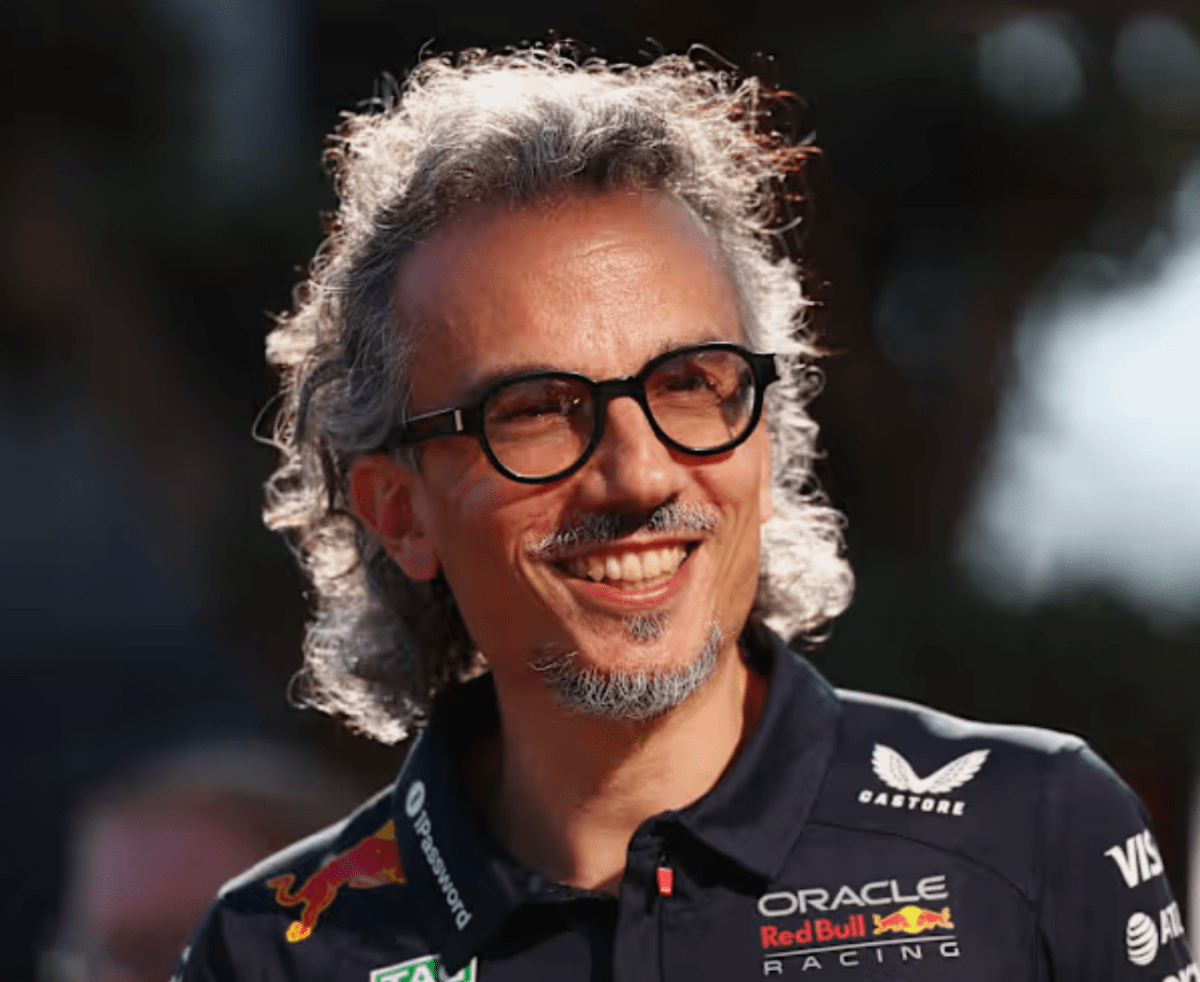
There’s a moment backstage at Web Summit when a member of the production crew — easily twice the size of Laurent Mekies — wraps a beefy arm around the Oracle Red Bull Racing CEO’s shoulder and steers him toward the soundboard to retrieve his phone for a selfie. Most executives leading 2,000-person organizations would bristle at the informality, even from a superfan. Mekies instead smiles, his demeanor unchanged as he accommodates the starstruck crew member.
It’s a small moment but perhaps a revealing one about Mekies who, just four months ago, became only the second person to lead Red Bull Racing in its 20-year history.
“The first feeling is one of being privileged, being honored, to suddenly be part of such an incredible team,” Mekies later tells me onstage in French-accented English. “This team has been winning more than anyone else in Formula One in the last two decades. And then suddenly you are part of it.”
“Suddenly” is not an overstatement. As widely reported, the wholly unexpected call came in July. Christian Horner, the outspoken executive who had led Red Bull since its entry into F1 in 2005, was out. Mekies, who had been running the team’s sister outfit, Racing Bulls, for just over a year, was tapped to step up.
Mekies was an improbable choice in some ways. Where Horner delights in the media spotlight and gamesmanship that defines F1 team principals, Mekies spent much of his career in the engineering trenches. His approach to winning reflects that technical background, too; he sees performance gains not just in aerodynamics and tire compounds, but in eliminating friction from workflows and processes.
That philosophy extends to the team’s partnerships. Take 1Password, the cybersecurity company whose CEO, David Faugno, sits beside Mekies and me on the Web Summit stage. Faugno took over his own iconic brand four months ago — the same week as Mekies.
The partnership between a cybersecurity company and an F1 team might seem unusual, but Mekies sees it as integral to Red Bull’s competitive edge. In F1, thousandths of a second matter. Every login, every system access, every workflow represents time that could be spent making the car faster. “We think we have the best people in the world,” says Mekies, but “we are also going after the best experts in the world at what they do, and that’s how we pick our partners. Our people have to manage and log in and log out of complex systems — aerodynamics, vehicle dynamics at the track, back at the factory, at the simulator, in the wind tunnel.”
Traditionally, security means friction. Passwords to check, systems to authenticate, delays that add up. But when I ask about this, Mekies says his team flipped the question. “We didn’t discuss together how to minimize the loss. We discussed together how to gain speed,” he says. “We go today faster in this seamless login and logout of our people from one system to another than what we were doing without the security level.”
Techcrunch event
San Francisco
|
October 13-15, 2026
It’s a small competitive advantage, but in F1, small advantages compound. “You are looking after the tiniest competitive advantage, one after the other,” Mekies notes. “Our tech genius, our people — they are challenging us every day about the noise that is somewhat unavoidable for a large team. With 1Password, we have this sort of answer where we reduce the noise, increase the time for the core business, and that’s fundamentally where the performance comes from.”
Faugno, for his part, sees the partnership as more than marketing. “We saw an opportunity to help Oracle Red Bull Racing take a thousandth off the pace,” he says.
From engineer to CEO
At 48, Mekies has seen Formula 1 from nearly every angle. After studying at ESTACA, an engineering school in Paris, and Loughborough University in the U.K., he started in Formula 3 in 2000 before crossing into F1 with a British racing team called Arrows in 2001. He then joined Minardi, an Italian team, in 2003 as a race engineer. When Red Bull bought the struggling outfit and transformed it into Toro Rosso in 2006 — the idea was to create a junior team to develop young drivers like Max Verstappen for Red Bull Racing — Mekies was promoted to chief engineer.
Mekies stayed for eight years before moving on to become safety director at the Fédération Internationale de l’Automobile (FIA), the rulemaker for Formula 1 and other motorsport series worldwide. There, he reportedly championed the titanium safety device that’s mounted above the cockpit of Formula 1 cars to protect the driver’s head — the “halo” system. Then it was on to Ferrari as deputy race director, and five years later, back to Red Bull’s junior racing team (renamed Racing Bulls in 2024).
Mekies brings a breadth of experience to the role, in short. What he doesn’t bring — not yet, at least — is a lot of ego. When Verstappen won the 2025 Italian Grand Prix at Monza in September in what became the fastest race in F1 history, reporters asked Mekies about his contribution to the victory. His answer was self-effacing: “I have zero contribution.” When the reporters laughed, he added, “I’m not kidding.”
When I ask about that moment on stage at Web Summit, Mekies shrugs. “All we do as leaders is put our people in position to be able to express their talents. So it is very much their win.”
Mekies sees his role differently than his high-profile predecessor, in fact. He isn’t deliberately trying to “lead from behind.” Instead, he tells me onstage that he doesn’t “think the approach matters. I don’t think it’s leadership style. You will find every possible style in leadership. I think what matters in leadership is care for the people and a care-for-the-company culture.”
Indeed, while Mekies could certainly shower attention on his star driver (Mekies wants to retain him after all), he’s more focused on the collective. “Your first thoughts are for the 2,000 people back in the factories who have never given up on this season,” he says. “It takes a tremendous amount of energy, of company culture, to keep that motivation and that fighting spirit.”
Humility doesn’t mean playing it safe, by the way. The Monza win also validated a somewhat surprising decision: to keep pushing on the 2025 car rather than abandoning it for next year’s development. “We were not happy about where the car performance had been at the beginning of this year and up until the middle of this year,” Mekies tells me. “We decided to press on a bit more with 2025. We didn’t feel that we could simply turn the page and have wishful thinking about how everything will be better next year.”
It was a risky call. With completely new regulations coming in 2026 — new chassis rules, new power unit regulations — most teams had already shifted resources to next year’s car. But Mekies felt his team needed to understand what had gone wrong before they could move forward. “We felt we had to get to the bottom of what had not been working,” he says. “We perhaps pushed a bit more than some of the competition. And luckily, it gave us this turnaround in form.”
Now the team heads into winter with less development time than its rivals, “but with a lot more trust in our tools, in our methodologies, in our process,” Mekies says.
Driving forward
If Mekies’ 2025 turnaround was risky, 2026 represents something else: a “crazy adventure,” as Mekies describes how Red Bull is building its own power unit for the first time, in partnership with Ford. (It has relied on Honda-based engines since 2019.) “For Oracle Red Bull Racing, there are no other words to describe next year other than as a crazy challenge. That’s how big it is for us.”
For a sense of what the team is taking on, here’s how Mekies describes it on stage: “We are going to do our own power unit with the support from Ford, and we are going to compete against people that have been manufacturing Formula One engines for more than 90 years. It’s the sort of crazy level that only Red Bull can do. We’ve decided to create overnight facilities in the middle of a field in Milton Keynes [a large town about 50 miles northwest of London] in the U.K. from zero — get the building, get the dynos in [which are massive, sophisticated test rigs], hire 600 people, try to get them to work together, eventually try to get an engine and get it up to speed to reach the track.”
Can he promise Verstappen a championship-winning car next year? When I ask Mekies, he answers straightaway. “We would be silly to think that we just go in there and are going to be at the right level straight away. This is not going to happen,” he says. “But we take it the Red Bull way. We take it with all the high-risk, high-gain approach that we cherish.”
He has reason for optimism. Sitting third in this year’s F1 team standings, just behind Mercedes, Red Bull has a realistic shot at overtaking them for second place in the final three races of this year’s season. It’s a far cry from the dominance Red Bull enjoyed in recent years, but given how the season started, it would represent a major recovery.
Backstage before our conversation, as makeup artists powder us for the stage lights, I ask Mekies about the pressure of those final races. His answer is pure racer.
“We always say that we take it race by race. So that’s what we are going to do in the next three races,” he tells me. “You want to turn up at the racetrack, put the car in the right window,” meaning the narrow range of conditions where a car performs optimally, “and fight for the win.”
It’s “incredibly difficult to fight at that level,” he continues, “but everyone in Milton Keynes has been doing such a tremendous job to turn the car around and to give us a competitive package for the end of the season.”
In the meantime, he insists that he’s not looking at the points tables or the what-ifs. “We don’t look at the numbers. We know there is a lot happening in the [F1 team standings], but we only look at it race by race.”
That’s the “only thing we do,” he says, describing Red Bull’s mission. “Chasing lap times.”

Waymo is adding another four cities to its growing list of robotaxi rollouts. The company announced Wednesday it has begun testing its autonomous vehicles (with a safety monitor) in Philadelphia, and that it will start manual driving to collect data in Baltimore, St. Louis, and Pittsburgh.
Waymo did not offer a timeline for when it plans to launch commercial services in those locations, nor do we know whether the Alphabet-owned company will partner with other companies to operate robotaxis in each one. That has been the move in cities like Atlanta and Austin, for example, where Waymo has partnered with Uber to advance its robotaxi rollout.
But the new locations join a list of over 20 cities where the company is either offering rides, prepping a commercial launch, or testing. Waymo is also now offering rides on freeways in Los Angeles, Phoenix, and the San Francisco Bay Area. The company plans to be doing one million rides per week by the end of 2026.
Waymo has done all this while claiming to be operating at a level five times safer than humans, according to data the company recently released.
But the expansion has not come without its issues. The National Highway Traffic Safety Administration is investigating how the company’s vehicles operate near school buses, after a Waymo was filmed driving around a stopped bus in Atlanta in September.
This week, Austin news outlet KXAN published a report showing Waymo’s vehicles have driven past school buses that were in the process of unloading or loading children multiple times — including after Waymo claims to have shipped software updates to address the problem.
Techcrunch event
San Francisco
|
October 13-15, 2026

Spotify Wrapped is back. After last year’s widely criticized flop that included an AI podcast as its highlight, the streamer’s highly anticipated annual review feature has returned to its roots. This year, Spotify is doubling down on what it knows works best: deep dives into your streaming data, creative experiences, messages from favorite artists, and other social features.
The company claims that Wrapped 2025 is its biggest, as it’s introducing nearly a dozen new features in addition to its old standbys, like top songs and artists. Plus, it’s offering more visibility into users’ data than in years past. For the first time, Spotify Wrapped is adding a live multiplayer feature to compare your listening data with friends.
Wrapped Party, Wrapped’s first live interactive experience, allows you to invite up to nine friends to compare listening stats.

Also new this year, your Top Songs Playlist will include the play counts for each of the top songs, so you can actually see how much time you spent with your favorite tracks.
Other standout features this year include an interactive Top Song Quiz, a Listening Age feature, and Wrapped Clubs, which match you to one of six unique listening styles.
The company believes these additions will not only bring back the personalized, engaging experience that users have long expected from Wrapped, but will take it a step further by making it more interactive than before.
In the Top Song Quiz, for instance, you can try to guess which top song soundtracked your year before seeing the results.
Techcrunch event
San Francisco
|
October 13-15, 2026

The new interactive Wrapped Party feature isn’t just about comparing the personal streaming data you’ve already received to your friends’ data, as that’s something people already do on social media. Instead, the feature presents unique data stories for your group, like who’s the “most obsessed fan,” the “early bird,” the most “picky listener,” or even something as nice as the “dinner table explainer,” meaning the person who listens to the most news podcasts.

Spotify says these awards update dynamically every time you join a Wrapped Party, so no two sessions are ever the same — even if you run through them again with the same group of friends.
The new Wrapped Clubs, meanwhile, will group you into one of half a dozen listening styles, like the “Soft Hearts Club,” the “Club Serotonin,” the “Full Charge Crew,” the “Cosmic Stereo Club,” and others. You’ll also receive a role in the club based on your listening data. You might be a club leader if your listening choices strongly matches the club’s values, a scout if you’re always seeking out new releases, or an archivist if you listen to music from past eras.

Another feature, Listening Age, compares your 2025 music listening to others in your age group. To calculate your age, the feature considers the release years of the tracks you listen to most. From there, it identifies the five-year span of music that you engaged with more than other listeners your age.

As in prior years, you’ll see your top songs, top artists, top genres, and, for the first time, top albums. If you engaged with audiobooks and podcasts, you’ll see metrics for those as well. Artists, writers, and podcasters will have their own version of Wrapped as before. And top fans will again receive video messages from their favorite artists, podcasters, and, now, authors.
You’ll also receive a playlist of your top songs of the year, as before.

What you won’t find in this year’s Wrapped is any feature that advertises it was made with AI.
In a press briefing on Tuesday, Spotify’s Senior Director of Global Marketing, Matt Luhks, admitted the company received a “lot of feedback” about its 2024 AI-focused Wrapped experience, saying it was a “mix of positive and ‘more constructive feedback,’” despite the feature driving more engagement than prior years.
“We take all of that in. We use that as information, insights, [and] inspiration for how we approached Wrapped this year,” he said in a press event ahead of today’s launch.
“What our users tell us about Wrapped means a lot to us, so it was really informative in how we approached Wrapped this year. And what we tried to build was the most creative, most innovative, most engaging Wrapped ever,” he added, setting a high bar for the 2025 edition of the now 11-year-old annual year-in-review feature.
“We’re the original and, we believe, still the best,” Luhks said.

Still, AI was a part of the Wrapped experience. Though the company claims the overall experience was not made with AI, it does leverage a LLM (large language model) to add a storytelling layer to Wrapped’s facts and figures, and natural language summaries in other parts of its experience, looking back on your data.
Spotify’s attempt to fix Wrapped after a notable stumble comes as the streamer faces increased competition from Apple, Amazon, YouTube, and others, which have all launched their own annual review features, inspired by Wrapped.
“Everyone seems to have their own version of Wrapped. Now, there’s a lot of reviews and replays and rewinds out there, but we believe that Wrapped still sets the bar for these year-end recaps,” Luhks said.
Along with the consumer experience, Spotify shared its top artists, songs, albums, podcasts, and audiobooks for the year, with top winners that included, respectively, Bad Bunny (top song and album), Joe Rogan (“The Joe Rogan Experience” podcast), and Rebeca Yarros (author of “Fourth Wing”).

Hardware maker Nothing is letting its user base buy its stock as part of a new community investment round of $5 million. The new round, which opens on December 10, will enable consumers to buy the company’s shares at its Series C valuation of $1.3 billion.
The company said it has so far raised $8 million in total from over 8,000 people across two previous community investment rounds. It held its first community funding event in 2021, aiming to raise $1.5 million.
“This isn’t about raising capital, it’s about giving our community/fans a chance to invest while we’re private and join us on the journey,” a spokesperson for Nothing told TechCrunch.
Community investors have a rotating seat on the company’s board, but it is unclear what else they get for investing in the company through such rounds.
Nothing raised $200 million in its Series C back in September from investors including Tiger Global, GV, Highland Europe, EQT, Latitude, I2BF and Tapestry. The company has raised $450 million to date.
The community round comes as Nothing makes changes to its corporate structure as it tries to increase its share of a smartphone market dominated by giants like Samsung and Apple. The company is spinning off its budget CMF brand, and plans to explore AI-centric devices while it keeps building smartphones and audio products. And Nothing claims it crossed $1 billion in cumulative revenue this year, up 150% from 2024.
The startup is working to be “IPO-ready” in three years, CEO Carl Pei told TechCrunch in an email. “The timing will depend on market conditions and what makes sense for the business at that point in time,” he said.
Techcrunch event
San Francisco
|
October 13-15, 2026
“What’s important is that we’re already operating with that discipline now. We’re building the systems, the governance, the financial discipline that a public company needs. It forces us to think longer-term and make smarter decisions that prioritise sustainable growth,” Pei added.
It’s not clear if Nothing aims to raise another round before an IPO. When asked about its fundraising plans, a Nothing spokesperson said the company is not thinking about raising capital immediately, but it wouldn’t be averse to those conversations.
Those interested in investing in the community round can use platforms like Wefunder and Crowdcube to participate.


Mateus Fernandes Desperate to Join Man Utd After Direct Contact

UFC Fighter Urged to ‘Wrap Up’ Career After Brutal Loss at the White House

Aston Villa Eyeing Big Summer Move for Man Utd’s Marcus Rashford

Simi Sanya and Femi Dapson Are Now Legally Married and It Is Beautiful to See

FCT Area Council Election: Live results from polling units

Premier League Set-Piece Goals (2025/2026)
-
 Sports2 days ago
US Denied World Cup Visa For Mum of Cape Verde Goalkeeper Vozinha
-
 Sports1 day ago
Saudi Arabia the Only 2026 World Cup Flag That Cannot Touch Ground
-
 Sports2 days ago
Rafael van der Vaart Accused of Making Racist Japan Comments
-
 Sports8 hours ago
Ilia Topuria Said Just 9 Words to His Agent After Justin Gaethje Defeat
-
 Sports2 days ago
FIFA Ban Pre-Revolutionary Iran Flags From World Cup Stadiums
-
 Sports11 hours ago
Clip of Zinedine Zidane in the Stands During Argentina 3-0 Algeria Goes Viral
-
 Sports2 days ago
Emma Hayes Praised For Using Drinks Break For Tactical Analysis
-
 Sports1 day ago
Rodri Labelled ‘Salty’ For Cape Verde Comments After Spain Draw