
Tech
TechCrunch Mobility: Searching for the robotaxi tipping point

Welcome back to TechCrunch Mobility — your central hub for news and insights on the future of transportation. To get this in your inbox, sign up here for free — just click TechCrunch Mobility!
Before we jump in, a quick housekeeping item. The transportation newsletter won’t run next Friday due to the Thanksgiving holiday.
For U.S. readers, I hope you have a safe and drama-free holiday filled with family and friends, delicious food, and long walks. Good luck to those traveling. For all of my international readers, I haven’t forgotten about you. But we all need a little break. I’ll be back the following week.
In the past week, there has been a flood of robotaxi news, mostly driven by Waymo’s flurry of expansion announcements.
Waymo, which has a commercial robotaxi service in Atlanta, Austin, Los Angeles, Phoenix, and San Francisco, has added more cities to its list. It will manually start driving (a precursor to driverless testing and deployment) in Minneapolis, New Orleans, and Tampa next year. Other cities that the Alphabet-owned self-driving company plans to deploy in 2026 are Dallas, Denver, Detroit, Houston, Las Vegas, Miami (it just removed safety drivers), Nashville, Orlando, San Antonio, San Diego, Seattle, and Washington, D.C. It’s also testing in New York City and plans to offer commercial rides internationally starting with London and Tokyo.
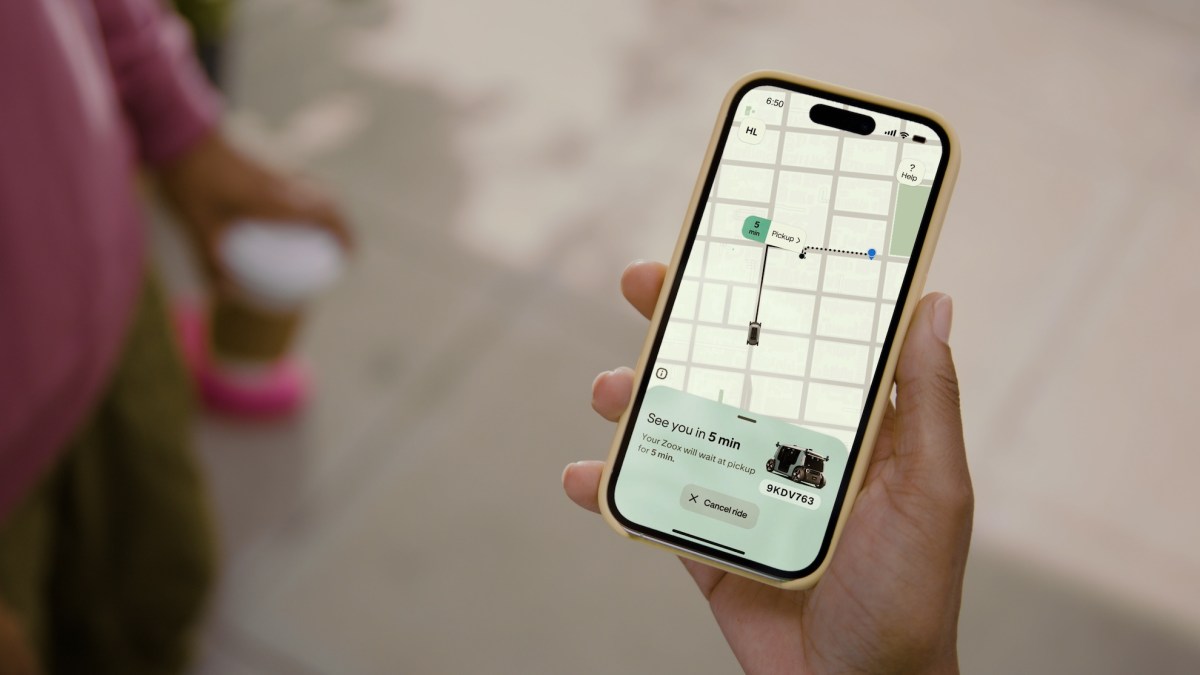
Waymo wasn’t the only company to make some AV news. Tesla received a ride-hailing permit in Arizona — the last regulatory hurdle to launch a robotaxi service there. And Zoox is starting to open its custom-built robotaxis to the public in San Francisco through its early rider program.
All of this has me poking at the question: When will robotaxis reach a tipping point that will lead to fundamental changes in how people think about moving from Point A to Point B? And perhaps more unclear, is how will that affect society and industries (old and new)? I can’t answer the second question, but I have some baked ideas about the first one.
Techcrunch event
San Francisco
|
October 13-15, 2026
In short (and in my view), we are not there yet.
It’s not just about the volume of one player. Waymo’s rapid deployment will certainly introduce the idea and experience to more people. But it’s not quite enough.
Here is what it will take, from my perspective: geography, competition, and an ecosystem spillover effect. Certain cities are simply going to carry more weight societally than others — at least when it comes to reaching that tipping point. Saturation in San Francisco is meaningful, but it’s also a region that is a literal incubator of technology. To me, robotaxi saturation in densely populated cities in the Southeast and East Coast, as well as in mid-tier cities in the Midwest, will be the tipping point indicator.
I am also looking for that startup spillover effect, in which an ecosystem of startups and businesses is launched and supported because of robotaxis. Service-related businesses are an obvious one. But even startups like Point One Navigation, which developed precise location technology and is in our Deals section, would qualify under my definition.
And finally, competition. This matters for several reasons, including that it can drive down prices for the user and introduce different business models.
So, what do you think? Sign up for the Mobility newsletter to vote in this week’s poll, where we ask: When do you expect robotaxis to reach a tipping point of mass adoption that will affect how people move from Point A to Point B?
A little bird

Many little birds have been chirping in senior reporter Sean O’Kane’s ear this past week about electric autonomous startup Monarch Tractor. Some of them shared an internal company memo that shows the startup is precariously close to shutting down.
In the memo, execs warned staff it may need to lay off more than 100 employees or possibly even “shut down.” Reminder: Monarch has raised at least $220 million since it was founded seven years ago. It went through a restructuring in late 2024 in an effort to cut costs and expand into new areas, including licensing its autonomous tech. That turnaround plan is underway, but Monarch may run out of cash before it can make real headway.
The company is also facing legal problems. A dealership in Idaho sued Monarch for breach of contract and allegedly violating its warranty because the California-based startup’s tractors were “unable to operate autonomously.”
Got a tip for us? Email Kirsten Korosec at kirsten.korosec@techcrunch.com or my Signal at kkorosec.07, or email Sean O’Kane at sean.okane@techcrunch.com.
Deals!

Autonomy, the EV subscription company founded by Scott Painter, secured $25 million in financing to acquire about 1,250 vehicles to expand beyond its previously all-Tesla fleet, the company told TechCrunch in an email. Autonomy’s fleet will now include Volvo and Polestar, as well as additional Tesla options.
Pionix, a Germany-based EV charging technology startup, raised €8 million in seed funding led by Ascend Capital Partners. Startup BW Seed Fonds, Pale Blue Dot, Vireo Ventures, and Axeleo Ventures also participated.
Point One Navigation, a San Francisco-based startup that has developed technology to give precise location within 1 to 3 centimeters, raised $35 million in a Series C round led by Khosla Ventures. The company’s post-money valuation is now $230 million, according to one insider familiar with the deal.
Japanese self-driving tech startup Turing raised about ¥15.3 billion ($97.7 million) in equity and debt. It raised ¥9.77 billion ($62 million) in a round co-led by JIC Venture Growth Investments, a government-backed fund, and VC firm Global Brain Corporation. Additional investors include GMO Internet Group, Denso, and other unnamed firms. Turing also secured ¥5.5 billion in syndicated loans arranged by Mizuho Bank.
Sortera, a startup that developed a system to separate aluminum grades with over 95% accuracy, raised $20 million in equity and $25 million in debt in a round led by VXI Capital and accounts advised by T. Rowe Price, with participation from Overlay Capital and Yamaha Motor Ventures.
Notable reads and other tidbits

Ford has joined Amazon Autos, which will allow customers to shop for, finance, and purchase certified pre-owned vehicles on the site. Meanwhile, Ford was hit with a potential setback after another fire broke out at the Novelis aluminum plant in Oswego, New York. The factory supplies sheet metal for Ford’s trucks, including its all-electric F-150 Lightning.
Google continues to push Gemini to as many devices as possible, including the car. Gemini will replace Google Assistant in Android Auto, the smartphone projection technology integrated into millions of cars, trucks, and SUVs.
Another legal brawl has started in the nascent electric aviation industry. Joby Aviation is suing Archer Aviation over allegations its rival used stolen trade secrets extracted from a former employee to interfere in its business. Read details of the lawsuit and Archer’s response here.
Mercedes-AMG Petronas F1 CEO and team principal Toto Wolff sold a portion of his holdings in the team to CrowdStrike founder and CEO George Kurtz.
Pony.ai launched a fourth-gen autonomous truck lineup that was jointly developed with Sany Truck and Dongfeng Liuzhou Motor. The company plans to deploy the trucks in 2026.
Stellantis’ long-delayed Jeep Recon will go into production next year. My article goes beyond the specs (although those are in here too) and digs into why its launch is so surprising.
Tesla is getting better at reporting FSD data, but…, The Verge reported.
Toyota has upped its bet on hybrid vehicles in the U.S. with plans to invest $912 million in five factories to expand production.
Uber Eats has partnered with sidewalk delivery robot company Starship Technologies to deliver food in the U.K. starting later this year.
Volvo canceled a five-year-old contract with Luminar, the latest escalation in a bitter fight between the lidar sensor company and its biggest customer.
The Washington Post’s article on the deadliest roads in America includes an interactive feature that lets you pinpoint hot spots in cities across the United States.
One more thing …
I’ve got a little something for all the automated driving jargon nerds out there.
The Autonocast, a podcast I co-host with Alex Roy and Ed Niedermeyer, recently recorded an interview with Bryant Walker Smith, in which we talked about how the SAE levels came to be, how he hopes to improve them, and his latest paper “Self-Driving” Means Self-Driving (which I shared a few weeks ago). Check out the episode here.

Waymo is adding another four cities to its growing list of robotaxi rollouts. The company announced Wednesday it has begun testing its autonomous vehicles (with a safety monitor) in Philadelphia, and that it will start manual driving to collect data in Baltimore, St. Louis, and Pittsburgh.
Waymo did not offer a timeline for when it plans to launch commercial services in those locations, nor do we know whether the Alphabet-owned company will partner with other companies to operate robotaxis in each one. That has been the move in cities like Atlanta and Austin, for example, where Waymo has partnered with Uber to advance its robotaxi rollout.
But the new locations join a list of over 20 cities where the company is either offering rides, prepping a commercial launch, or testing. Waymo is also now offering rides on freeways in Los Angeles, Phoenix, and the San Francisco Bay Area. The company plans to be doing one million rides per week by the end of 2026.
Waymo has done all this while claiming to be operating at a level five times safer than humans, according to data the company recently released.
But the expansion has not come without its issues. The National Highway Traffic Safety Administration is investigating how the company’s vehicles operate near school buses, after a Waymo was filmed driving around a stopped bus in Atlanta in September.
This week, Austin news outlet KXAN published a report showing Waymo’s vehicles have driven past school buses that were in the process of unloading or loading children multiple times — including after Waymo claims to have shipped software updates to address the problem.
Techcrunch event
San Francisco
|
October 13-15, 2026

Spotify Wrapped is back. After last year’s widely criticized flop that included an AI podcast as its highlight, the streamer’s highly anticipated annual review feature has returned to its roots. This year, Spotify is doubling down on what it knows works best: deep dives into your streaming data, creative experiences, messages from favorite artists, and other social features.
The company claims that Wrapped 2025 is its biggest, as it’s introducing nearly a dozen new features in addition to its old standbys, like top songs and artists. Plus, it’s offering more visibility into users’ data than in years past. For the first time, Spotify Wrapped is adding a live multiplayer feature to compare your listening data with friends.
Wrapped Party, Wrapped’s first live interactive experience, allows you to invite up to nine friends to compare listening stats.

Also new this year, your Top Songs Playlist will include the play counts for each of the top songs, so you can actually see how much time you spent with your favorite tracks.
Other standout features this year include an interactive Top Song Quiz, a Listening Age feature, and Wrapped Clubs, which match you to one of six unique listening styles.
The company believes these additions will not only bring back the personalized, engaging experience that users have long expected from Wrapped, but will take it a step further by making it more interactive than before.
In the Top Song Quiz, for instance, you can try to guess which top song soundtracked your year before seeing the results.
Techcrunch event
San Francisco
|
October 13-15, 2026

The new interactive Wrapped Party feature isn’t just about comparing the personal streaming data you’ve already received to your friends’ data, as that’s something people already do on social media. Instead, the feature presents unique data stories for your group, like who’s the “most obsessed fan,” the “early bird,” the most “picky listener,” or even something as nice as the “dinner table explainer,” meaning the person who listens to the most news podcasts.

Spotify says these awards update dynamically every time you join a Wrapped Party, so no two sessions are ever the same — even if you run through them again with the same group of friends.
The new Wrapped Clubs, meanwhile, will group you into one of half a dozen listening styles, like the “Soft Hearts Club,” the “Club Serotonin,” the “Full Charge Crew,” the “Cosmic Stereo Club,” and others. You’ll also receive a role in the club based on your listening data. You might be a club leader if your listening choices strongly matches the club’s values, a scout if you’re always seeking out new releases, or an archivist if you listen to music from past eras.

Another feature, Listening Age, compares your 2025 music listening to others in your age group. To calculate your age, the feature considers the release years of the tracks you listen to most. From there, it identifies the five-year span of music that you engaged with more than other listeners your age.

As in prior years, you’ll see your top songs, top artists, top genres, and, for the first time, top albums. If you engaged with audiobooks and podcasts, you’ll see metrics for those as well. Artists, writers, and podcasters will have their own version of Wrapped as before. And top fans will again receive video messages from their favorite artists, podcasters, and, now, authors.
You’ll also receive a playlist of your top songs of the year, as before.

What you won’t find in this year’s Wrapped is any feature that advertises it was made with AI.
In a press briefing on Tuesday, Spotify’s Senior Director of Global Marketing, Matt Luhks, admitted the company received a “lot of feedback” about its 2024 AI-focused Wrapped experience, saying it was a “mix of positive and ‘more constructive feedback,’” despite the feature driving more engagement than prior years.
“We take all of that in. We use that as information, insights, [and] inspiration for how we approached Wrapped this year,” he said in a press event ahead of today’s launch.
“What our users tell us about Wrapped means a lot to us, so it was really informative in how we approached Wrapped this year. And what we tried to build was the most creative, most innovative, most engaging Wrapped ever,” he added, setting a high bar for the 2025 edition of the now 11-year-old annual year-in-review feature.
“We’re the original and, we believe, still the best,” Luhks said.

Still, AI was a part of the Wrapped experience. Though the company claims the overall experience was not made with AI, it does leverage a LLM (large language model) to add a storytelling layer to Wrapped’s facts and figures, and natural language summaries in other parts of its experience, looking back on your data.
Spotify’s attempt to fix Wrapped after a notable stumble comes as the streamer faces increased competition from Apple, Amazon, YouTube, and others, which have all launched their own annual review features, inspired by Wrapped.
“Everyone seems to have their own version of Wrapped. Now, there’s a lot of reviews and replays and rewinds out there, but we believe that Wrapped still sets the bar for these year-end recaps,” Luhks said.
Along with the consumer experience, Spotify shared its top artists, songs, albums, podcasts, and audiobooks for the year, with top winners that included, respectively, Bad Bunny (top song and album), Joe Rogan (“The Joe Rogan Experience” podcast), and Rebeca Yarros (author of “Fourth Wing”).

Hardware maker Nothing is letting its user base buy its stock as part of a new community investment round of $5 million. The new round, which opens on December 10, will enable consumers to buy the company’s shares at its Series C valuation of $1.3 billion.
The company said it has so far raised $8 million in total from over 8,000 people across two previous community investment rounds. It held its first community funding event in 2021, aiming to raise $1.5 million.
“This isn’t about raising capital, it’s about giving our community/fans a chance to invest while we’re private and join us on the journey,” a spokesperson for Nothing told TechCrunch.
Community investors have a rotating seat on the company’s board, but it is unclear what else they get for investing in the company through such rounds.
Nothing raised $200 million in its Series C back in September from investors including Tiger Global, GV, Highland Europe, EQT, Latitude, I2BF and Tapestry. The company has raised $450 million to date.
The community round comes as Nothing makes changes to its corporate structure as it tries to increase its share of a smartphone market dominated by giants like Samsung and Apple. The company is spinning off its budget CMF brand, and plans to explore AI-centric devices while it keeps building smartphones and audio products. And Nothing claims it crossed $1 billion in cumulative revenue this year, up 150% from 2024.
The startup is working to be “IPO-ready” in three years, CEO Carl Pei told TechCrunch in an email. “The timing will depend on market conditions and what makes sense for the business at that point in time,” he said.
Techcrunch event
San Francisco
|
October 13-15, 2026
“What’s important is that we’re already operating with that discipline now. We’re building the systems, the governance, the financial discipline that a public company needs. It forces us to think longer-term and make smarter decisions that prioritise sustainable growth,” Pei added.
It’s not clear if Nothing aims to raise another round before an IPO. When asked about its fundraising plans, a Nothing spokesperson said the company is not thinking about raising capital immediately, but it wouldn’t be averse to those conversations.
Those interested in investing in the community round can use platforms like Wefunder and Crowdcube to participate.


England’s 11 For 2026 World Cup Opener vs Croatia ‘Leaked’

Man Utd to Miss Out on Osasuna Winger Victor Munoz to Newcastle

Man Utd Eyeing Move to Sign Morgan Rogers After Fernandes and Summerville

Simi Sanya and Femi Dapson Are Now Legally Married and It Is Beautiful to See

FCT Area Council Election: Live results from polling units

Premier League Set-Piece Goals (2025/2026)
-
 Sports2 days ago
FIFA Forced Into U-Turn on Spanish Press Conference Rule After Backlash
-
 Sports2 days ago
US Denied World Cup Visa For Mum of Cape Verde Goalkeeper Vozinha
-
 Sports1 day ago
Saudi Arabia the Only 2026 World Cup Flag That Cannot Touch Ground
-
 Sports2 days ago
Rafael van der Vaart Accused of Making Racist Japan Comments
-
 Sports2 days ago
FIFA Ban Pre-Revolutionary Iran Flags From World Cup Stadiums
-
 Sports2 days ago
Emma Hayes Praised For Using Drinks Break For Tactical Analysis
-
 Sports1 day ago
Rodri Labelled ‘Salty’ For Cape Verde Comments After Spain Draw
-
 Sports5 hours ago
Clip of Zinedine Zidane in the Stands During Argentina 3-0 Algeria Goes Viral