
Politics
PDP defectors now ‘onlookers’ in APC – Ogun party chairman


The Chairman of the Peoples Democratic Party, PDP, in Ogun State, Abayomi Tella has said that politicians who dumped the party for the All Progressives Congress, APC, have now become “onlookers” in the ruling party.
Tella, who disclosed this in an interview with journalists on Thursday, said many PDP members who joined APC are being sidelined in the ruling party because they were not part of the party’s foundation and were not around when members worked to secure victories.
Recall that the immediate past chairman of PDP in the state, Sikirulai Ogundele, the former deputy governorship candidate of PDP in 2023 and others dumped the party for the ruling APC in July 2025.
But speaking with journalists on Thursday, Tella argued that the APC may not fully integrate the defectors because they were never part of the party’s struggle for power, hence they are often sidelined and remain onlookers in the ruling party.
“It is no longer enviable for a politician to cross from PDP to APC because most of our members who have gone there (APC) have become onlookers. They were not part of their system from day one.
“When the members of the party were working for their victory the defectors were not there, so they will still be treated as outsiders,” Tella said.
Tella, however said the PDP is open to welcoming either Governor Dapo Abiodun or the senator representing Ogun East, Otunba Gbenga Daniel, back to the fold.
He said the PDP would work to gain from the rift between Abiodun and Daniel, should either of the two fail to secure the ticket and need a platform to run.
He said Abiodun, Daniel and former Governor Ibikunle Amosun all have political roots in the PDP, declaring that they would be welcome back at any time.
The chairman said: “Part of politics is rift, and PDP gaining from it is also part of politics. We will begin to look at areas where the PDP can gain from the ongoing rift between Dapo Abiodun and OGD, because Dapo Abiodun may not likely get his senatorial ticket from the APC. Maybe this rift will help us in luring Dapo Abiodun back to the PDP so that we can rehabilitate him for him to fit into the ideologies of PDP.
“If it is OGD that we can lure back into PDP, he is welcome. We will gladly harvest him back into the party because he is already a good breed.
“It will also be a plus for us to harvest Amosun back into PDP because we know bringing people like OGD, Abiodun, and Amosun into PDP is a big win for the party. The three of them are from this party, but it’s ambition that drove them away.
“We will begin to work immediately on the rift between Abiodun and OGD to ensure that PDP gains from it. They don’t need to be fighting in APC when they can just come to PDP where they left.”
Reaffirming the strength of the PDP in the state, Tella said the party remains resilient and deeply rooted despite challenges over the years.
“PDP is here to stay. The party can never die. If you try to kill it today, it will resurrect tomorrow. We are making frantic efforts to keep our people together,” he said.
dailypost.ng
The Inter-Party Advisory Council, IPAC, has expressed concern over recurring court judgments ordering political parties’ deregistration, warning that it threatens Nigeria’s constitutional democracy.
The National Publicity Secretary of the council, Mr Martins Egbeola, spoke on Wednesday in Abuja, stating that the developments constituted a disturbing trend.
Egbeola said the judicial pronouncements, if unchecked, could weaken the country’s multi-party political system and undermine citizens’ constitutional rights to political participation and association.
He noted that the earlier judgments directing five political parties’ deregistration, alongside the recent ruling against the Nigeria Democratic Congress, NDC, raised serious concerns about the direction of Nigeria’s democracy.
According to the IPAC spokesman, regardless of legal arguments, the cumulative effect of such judgments can undermine political pluralism, shrink democratic space, and weaken constitutional guarantees protecting citizens’ political freedoms.
He said that the developments suggested a dangerous pattern aimed at eroding Nigeria’s multi-party democracy through judicial means, cautioning against manipulation of state institutions for political interests.
“It is becoming increasingly difficult to ignore the possibility that anti-democratic forces are working behind the scenes to manipulate state institutions for narrow political interests,” Egbeola said.
Egbeola therefore urged the National Judicial Council, NJC, to ensure that judges uphold judicial independence, impartiality and constitutional fidelity, preserve public confidence and ensure democratic governance in the judiciary.
“The judiciary remains the last hope of the common man and must never be perceived as a tool in the hands of politicians,” he added.
dailypost.ng

The All Progressives Congress, APC, has reversed the outcome of National Assembly primary elections in Benue State, removing some candidates who emerged from the party’s primaries and replacing them with new nominees.
Among those affected is former Benue State Governor, Gabriel Suswam, whose victory in the Benue North East Senatorial primary has been nullified. He has now been replaced by Senator Emmanuel Udende.
The changes were made following the recommendations of the APC Primary Election Appeal Committee and were reflected in the party’s final list of candidates submitted to the Independent National Electoral Commission, INEC.
The review affected candidates for two senatorial districts and five House of Representatives constituencies in Benue State.
Political observers say the latest decision reverses some of the major victories recorded by Governor Hyacinth Alia’s political camp during the primaries, while restoring several aspirants believed to be loyal to the Secretary to the Government of the Federation, SGF, George Akume.
For the Benue North West Senatorial District, Titus Zam was reinstated as the party’s candidate, replacing Benjamin Aber, husband of the Benue State Secretary to the Government, Deborah Aber.
The APC also announced fresh candidates for five House of Representatives seats. Dickson Tarkighir replaced Christopher Ikper in Makurdi/Guma, Austin Achado took over from Terhemba Nongo in Gwer East/Gwer West, Terser Ugbor replaced Kohol Iormem in Kwande/Ushongo, Sekav Iyortyom displaced Gideon Inyom in Buruku, while Sesoo Ikpagher replaced Livinus Tsar in Vandeikya/Konshisha.
The substitutions were communicated to INEC through a letter jointly signed by APC National Chairman, Nentawe Yilwatda, and National Secretary, Ajibola Basiru. The party explained that the changes were based on the findings of its Primary Election Appeal Committee.
The development comes about six weeks after the APC primaries, which were widely seen as a significant political victory for Governor Alia in his prolonged rivalry with Akume.
During the House of Representatives primaries held on May 17, 2026, six serving lawmakers believed to be aligned with Akume lost their bids for re-election. They included Austin Achado, Dickson Tarkighir, Terser Ugbor, Sekav Iyortyom and Sesoo Ikpagher. All five have now regained the party’s tickets.
Two days later, on May 19, 2026, Gabriel Suswam defeated incumbent Senator Emmanuel Udende in the Benue North East senatorial primary, while Benjamin Aber emerged ahead of Titus Zam in Benue North West. Those victories were interpreted at the time as evidence of Governor Alia’s growing influence within the Benue APC.
The primaries also rejected proposals for automatic return tickets for serving lawmakers, an idea publicly promoted by Akume during the party’s reconciliation meeting in Makurdi before the primaries.
“We want everybody to have a place. We want inclusiveness in this party,” Akume had said.
Governor Alia rejected the proposal, maintaining that neither President Bola Tinubu nor the APC leadership endorsed automatic tickets.
“What the SGF said was a prayer and not a resolution,” the governor said at the time.
With the revised candidate list now in place, the earlier outcome of the primaries has been significantly altered.
Governor Alia’s camp retained seven major National Assembly tickets, including Francis Agbo (Benue South Senate), Ojotu Ojema (Apa/Agatu), Anthony Agom (Ado/Okpokwu/Ogbadibo), Blessing Onuh (Otukpo/Ohimini), Peter Ogbodo (Oju/Obi), Regina Akume (Gboko/Tarka) and Solomon Wombo (Katsina-Ala/Ukum/Logo).
Following the substitutions, the Akume camp also controls seven National Assembly tickets, including senators Emmanuel Udende and Titus Zam, alongside Austin Achado, Dickson Tarkighir, Sekav Iyortyom, Terser Ugbor and Sesoo Ikpagher in the House of Representatives.
dailypost.ng
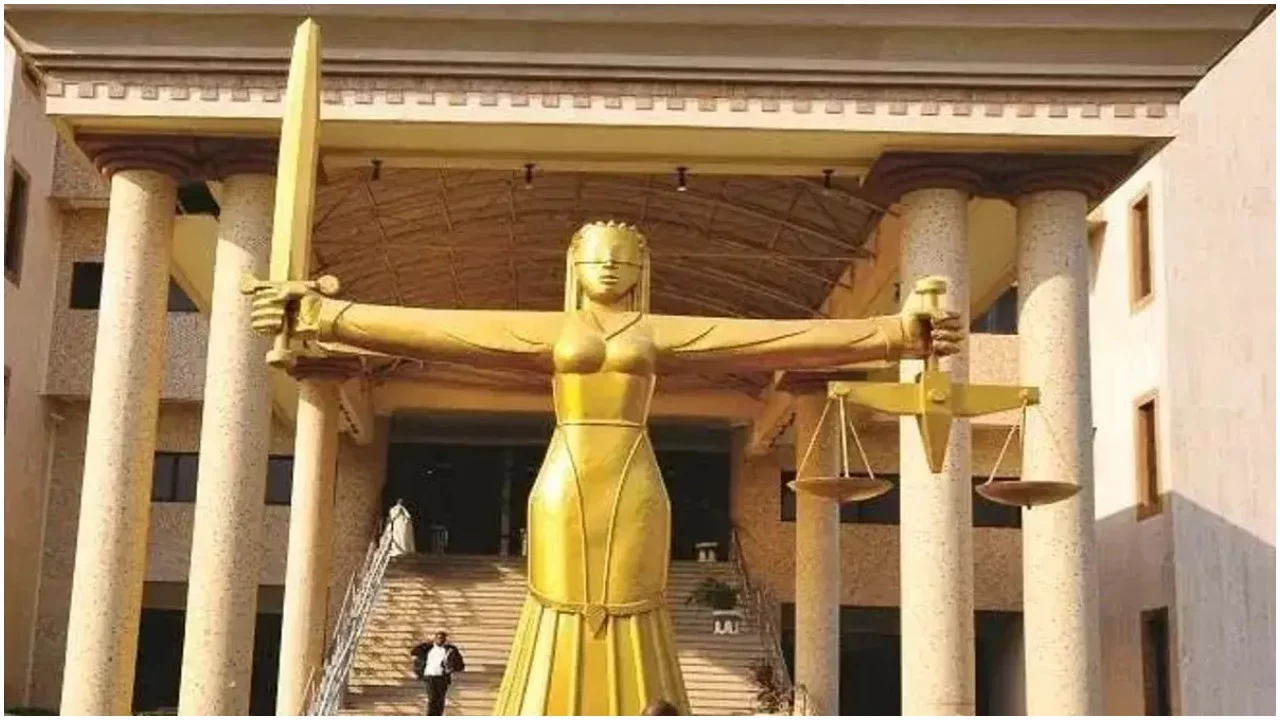
The Abuja Division of the Court of Appeal has reserved judgement in two separate appeals over the timetable for the conduct of the 2027 elections released by the Independent National Electoral Commission, INEC.
Justice Adebukola Bankole, who led the panel that heard the appeals, reserved judgement in the the cases.
The judge said the date of the judgement will be communicated to parties in the appeal
Two political parties, Youth Party of Nigeria, YPN, and Social Democratic Party, SDP, had approached the Federal High Court in Abuja, to nullify the timetable released for the elections by INEC.
While Justice Mohammed Umar granted the reliefs sought in the suit by YPN and nullified the election guidelines released by INEC, Justice James Omotosho, in the suit filed by SDP, granted some reliefs in favour of the party and some others in favour of the electoral umpire.
Not satisfied by the two judgments, INEC approached the Court of Appeal to set aside the judgments of Justice Umar and parts of the judgement of Justice Omotosho which limits its power regarding the elections.
Dr Alex Izinyon, SAN, led two other SANs from INEC to argue the appeals.
Izinyon in his submission before the court contended that INEC has the power as provided by the law under the provisions of the 1999 Constitution and the Electoral Act to issue guidelines.
Izinyon said, “The Constitution, specifically, empowered INEC to organize, supervise and undertake elections and other political activities as provided and that the timetable provided is in consonance with the power donated by the 1999 Constitution and the enabling act for INEC to do what it did in issuing elections timetables.
“The trial court erred in law because it failed to interpret, using the Supreme Court authorities and Court of Appeal decisions on the power already donated by the 1999 Constitution to INEC to arrange for elections including pre-election matters.
“Supreme Court and Court of Appeal have held that INEC has the power to organize and supervise elections and this include timetable for elections to carry out political activities preceeding the elections.
“The trial court failed to give effect to the phrase “not later than 120days and not more than 90days”, which was a subject of contention at the trial court and that not less than 120 days means it should not be more than but it can be less than but for the court to say that it must be exactly 120days, was too mathematical and not the intendment of the lawmakers as any of the activities can be done before the 120days and not more than. For the trial court to say it must be exactly 120 days is a mechanical application of the statue which is contrary to the decisions of the apex court and the Court of Appeal.”
He said the same goes for the 90 days provisions adding that the reliefs sought by the respondent at the trial court were declarative in nature. “There was no evidence by way of affidavit to show that they have commenced any primary or taken steps or that they have suffered any injury. Therefore the Court ought not to have granted any relief.
“The second appeal was filed by SDP in a judgement delivered by Justice James Omotosho, who granted some reliefs to the SDP and granted some also to the INEC.
“INEC appealed part of the judgement in that case which limits their powers by saying that the days were short by few numbers of days that INEC should go back and rectify this,” Izinyon added.
Before the main appeal was argued, Izinyon moved three applications, one of which urged the court to close the door against YPN on the ground that the party failed to file its respondent brief after service of the appellant briefs on them five days.
He argued that the court should hold that they have no written briefs in opposition to the appellants briefs as they are prohibited by paragraph 13 of the practice direction of the pre-election proceedings issued by the President of the Court of Appeal, which states that no time shall be extended for default under the same paragraph.
YPN counsel, Akinwale Irokosun, when asked by the panel if the party filed any response to the motion, answered in the negative.
The lead counsel later moved his application and the court reserved ruling to be delivered alongside the main appeal.
In the second motion the YPN counsel prayed the court for an extension of time to file the respondent brief out of time but the application was opposed by the INEC lead counsel, Izinyon, on the ground that there is no extension of time to file respondent brief when the time provided by the rules has elapsed.
Izinyon cited a plethoria of Supreme Court and Court of Appeal cases to back his argument, that no discretion can be exercised in that regard once you fail to file respondent brief.
He said the third motion was an application that the purported brief was filed after they had received notice of hearing of the appellant brief saying that the motion was incompetent because there is no time that can be extended for them to file their brief.
According to him, the brief was incompetent because it was filed put of the five days period.
“The brief was more than the lawfully required 25-page limit provided by the rules as it was 37 pages,” Izinyon said.
dailypost.ng


Man Utd Make Summerville Leading Transfer Target After Mateus Fernandes Blow

Mateus Fernandes Undergoing Medical at Hotspur Way

All Completed Tottenham Transfers in 2026/27

Simi Sanya and Femi Dapson Are Now Legally Married and It Is Beautiful to See

FCT Area Council Election: Live results from polling units

Premier League Set-Piece Goals (2025/2026)
-
 Sports1 day ago
Kevin Pietersen Causes Stir With Tweet About His International Cricket Retirement
-
 Sports1 day ago
Virgil van Dijk Slammed For Comments After Netherlands’ World Cup Exit v Morocco
-
 Sports1 day ago
Carlo Ancelotti Explains Why He Didn’t Celebrate Brazil’s Winner v Japan
-
 Sports1 day ago
Zlatan Ibrahimovic Blames Netherlands’ Shock World Cup Exit on Ronald Koeman
-
 Sports1 day ago
Leon Goretzka Slammed For Not Taking Penalty in Germany vs Paraguay
-
 Sports1 day ago
Virgil van Dijk Blasted For Not Taking a Penalty in Netherlands’ World Cup Exit v Morocco
-
 Sports2 days ago
FIFA Make Decision on Investigating 2026 World Cup ‘Match-Fixing’
-
 Sports19 hours ago
Diego Maradona Slammed New FIFA and USA World Cup Rule in 2018