
Politics
Vote Buying: Why we’ve not charged those arrested in Anambra to court – INEC

… says poor telecommunication service hinder speedy upload of results
By Ikechukwu Nnochiri
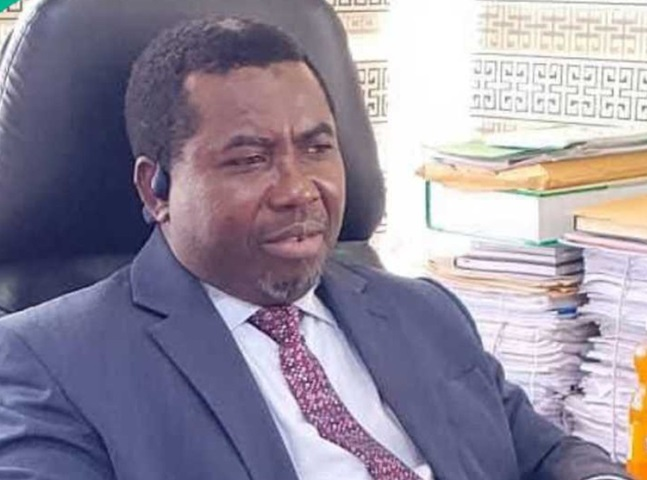
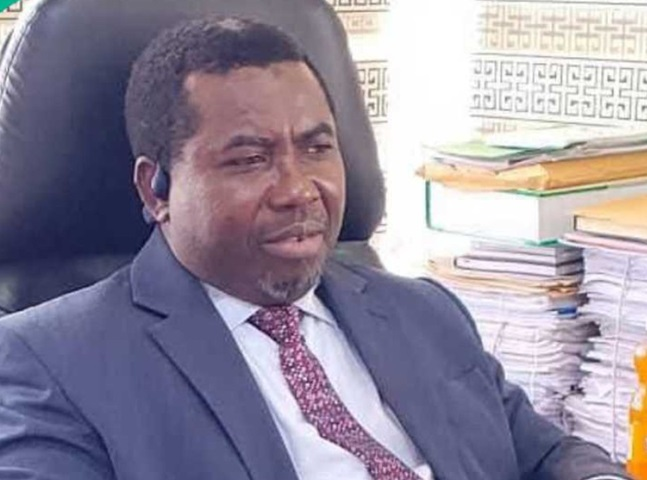
ABUJA–The Chairman of the Independent National Electoral Commission, INEC, Prof. Joash Amupitan, SAN, on Thursday, gave reasons why those that were arrested for engaging in vote-buying during the recent governorship election in Anambra state, have not been charged to court.
According to him, whereas the INEC is statutorily empowered to prosecute electoral offenders, however, security agencies that carried out the arrests have not submitted their investigation reports to the Commission.
Amupitan, SAN, who made the revelation at a Stakeholders’ Forum on Elections, organised by the Nigeria Civil Society Situation Room, said the electoral body have been liaising with the relevant agencies to secure the reports.
He said: “I am happy to know that you are aware that some people were arrested, and people are saying, what have you done?
“We are reaching to the police. We are reaching to EFCC. We are reaching to all the other agencies. We will need reports on the investigations conducted in respect of those people that were arrested.
“Because the power of INEC is to prosecute, not to arrest. We don’t have that capacity for now.
“We are liaising with the law engineering agencies to ensure that those that were arrested will have their day in court.”
The INEC boss maintained that to secure democracy, technological integrity must be matched by political accountability.
“We recognise that vote-buying and financial inducement derail the will of the people. To combat this, we have intensified our collaboration with law enforcement agencies through the Inter-Agency Consultative Committee on Election Security (ICCES).
“The strategic deployment of security personnel and covert intelligence operations at election centres is designed to protect voters from intimidation and resist inducement.
“This is a multi-sectoral fight that requires collective resolve. Civil Society Organisations must play their part decisively to hold all stakeholders, including political parties, to account,” he added.
He decried that poor telecommunication network remained INEC’s “formidable obstacle” in its effort to achieve real-time upload of election results from the 176, 000 polling polling units in the country, some of which are located in remote areas.
“Achieving real-time upload of results to IREV remains one of our toughest operational battles. As I have stated above, a tool like BVAS is only as good as the network it runs.
“We are therefore committed to continuous engagement with the Nigerian Communication Commission, NCC, and the network providers, while actively exploring the alternative technologies, improving on the existing one, and building a system.
“I am building system redundancy to bridge these gaps. I want to share about our experience in Anambra. Before the Anambra election, we had a mock accreditation and the essence of the mock accreditation was to test technology, because whether we like it or not, in whatever electoral process, technology plays a very, very important role.
“Now, some people were on the field, and we picked out some polling units in some local governments, and we were in the situation room as this, monitoring what was happening.
“So, they were doing accreditation on the field, in particular polling units. We noticed that the presiding officer would tell us that they have accredited 20, but you are still seeing 11. So, we were working on a situation where, as you were doing the accreditation, automatically the BVAS would upload.
“Now, some were working well, others were not working well. We now had to interrogate. Number one, we discovered that one of the presiding officers, the network was bad in that area. It was what’s epileptic. So, it was not uploading as they were accrediting and in another place, we discovered that a presiding officer we had even trained for the election, could not upload.
“So, we just had to find a way, trying to test just to be sure that on the election day, we do not have such an issue. It is important to note that in as much as there is technology, our infrastructure are still not 100% the way we desire it. We rely on service providers, secondary service providers.
“We are looking forward to when INEC will, on its own, be able to have its own services, so that you don’t even need to rely on anybody.
“Somebody told me, on the day of election, what if a powerful politician just decide to ask one of the service provider to switch off its services, just for one day. So, do we have control over it?
“In as much as we desire, we are going to do everything to improve on what we find on ground.
“But those are some of the challenges which we have to bring to fore. Even with technology, we must collectively confront persistent low turnout that threatens the very legitimacy of our democracy.”
While emphasizing the need for a thorough clean up of the existing voters register, Amupitan said the Commission has recorded a nationwide total of 2,685,725 fresh registration of voters.
“Of this figure, 1,576,137 individuals completed the online pre-registration, while 1,109,588 finalised their registration through physical capture. This mobilisation is a testament to the rising political awareness, and we commend the states leading the charge: Osun State firmly maintains its lead with 208,357 registered voters. It is closely followed by Kano (159,669), Sokoto (152,650), and Imo (145,561).
“States like Borno (123,835) and Lagos (123,484) also reflect this impressive mobilisation of citizens,” he added.
In his remarks, the Executive Director of Policy & Legal Advocacy Center, PLAC, Mr. Clement Nwankwo, cautioned against what he described as the shrinking of political spaces in the country, warning that “our political parties are dying.”
“We must have plurality in this country,” Nwankwo added, insisting the current movement of politicians into one political party, ahead of the 2027 general elections, was not in the best interest of the nation.
The post Vote Buying: Why we’ve not charged those arrested in Anambra to court – INEC appeared first on Vanguard News.
www.vanguardngr.com

Kaduna State Governor, Senator Uba Sani, has urged politicians to refrain from politicising judicial decisions, saying the presidential candidate of the Nigeria Democratic Congress (NDC), Peter Obi, was among those who had benefited from court rulings in the past.
Speaking during an exclusive interview with ARISE NEWS on Tuesday, Sani reacted to concerns surrounding the Federal High Court’s ruling affecting the registration of the NDC, stressing that confidence in the judiciary remained critical to the survival of Nigeria’s democracy.
The governor said politicians should not applaud the courts when judgments favour them and condemn the judiciary whenever decisions go against their interests.
“For some of us that believe in democracy, rule of law, judiciary, we believe we have to be very careful. Politicizing every judicial issue is not healthy for us,” he said.
Recalling Obi’s political history, Sani noted that the former Anambra State governor had secured his mandate through a landmark judicial pronouncement.
“Because many actors that are involved, they were also beneficiaries of some judicial decisions in this country. Whether the leader of NDC himself—I mean the presidential candidate, Peter Obi—remember he was also someone that benefited from a very strong judicial pronouncement when he was governor.
“When it favors politicians, they feel the judiciary is the best place to go. When it goes against them, they feel the judiciary is the worst place to go,” he added.
While acknowledging that no judicial system is perfect, the governor insisted that democrats must continue to place their trust in the courts and other democratic institutions.
“You have to understand, if you’re a democrat, believe in the system. Believe in our judiciary. I have no doubt in my mind. Our judiciary is not perfect. Neither is it perfect anywhere in the world. But in any case, can we have faith in the system?” he said.
Sani also dismissed allegations that the ruling All Progressives Congress (APC) or President Bola Tinubu’s administration was behind the internal challenges confronting opposition parties.
“What is the evidence that the ruling party is involved in what is happening to them? If you ask me, sincerely speaking, it’s simply because they are only jumping from one party to another looking for just a platform to contest the election. They are not organised,” he said.
According to the governor, the recurring crises within opposition parties stem from disagreements over presidential ambitions and power-sharing arrangements rather than external interference.
He argued that political parties built solely as vehicles for elections, instead of on shared ideology, would continue to struggle to remain united.
www.vanguardngr.com

The Independent National Electoral Commission (INEC) says nine registered political parties have collected access codes to upload their candidates’ particulars for the presidential and National Assembly elections ahead of the 2027 general elections.
The INEC National Commissioner in charge of Voter Education and Publicity, Malam Mohammed Haruna, made this known to the News Agency of Nigeria (NAN) on Tuesday in Abuja.
”As of close of work on Monday, nine politicians have collected the access code for the national elections,” he said.
According to Haruna, the nine political parties are Accord (A), Action Alliance (AA), African Democratic Congress (ADC), All Progressives Congress (APC), Labour Party (LP), National Democratic Congress (NDC), National Democratic Party (NDP), Peoples Redemption Party (PRP), and Social Democratic Party (SDP),” he said.
He explained that it was the responsibility of the political parties participating in an election to approach the commission to collect the code, rather than INEC taking it to individual party secretariats.
Haruna added that anyone seeking to collect the code on behalf of a political party must present an authorisation letter from the leadership of the party.
He noted that INEC has issued guidelines for candidate nomination; the national commissioner advised political parties to adhere strictly to the rules, adding that party officials had already been trained by the commission.
Haruna also cautioned political parties against waiting until the last minute before completing and submitting their nomination forms online.
“INEC has been generous by extending the deadline from the close of work to midnight of the deadline date. If any political party decides to wait until the deadline, INEC cannot be blamed for that,” Haruna said.
NAN reports that INEC fixed June 27 to July 11 for political parties to submit nomination forms for the presidential and National Assembly candidates through its designated candidate nomination portal.
NAN also reports that according to the INEC timetable and schedules of activities for the 2027 general election, the submission of nomination forms for the governorship and State Assembly nomination is scheduled from July 18 to Aug 8. (NAN)
www.vanguardngr.com

By Nwafor Sunday Polycarp, Online News Editor
ABUJA — The African Democratic Congress (ADC) and the Nigeria Democratic Congress (NDC) have confirmed the submission of their presidential tickets to the Independent National Electoral Commission (INEC) nomination portal ahead of the 2027 general election.
ADC National Publicity Secretary, Bolaji Abdullahi, announced on Wednesday that the party had successfully uploaded the names and particulars of its presidential candidate, Atiku Abubakar, and vice-presidential candidate, Rotimi Amaechi.
In a post on his X handle, Abdullahi described the submission as another milestone in the party’s preparations for the 2027 elections.
“We are pleased to announce that we have successfully uploaded the names and particulars of the African Democratic Congress (ADC) Presidential Candidate, Atiku Abubakar (GCON), and our Vice Presidential Candidate, Rotimi Amaechi (CON), to the nomination portal of INEC.
“This marks another important step in our preparations for the 2027 general election and our commitment to offer Nigerians a credible alternative built on competence, unity, and national renewal,” he said.
Similarly, the presidential candidate of the Nigeria Democratic Congress (NDC), Peter Obi, disclosed that he had completed his INEC nomination form, using the occasion to call for greater transparency in the electoral process and a renewed focus on governance.
In a post on his Facebook page, Obi said one of the questions on the nomination form, asking whether an aspirant had ever been adjudged a lunatic or declared to be of unsound mind, prompted him to reflect on the state of leadership in Nigeria.
According to him, the country’s worsening insecurity, widespread hunger and alleged diversion of public funds should be treated as national emergencies rather than allowing politics to dominate public discourse.
“When Nigerians, including children and security personnel, are being abducted into the bushes, citizens cannot travel safely on our highways, several million Nigerians are uncertain where their next meal will come from, and several billions are being siphoned frivolously through non-existent agencies and projects, should politics really be our primary preoccupation?” he asked.
Obi said a “sound-minded leadership” would mobilise all relevant institutions and stakeholders to confront the country’s challenges with urgency.
He also drew attention to another question in the nomination form asking whether a candidate had ever presented a forged certificate to INEC.
The former Anambra State governor urged the electoral commission to publish the academic credentials submitted by all candidates seeking elective offices to strengthen public confidence in the electoral process.
“Transparency strengthens democracy and builds public trust. Nigeria’s problems are too serious for politics as usual. It is time for leadership defined by competence, character, capacity, compassion and commitment to service,” Obi stated.
Meanwhile, NDC vice-presidential candidate, Rabiu Musa Kwankwaso, also confirmed that his nomination had been successfully uploaded to the INEC portal.
In a post on his X handle, Kwankwaso disclosed that the party’s National Leader, Henry Seriake Dickson, visited him at his Abuja residence, where they reviewed preparations for the 2027 elections.
Kwankwaso said he briefed Dickson on his consultations across the North-West, which he described as productive and encouraging.
“I took the opportunity to brief him on the highly productive engagements and consultations I have undertaken across the North West states, which have yielded very encouraging results,” he said.
According to Kwankwaso, Dickson confirmed the successful submission of his candidacy and announced that his name had been uploaded to the INEC portal as the NDC’s vice-presidential candidate alongside Obi.
“HE Dickson confirmed the successful submission of my candidacy and also announced that my name has been duly uploaded on the INEC portal as the Vice Presidential candidate to His Excellency Peter Obi on the platform of our party.
“We remain steadfast, united, and fully focused on the mission ahead,” Kwankwaso stated.
The announcements by the ADC and NDC come as political parties intensify preparations and conclude candidate nominations in line with INEC’s timetable for the 2027 general election.
www.vanguardngr.com

NDC deregistration: Peter Obi once benefitted from judicial decisions — Gov Sani

Arsenal Eyeing Former Leeds Goalkeeper Illan Meslier

Serena Williams Slammed For Actions After Losing to Maya Joint

Simi Sanya and Femi Dapson Are Now Legally Married and It Is Beautiful to See

FCT Area Council Election: Live results from polling units

Premier League Set-Piece Goals (2025/2026)
-
 Sports1 day ago
Kevin Pietersen Causes Stir With Tweet About His International Cricket Retirement
-
 Sports1 day ago
Virgil van Dijk Slammed For Comments After Netherlands’ World Cup Exit v Morocco
-
 Sports24 hours ago
Carlo Ancelotti Explains Why He Didn’t Celebrate Brazil’s Winner v Japan
-
 Sports1 day ago
Zlatan Ibrahimovic Blames Netherlands’ Shock World Cup Exit on Ronald Koeman
-
 Sports19 hours ago
Leon Goretzka Slammed For Not Taking Penalty in Germany vs Paraguay
-
 Sports22 hours ago
Virgil van Dijk Blasted For Not Taking a Penalty in Netherlands’ World Cup Exit v Morocco
-
 Sports2 days ago
Roger Federer Names His Top 5 Tennis Players of All Time
-
 Sports2 days ago
How Much Emma Raducanu Will Earn Despite Withdrawing Through Injury