
Sports
Ecuador International Mario Pineida Killed in Attack Aged 33

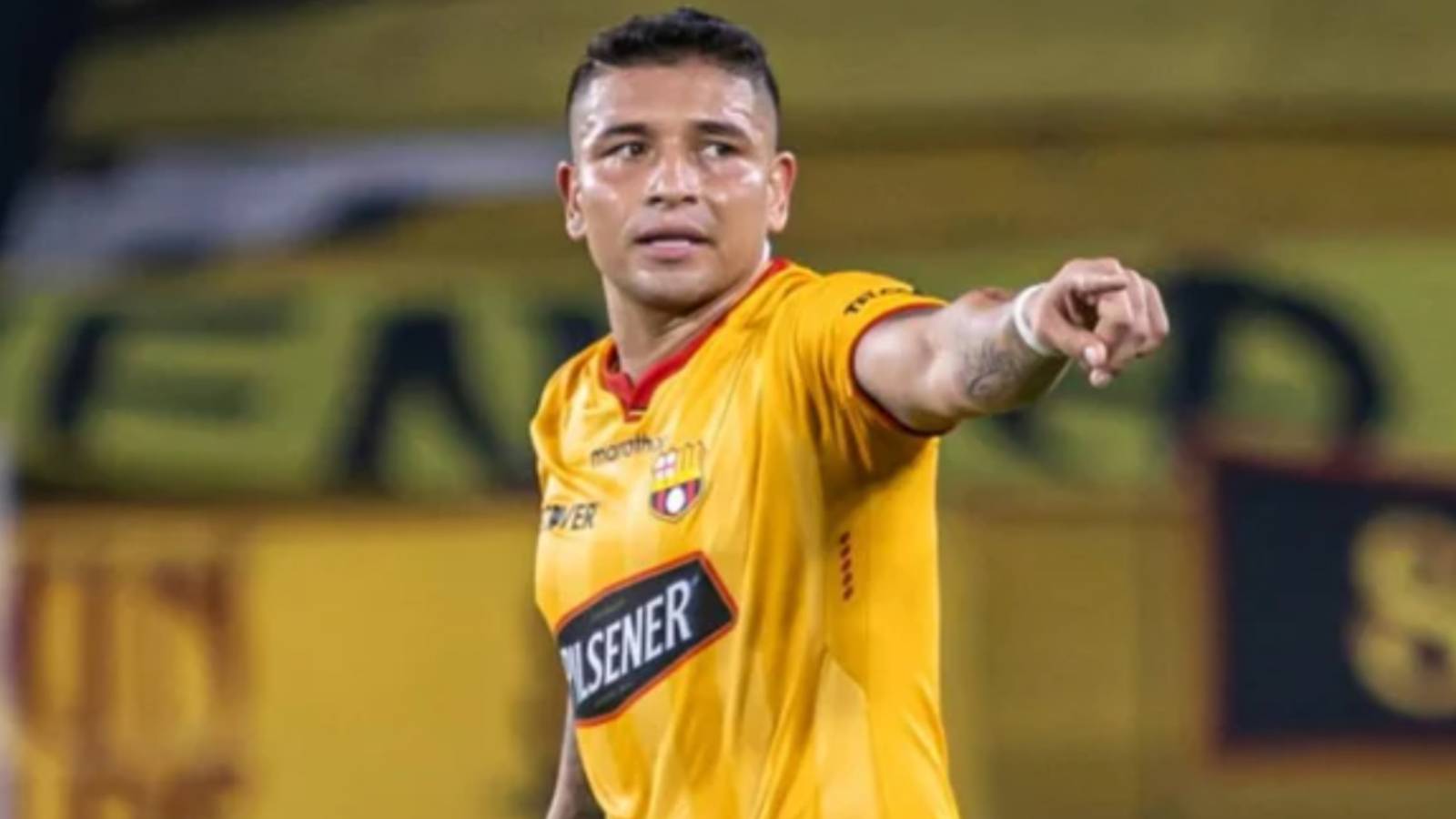
Brazilian side Fluminense have released a statement following the tragic passing of their former player Mario Pineida, aged just 33. The Ecuadorian left-back, who most recently played for Barcelona SC in his home country, was murdered on Wednesday in Guayaquil, according to local press reports.
Pineida played for the Brazilian giants on loan in 2022, a season in which he won the Rio de Janeiro state championship. He began his professional career at Independiente del Valle, where he played from 2010 to 2015, before moving to Guayaquil-based Barcelona SC in 2016, winning two league titles with the club across six years. He also made nine appearances for the national team.
Police said another unidentified person was also killed in the incident, while a third individual was wounded during the attack on Wednesday afternoon. This comes after it was revealed that Ecuador is expected to have its most violent year on record with more than 9,000 homicides, according to the Ecuadorian Observatory of Organized Crime, as per The Independent.

Fluminense expressed its condolences on social media regarding the player’s passing. In a statement, they wrote (see the full post below): “Fluminense Football Club received with deep sorrow the news of the passing of Mario Pineida, an athlete who defended the club in 2022.
“Pineida arrived at the Tricolor at the beginning of the season in which we were crowned together as Carioca champions. Fluminense extends solidarity to his family and friends.”
Barcelona SC also wrote on social media, as they posted (see the full post below): “Barcelona Sporting Club informs, with deep sorrow, that it has been officially notified of the death of our player, Mario Pineida, which occurred following an attack against him. This regrettable news has deeply saddened all of us who are part of the institution, and grieves us as a Barcelona family.
“In the coming hours, we will provide timely information regarding the events that will be held in his memory. For now, we ask our members, fans, and the public to offer a prayer for the repose of his soul and for strength for his entire family in this moment of immense sorrow.”
Details of Pineida’s Murder Emerge
Ecuadorian media reported the incident took place in the region of Samanes in the north end of Guayaquil, which lies 265 kilometers (165 miles) southwest of the capital Quito. According to the website “Ecuavisa”, as per Globo, local police reported that Pineida was shot in front of a butcher shop in the Sanales neighborhood, and that the player’s wife was also killed in the attack. Pineida’s mother, who was with the couple, was injured.
Pineida was murdered just hours after the president of Barcelona de Guayaquil, Antonio Alvarez, revealed that the player had requested special protection, claiming he was receiving death threats. The Ecuadorian club’s squad had decided not to train on Wednesday morning in protest over four months of unpaid wages.
According to local press, Ecuadorian football is experiencing a wave of attacks against players, with at least three other deaths: Maicol Valencia and Leandro Yepez, both from Exapromo Costa, in the second division, on September 8th, and Jonathan Gonzalez, former player for Independiente del Valle and LDU, on the 20th of the same month. In November, Miguel Nazareno, 16, a youth player for Del Valle, was found dead in his home.

Football in the VAR era has conjured up more than a few controversies, with the 2026 World Cup providing no exception. But for the most part, co-hosts the United States had managed to sidestep any unwanted technological interventions — until their knockout fixture against Bosnia-Herzegovina.
The in-form USMNT striker Folarin Balogun was sent off after a video review during his team’s Last 32 match. But stranger still was the nature of the red card’s reversal. Under Article 27 of FIFA’s Disciplinary Code, Balogun was spared the pain of a one-match suspension during the tournament despite the red card.
The ruling has been utilised similarly in the World Cup before, but how does it prevent a punished player from serving their suspension?

Alexi Lalas’ Lionel Messi Tweet Goes Viral After Folarin Balogun Red Card For USA vs Bosnia
Outspoken World Cup pundit Alexi Lalas posted a tweet involving Messi after USMNT star Balogun was sent off against Bosnia
What Happened With Folarin Balogun?

The former England U21 striker was sent off for an accidental, but dangerous challenge on Bosnia-Herzegovina defender Tarik Muharemovic. Balogun had earlier scored the first goal in what would be the USA’s 2-0 Last 32 victory.
Referee Raphael Claus had not even awarded a free kick for Balogun’s challenge despite standing just a few yards away from the incident. But after being advised to review the incident by the video assistant referee, slow-motion replays showed Balogun’s foot landing high on the ankle of the Bosnian defender. The USA international was shown a straight red card in a decision that was widely criticised.
What is the FIFA Rule That Allows Red Cards to Be Suspended?

Article 27 of FIFA’s Disciplinary Code has been the subject of close attention in light of Balogun’s red card. The code does not allow appeals against straight red cards, with US Soccer representatives confirming this after the game when questioned about a possible appeal.
However, FIFA decided to enact Article 27 in the context of Balogun’s red card, rescinding it and therefore making him available for the Last 16 tie against Belgium.
Section 1 of Article 27 states that FIFA’s judicial committee has the power to “fully or partially suspend the implementation of a disciplinary measure.” However, the red card will stay on the Monaco forward’s record for a probationary period of one year, as stated in Section 2 of Article 27.
“By suspending the implementation of the sanction, the judicial body subjects the person sanctioned to a probationary period of one to four years.” Essentially, if Balogun commits another similar violation, he will serve his one-match ban.
FIFA Article 27 in Full
- The judicial body may decide to fully or partially suspend the implementation of a disciplinary measure.
- By suspending the implementation of the sanction, the judicial body subjects the person sanctioned to a probationary period of one to four years.
- If the person benefiting from a suspended sanction commits another infringement of a similar nature and gravity during the probationary period, the suspension shall be revoked by the judicial body and the sanction enforced without prejudice to any additional sanction imposed for the new infringement.
- Disciplinary measures relating to match manipulation cannot be suspended.
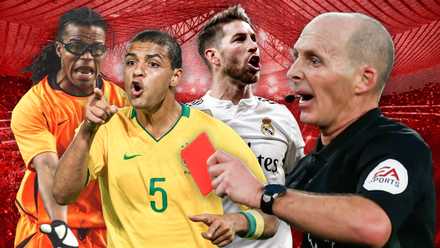
15 Players with the Most Red Cards in Football History
The 15 players with the most red cards in football history have been named and ordered with Sergio Ramos second.
Has Article 27 Been Used Before?

Interestingly, Article 27 has already played a major role in the 2026 World Cup. Cristiano Ronaldo was sent off in a World Cup qualifier against the Republic of Ireland in November 2025 that resulted in a three-match ban. This would’ve ensured that he missed the first two group games of Portugal’s tournament.
However, FIFA used the ruling to reduce the ban to one match, which he served in another qualifier against Armenia. This allowed Ronaldo to participate in the group games against the DR Congo and Uzbekistan, with the 41-year-old scoring twice against the latter.
Perhaps more controversially, Brazilian great Garrincha was permitted to play in the 1962 World Cup Final despite receiving a red card in the preceding game. Garrincha was sent off against Chile in the semifinal but no suspension was enforced. Brazil would go on to defeat Czechoslovakia 3-1 in the final.
Did Donald Trump Play a Role in Balogun’s Red Card Suspension?

Considering his nation are co-hosts and performing impressively in the World Cup, the US President has been unusually quiet on social media. However, that all changed with one post following the cancellation of Balogun’s suspension.
This post came after Trump reportedly made calls to FIFA, asking for Balogun’s ban to be lifted. There were further reports following Trump’s social media post that the White House World Cup taskforce had brought a challenge against Balogun’s suspension, specifically citing the use of slow-motion replays to support VAR decisions. Beyond the debate around Article 27, the knock-on effect of this appeal could lead to further legal challenges against professional football’s disciplinary approach.
The United States’ next opponents, Belgium, were understandably vexed by the decision. In a damning statement, the Royal Belgium Football Association (RBFA) were “astonished” by FIFA’s decision-making, accusing them of contradicting their own rules and regulations.
“In order to safeguard the legitimate rights of all participating teams and to protect the fundamental principles of fair play in our sport, both at this World Cup and at future editions of the tournament, the Belgian FA is investigating all potential options,” the RBFA concluded.
Klopp’s Comments After ‘Trump Asked Infantino to Revoke Balogun’s Red Card’ Go Viral
Klopp has reacted to the news.

In what was an absolutely engrossing encounter, Norway have knocked Brazil out of the World Cup. Erling Haaland stole the show with two goals in the 2-1 victory, but there were plenty of other talking points as well.
The Manchester City forward rose highest to head in the opener after 79 minutes, before then essentially putting the game to bed with a stunning strike to make it 2-0 in the 90th minute. From here, Brazil substitute Neymar would net a late penalty, but this wasn’t enough to keep his team in the tournament.
In the dying stages of the game, Norway put on a masterclass in keeping the ball away from their opponents, with Arsenal star Martin Odegaard dancing around the pitch. Usually the one pulling off the tricks, Neymar took issue with the midfielder and they were involved in a little coming together late on.
Neymar Loses it With Odegaard During World Cup Defeat
Numerous clips have gained traction online, showing Odegaard and his teammates keeping possesion with great technical skill, while the Brazilian players failing to win the ball back. In an act of both frustration and desperation, Neymar then brought the Arsenal ace down with a cynical foul.
Shortly after the resulting free-kick, the pair clashed once again, with Neymar shoving the Norway captain in the chest, prompting a number of other players to rush to get involved in the minor melee. The Brazilian was then booked. Watch the footage below:
Neymar did get on the scoresheet for Brazil, but his tempered even flared up in that moment as well, as he had a verbal spat with Norweigan goalkeeper Orjan Nyland before scoring his penalty. Despite the antagonisation, Odegaard and his teammates did well to keep their cool and have the last laugh as they won the game to set up a quarter-final encounter against England.
World Cup: Sepp Blatter Makes Feelings Clear After FIFA Suspend Balogun’s Red Card
FIFA’s decision to suspend USMNT star Folarin Balogun’s one-game ban has sparked outrage, and now Sepp Blatter has given his strong views.
Neymar Waited For Odegaard As Norway Captain Speaks Out
As the full-time whistle was blown, Neymar was seen bursting into tears with this almost certainly his final shot at World Cup glory. Now aged 34, he may also never play for Brazil again.
In fairness to the Santos star, however, having calmed down a little, he then showed good sportsmanship as he was seen waiting for Odegaard to pull out of a hug with teammate Sander Berge. He then embraced the Premier League-winning midfielder as the pair appeared to make amends while sharing a quick conversation.
It’s unclear what exactly was said between the two stars, but Odegaard has commented more generally on his little spat with Neymar, revealing to the press how he really felt about the Brazilian after full-time:
“Yes, it got a little awkward. But there was a good atmosphere afterwards. So it ended well.”
Brazil have now failed to win the World Cup since 2002, with 2026 marking the Selecao’s sixth consecutive tournament without lifting the trophy. Norway will hope to make positive headlines again when they now take on the Three Lions on 11 July.

Erling Haaland is universally recognised as one of the most physically impressive footballers on the planet, and it plays a key role in his consistent success.
His game is built on power, movement and physicality, and it directly enhances his ability to score goals at a freakish rate, and it’s even more impressive that he stands extremely tall at 1.95m.
It makes him a defender’s worst nightmare, and it’s the reason why he sits among the best players on the planet. But just how fast is Haaland? And how does he compare to other footballers and other athletes?
How Fast Is Erling Haaland?

We know he’s fast, but just how fast is his total speed? According to UEFA, his career high speed came in the Champions League 2024/25 season, with 36.9 km/h.
Typically, players never record their top speed on the pitch. This is because it occurs during 30–40m of clean acceleration and most match sprints don’t tend to exceed 20m, according to multiple sources.
Most top speeds recorded are when there are unobstructed transition moments, usually on the counter-attack or something that resembles a track sprinter’s runway and football has too many variables.
It means Haaland’s genuine top-end speed is likely higher than any figure we’ve actually seen recorded.

Haaland’s pure power and pace puts him within the elite bracket of players. However, he isn’t at the summit of the fastest players. With technology getting increasingly better over time, the last decade has given us detailed and accurate comparisons.
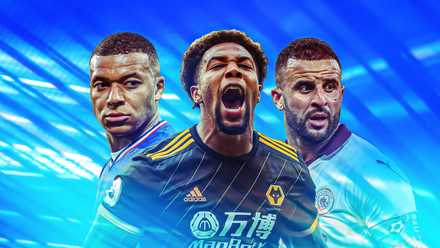
Speeds that have been recorded faster than Haaland’s 36.9 km/h include a handful of players. In the Premier League, five players hit a quicker figure. Anthony Elanga (36.91), Chiedozie Ogbene (36.93), Jackson Tchatchoua (37.30), Kyle Walker (37.31) and Micky van den Ven took the top spot with an incredible 37.38 km/h.
At the top of the list is Kylian Mbappé with 38.00 km/h, who achieved it against Monaco whilst playing for Paris Saint-Germain. There are other so-called recorded figures, but they aren’t from reputable sources.
20 Fastest Players in Football History [Ranked]
From England’s Kyle Walker to the legendary Thierry Henry, here are the fastest footballers of all time.
How Does Haaland Compare to Other Athletes?

Whilst his speed on a football pitch is frightening, when it compares to other athletes, it is certainly put into perspective rather quickly. Other athletes to compare include American Football, Rugby Union, Rugby 7s and the Australian Football League.
Oleg Markov in the AFL and Tyreek Hill in the NFL both recorded 37.4 km/h (roughly 23.24 mph) in 2019 and 2016 respectively. Ahead of that are Jonny May and Louis Bielle-Biarrey in Rugby Union and Gary Rohan and Charlie Comben in the AFL — with all four registering 37.8 km/h.
The only two other fastest times are in Rugby 7s, with Perry Baker/Marcos Moneta scoring 40.3 km/h in the HSBC World Series. Sitting in second place is the fastest ever speed recorded on a rugby pitch by Carlin Isles at 41.4 km/h.
At the top of the tree is the fastest man ever recorded: Usain Bolt. His 100m world record in 2009 was measured at 44.72 km/h (27.8 mph), which is roughly eight km/h quicker than Haaland’s peak. That demonstrates the pure velocity that sprinters possess in comparison.
Erling Haaland International Goals for Norway
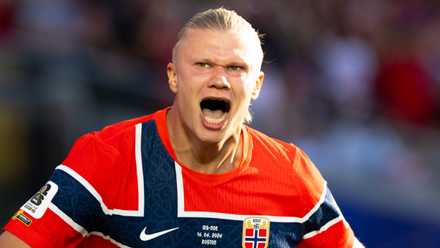
Erling Haaland is a goalscoring machine, becoming Norway’s all-time top goalscorer, but how has he managed to get there at such a young age?


Police apprehend newly initiated cultist, two others in Akwa Ibom
Article 27 of FIFA Disciplinary Code

Troops neutralize suspect linked to ex-Benue SSG Salifu’s killing

Simi Sanya and Femi Dapson Are Now Legally Married and It Is Beautiful to See

Premier League Set-Piece Goals (2025/2026)

FCT Area Council Election: Live results from polling units
-
 Sports17 hours ago
Neymar’s Comment to Norway Goalkeeper Orjan Nyland After Scoring Penalty
-
 Sports1 day ago
Mexico vs England Referee Already Made World Cup Blunder
-
 Sports2 days ago
Joe Hart Slams ‘Disgrace’ France vs Paraguay Referee
-
 Sports2 days ago
Vozinha Reveals What Lionel Messi Told Him After Argentina 3-2 Cape Verde
-
 Sports18 hours ago
Zlatan Ibrahimovic Causes Big Stir With Reaction to FIFA Suspending Folarin Balogun’s One-Game Ban
-
 Sports7 hours ago
Mexican Media Cast Verdict on England After Chaotic World Cup Win
-
 Sports19 hours ago
Mario Balotelli Names One Footballer Better Than Lionel Messi
-
 Sports8 hours ago
England Fans Praise ‘Animal’ Anthony Gordon vs Mexico