
Politics
INEC wades into PDP leadership crisis, summons factions

By Omeiza Ajayi – ABUJA
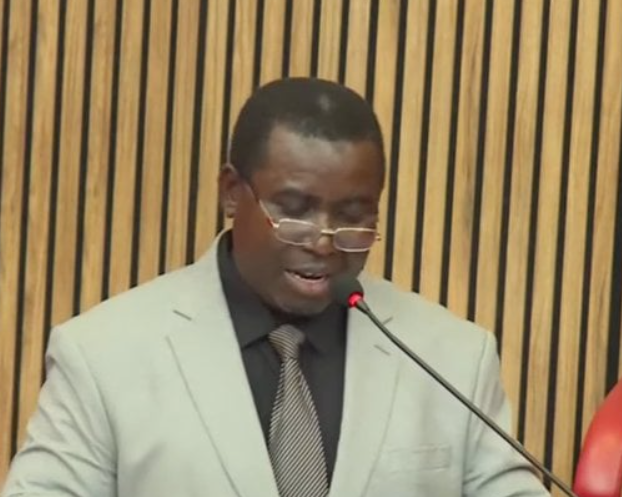
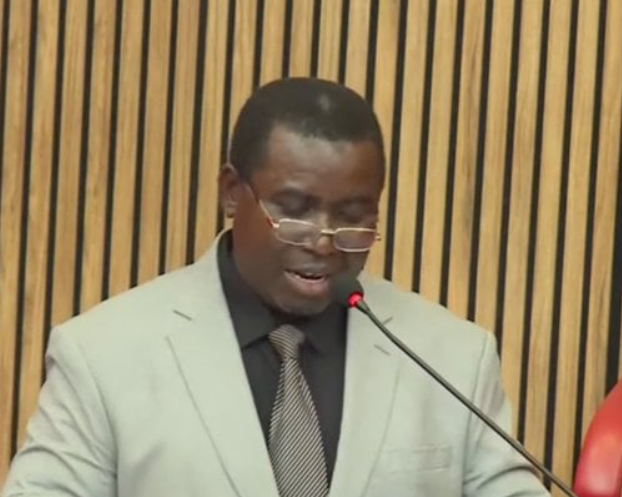
The Independent National Electoral Commission, INEC, has summoned the two warring factions of Peoples Democratic Party, PDP, for a troubleshooting meeting at the Commission’s headquarters in Abuja.
Read Also: PDP caretaker committee backed by Wike takes charge, dissolves 14 state executives
The meeting, which is currently underway, has the Tanimu Turaki-led faction and the Nyesom Wike-backed Abdulrahman Mohammed faction.
Some of those who accompanied Turaki are members of his National Working Committee, NWC, secretariat staff and former Governor Babangida Aliyu of Niger State.
Mohammed, on his part, was accompanied by members of his national caretaker committee, including the Secretary, Senator Sam Anyanwu.
Details later.
The post INEC wades into PDP leadership crisis, summons factions appeared first on Vanguard News.
www.vanguardngr.com

Imo State Chairman of the All Progressives Congress, APC, Austin Onyedebelu, has said that the party leadership in the State will fight like a wounded lion to ensure President Bola Ahmed Tinubu is reelected come 2027 presidential election.
Onyedebelu made the assertion during a stakeholders’ meeting between the State Working Committee of the party and officials of the APC drawn from the 9 LGAs and 105 wards of Owerri Zone.
The meeting was attended by the LGA party Executives, Ward Executives, elected LGA Chairmen, Councillors, and other party officials.
Addressing the gathering, the State Chairman stressed that unity remained the greatest weapon for electoral success.
He maintained that party members and the leadership must work together in ensuring overwhelming victories for Mr president and other candidates of the party in the State.
The APC Chairman warned party officials that they would be held accountable for the party’s performance in their respective areas.
“If you lose our votes we are going to hold you responsible. Don’t tell us why you failed after the election.
“Tell us now what will make you fail so we can address it. If there is anything or any leader that will sabotage our efforts, you must tell us now for us to address it,” he said.
Onyedebelu urged party faithful to rely solely on genuine grassroots mobilization rather than shortcuts, insisting that only real votes would guarantee victory.
He added that there is no other way to win elections than to count on real votes, and that the only way to achieve it is to remain united.
The State party boss cautioned against anti-party activities, reminding members that those who work against their own party would ultimately have nothing to gain.
“If you support the opposition to win against your party, when they begin to share the proceeds of victory, they will first reward their own party members before remembering you,” he added.
The State Chairman also described the 2027 general elections as a defining moment for Owerri Zone in its aspiration to produce the next Governor of Imo State.
Earlier in his opening remarks, the State Secretary of the party, Onyekachi Ibezim, explained that the purpose of the meeting was to enable the State Working Committee to interact directly with party executives at the LGA and Ward levels ahead of the 2027 electoral contest.
He noted that the officers constitute the engine room of the party at the grassroots and would be held responsible for the success of the party in the forthcoming general elections.
Responding on behalf of Owerri Zone, the State Vice Chairman for Owerri Zone, Justus Ogu, assured the State Working Committee that the zone would not disappoint the party.
He assured that the Zone will deliver APC from President down to the State House of Assembly members.
dailypost.ng

— Describes state police as a “child of necessity”
— Governors promise speedy approval
— As Ekiti governor promises 700,000 votes for Tinubu, reaches out to opposition
By Johnbosco Agbakwuru
ABUJA — The Senate Leader, Opeyemi Bamidele, on Wednesday said the National Assembly is working to prevent governors from abusing state police.
The Ekiti State Governor, Abiodun Oyebanji, also promised that the state will deliver about 700,000 votes to President Bola Tinubu in the 2027 elections.
The two spoke to State House correspondents after meeting with President Tinubu at the Presidential Villa, Abuja.
Fielding questions about fears that governors might use their position to abuse the state police, Senator Bamidele said mechanisms are being developed through a constitutional amendment to prevent or minimize any abuse.
On the concerns, he said: “There will always be fears and concerns, but whether the concerns are well-founded is another issue altogether, and we are not unmindful of them.
“They are legitimate concerns, but let me put it this way: even with the federal police, a governor who is the chief security officer in the state can still use the police in a way he deems possible, depending on how much the system allows manipulation.
“Most importantly, we are putting mechanisms in the law as we amend the constitution that would prevent or minimize instances of abuse by state governors.
“And as much as possible, I believe that not everything can go into the constitution, but what’s important at this point is that all the governors, or most of them, are on the same page with us.
“And that will be demonstrated by the speed with which the bill will receive concurrence in their state houses of assembly when we eventually transmit it. We all must know state police is a child of necessity.”
On opposition to the proposal, Senator Bamidele said it was no longer about political interests, adding, “All of us are on the same page that there’s a need for this.
“In the amendment to the Police Act that will follow, we will spell out more details — details that cannot possibly go into the constitution of the Federal Republic of Nigeria.”
Also speaking to journalists about the state’s disposition to the establishment of state police, Governor Oyebanji said the National Economic and Financial Council, comprising the 36 state governors, had met and that most governors had submitted their positions.
He said: “We are ready for state police, and we are grateful to the National Assembly for the constitutional amendments. We are waiting for them to be transmitted to the state houses of assembly.
“The governors have made up their minds that they will give it speedy approval so we can start implementing.”
The governor also spoke about his second-term victory in the recent gubernatorial election, attributing the win to the grace of God and the support of President Tinubu, which he said enabled him to deliver on his promises to the people.
“So these are the two factors that led to the result we saw two weeks ago,” he said.
Governor Oyebanji said he has reached out to the opposition candidates to build unity.
“I’m here with the chairman of the campaign council. The election ended when the winner was declared. I phoned the two other candidates and, with the chairman of the campaign council, we visited one of them and reached an understanding.
“Once I get back to Ekiti, I will visit the other one, and they’ve assured me of their cooperation, because the election and politics have ended and we must return to governance.
“I told them that I will need all of them — their wisdom, suggestions and advice — to ensure we continue to deliver to our people.”
On what he will do differently, the governor said: “I have my job cut out for me. We have a 30-year development plan that I’m following, and we will continue to implement it diligently.
“We are not going to do anything differently, because that 30-year development plan is the basis upon which our yearly budget is built and upon which the manifesto is crafted.”
Answering a question on the chances of the President winning the state in 2027, Governor Oyebanji said: “Well, it’s very bright. Let me paint a scenario: in 2022 when we first contested, we won with 187,000 votes; six months later, when the President ran, and I was a few months in office, we increased it to 210,000. This 2026 governorship election posted 318,000, so you can extrapolate and see that in 2027 a target of 600,000–700,000 is doable.”
www.vanguardngr.com

By Omeiza Ajayi, Abuja
Chairman of the Independent National Electoral Commission (INEC), Professor Joash Ojo Amupitan SAN, has declared that the era of ballot box snatching and manual manipulation of election results is gone, assuring Nigerians that current technological safeguards are robust enough to protect every vote cast in the 2027 general elections.
Amupitan made the declaration on Wednesday in Abuja when he received the Director General of the National Orientation Agency (NOA), Mallam Lanre Issa-Onilu, on a courtesy visit to INEC headquarters.
Both institutions used the occasion to deepen collaboration on voter education ahead of the 2027 polls.
The INEC chairman, who recalled that the presidential election is held on January 16 and governorship polls on February 6, 2027, said the commission must begin intensive civic engagement immediately, warning that voter apathy and disinformation remain dangerous threats to the integrity of the electoral process.
He said, “We need to teach them why their vote matters and how our new legal and technological safeguards protect their choices. We must look the rural farmer, the marketplace woman, and the disillusioned urban youth in the eye and explain to them, in the language they understand, that because of the current technological infrastructure, the era of snatching ballot boxes or rewriting results manually is gone.”
While acknowledging significant operational achievements recorded during the February 21 Federal Capital Territory FCT Area Council elections and the June 20 off-cycle Governorship election in Ekiti State — including over 90 per cent early opening of polling units, biometric authentication via the Bimodal Voter Accreditation System (BVAS), and swift result uploads to the INEC Result Viewing Portal IReV — the chairman said both polls exposed a troubling undercurrent of voter apathy and widespread confusion among urban voters over polling unit splits and registration transfers.
“This is a clear indicator that while our technology is moving forward, civic familiarity with the evolving system is lagging. It is a loud diagnostic signal that far more needs to be done in the area of intensive, deep-rooted voter education, and it proves that we cannot afford to wait until the eve of the 2027 polls to start talking to our people,” he said.
Amupitan stressed that INEC cannot build a robust democracy in isolation, noting that advanced technology alone means nothing without an informed electorate.
He said, “We can purchase the finest BVAS machines, we can optimise the IReV to international standards, and we can map out the most logistical routes for material deployment. But all of these technological and administrative triumphs mean nothing if the citizens remain detached, cynical, or completely uneducated about the power of their votes.”
Describing the NOA as Nigeria’s premier organisation for civic orientation and the visit as “a vital meeting of minds”, the INEC boss said the two institutions share a constitutional responsibility to educate Nigerians on democratic culture and must co-create a decentralised, grassroots voter education campaign that goes beyond telling people when to vote.
He called for joint campaigns against vote-buying and misinformation and urged that NOA field officers be equipped with accurate technical knowledge of INEC’s operations so they can serve as trusted community ambassadors ahead of the elections.
“Together, INEC and the NOA must rewrite this narrative. We need to co-create a decentralised, grassroots voter education campaign that goes beyond simply telling people when to vote,” Amupitan said, adding that the collaboration between both agencies is “not a secondary option; it is an absolute necessity.”
Welcoming the NOA DG’s leadership and his grasp of modern strategic communication, Amupitan said civic orientation in 2026 cannot rely on old, top-down bureaucratic methods, stressing that engagement must be digital, relational, and youth-focused.
He pledged the commission’s full institutional support for the partnership. “Our doors are wide open. We are ready to pool our resources, share our data, and give your teams all the institutional support required to make this collaboration a resounding success,” he said.
Earlier, Issa-Onilu stressed the necessity of collaborating with INEC, lamenting that the number of voters who come out on election days is dangerously low when compared to the number of registered voters.
“We are going into communities with our advocacy to the people.
“We both have in our hands civic education and voter education. We humbly seek support from INEC, which we are already having, but we believe it can be better. We need to increase the number of people who come out to vote. Those who come out to vote are very low compared to those on the register. We need to even let them know everything beyond the elections to ensure that Nigerians can keep track of cases in court,” he said.
www.vanguardngr.com


Residents stranded as flood washes away bridge in Oyo [PHOTOS]

Power failure costs Nigeria jobs, investments — APFFLON

Police arrest three over alleged abduction, murder of Kwara Polytechnic student

Simi Sanya and Femi Dapson Are Now Legally Married and It Is Beautiful to See

FCT Area Council Election: Live results from polling units

Premier League Set-Piece Goals (2025/2026)
-
 Sports2 days ago
Kevin Pietersen Causes Stir With Tweet About His International Cricket Retirement
-
 Sports2 days ago
Virgil van Dijk Slammed For Comments After Netherlands’ World Cup Exit v Morocco
-
 Sports2 days ago
Carlo Ancelotti Explains Why He Didn’t Celebrate Brazil’s Winner v Japan
-
 Sports2 days ago
Zlatan Ibrahimovic Blames Netherlands’ Shock World Cup Exit on Ronald Koeman
-
 Sports2 days ago
Leon Goretzka Slammed For Not Taking Penalty in Germany vs Paraguay
-
 Sports23 hours ago
Rayan Cherki Appears to Ignore Didier Deschamps After 3-0 Win vs Sweden
-
 Sports1 day ago
Diego Maradona Slammed New FIFA and USA World Cup Rule in 2018
-
 Sports2 days ago
Virgil van Dijk Blasted For Not Taking a Penalty in Netherlands’ World Cup Exit v Morocco