
Politics
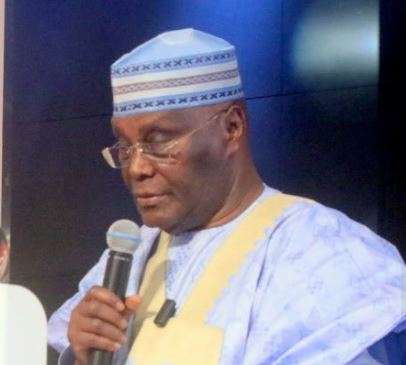
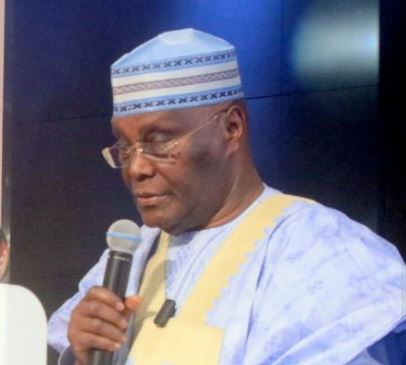
Atiku Abubakar: Six presidential runs, one unresolved ambition

From Abiola’s shadow to ADC’s uncertainty
By Luminous Jannamike, Abuja
ON a quiet morning in Yola, an old campaign aide once watched Atiku Abubakar stare at a map of Nigeria spread across a wooden table. This was years ago, long before WhatsApp broadcasts and social media war rooms, when politics was still conducted with handshakes, horse-trading, and long nights of persuasion. Atiku tapped the map slowly, state by state, as if tracing a destiny that had already been promised but stubbornly refused to arrive.
For Atiku Abubakar, the presidency has never been an abstract ambition. It has been personal; patient, consuming, and relentless. From the days he stood beside Moshood Kashimawo Olawale Abiola, watching a historic mandate annulled, to his current positioning within the African Democratic Congress (ADC), Atiku’s political life has revolved around a single, unfinished journey: becoming Nigeria’s president.
He has tried six times. He has failed six times. Now, with 2027 approaching, he is preparing again.
To some, it is courage. To others, fatigue dressed up as persistence. To Atiku, it is simply unfinished business.
The Abiola Lesson
Those who knew Atiku in the Abiola era say that June 12 did something to him. He was not just a businessman-turned-politician then; he was a believer in political transition, in civilian rule, in the idea that Nigeria could be governed differently. Watching Abiola win and lose the presidency in the same breath taught Atiku two enduring lessons: that power is never gifted, and that timing can destroy destiny. That lesson never left him.
When democracy returned in 1999, Atiku did not hesitate. He aligned with Olusegun Obasanjo, becoming vice president under the Peoples Democratic Party (PDP). For eight years, he occupied the second-highest office in the land, building networks, attracting loyalists, and cultivating goodwill across regions, especially in the South, where a northern politician rarely enjoyed such acceptance. But ambition has a way of turning alliances brittle.
By 2007, Atiku had broken up with Obasanjo and entered the long cycle that would come to define his political career: switching platforms in pursuit of a ticket, contesting fiercely, losing narrowly or decisively, and retreating, often physically, to Dubai.
A Pattern That Refused to Change
PDP – Action Congress – All Progressives Congress. Back to PDP. Out again. Now ADC.
Atiku’s critics say this movement tells its own story: a politician who enters parties to contest elections, not to build institutions. His supporters counter that Nigeria’s parties are weak, transactional, and rarely worthy of long-term loyalty.
Still, the record is difficult to ignore. Atiku has never stayed long enough in any party after defeat to rebuild it from the grassroots. Elections end, the noise fades, and he disappears, sometimes from public life altogether, until another electoral cycle calls him back. In the South, that absence was noticed.
Once, Atiku was warmly received there. He spoke the language of restructuring when others avoided it. He was seen as a bridge between regions. Over time, however, trust thinned. Many southern leaders felt he took their support for granted, without offering them meaningful political ownership in return. That tension finally snapped in 2023.
The 2023 Breaking Point
When Atiku secured the PDP presidential ticket in 2022, it was not just a victory; it was a rupture.
Under the party’s zoning understanding, many expected power to shift southward after eight years of Muhammadu Buhari. Instead, Atiku emerged as candidate, with Iyorchia Ayu, also from the North, remaining party chairman. Party elders pleaded. Governors warned.
The argument was simple: how do you explain to your people that both the presidential candidate and the party chairman are from the same region? Atiku refused to step down or compel Ayu to resign. Five PDP governors walked away.
That decision did more than cost votes; it fractured the party’s moral authority. Campaign structures collapsed in key states. The PDP entered the election divided and exited it wounded. The aftershocks continue today, with defections thinning its base and internal wars redefining its future.
Some party insiders still describe that moment as the point where Atiku chose ambition over cohesion, and lost both.
Voices Around Him
Not everyone sees it that way. Abdul-Aziz Na’ibi Abubakar, an entrepreneur and politician associated with the former vice president said: “I proudly support Atiku Abubakar for the presidency due to his authentic and principled character, unwavering commitment to fostering inclusivity, and dedication to mentoring the youth.
“As a visionary leader, he possesses a clear readiness to address Nigeria’s and Africa’s pressing challenges with innovative and practical solutions.
“I earnestly pray that Almighty Allah grants him victory in the 2027 election and blesses us with long life, sound health, and prosperity to witness his transformative eight-year tenure as president.”
For loyalists, Atiku remains the most prepared man in the room, a former vice president whose ideas on privatisation, subsidy removal, and restructuring were once dismissed but are now being implemented by others.
Demola Olanrewaju, another associate of Atiku Abubakar, said: “His Excellency, Atiku Abubakar, is a former Vice President. He is well experienced. He is a man of many political parts, and he will draw support not just from within the ADC but also from the PDP and the APC if and when he decides to contest that election.
“So it’s not about ADC having structure. We saw what His Excellency Peter Obi did in the last election in Nigeria. It’s about getting the votes, and we believe very strongly that with the present direction of the PDP, a lot of the PDP structure, and some of those within the APC, will definitely work for change in this country in 2027.”
Persistence or Desperation?
Yet the question refuses to go away. Now in his late seventies, Atiku faces whispers about age, relevance, and timing. Critics describe his seventh attempt as political exhaustion masquerading as resilience.
Asked directly about this, Olanrewaju pushed back. “No. Well, I mean, it’s simple. I’ve been married for quite a number of years and I’m still married. I’ve been a friend to people for quite a number of years and I’m still friends with those people. I have certain aspirations in life and I’m still on those aspirations.
“We don’t give up on our aspirations. We do what we want to do. His Excellency Atiku has made it clear he wants to be the President of Nigeria. As long as he’s healthy, as long as he’s fit, he would always put himself forward.
“So I think there shouldn’t be any controversy about that, except for the fact that it is politics and people will try to use everything they can use against you.”
Not everyone is convinced. Lere Olayinka, media aide to the Minister of the Federal Capital Territory, Nyesom Wike, said: “Someone should tell our serial presidential election contester that Wike also has no regret for ensuring that he failed in the election and will make sure that he fails again and again.”
From the youth flank, the impatience is sharper. Eze-Onyebuchi Chukwu, national youth leader of APGA, said: “Rather than aspiring to run again in 2027, Atiku should rally his political allies to support a young, credible Nigerian. It’s time to return power to the youths.
“Atiku challenged Goodluck Jonathan in 2011, Muhammadu Buhari in 2019, and Tinubu in 2023. Now he wants to contest again in 2027, is he the only one fit to be president? There are capable young Nigerians who deserve a chance.”
The ADC Question
Now Atiku is in ADC, a party still finding its ideological footing and already grappling with zoning debates. Peter Obi has hinted that power should shift south in 2027. Atiku appears to be the loudest northern voice insisting on running. The risk is obvious.
Will southern voters, already wary after 2023, rally behind him again? Or will ADC fracture before it fully matures?
Atiku’s camp believes money, experience, and national networks can overcome structural weakness. History, however, suggests otherwise. Winning a primary is one thing; building trust across regions is another.
Atiku himself, perhaps sensing the mood, struck a conciliatory note recently.
“My being in the 2027 race does not prevent anyone from contesting. If a vibrant and widely accepted younger candidate emerges, I am willing to step aside,” he said during a recent interview with BBC Hausa.
Whether that openness is tactical or sincere remains an open question.
An Unfinished Map
Back in Yola, the memory of Atiku tracing Nigeria on that table still lingers; state by state, region by region. Always close, never close enough.
Atiku Abubakar’s story is not merely about losing elections. It is the story of a man who once stood at the centre of national goodwill, then slowly allowed ambition to outrun coalition-building. It is about opportunities grasped and mishandled, alliances forged and broken, and a future that no longer looks as generous as the past.
In 2027, Nigerians will decide whether persistence deserves one final reward, or whether history, having offered its lessons repeatedly, has already given its answer.
The post Atiku Abubakar: Six presidential runs, one unresolved ambition appeared first on Vanguard News.
www.vanguardngr.com

The full fixtures and dates for the World Cup Round of 16 fixtures have been confirmed.
This follows the conclusion of the Round of 32 fixtures played today.
Recall that Argentina defeated Cape Verde 3-2 to progress to the Round of 32, while Colombia eliminated Ghana from the competition following a 1-0 win.
Argentina will now face Egypt in the last-16 on Tuesday, while Colombia will take on Switzerland.
Co-host nation Canada will tackle Morocco on Saturday.
2026 FIFA World Cup Round of 16 fixtures in full:
Saturday, July 4:
Canada vs Morocco
Paraguay vs France
Sunday, July 5:
Brazil vs Norway
Mexico vs England
Monday, July 6:
Portugal vs Spain
United States vs Belgium
Tuesday, July 7:
Argentina vs Egypt
Switzerland vs Colombia
dailypost.ng

By Luminous Jannamike, Abuja
As political alignments ahead of the 2027 general election continue to shift, renewed attention has turned to the Nigeria Democratic Congress (NDC) following a series of legal and political developments. In June, the Federal High Court in Lokoja, Kogi State, stunned sections of the opposition when it set aside its December 2025 judgment directing the Independent National Electoral Commission (INEC) to register the NDC as a political party, although that decision has since been overturned on appeal.
The legal twists have revived questions first raised months ago about the forces behind the emerging party. They have also rekindled interest in an earlier Saturday Vanguard report, which quoted insider sources expressing fears that the NDC could face internal sabotage after the emergence of its eventual presidential candidate and alleging that some individuals associated with the project maintained close relationships with influential figures in the ruling establishment.
Those claims have not been independently verified. Even so, the developments have continued to fuel public debate over the independence of emerging opposition platforms and whether ‘fifth columnists’ could undermine efforts to build a formidable coalition ahead of 2027.
Below is what Saturday Vanguard published on 9 May under the headline, ‘
2027: Who owns NDC? Fear of moles rocking party spreads.’
Fresh anxiety is quietly spreading within sections of the opposition coalition amid growing concerns that the National Democratic Congress (NDC) may already have individuals sympathetic to the ruling All Progressives Congress, APC, within its wider support network.
The unease emerged following the collapse of the ADC coalition arrangement involving former Vice President Atiku Abubakar and former Anambra State governor Peter Obi, with some insiders warning that the NDC may not eventually become the independent opposition platform many supporters expect.
Multiple sources familiar with ongoing coalition discussions told Saturday Vanguard that some political actors had become increasingly cautious about the emerging Obi-Atiku split and the rush into the NDC platform.
One source said there were fears that influential figures linked to the party maintained close relationships with elements within the ruling establishment.
“We have to be very, very careful about this Obi-Atiku split because there’s a game being played by the APC that many people are not aware,” the source said.
“Even the NDC that they are running to. Do you know who owns the NDC? The man pulling the strings behind this thing is a former lawmaker who is a key member of the APC and enjoys access to the State House, Aso Villa.
“The close supporters of the NDC are the PDP-APC people. So we will see what will happen. It’s only a matter of time.”
The source added that the situation could become clearer once the ongoing round of party primaries and internal alignments are concluded later this month.
The allegations could not be independently verified as of press time, and no evidence has publicly emerged linking the NDC leadership to the APC or the Presidency.
However, another source involved in the wider opposition talks said the unease within some camps was being driven by fears that “moles” could eventually weaken efforts to build the NDC into a united opposition front ahead of 2027.
According to the source, the concern was less about the formal founders of the party and more about some influential supporters and political associates believed to have longstanding ties within the APC power structure. “The concern is not necessarily about the founders,” the source said.
“It is about some major supporters and people around the project who are believed to have sympathies or strong relationships within the Presidency and the APC establishment.”
The development comes as opposition leaders intensify talks and political realignments following recent defections and coalition negotiations involving key figures across several parties ahead of the 2027 elections.
www.vanguardngr.com

Ahead of his historic address to the House of Lords in London on Friday, Imo State Governor, Senator Hope Uzodimma has received a special recognition from the United States House of Representatives for his transformative leadership.
Uzodimma, apart from the address at the House of Lords , would be receiving “African Inspirational Leadership and Good Governance Award” by the African Leadership Organization.
Even before the event scheduled for Westminster, the South Carolina House of Representatives moved a motion to recognise and commend Uzodimma for his transformative leadership guided by the strategic 3R agenda of rehabilitation, reconstruction and recovery.
The motion, moved by Representative Rosalyn D Henderson-Meyes, recognised the Imo State Governor for undertaking “ extensive investments in road infrastructure, urban renewal and digital transformation initiatives aimed at enhancing connectivity, improving public service delivery and creating an enabling environment for sustainable growth “
The South Carolina House of Representatives in the motion signed by the Speaker, G Murrel Smith Jr and the Clerk Charles F Reid ,also acknowledged Uzodimma as a widely respected leader known for his dedication to “ inclusive governance, infrastructure development, economic revitalization, and the long term prosperity of Imo State, reinforcing his standing as one of Nigeria’s leading sub-national reformers and development focused leaders “
It noted that the honour bestowed on only 40 Africans also took cognisance of the Governor’s focus on improving the ease of doing business through strategic reforms and investor friendly policies which has in turn enhanced the state’s attractiveness to both domestic and international investors. It specifically mentioned Uzodimma’s signature infrastructure projects to include the Assumpta Twin Flyover and the development of the Orashi Energy Free Trade Zone, which have made Imo State the key driver of regional national development.
Receiving the award in London on behalf of the Governor, the Imo State Commissioner for Information, Public Orientation and Strategy, Hon Declan Emelumba, described it as a global acknowledgement of Uzodimma’s hard work and commitment to the overall development of the state.
While commending the South Carolina House of Representatives for the honour, Emelumba said it would certainly spur the governor to do more not only for the state but Nigeria and the African continent.
The Commissioner noted that it was quite encouraging that notable global institutions have continued to acknowledge and appreciate Uzodimma as one of the very few sub-national leaders committed to transformative leadership in Africa.
www.vanguardngr.com


Police arrest 11 suspected cultists at LAUTECH, recover guns
World Cup 2026: Full fixtures, dates of Round of 16

Pele Named England Genius with ‘Skills of a Brazilian’ – He Started at Only 1 World Cup

Simi Sanya and Femi Dapson Are Now Legally Married and It Is Beautiful to See

FCT Area Council Election: Live results from polling units

Premier League Set-Piece Goals (2025/2026)
-
 Sports2 days ago
Real Reason Serena Williams Broke Strict Rule as $50,000 Fine Decision Made
-
 Sports24 hours ago
FIFA Release Statement After VAR Call During Portugal 2-1 Croatia
-
 Sports23 hours ago
Piers Morgan Slams BBC Commentators For Cristiano Ronaldo Treatment
-
 Sports22 hours ago
Croatia’s Igor Matanovic Praised For Interview After Goal v Portugal is Ruled Out
-
 Sports2 days ago
VAR Expert Casts Clear Verdict on Folarin Balogun Red Card vs Bosnia
-
 Sports11 hours ago
FIFA Set to Change England vs Mexico World Cup Kick-Off Time
-
 Sports20 hours ago
What Cristiano Ronaldo Told Croatia Star After Controversy in World Cup Game
-
 Sports2 days ago
US Icon Brad Friedel Blasts Mexico Ahead of England Match