
Politics
Atiku has ‘best chance’ of becoming Nigeria’s President in 2027 – Dele Momodu

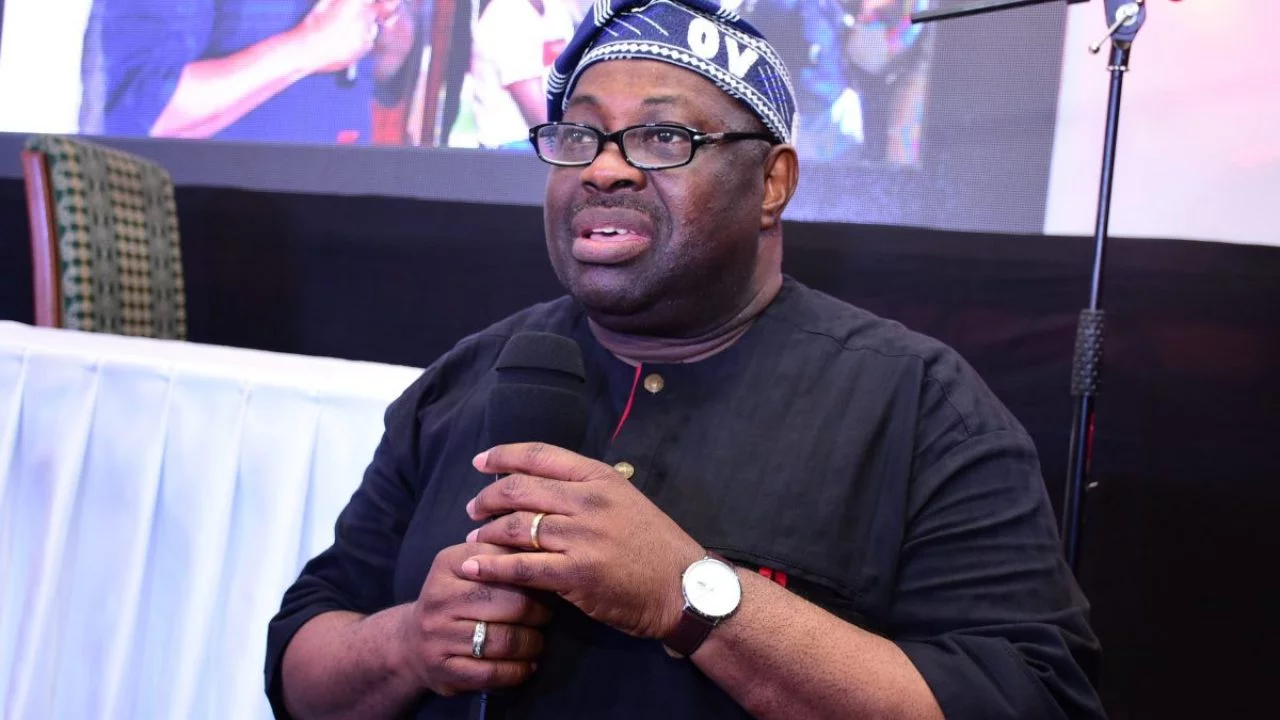
A key member of the African Democratic Congress, ADC, Dele Momodu, on Monday disclosed that former Vice President Atiku Abubakar may become the Abraham Lincoln of Nigeria in 2027, if God permits.
Momodu insisted that Atiku stands a strong chance of becoming Nigeria’s president in 2027.
He spoke while fielding questions from participants of an X Space session titled “Avrilsspace: The Electoral Mathematics for 2027.”
Atiku has been contesting for the presidency since 1993, when he stepped down for MKO Abiola under the Social Democratic Party, SDP, in Jos, Plateau State.
In the 2023 presidential election, Atiku lost to President Bola Tinubu of the All Progressives Congress, APC.
Ahead of the 2027 election, there are indications that he might once again vie for the presidency.
Momodu said: “There is no conflict of interest anywhere, Atiku has been running since 1993 and if God favours him, he may likely become the Abraham Lincoln of Nigeria, I leave that to God.
“Like I said, I’m never a desperate supporter of any candidate, I’m a realist but I believe that he stands the best chance today. He’s in good health, his business is thriving, and his family is adorable.
“He has conducted his lifestyle in a very simple and straightforward manner; despite the occasional skirmishes with his then boss, Obasanjo, he has never uttered any insult against him.”
dailypost.ng

The National Spokesman of the African Democratic Congress, ADC, says he fears that the 2027 general elections may not hold.
Abdullahi attributed his fears to certain endemic factors from both the Independent National Electoral Commission, INEC, and the All Progressives Congress, APC-led government.
Abdullahi also cited insecurity, saying it may create situations where the election will not hold in many parts of the country.
He also said that the hunger in the land created by the President Bola Tinubu’s administration is another reason that people may not come out to exercise their franchise, adding that Nigerians are bitter.
“There is so much procurement INEC usually embarks on. A lot of them are offshore, outside the country. If by now INEC has not received funding for those procurements or has not been able to do those procurements, then the election is threatened. That is my number one fear.
“I am worried that INEC may not be ready for the election, whether deliberately or inadvertently. I have serious fear that INEC may not be ready for the election.
“They may rig the election and tell people to go to court, thinking that politicians will go to court, and that they will live happily thereafter,” The Sun quoted him as saying.
dailypost.ng

•It’s a family affair, being addressed – Party
By Omeiza Ajayi
A storm is brewing within the All Progressives Congress (APC) over its revised list of National Assembly candidates submitted to the Independent National Electoral Commission (INEC), as aggrieved aspirants drag the party to court, stakeholders demand fresh representation, and a chieftain warns of simmering anger within the party’s ranks ahead of the 2027 general elections.
The development, nonetheless, the APC said it is an internal process which is being addressed internally.
Former senator representing Ekiti North, Ayo Arise, disclosed in an interview that he had approached the court to challenge the outcome of the APC’s senatorial primary in his district, insisting that he lawfully won the exercise.
Arise said his decision to institute legal action immediately after the primary was informed by his understanding of the timelines stipulated by the Electoral Act, adding that he was not surprised when his name was eventually omitted from the party’s list of candidates.
According to him, the legal action was not driven by personal ambition but by the need to ensure that political parties comply with their own rules and uphold democratic principles. He said many aspirants were misled into waiting for declarations by the party’s national leadership, despite provisions in the APC guidelines indicating how the primary process should be concluded.
“I went ahead and filed my case in court because I knew what was coming. That is why I was not surprised at the outcome. This is not about me; it is about ensuring that we have a system that works for everybody,” Arise said, adding that the court was now the arbiter that would determine whether the party’s guidelines were followed. He expressed confidence in the judiciary, saying he believed he would get his ticket back because he won massively.
In Ondo State, stakeholders in Okeigbo, Ile-Oluji/Okeigbo Local Government Area, for their part, demanded a new representative for the Ile-Oluji/Okeigbo/Odigbo Federal Constituency in the House of Representatives ahead of 2027, citing years of poor representation and inadequate development.
Their position was contained in a statement issued on their behalf in Abuja by Fayemisi Tosin, a chieftain of the APC, who said growing dissatisfaction among residents had intensified demands for a lawmaker capable of attracting federal projects and giving the constituency a stronger voice in the National Assembly.
Tosin said many constituents who had high expectations when the incumbent lawmaker assumed office now believe the anticipated dividends of democracy have not been delivered, citing poor infrastructure, limited federal presence, youth unemployment and the absence of impactful constituency projects, including the deteriorating Okeigbo-Ifetedo Bridge linking Ondo and Osun states. The stakeholders declared their support for Simisola Fajemirokun-Ajayi, who contested the APC House of Representatives primary for the constituency, and urged the party’s national leadership to recognise her as the rightful candidate.
The discontent comes as the APC made sweeping changes to its list of National Assembly candidates, replacing former Benue State Governor, Gabriel Suswam, former House of Representatives member, Gbenga Elegbeleye, and several others following the outcome of appeals arising from the party’s primaries.
The changes were conveyed to INEC in a letter jointly signed by APC National Chairman, Nentawe Yilwatda, and National Secretary, Ajibola Basiru, who said the substitutions were approved by the party’s National Working Committee NWC after considering the recommendations of the Primary Election Appeal Committee.
Beyond the Senate, the party also replaced 19 House of Representatives candidates across Benue, Kogi, Ondo, Taraba, Niger, Kwara, Kaduna, Abia and Ebonyi states, with Benue recording the highest number of changes.
Reacting to the development in an interview, APC chieftain, Cletus Obun, said INEC had made clear that no candidate could be substituted outside the outcome of primaries monitored and uploaded by the commission, warning that anyone attempting to import candidates who did not participate in the primaries was working against the party.
He cited the precedent of Zamfara State, where the APC lost all its elective positions in court after fielding candidates who did not go through valid primaries, saying the party could not afford to repeat the same mistake.
“If anybody anywhere in the party wants to undo the party by sabotaging it using this level of subterfuge of importing candidates, then we will look at him and know that he is just nothing but a saboteur,” Obun said, adding that the APC needed to explain the process by which previously disqualified aspirants suddenly became qualified for the revised list.
Obun disclosed that he personally lost out in the appeal process in Cross River State despite over two decades of building the party from the opposition, describing himself as “very, very injured” by the outcome.
He, however, said he would not abandon the party, expressing hope that party leadership would eventually recognise his contributions.
Obun called for an urgent reconciliation committee to address rising anger among foundation members across the country, warning that the APC’s 31 governors could become “a time bomb” if the grievances were not addressed before the 2027 campaigns begin.
Abimbola Tooki, spokesman of the party’s national chairman, Prof. Nentawe Yilwatda, said the matter was being addressed.
“An internal processes which will be sorted out internally”, he told Sunday Vanguard.
www.vanguardngr.com

By Johnbosco Agbakwuru
Comrade Ayodele Wisdom Olawande is the Minister of Youth Development. In this interview, he highlights President Bola Tinubu’s administration, focusing on economic reforms, infrastructure development and youth empowerment. He says that despite the hardship from the ongoing reforms, the administration aims to create a sustainable economy and provide jobs. On the 2027 elections, he says the All Progressives Congress (APC) has a brighter chance if it continues to deliver on its promises. Excerpts:
President Tinubu is three years in office. What is your assessment of his administration?
Thank you very much. That is a very good question. Priorities depend on personal perspective. Assessing an administration does not only depend on talking points. Everyone knows the president came into power at a very difficult time for Nigeria. I remember what the Emir of Kano said: if anyone campaigns and tells you things will be easy, it is a lie. Nigeria needed someone dedicated, committed, energetic and of strong character to move the country forward.
This administration has taken bold steps and decisions to fix long-standing economic problems. The administration has chosen to make deliberate, sustained changes — not temporary measures or random sharing formulas — but to ensure necessary systems are put in place. Any administration that wants the good of Nigeria will seek every opportunity to create a prosperous life for the people, especially for young people. We are seeing improvements in several areas.
Infrastructure development is visible. Let us use Abuja as a template, because it is the FCT. If you compare Abuja three or four years ago to today, the infrastructure improvements demonstrate the president’s commitment. This is not limited to Abuja: we have the coastal road, the Lagos–Calabar coastal highway, and many other projects. The government has invested heavily in infrastructure.
Some people say they don’t see the benefits of removing the fuel subsidy; I laugh at that — the first place to see the benefit is among young people. For three uninterrupted years, no student has been out of school because of ASUU strike, and that is a major achievement. Previously, there was little investment in youth. For the first time we are seeing substantial investment in young people. Investment in energy is key: we are moving from the old NNPC model toward a more diversified energy approach, including CNG. Energy must be developed from what we have, not only from what we are seeking.
On youth support, much has been done but there is more to do. We are not yet where we want to be. There are still actions to take and systems to establish, but we started from somewhere. The government is focused. The president is one of the most focused leaders we’ve had. He is committed to building a sustainable country where young Nigerians can have a place to call home. That is the major part of what the president is doing — building a stronger economy for future generations.
But some people argue his policies and reforms have brought hardship to citizens. What is your take?
Reforms often come with pain. Childbirth is hard, yet necessary for the good that follows. No reform that produces meaningful, long-term benefits is painless. We must correct problems that have existed for decades, and that requires courage and tenacity. We cannot avoid difficult times.
What matters is that government continues to provide support to citizens to ease the adjustment to economic reforms. The goal is a sustainable, productive economy that creates real jobs — not superficial programs that only offer the appearance of employment. Many young people have left the country; you cannot blame them. For decades — and I mean forty years — people did not feel government presence. Leadership was often rulership, not servant leadership. These reforms are not intended to perpetuate hardship but to improve living conditions for Nigerians so our children and grandchildren will have better opportunities. We are trying to reshape the country for future prosperity.
With the hardship Nigerians are experiencing now, do you think the APC has a chance in 2027?
Elections are decided by the people. Democracy is of the people, by the people, and for the people. I believe we are getting our message across. Nigerians will consider the challenges we faced on arrival, what we found on the ground, and what we are doing now. They will judge the visibility and the progress. They should weigh constructive arguments, not bitterness or a mere desire for power.
APC has a better, brighter chance if it continues to deliver on its promises. If the president is allowed, by the grace of God, to secure a second term, it could deliver more direct benefits for many Nigerians. The party’s prospects could extend beyond 2027 because youth participation is growing. The president has given young people a chance to learn and benefit from reforms, and by 2031 we can expect an even stronger pool of leaders.
As the Minister of Youth Development, do you think the youth have enjoyed the impacts of the current government?
Yes. This is the first administration in our history — and people can criticize this — that has clearly prioritized young people. That is why there is pressure on institutions like NYSC: no student has been out of school for three years; academic calendars are running and ASUU is not striking. That alone is a major achievement for youth development.
NELFUND is one of the biggest programs for youth, and despite challenges this government has invested more in skills development. The TVS program is changing curricula and skills training. We’ve also increased digital training through partnerships with many NGOs and established the Nigerian Youth Academy for digital capacity building. Entrepreneurship access has improved and the government has worked to provide funding and other youth empowerment programs.
As the Ministry of Youth, in collaboration with other MDAs, we have rolled out initiatives to end tokenism. The era of token gestures is over. Our focus is to create an enabling environment and real opportunities for Nigerian youth. We still need more: we want fewer young people to travel abroad out of desperation and more to have stable incomes at home. But we are making progress in empowering and protecting young people productively.
Can you give the statistic of the number of youths employed since this administration began?
Employment statistics are complex. We do not want to push everyone into civil service jobs. Youths are divided into formal and informal sectors. Government cannot employ everyone. Many job gains come through public–private partnerships (PPPs). If you visit the coastal road projects or factories like Dangote’s, you will see many young people employed through PPPs.
Our approach focuses on private-sector–driven employment and entrepreneurship. Agencies like SMEDAN and NASENI support small businesses and innovation. The World Bank and other partners are also engaged on youth employment. NYSC reform aims to make the one-year service year productive so graduates leave with skills and marketable experience, not idle time. So, employment measurement must include private-sector and PPP outcomes, not only government hires.
How would you score the administration on youth empowerment?
Young people are receiving more attention today than before. Empowerment is no longer just handing out tailoring kits. We are focusing on productive empowerment: skill development and creating linkages with the private sector. Our ministry’s mantra is that a youth should have at least two skills. We implement this through multiple platforms — MTT, AIR, house-to-house outreach — and by working closely with state governments.
What is the relationship between your ministry and the National Directorate of Employment and the Ministry of Labour?
We are collaborating closely. We are reviewing their data and employment policies to align them with the president’s reforms. The aim is to improve their engagement levels, sharpen employment statistics, and ensure a level playing field so every young person can benefit from government programs.
As the general elections draw nearer, what is your advice to the youth?
My advice is simple: get your voter card and participate in the democratic process. Avoid violent actions, hate speech and misinformation. Do your research; study the issues and the candidates. Don’t be swayed by empty promises or tokenism. Know what the National Assembly should do, and demand accountability.
Understand the issues, deliberate on needed constitutional changes, and support efforts like local government autonomy so local leaders can deliver basic services. Nigeria belongs to all of us; no one will be sent away. Young people must play a positive role in shaping our country’s future. I am confident in our youth — they are resourceful, resilient, and capable of leading with guidance and wisdom.
www.vanguardngr.com

2027: Why elections may not hold – ADC spokesman, Abdullahi
2027: Fresh storm rocks APC over NASS list
APC has a brighter chance in 2027 — Youth Minister

Simi Sanya and Femi Dapson Are Now Legally Married and It Is Beautiful to See

FCT Area Council Election: Live results from polling units

Premier League Set-Piece Goals (2025/2026)
-
 Sports2 days ago
Piers Morgan Slams BBC Commentators For Cristiano Ronaldo Treatment
-
 Sports2 days ago
Croatia’s Igor Matanovic Praised For Interview After Goal v Portugal is Ruled Out
-
 Sports2 days ago
What Cristiano Ronaldo Told Croatia Star After Controversy in World Cup Game
-
 Sports1 day ago
FIFA Set to Change England vs Mexico World Cup Kick-Off Time
-
 Sports11 hours ago
Vozinha Reveals What Lionel Messi Told Him After Argentina 3-2 Cape Verde
-
 Sports22 hours ago
Footage Shows What Happened After Lionel Messi’s Post-Match Interview v Cape Verde
-
 Sports1 day ago
8 Tunisia Players Fail Drug Tests As Mexican Food Contamination Suspected
-
 Sports1 day ago
Egypt Stars Watch Kylian Mbappe Footage as Penalty Tactic vs Australia