
Business
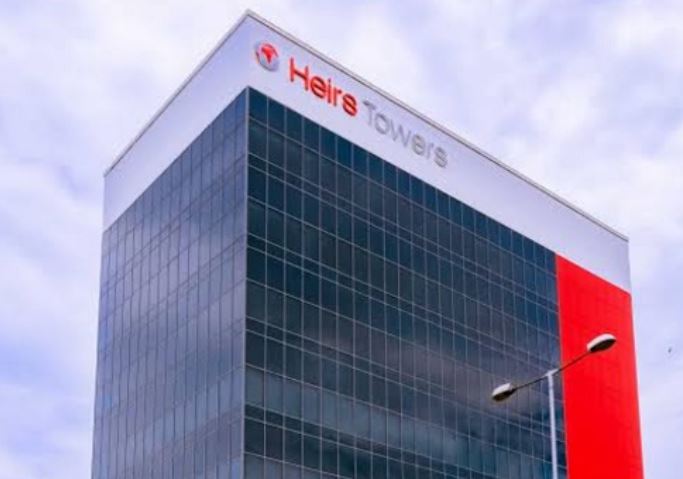
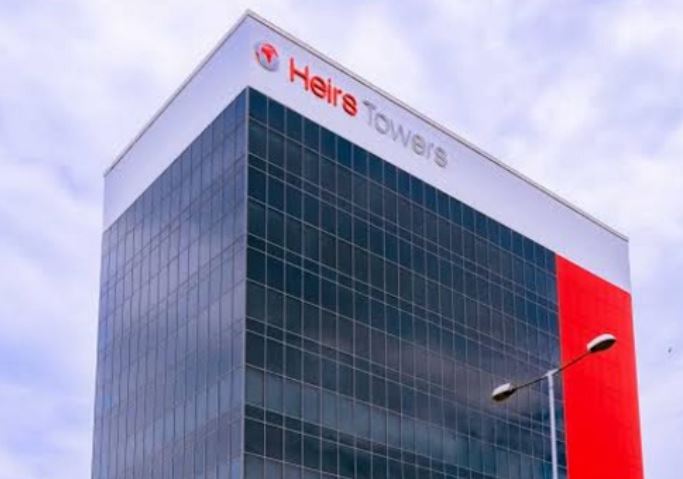
Heirs Energies acquires Maurel & Prom’s 20% stake in Seplat Energy for $500m

By Udeme Akpan, Energy Editor
Heirs Energies, Africa’s leading indigenous integrated energy company, has acquired the entire 20.07% equity stake (120.4 million ordinary shares) previously held by Maurel & Prom S.A. in Seplat Energy Plc (Seplat Energy) at a price of GBP3.05 pence per share, valuing the transaction at approximately US$500 million.
The acquisition represents a further milestone in Heirs Energies’ long-term strategy to strengthen indigenous participation in strategic assets and accelerate sustainable energy development and security for Nigeria and Africa.
Commenting on the transaction, Tony Elumelu, Chairman of Heirs Energies, said: “This acquisition reflects our strong belief in Africa’s ability to own, develop, and responsibly manage its strategic resources. It is a long-term investment in Nigeria’s and Africa’s energy future, and aligns with our mission to drive energy security, industrialisation, and shared prosperity. Seplat Energy has built a resilient, well-governed platform with compelling long-term prospects, and we are pleased to support its continued growth and value creation for all stakeholders.”
This landmark achievement was supported by two leading African financial institutions—Afreximbank and AFC—further demonstrating Africa’s capacity to finance its own deals.
Heirs Energies Limited is Africa’s leading indigenous-owned integrated energy company, committed to meeting Africa’s unique energy needs while aligning with global sustainability goals.
Having a strong focus on safe operations, innovation-driven growth, environmental responsibility and creating shared prosperity for all stakeholders, Heirs Energies leads in the evolving energy landscape and contributes to a more prosperous Africa.
Heirs Energies operates OML 17 in the Niger Delta, producing over 50 thousand barrels of oil per day (50 kbopd) and 120 million cubic feet of gas per day (120 mmcfd), with reserves base of over 1.5 billion barrels of oil (MMBo) and 2.5 trillion cubic feet of gas (Tcf).
Since its debut in 2021, Heirs Energies has established itself as the brownfield excellence leader, having successfully addressed all the challenges that confronted onshore operations in Nigeria and has been a critical catalyst for the rejuvenation of safe and reliable onshore operations in the Niger Delta.
Heirs Energies is a leading gas producer and supplier in Nigeria’s domestic gas market, providing fuel for over 400 megawatts of electricity generation, powering millions of homes, businesses and factories.
On the other hand, Seplat Energy Plc is a Nigerian independent energy company focused on oil and gas exploration, production, and gas processing, primarily in the Niger Delta.
It is listed on both the Nigerian Exchange and the London Stock Exchange and is a key player in Nigeria’s energy transition. Seplat Energy has, as of 31 December 2024, 2P reserves of 1.043 billion barrels of oil equivalent (MMBoe) and working interest production of 135.6 kboepd as of 31 October 2025.
The post Heirs Energies acquires Maurel & Prom’s 20% stake in Seplat Energy for $500m appeared first on Vanguard News.

By Babajide Komolafe
United Bank for Africa, UBA Plc, has announced the retirement of its Group Chairman, Tony Elumelu and the appointment of Mr. Emmanuel Nnorom as his successor.
In a statement announcing the board leadership change filed with the Nigerian Exchange, NGX, the bank stated: “Mr. Tony O. Elumelu, Group Chairman of UBA, will retire from the Board of Directors of UBA with effect from 21 August 2026, upon the completion of the maximum 12-year tenure prescribed for Non-Executive Directors of Banks by the Central Bank of Nigeria.
“At its meeting held on 6 July 2026, the Board accepted Mr. Elumelu’s retirement letter and elected Mr. Emmanuel N. Nnorom, a Non-Executive Director of the Bank, as his successor, with effect from 21 August 2026.
“The Board places on record its profound appreciation to Mr. Elumelu for his visionary leadership and exceptional contribution to the growth, transformation and institutional strength of the UBA Group.
“Mr. Nnorom is a chartered accountant with over forty years’ experience in banking, finance and audit. He brings to the role, extensive leadership experience and deep institutional knowledge of UBA.”
Commenting on his retirement, Mr. Tony O. Elumelu said: “Serving United Bank for Africa has been one of the great privileges of my career. UBA has a unique competitive position, across Africa and globally, and I leave the Board with great confidence in UBA’s future. Emmanuel Nnorom is a leader of integrity, experience and sound judgement, and I am confident that the Bank will continue to thrive under his leadership.
Speaking on his appointment, Nnorom said: “I am honoured by the trust the Board has placed in me and deeply conscious of the legacy I inherit. I look forward to working with my colleagues on the Board, Management and our staff across all our markets to sustain UBA’s momentum and continue delivering long-term value to our shareholders, customers and stakeholders.”

•IPMAN targets sub-N800/litre
By Udeme Akpan & Obas Esiedesa
Nigeria’s downstream petroleum market witnessed another round of price reductions on Monday, with the Dangote Petroleum Refinery and several major fuel marketers lowering depot prices for Premium Motor Spirit (PMS), popularly known as petrol, and diesel.
This development comes at the backdrop of pressures from the Federal Government (FG) as well as growing competition and improving product availability.
Earlier yesterday before the price adjustments, the Minister of State for Petroleum Resources (Oil), Senator Heineken Lokpobiri, told a stakeholders’ meeting that the current retail price of petrol does not reflect the sharp decline in price of crude oil.
The meeting, convened by the Nigerian Midstream and Downstream Petroleum Regulatory Authority (NMDPRA), was attended by representatives of the Dangote Refinery, Major Energy Marketers Association of Nigeria (MEMAN), IPMAN, Depots and Petroleum Products Marketers Association of Nigeria (DAPPMAN), Nigerian Association of Road Transport Owners (NARTO), and Petroleum Products Retail Outlets Owners Association of Nigeria (PETROAN).
The latest mid-day depot price report showed that Dangote Refinery reduced it’s ex-depot petrol price in Lagos by N3 per litre, from N1,079 to N1,076 per litre, while maintaining its diesel price at N1,500 per litre.
The reduction comes as several marketers also adjusted their prices downward in an apparent bid to remain competitive in an increasingly price-sensitive market.
Among the major Lagos depots, NIPCO cut its petrol price by N2 to N1,076 per litre, while Pinnacle lowered its price by N3 to N1,075 per litre. Sahara, AIPEC, and African Terminal each reduced prices by N4, bringing their petrol prices to N1,075 per litre.
Aiteo maintained its petrol price at N1,075 per litre.
Diesel prices also softened across several depots. Rain Oil reduced it’s AGO price by N15 to N1,430 per litre, while Ibeto, Duport, and Ibachem all cut prices to N1,430 per litre. Dangote Refinery, however, retained its diesel price at N1,500 per litre.
In Port Harcourt, marketers recorded even steeper reductions. Matrix slashed its petrol price by N8 to N1,087 per litre and cut diesel by N55 to N1,465 per litre, representing the biggest diesel price reduction recorded during the trading session.
Sigmund also reduced its petrol price by N12 to N1,082 per litre, although it raised its diesel price slightly by N2 to N1,463 per litre.
The downward trend extended to other regions. In Calabar, Fynfield reduced its petrol price by N7 to N1,090 per litre, while Soroman lowered its price by N5 to the same level.
In Warri, Matrix and Prudent both reduced petrol prices by N5 to N1,085 per litre. On the diesel side, Prudent cut its price by N25 to N1,475 per litre, while A.Y.M. Shafa lowered its diesel price by N3 to N1,455 per litre.
Industry analysts said the latest adjustments reflect heightened competition among suppliers following increased domestic refining capacity and relatively stable international crude oil prices.
Speaking after a stakeholders’ meeting on Cost-Reflective Pricing of PMS Lokpobiri said while the government did not interfere when petrol prices rose in response to higher crude oil prices, there was now no justification for maintaining current pump prices with Brent crude trading below $70 per barrel.
“NMDPRA never faulted anybody as far as the price was concerned because we are operating a fully deregulated economy.
“But deregulation doesn’t mean excessive profiteering. The Petroleum Industry Act also places responsibility on NMDPRA to ensure that steps are taken to prevent unnecessary profiteering.
“When Brent crude was about $118 per barrel, prices adjusted rapidly. Now that crude prices have dropped significantly, why has the pump price not come down in the same way?” he asked.
The Minister said discussions with marketers were constructive and would continue until a framework was agreed to ensure petrol prices better reflected developments in the global crude oil market.
“We had very fruitful and frank discussions with the marketers and leaders of the downstream sector with a view to driving down the price of PMS. The engagements are still ongoing.
“We told them the concerns of Nigerian consumers, and they have agreed to go back and think of what concrete steps can be taken. Discussions are ongoing, and we believe we are getting somewhere,” he said.
Also speaking, Chief Executive of NMDPRA, Mallam Rabiu Umar, said the current disconnect between falling international crude prices and sustained domestic retail PMS prices made the engagement with marketers necessary.
He noted that previous consultations with stakeholders had helped ease prices in the domestic Liquefied Petroleum Gas (LPG) market and expressed confidence that similar dialogue would deliver positive results for petrol consumers.
“Deregulation is not a licence for market distortion or unfair consumer pricing. Sustainable profitability for marketers and consumer welfare are not mutually exclusive,” Umar said.
Meanwhile, IPMAN said petrol prices could decline below N800 per litre as independent marketers begin purchasing products directly from the Dangote Petroleum Refinery.
IPMAN National President, Abubakar Garima, said the association had already reduced petrol prices by about N125 per litre across the country and would continue to lower prices whenever product acquisition costs decline.

By Rosemary Iwunze
As the insurance recapitalisation deadline of July 31st 2026 draws near, the National Insurance Commission, NAICOM, has stated that it will not re-license any company with outstanding claims.
In a letter to all Managing Director/CEOs of insurance companies, issued yesterday, titled: “Regulatory Directive – Settlement of Discharged Claims as A Precondition for Re-Licensing Pursuant to the Ongoing Recapitalization Exercise” NAICOM noted that the move is part of efforts to ensure that the exercise achieves its intended objectives.
The letter stated: “The ongoing recapitalization exercise is aimed at strengthening the financial capacity, resilience, and overall stability of the insurance sector. As part of efforts to ensure that this exercise achieves its intended objectives and enhances public confidence in the insurance market, all insurance companies are hereby directed to fully settle all outstanding duly discharged claims. Please note that this is a mandatory pre condition for being certified as having fulfilled the statutory recapitalization requirement and the Commission’s regulatory clearance.
“Accordingly, all insurance companies are required to Identify, reconcile all discharged claims currently outstanding in their records and thereafter, ensure full settlement of these claims to beneficiaries without further delay. A report of the reconciled discharged claims signed by the Managing Director/CEO and evidence of settlement of these claims shall be submitted to the Commission on or before 21th of July 2026.
“Please note that compliance with this directive is a critical regulatory criterion for eligibility, confirmation, and re licensing of all insurance/reinsurance companies after the conclusion of the ongoing recapitalization exercise. All insurance/reinsurance companies are required to ensure strict compliance with the content of this regulatory directive.”


Troops arrest suspected terrorist informant, recover motorcycle, cash in Kebbi

Most Popular Sports in America [Ranked]

Police foil kidnap plot in Ekiti, recover stolen cattle

Simi Sanya and Femi Dapson Are Now Legally Married and It Is Beautiful to See

Premier League Set-Piece Goals (2025/2026)

FCT Area Council Election: Live results from polling units
-
 Sports2 days ago
Neymar’s Comment to Norway Goalkeeper Orjan Nyland After Scoring Penalty
-
 Sports1 day ago
Mexican Media Cast Verdict on England After Chaotic World Cup Win
-
 Sports1 day ago
Wayne Rooney Blasts FIFA’s Decision to Suspend Folarin Balogun’s Red Card
-
 Sports1 day ago
England Fans Praise ‘Animal’ Anthony Gordon vs Mexico
-
 Sports2 days ago
Zlatan Ibrahimovic Causes Big Stir With Reaction to FIFA Suspending Folarin Balogun’s One-Game Ban
-
 Sports14 hours ago
Rodri Addresses Bernardo Silva Incident During Spain 1-0 Portugal
-
 Sports2 days ago
Mario Balotelli Names One Footballer Better Than Lionel Messi
-
 Sports15 hours ago
World Cup Fans Claim Bernardo Silva Player ‘Cost’ Portugal vs Spain