
Business
Equity investors sustain last year end rally to gain N2.05trn

By Peter Egwuatu
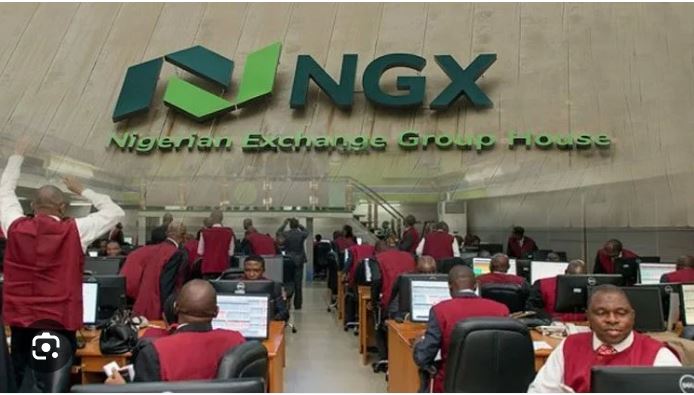
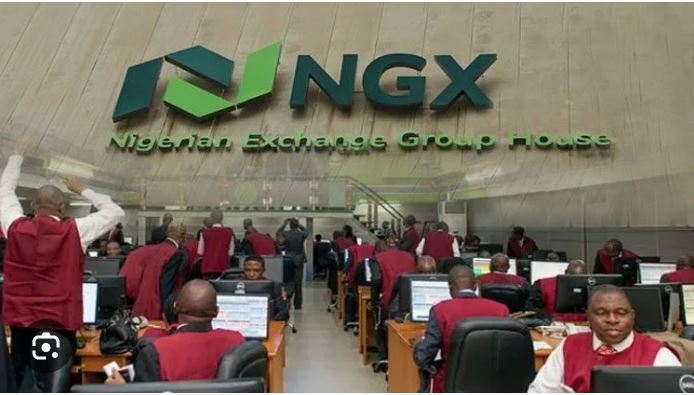
The investors on the Nigerian Exchange Limited, NGX sustained the 2025 year-end rally, gaining N2.05 trillion in the four trading days of the week.
Financial analysts noted that investors returned to fundamentally strong stocks across the Banking, Information Communications Technology , ICT and select Consumer Goods sectors.
Analysis of trading shows that the NGX market capitalisation, which represents total value of equity investment on the Exchange, surged to N99.938 trillion from N97.890 trillion the previous week.
Similarly, another performance indicator, NGX All Share Index, ASI rose by 1.9% to close last week at 156,492.36 points from N153,539.83 points the previous week.
Further transactions at the market show that a total turnover of 7.821 billion shares worth N134.471 billion in 150,799 deals was traded last week by investors on the floor of the Exchange, in contrast to a total of 2.876 billion shares valued at N63.832 billion that exchanged hands the previous week in 80,229 deals.
The Financial Services Industry (measured by volume) led the activity chart with 5.992 billion shares valued at N67.024 billion traded in 55,598 deals; thus contributing 76.61% and 49.84% to the total equity turnover volume and value respectively. The ICT Industry followed with 946.959 million shares worth N8.028 billion in 15,443 deals. Third place was the Consumer Goods Industry, with a turnover of 258.820 million shares worth N9.381 billion in 24,133 deals.
Trading in the top three equities, namely Cornerstone Insurance Plc, Cham Holding Company Plc and Access Holdings Plc (measured by volume), accounted for 5.317 billion shares worth N37.361 billion in 10,441 deals, contributing 67.97% and 27.78% to the total equity turnover volume and value respectively.
Seventy-three (73) equities appreciated in price during the week under review, higher than forty-four (44) equities in the previous week. Twenty-three (23) equities depreciated in price, lower than thirty (30) equities in the previous week, while fifty-one (51) equities remained unchanged, lower than seventy-three (73) recorded in the previous week.
In their market outlook, analysts at InvestData Consulting Limited stated: “The market enters 2026 with robust infrastructure, modernised regulatory frameworks, and a deepening investor base. The challenge now lies in translating plans into execution, policy into action, and market potential into sustainable economic development. The Nigerian capital market is well-positioned to support the country’s economic ambitions, provided reforms are implemented and leadership delivers the necessary impetus to unlock its full potential.”
The post Equity investors sustain last year end rally to gain N2.05trn appeared first on Vanguard News.

By Peter Egwuatu
The Chartered Institute of Stockbrokers (CIS) has described FTSE Russell’s decision to defer Nigeria’s planned reclassification to Frontier Market status as a temporary review process rather than a reversal of the country’s capital market reforms, stressing that Nigeria’s newly adopted T+1 settlement cycle remains a landmark achievement capable of strengthening investor confidence and market efficiency.
The Institute said the postponement announced by FTSE Russell on June 30, 2026, followed the global index provider’s decision to further assess the practical implications of Nigeria’s migration from a T+2 to a T+1 securities settlement cycle for international institutional investors.
According to CIS, Nigeria’s transition to the T+1 settlement framework on June 1, 2026, represents one of the most significant reforms in the country’s capital market history, making Nigeria the first capital market in Africa to implement the shortened settlement cycle.
The Institute noted that the reform aligns Nigeria with major global markets that have adopted faster settlement systems to improve operational efficiency, reduce settlement risk and enhance liquidity.
“The introduction of T+1 settlement demonstrates Nigeria’s commitment to international best practices and strengthens the country’s competitiveness within the global investment community,” the Institute stated.
CIS explained that FTSE Russell’s concerns centre on whether the shortened settlement period could, in practice, create a de facto prefunded market for foreign institutional investors operating across multiple jurisdictions and time zones.
However, the Institute maintained that Nigeria’s migration to T+1 has not altered the country’s Delivery versus Payment (DvP) settlement model, under which securities and cash are exchanged simultaneously at settlement.
“The implementation of T+1 does not require foreign portfolio investors to prefund their transactions. The market continues to operate under internationally recognised Delivery versus Payment principles, with the only change being the reduction of the settlement period from two business days to one.
“We recognise the operational challenges arising from the shortened settlement cycle. Accordingly, sustained engagement and constructive collaboration with all stakeholders will be crucial to refining the reforms, addressing emerging issues, and ensuring that no category of investor is disadvantaged or unintentionally excluded from participating in the Nigerian capital market,” CIS stated.

By Providence Ayanfeoluwa
The Minister of Marine and Blue Economy, Dr Adegboyega Oyetola, has called for synergy between the Federal and state governments, private sector and development partners to accelerate the implementation of Nigeria’s National Policy on Marine and Blue Economy, describing sub-national participation as critical to unlocking the sector’s vast economic potential.
Oyetola said this at the Second Quarter 2026 Citizens’ and Stakeholders’ Engagement of the Federal Ministry of Marine and Blue Economy held in Lagos last week with the theme: “From Policy to Action: Mobilising Sub-National Governments for Effective Implementation of Nigeria’s National Policy on Marine and Blue Economy”.
He said Nigeria had moved beyond policy formulation and must now focus on implementation capable of delivering measurable economic benefits, noting that the National Policy on Marine and Blue Economy had provided a strategic framework for harnessing Nigeria’s oceans, inland waterways, fisheries and coastal resources, but stressed that its success depended on coordinated action across all levels of government.
According to him, many of the country’s blue economy assets were located within states and communities, making sub-national governments indispensable partners in driving investment, creating jobs, improving food security and promoting environmental sustainability.
Oyetola said reforms under President Bola Ahmed Tinubu’s Renewed Hope Agenda had strengthened stakeholder engagement, attracted investment, improved maritime safety and enhanced the competitiveness of Nigeria’s ports.
He cited the 2025 Container Port Performance Index by the World Bank and S&P Global Market Intelligence, which ranked Tin Can Island Port as the tenth most improved port globally and Lagos Port Complex, Apapa, as the twelfth most improved between 2020 and 2025.
In his keynote address, Bayelsa State Governor, Senator Duoye Diri, commended President Tinubu for establishing the Federal Ministry of Marine and Blue Economy, describing it as a strategic step towards diversifying Nigeria’s economy.
He said Bayelsa followed suit by creating its own Ministry of Marine and Blue Economy in June 2024 to drive the blue economy component of the state’s A-S-S-U-R-E-D Prosperity Agenda.
In his presentation on private sector investment and industrialisation, President of Dangote Industries Limited, Aliko Dangote, said the successful implementation of the National Policy on Marine and Blue Economy would depend largely on sustained private sector participation. He noted that the policy targets the creation of three million jobs within its first four years, annual sectoral growth of seven per cent and the reservation of at least 50 per cent of new jobs for young people aged between 18 and 35.
Dangote, who was represented by the Managing Director of Dangote Port Operations, Simeon Akin Omole, said industrial transformation required policy consistency, quality infrastructure, access to finance and investor confidence.

In this picture obtained from Iran’s ISNA news agency on May 4, 2026, the Iran-flagged tugboat Basim sails near a ship anchored in the Strait of Hormuz off Bandar Abbas in southern Iran. Iran’s Revolutionary Guards on May 4 denied that any commercial ships had crossed the Strait of Hormuz, after the US military earlier said two US-flagged merchant vessels had transited through the vital waterway. (Photo by Amirhossein KHORGOOEI / ISNA / AFP) /
By Efe Onodjae
The Executive Secretary and Chief Executive Officer of the Nigerian Shippers’ Council (NSC), Dr. Akutah Pius, says the Council protects over N90.60 billion and $1.348 million in economic value for Nigerian shippers through regulatory interventions and dispute resolution.
Speaking through a representative at a media engagement with maritime editors and reporters in Lagos, he says: “Within the period under review, the Council protects over N90.60 billion and $1.348 million in economic value for Nigerian shippers and the national economy. This includes preventing N86.06 billion in unjustified demurrage payments and securing savings of N4.54 billion and $1.348 million through Alternative Dispute Resolution and regulatory interventions.”
According to him, “The Council receives 558 complaints and successfully resolves 295 commercial disputes involving container deposits, demurrage, detention charges, terminal charges, cargo claims and export fraud.”
He adds that the Council also records out-of-court settlements with APM Terminals Nigeria Limited, CMA CGM and Maersk Nigeria Limited over charges collected above approved tariffs.
On reforms, Dr. Akutah says: “The Council harmonises bonded terminal invoice charges by reducing billing categories from 18 to six. Terminal operators are directed to display approved tariffs publicly, while shipping companies are mandated to establish holding bays outside the ports to ease the return of empty containers and reduce congestion.”
He further says: “The Nigerian Port Economic Regulatory Agency Bill has been passed by both chambers of the National Assembly and is awaiting Presidential assent. The proposed law will strengthen tariff regulation, service standards, competition and commercial conduct across Nigerian ports.”
According to him, the Council also secures statutory funding through the 2025 Appropriation Act and continues to support the National Single Window, the International Cargo Tracking Note and the expansion of Inland Dry Ports to improve trade and reduce the cost of doing business.


Oyo abduction: Makinde told me Tinubu never called; shouldn’t seek re-election – Obi

Why He Kept 3rd Position at British GP Despite Yellow Flag

Benue under siege as gunmen kill four, injure 10 others

Simi Sanya and Femi Dapson Are Now Legally Married and It Is Beautiful to See

Premier League Set-Piece Goals (2025/2026)

FCT Area Council Election: Live results from polling units
-
 Sports12 hours ago
Neymar’s Comment to Norway Goalkeeper Orjan Nyland After Scoring Penalty
-
 Sports1 day ago
Mexico vs England Referee Already Made World Cup Blunder
-
 Sports1 day ago
Joe Hart Slams ‘Disgrace’ France vs Paraguay Referee
-
 Sports2 days ago
Vozinha Reveals What Lionel Messi Told Him After Argentina 3-2 Cape Verde
-
 Sports13 hours ago
Zlatan Ibrahimovic Causes Big Stir With Reaction to FIFA Suspending Folarin Balogun’s One-Game Ban
-
 Sports14 hours ago
Mario Balotelli Names One Footballer Better Than Lionel Messi
-
 Sports2 days ago
Explanation Emerges as Ref Accused of Breaking FIFA Rule to Favour Argentina v Cape Verde
-
 Sports2 days ago
Paraguay Legend Chilavert Sparks Uproar With ‘Disgraceful’ Comments About France