
Business
Nigeria’s oil, gas post gains, miss targets in 2025

By Udeme Akpan, Energy Editor
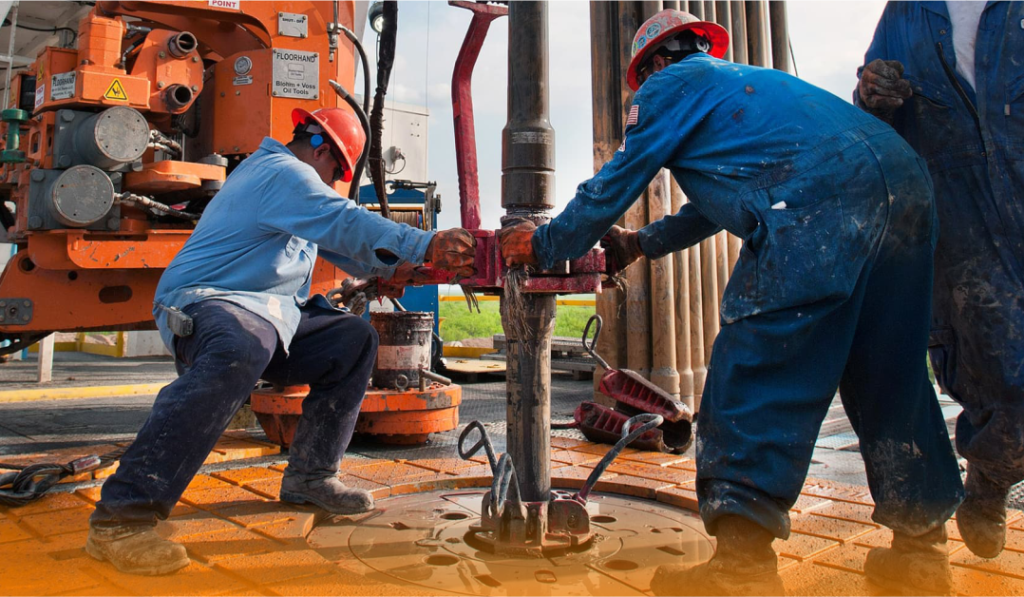
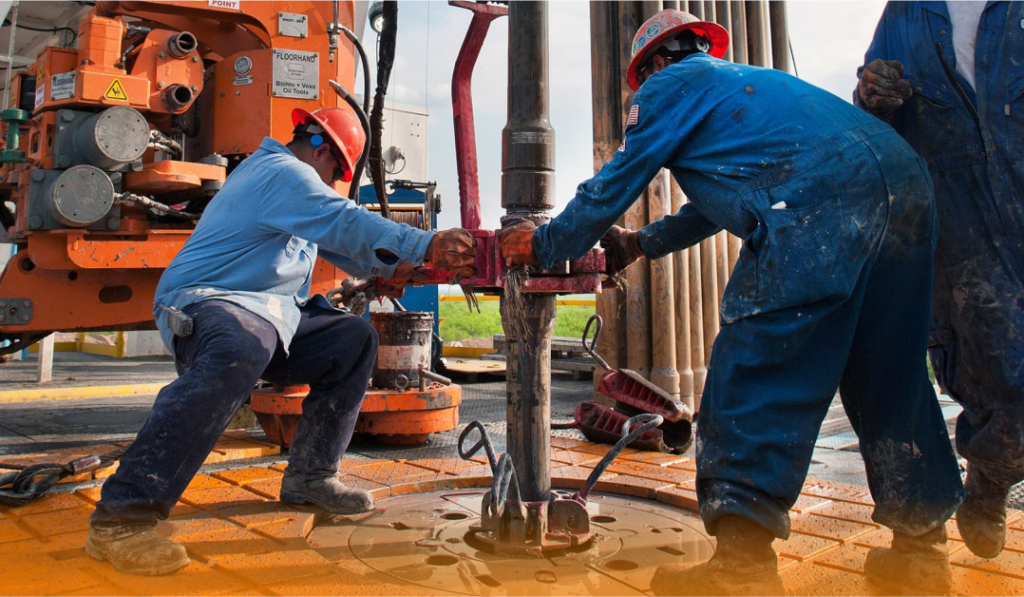
Nigeria’s oil and gas industry recorded mixed performance marked with improvement in some indices marred by below expectation oil production, worsening gas flaring and dispute over the domestic fuel supply.
Improved Upstream activity
The rig count, an index of measuring activities in the upstream sector, recorded a rise of 63% year-on-year in 2025.
Specifically, the country’s rig count jumped to 18 in November 2025, up from 11 in the same period last year. But the rig count remained flat, staying at 18 in November 2025, same as October 2025, according to the Monthly Oil Market Reports, MOMRs of the Organisation of Petroleum Exporting Countries OPEC.
Checks by Vanguard indicated that the performance of Nigeria would not record much variation when the December 2025 report is released in the coming weeks.
However, the Nigerian Upstream Petroleum Regulatory Commission (NUPRC) has a slightly different figure, putting the country’s active rig count at 40, showing 22 rigs in excess of OPEC figures during the period.
Average oil output hovers at 1.5m bpd
With the support of the rigs and other infrastructure, the nation produced an average of 1.5 million barrels of crude oil, including condensate in 2025.
According to the NUPRC, Nigeria produced 1.597 million bpd, including condensate in October 2025, indicating a marginal increase of 16,000 bpd compared to 1.581 million bpd produced in the preceding month of September 2025.
This showed that Nigeria did not meet its 2025 budget target of producing 2.060 million bpd.
Also, OPEC, that does not consider condensate as part of oil output believes Nigeria did not meet its 1.5 million bpd quota for a greater part of the period, including November 2025 when Nigeria’s output stood at 1.486 million barrels per day, bpd, showing a decrease of 10,000 bpd behind the 1.496 million bpd produced in October 2025.
This showed that Nigeria did not meet its 2025 budget target of producing 2.060 million bpd.
Also, OPEC, that does not consider condensate as part of oil output believes Nigeria did not meet its 1.5 million bpd quota for a greater part of the period, including November 2025 when Nigeria’s output stood at 1.486 million barrels per day, bpd, showing a decrease of 10,000 bpd behind the 1.496 million bpd produced in October 2025.
NUPRC commences 2025 oil licensing round
However, expectations are high that more investors would be attracted to invest in the upstream sector as the NUPRC has commenced its 2025 Oil Licensing Round which commenced on December 1, 2025, the third in a series of licensing rounds.
The Commission stated: “It will be held in accordance with the Petroleum Industry Act 2021 (PIA), which features enhanced legal and regulatory frameworks aimed at encouraging new investors and investments in the next phase of exploration in this region.”
This is expected to further impact the downstream and midstream sectors as well as other sectors of the domestic economy that are highly dependent on fossil fuel.
Gas output rises to 6,997 mmscf/d amidst increased flaring
The nation also recorded strides in the gas front, producing 6,997 million standard cubic feet per day (mmscf/d) in October 2025 alone, up from 6,284 mmscf/d in September, according to NNPC Ltd’s Monthly Report Summary.
This increase underscores the country’s efforts to strengthen its gas value chain and boost supply to power plants, industries, and export terminals.
However, a significant part of the nation’s gas was flared as fresh data from the NUPRC, showed that gas flaring increased month-on-month by 10 per cent to 16.679 million standard cubic feet (mmscf) in September 2025, up from 15.057 mmscf in August.
The 16.679 mmscf flared in September 2025 accounted for 8.72 per cent of the nation’s 191,385.21 mmscf output while the 15.057 mmscf flared in August 2025 accounted for 6.87 per cent of 219,280.73 mmscf output.
Year-on-year, flaring rose by seven per cent, translating into a nine-month cumulative total of 150,028.86 mmscf – gas worth about $451 million, enough to power a small-scale plant that can generate 10-50MW.
FG issues permit to 28 gas investors
On gas development, the NUPRC issued Permits to Access Flare Gas to 28 successful awardees under the Nigerian Gas Flare Commercialisation Programme (NGFCP), marking a pivotal shift from environmental liability to economic opportunity in Nigeria’s upstream petroleum sector.
The successful awardees – Ace Energy Limited; Afagaf Company Limited; AGH Lero; Almina Resources Limited; Amazon Energy Limited; AUT Energy; Beluga Asiko; Bodej Investment Limited; Cainergy Limited; Cimcmonobuo Nigeria Limited; Dawcon Consortium; Dawnwatch Limited; Fargab Limited; Folstaj International Limited; Geospectra Energy Limited; Izzi Project Limited; and MMLet Energy Limited – have mobilized to start operations.
Others – MSN Consortium; Newgaz Integrated Services Limited; NG Lyon Construction Limited; Oaks Cluster Energy; Seal Energy Limited; Tecnis EPS International Limited; Teobell International; Terms Energies; Zipora Gas; and Stelog Gas Company Limited – have also mobilized to start operations.
According to NUPRC, “From 300 initial expressions of interest, 139 applicants qualified for the RFP stage. Following a competitive and transparent evaluation process, 42 successful bidders were awarded 49 flare sites, an achievement widely recognized for its integrity and rigour.
“A total of 49 flare sites have been auctioned. Forty-two (42) bidders have been awarded the sites. Between 250 and 300 mmscfd of currently flared gas will be captured and commercialised, eliminating approximately six (6) million tonnes of carbon dioxide (CO‚ ) annually.
“The programme is expected to attract up to $2 billion in investment. More than 100,000 direct and indirect jobs will be created. About one hundred and seventy thousand (170,000) metric tons of LPG will be produced annually, enabling clean energy access for approximately 1.4 million households. And nearly 3GW (gigawatts) of power generation potential will be unlocked.”
Local content
hits 61%
Checks showed that the prioritising of Nigeria’s content culminated in local content rising to 61 per cent from 56 per cent in the petroleum industry. Executive Secretary of the Nigerian Content Development and Monitoring Board, NCDMB, Engr. Felix Ogbe, confirmed the development, adding that plans are underway to grow local content to 70 per cent by 2027.
Domestic crude supply suffers setback
Meanwhile, the commencement of operations of the 650,000 bpd Dangote Petroleum Refinery, has made significant impact in meeting the nation’s energy security.
Of the estimated 50 million litres of Premium Motor Spirit, PMS, also known as petrol, data obtained from the refinery indicated that it supplied more than 40 million litres daily but Nigerian Midstream and Downstream Petroleum Regulatory Authority, NMDPRA puts its supplies at about 15 million litres.
NMDPRA that listed Nigeria’s refineries to include Dangote Refinery (650,000 bpd capacity), Waltersmith Modular Refinery (5,000 bpd), Dupont (2,500 bpd), Edo Refinery (1,000 bpd), OPAC (10,000 bpd), and Aradel (11,000 bpd) put the nation’s combined refining capacity of 1,125,000 barrels per day with the active refineries producing at 467,000 barrels per day.
The agency noted that the refineries, including Dangote Petroleum Refinery do not have the capacity to meet domestic demand, thus justifying the need for continued importation.
Dangote Petroleum Refinery that felt that the federal government was misled to believe that the refinery does not have the capacity to meet domestic demand took up the matter to President Bola Tinubu and relevant agencies.
The petition of the refinery against the downstream regulator, however, culminated in the resignation of not only Engr. Farouk Ahmed but also his upstream counterpart, Engr. Gbenga Komolafe.
Prioritize downstream, increase domestic crude supply, says OGSPAN
In an interview with Vanguard, weekend, the National President of the Oil and Gas Services Providers Association of Nigeria, OGSPAN, Mazi Colman Obasi, said: “To a great extent, the nation has done well in the areas of exploration and production of oil and gas.
But that cannot be said about the downstream sector. Efforts by private investors like Dangote Petroleum Refinery to impact the sector does not seem to have attracted much support from the government agencies.”
The post Nigeria’s oil, gas post gains, miss targets in 2025 appeared first on Vanguard News.

The World Bank has said Nigeria’s biggest fiscal challenge is weak revenue mobilisation rather than excessive borrowing, urging the government to prioritise efforts to boost revenue generation to support sustainable economic growth.
Speaking during an interview on Channels Television on Friday, the World Bank Country Director for Nigeria, Mathew Verghis, said Nigeria’s debt profile remains moderate by international standards and is significantly different from countries experiencing debt distress.
“From our assessment, Nigeria doesn’t have a high indebtedness problem; it has a low revenue problem,” Verghis said.
He explained that Nigeria’s debt-to-GDP ratio is lower than that of many comparable countries, stressing that concerns should focus on improving government revenue rather than limiting borrowing.
“When we looked at the numbers, Nigeria is a moderately indebted country, meaning it has less debt relative to its economy than most of its neighbours and many other countries,” he said.
“Nigeria is in a very different situation than Ghana, for example, which is going through a debt restructuring.”
Verghis defended government borrowing as a necessary tool for financing long-term investments that stimulate economic growth and improve living standards.
“Nigeria borrows for the same reasons that all countries borrow. If you want to deliver results to people, the money available on an annual basis is not enough. So you borrow, deliver results, and that improves your ability to repay,” he said.
He cited the expansion of electricity access as an example, noting that providing power to about 32 million Nigerians requires substantial upfront investment.
“To be able to connect and provide energy to 32 million Nigerians, Nigeria needs to borrow money now. But with increased access to energy, the country will become wealthier and better positioned to repay the loans,” he added.
The World Bank official, however, warned that low government revenue poses a greater threat to Nigeria’s fiscal sustainability than its current debt level.
“Nigeria’s debt is not particularly high, and in fact, it’s quite moderate by international standards. Its revenues are very low by international standards, and unless those revenues are raised, it will not be able to pay back debt,” Verghis said.
According to him, strengthening revenue mobilisation would enable the government to increase investments in infrastructure, healthcare, education and other sectors that drive job creation, improve human capital and reduce poverty over the long term.
The remarks come as the World Bank recently unveiled a new six-year Country Partnership Framework for Nigeria, which places job creation at the centre of its support for the country through investments in infrastructure, healthcare, agriculture and digital connectivity.

By Elizabeth Adegbesan
As part of the Federal Government (FG) borrowing plan for the 2026 budget, the Central Bank of Nigeria, CBN, has issued Treasury Bills, TBs, to raise N5.8 trillion in the third quarter of 2026 (Q3’26).
This represents a 241 percent year-on-year (YoY) increase when compared to N1.76 trillion sold in Q3’25.
CBN disclosed this in its Nigeria Treasury Bills Issue programme for Q3’26.
Treasury Bills are short term (less than one year) debt instruments used by the apex bank to borrow money from the Nigerian public on behalf of the federal government. CBN also uses TBs to control money supply in the economy.
The TB issue programme commenced on July 1st, and ends on September 23rd, 2026. The settlement date began yesterday and ends on September 24th, 2026.
During the period, the apex bank will issue TBs worth N900 billion on 91 days tenor, N900 billion on 182 days and N4 trillion on 364 days.
A breakdown of the programme revealed that in July, the apex bank plans to issue N2 trillion worth of TBs, comprising N300 billion worth of 91 days bills, N300 billion worth of 182 days bills and N1.4 trillion worth of 364 bills.
In August, the apex bank issued N2.1 trillion worth of TBs, comprising N300 billion worth of 91 days bills, N300 billion worth of 182 days bills, and N1.5 trillion worth of 364 days bills.
In September, CBN plans to sell N1.7 trillion worth of TBs comprising N300 billion worth of 91 days bills, N300 billion worth of 182 days bills and N1.1 trillion worth of 384 days bills.

By Emma Ujah
President and Chairman of the Board of the African Export-Import Bank (Afreximbank), Dr. George Elombi, has tasked African nations to stop the export of Lithium, the main raw material used in the production of electric vehicle (EV) batteries. Nigeria is a major exporter of Lithium in Africa, though most of the quantity is illegally exported.
Speaking at the bank’s Mid-Year Media Roundtable in Abuja on Wednesday, he said that rather than exporting raw lithium, African countries should use it to manufacture EV batteries on the continent.
He also said Afreximbank has sufficient funds to finance the production of EV batteries and is ready to provide the necessary funding to any individual or organisation willing to venture into the industry.
In his words, “African mineral resources must work for Africa’s development. EVs are the future of transportation, and the use of lithium to produce EV batteries is taking centre stage in the EV industry.
“Africa must take its position in the EV industry. We have lithium. We should produce EV batteries at home. We simply have to produce them here. There is enough money in Africa to manufacture batteries in Africa.
“If you know anyone who is interested in EV battery production, bring them to me. But if you see someone looking for funding to export lithium, don’t bring them to me.”
Dr. Elombi also said African leaders and institutions must work together to ensure that African funds held outside the continent are repatriated to support the region’s development.
Some rating agencies biased against Africa
Speaking on the bank’s credit ratings, Dr. Elombi, who advocated for African rating agencies, said some global rating agencies initially dismissed Afreximbank as too small and insignificant to drive Africa’s development, while questioning the bank’s trade finance mandate.
According to him, one agency’s 2014 assessment suggested that trade finance could not serve as a foundation for development and implied that the bank’s core mandate lacked relevance.


Christian Horner Names His One Condition For F1 Return at British GP

Rangers Could Get Lewis Ferguson Deal Green Light as Connor Barron Eyed for Exit

Djed Spence Ruled Out of World Cup Last 16 Clash

Simi Sanya and Femi Dapson Are Now Legally Married and It Is Beautiful to See

Premier League Set-Piece Goals (2025/2026)

FCT Area Council Election: Live results from polling units
-
 Sports16 hours ago
Joe Hart Slams ‘Disgrace’ France vs Paraguay Referee
-
 Sports21 hours ago
Vozinha Reveals What Lionel Messi Told Him After Argentina 3-2 Cape Verde
-
 Sports2 days ago
FIFA Set to Change England vs Mexico World Cup Kick-Off Time
-
 Sports1 day ago
Footage Shows What Happened After Lionel Messi’s Post-Match Interview v Cape Verde
-
 Sports1 day ago
20 Players in England’s 2026 World Cup Squad Could’ve Represented Other Nations
-
 Sports7 hours ago
Mexico vs England Referee Already Made World Cup Blunder
-
 Sports2 days ago
8 Tunisia Players Fail Drug Tests As Mexican Food Contamination Suspected
-
 Sports2 days ago
Zlatan Ibrahimovic Has Theory on Croatia VAR Controversy vs Portugal