
Politics
2027 elections: Political atmosphere charged as governors move to dismantle godfather structures

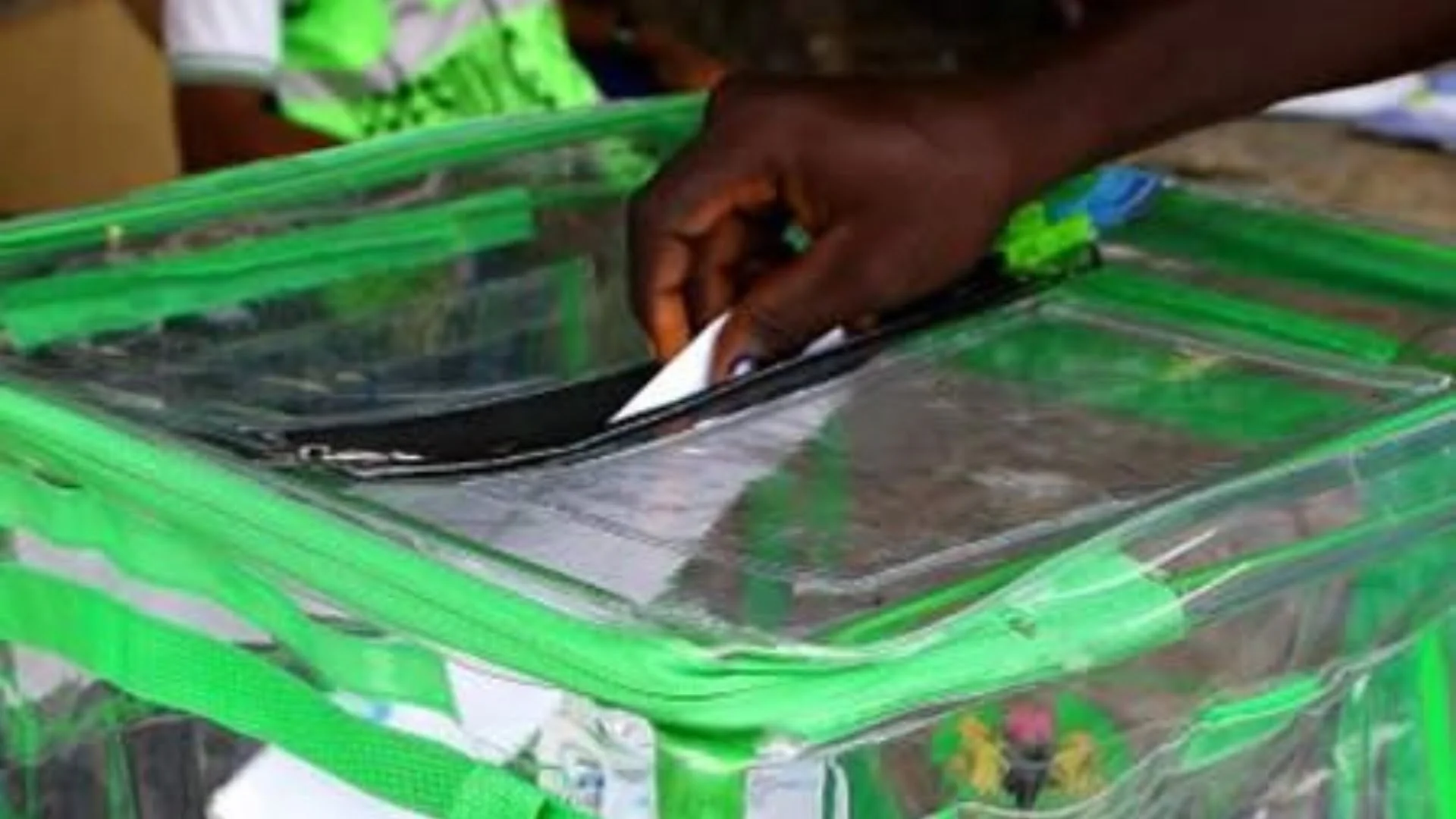
As preparations for the 2027 general elections gradually take shape, political activities across Nigeria are heating up. Party defections, internal crises within major parties such as the PDP, LP, NNPP, ADC and others, as well as emerging fault lines even within the ruling APC, now dominate the political landscape.
However, beyond defections and party disputes, one issue has captured growing public attention: the steady erosion of political godfatherism.
From 2023 to date, Nigeria has witnessed a familiar but increasingly bold pattern, governors who emerged through the influence, resources and political machinery of powerful benefactors later breaking ranks with those same godfathers.
Once-installed protégés are now asserting independence, often at great political cost.
In Nigerian political parlance, a godfather is an influential figure who installs a candidate into office using power, money, structures or political clout, with voters often aligning out of loyalty or fear rather than policy conviction.
While this practice has long shaped electoral outcomes, recent developments suggest its dominance is weakening.
Kano: Kwankwaso vs Abba Yusuf
One of the most striking examples is unfolding in Kano State, where relationship between Governor Abba Kabir Yusuf and his political mentor, former governor and NNPP leader, Senator Rabiu Musa Kwankwaso, has deteriorated sharply.
The crisis revolves around reports that Governor Yusuf is planning to defect from the NNPP to the APC. Kwankwaso is said to have openly opposed any such move, stating that Yusuf would not join forces with APC leader Abdullahi Ganduje with his blessing.
Despite this resistance, political insiders say arrangements to welcome the governor into the APC are already far advanced and January 12 has already been fixed as the “deal” date.
Observers have expressed surprise at the speed and intensity of the fallout, especially given Yusuf’s past loyalty to Kwankwaso.
The rift has since spilled onto social media, where supporters of both camps trade words daily.
The division has also cut across the political structure of the state, with commissioners, local government chairmen, lawmakers at state and federal levels openly choosing sides.
The crisis has already claimed a casualty within the NNPP. The party’s state chairman, Hashimu Dungurawa, believed to be loyal to Kwankwaso was removed and replaced with Abdullahi Abiya, a known ally of Governor Yusuf.
Speaking with DAILY POST on Tuesday, Kano State Commissioner for Information, Comrade Ibrahim Abdullahi Waiya, described a possible defection by Yusuf to the APC as “a blessing” for the state.
“Kano has lost a lot because we are not in the ruling party. Many federal projects that should come to the state are not coming because of party differences. If the governor moves, it will be for the good of Kano, and we only pray that Allah reconciles Governor Abba Yusuf and his political leader, Senator Rabiu Kwankwaso.” Waiya said.
For now, Governor Yusuf remains in the NNPP, but analysts believe it is only a matter of time before he makes a final decision.
Meanwhile, Kwankwaso’s camp is reportedly preparing for a major political showdown ahead of 2027.
Kaduna: El-Rufai and Uba Sani’s fall out
A similar power struggle has played out in Kaduna State between former governor Nasir El-Rufai and his successor, Governor Uba Sani.
Tension becames public in early 2024 when Uba Sani accused El-Rufai, his political benefactor, of leaving the state in deep financial trouble, claiming Kaduna was struggling to even pay workers’ salaries. El-Rufai strongly denied the allegation.
The crisis escalated when the Kaduna State House of Assembly accused El-Rufai’s administration of financial impropriety involving contract funds.
The lawmakers directed anti-graft agencies to investigate the former governor’s ex-chief of staff and former commissioner for finance. While El-Rufai has since moved to the ADC, Sani remains in the APC. A true test of leadership is expected come 2027.
Jigawa: Quiet but growing tension
In Jigawa State, political watchers also point to a growing rift between Governor Umar Namadi and his predecessor, former governor Badaru Abubakar. While the disagreement has remained relatively subdued, insiders say relations between both camps are increasingly strained.
Yusuf Ahmed, a political analyst from the state told DAILY POST that it will be a “clash of the titans as preparations for 2027 begin. All is not well between the governor and the former governor.”
Rivers: Wike–Fubara Showdown
The political crisis between former Rivers State Governor, Nyesom Wike and his protégé-turned-rival, Governor Siminalayi Fubara, escalated into a full-blown confrontation that engulfed the State House of Assembly and local government councils.
Although the crisis appeared to subside after Governor Fubara backed down and sought reconciliation, following his suspension from office for six months and the appointment of an acting administrator, the underlying tension has continued to linger.
In a bid to end the conflict altogether, Governor Fubara defected to the ruling All Progressives Congress (APC). However, recent actions from both leaders have showed that the dispute is far from over, as political undercurrents continue to signal lingering instability in the state.
Wike had during a recent tour of the state insisted he remains the only leader in the state. His body language indicated he is picking another candidate for 2027 election. The House of Assembly members loyal to the FCT minister have equally commenced an impeachment move against the governor.
Not a new phenomenon
Recall that clashes between godfathers and their protégés are not new in Nigeria. Historical examples abound.
In Kano, the ideological alliance between Malam Aminu Kano and Governor Abubakar Rimi collapsed in 1982, Rimi eventually left the PRP, joined another party and contested against his former mentor, only to be defeated by a new PRP candidate backed by Aminu Kano.
In Oyo State, the late political strongman Lamidi Adedibu orchestrated the impeachment of Governor Rashidi Ladoja in 2006 after both fell out.
Similar godfather-protégé crises have played out in Sokoto between Attahiru Bafarawa and Aliyu Wamakko, and earlier between Yariman Bakura and Mahmud Shinkafi, rifts that still shape Sokoto politics till date.
Experts weigh in
Professor Kamilu Sani Fage, a political scientist at Bayero University, Kano, told DAILY POST that godfatherism has no place in a true democracy.
“Democracy has nothing to do with godfathers,” he said.
“This practice only thrives in Nigeria. In most cases, godfathers do not support candidates for public interest but for personal gain. That is why these arrangements always collapse.”
According to him, the collapse of godfatherism is healthy for democracy. “Wherever godfatherism exists, conflict is inevitable. Its decline will allow governors to serve the people freely without undue interference.”
Divided opinions
Not all political actors agree. Umar Kyari, spokesperson of the PDP in Jigawa State, insists that godfatherism remains unavoidable in Nigerian politics.
“In Nigeria, politics cannot work without a godfather; someone who mentors you and brings you into the system,” Kyari told DAILY POST.
“The problem starts when relationships are not built on trust and sincerity,” he said.
He added that godfathers should step back after elections and allow elected officials to govern independently.
Similarly, Sheikh Ibrahim Khalil, ADC governorship candidate in Kano during the 2023 elections, argued that many politicians lack the capacity to succeed without strong backing.
“Some people cannot stand on their own. Their success depends on guidance and support,” he said, adding that betraying one’s godfather is morally wrong.
On Kano politics, Khalil was blunt: “Without Kwankwaso, Abba Yusuf would not have become governor. Anyone who voted for Abba did so because of Kwankwaso.”
2027: What next?
As Nigeria edges closer to the 2027 elections, political analysts expect more confrontations between godfathers and their political offspring across party lines.
Whether this signals the end of godfatherism or merely a reshaping of old power structures remains an open question, but one thing is clear, loyalty is no longer guaranteed, and authority is increasingly contested.
dailypost.ng
Oyo State chapter of the All Progressives Congress, APC, has declared that it has constituted a reconciliation committee ahead of the 2027 general elections.
The committee is expected to pacify all the aggrieved members of the party who are not happy with recent developments in the party across the state.
The party made the assertion via a statement signed by its Publicity Secretary, Wasiu Sadare.
The statement was made available to DAILY POST on Sunday in Ibadan, the state capital.
DAILY POST reports that primary elections of the party have been held in the state.
It was learnt that some stakeholders within the party are not happy with the outcomes of the elections.
The party, in the statement issued on Sunday, explained that it has set up the committee to resolve the issues.
Sadare, in the statement, noted that the committee consists of elders, chieftains, and leaders of the party.
Members of the committee, according to Sadare, are Senators Olufemi Lanlehin, Brimo Yusuf and Hosea Agboola; Chief Akin Oke; former Head of the Civil Service of the Federation, Professor Afolabi Oladapo; Engineer Idris Adeoye; Pa Timothy Jolaoso; Chief Olukemi Alao-Akala; Dr. Adebayo Adewusi; Hon. Gunju Ojo; and Dr. Adekemi Opatunde.
The rest are Aare Abisoye Fagade, Alhaji Kamorudeen Ajisafe, Abu Gbadamosi, Isiaka Alimi, Prince Niran Adeyoju, Alhaji Yinka Folarin, Chief Emmanuel Olaoye, Alhaji Mufutau Adisa, Alhaji Sule Ajibade, Prof. Abideen Olaiya, Engr. Dayo Lawal, Hon. Ibrahim Bolomope, Mrs. Mabel Williams, Hon. Jelili Agboola, Hon. Kehinde Oloya, Chief Goke Oyetunji, Hon. Ramota Okemakinde, Hon. Raji Rasaki, Dr. Segun Ajanaku, Hon. Shakiru Fagunwa, Barrister Abduwaheed Lawal, Hon. Esther Adedokun, and Hon. Obatunde Oladapo.
Sadare, in the statement, added that the committee members are to find ways to ensure peace and harmony within the party ahead of the 2027 general elections.
He said that the major mandate of the committee is to address grievances and complaints being raised by some of the aspirants and other key stakeholders of the party.
Sadare also disclosed that the committee, which is expected to be inaugurated next week by the state chairman of the party, Chief Moses Alake Adeyemo, will be mandated to reach out to all those who obtained expression of interest and nomination forms of the party but were unable to secure the party’s tickets.
Sadare said, “The Reconciliation Committee, upon its inauguration later this week, would be given the task to meet with all relevant stakeholders, including aspirants who feel dissatisfied by the outcome of the recent primaries which produced APC candidates for the next general elections, and it is hoped that this effort would bring about the desired peace and unity for our great party to win big at the polls next year.”
dailypost.ng
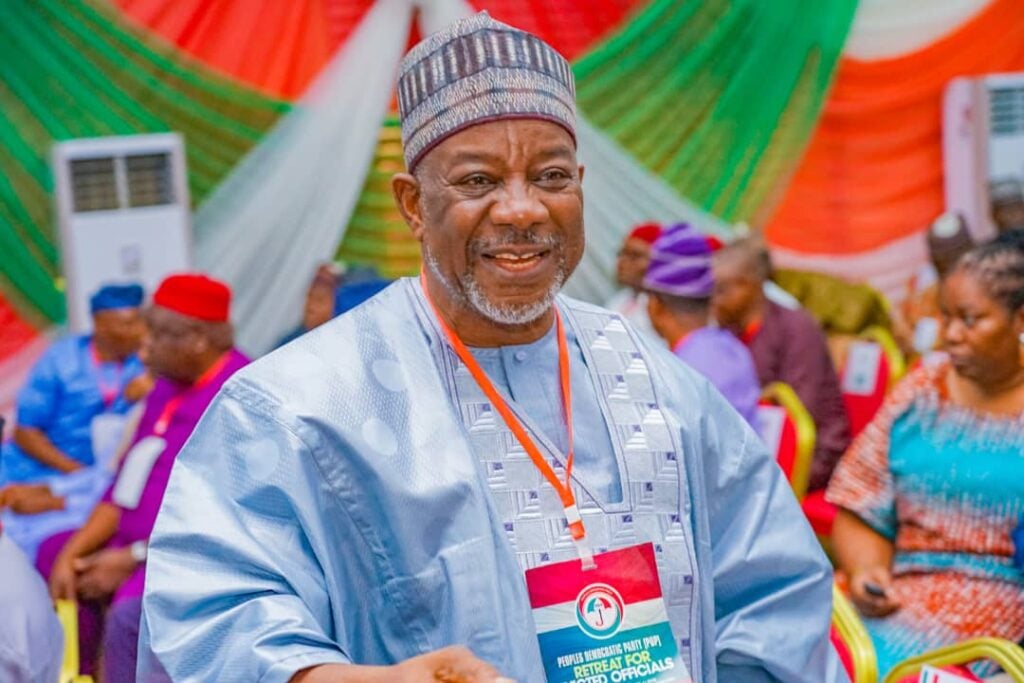
Lawmaker representing the Nasarawa South Senatorial District, Senator Mohammed Ogoshi Onawo, has officially resigned from the African Democratic Congress, ADC.
His resignation was contained in a letter dated July 2, 2026, and addressed to the ADC Ward Chairman in Galadimawa Ward, Doma Local Government Area of Nasarawa State.
The lawmaker attributed his decision to the party’s lingering internal crisis and protracted legal disputes at the national level.
In the letter sighted on Sunday by our correspondent, Onawo said his resignation takes effect from June 15, 2026.
The lawmaker said the persistent internal wrangling and legal battles within the party made it difficult for him to pursue the developmental mandate entrusted to him by the electorate.
“It is driven by my firm belief that the prevailing circumstances within the current party structure and the endless legal battles it is currently embroiled in no longer provide the cohesion, support, and enabling environment for me to focus squarely on effectively representing my constituents and to fully realise the developmental and progressive mandate they entrusted to me,” he said.

dailypost.ng
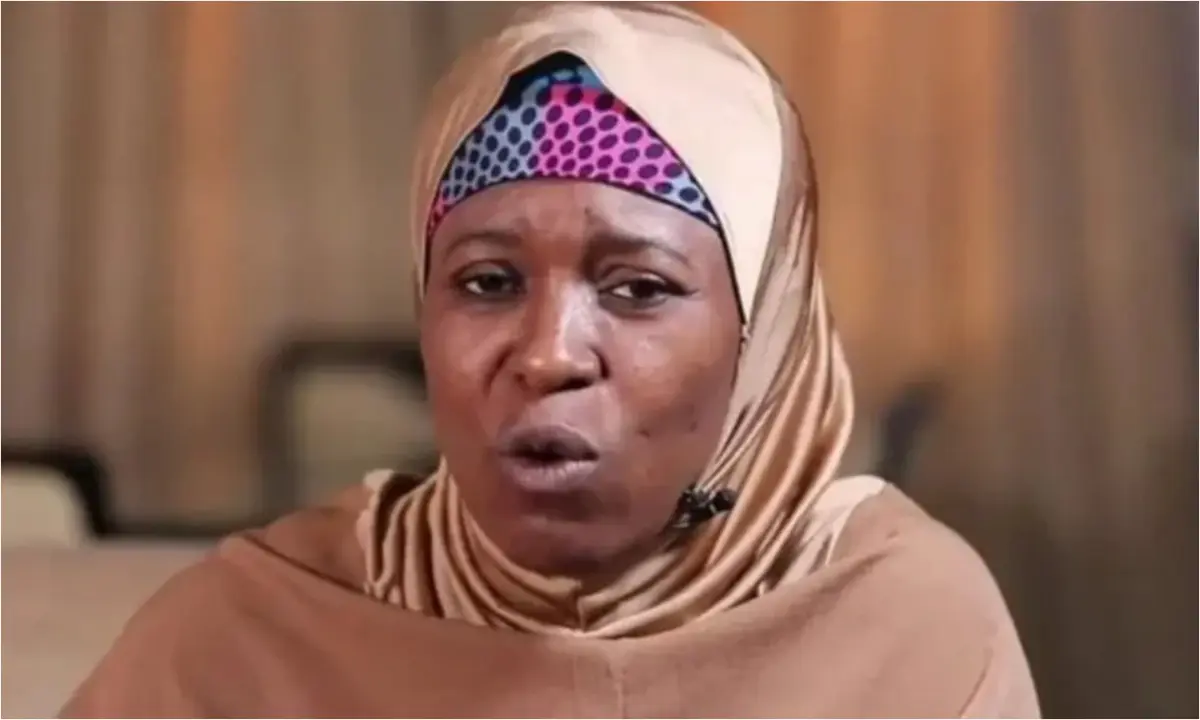
Former Nigeria Democratic Congress, NDC, Senatorial aspirant for the Federal Capital Territory, FCT, Aisha Yesufu, says any vote for the All Progressives Congress, APC, is for terrorists to continue in the country.
Yesufu made this remark in a statement posted on her verified X handle on Sunday.
This is as the rate of insecurity in the country has significantly increased with killings and abductions across the country.
The human rights activist also charged every Nigerian above 18 years old to get their Permanent Voter Cards, PVCs.
According to her, the miracle people have been praying for is more accessible with their PVCs
“Any vote for APC is vote for these terrorists to continue what they are doing,” the co-convener of BringBackOurGirls Movement said.
dailypost.ng


Man Utd Move to Sign Ederson Collapses

2027: Oyo APC constitutes reconciliation committee to pacify aggrieved members

Man Utd Eyeing £87m Deal to Sign Brazil Star Rayan

Simi Sanya and Femi Dapson Are Now Legally Married and It Is Beautiful to See

Premier League Set-Piece Goals (2025/2026)

FCT Area Council Election: Live results from polling units
-
 Sports20 hours ago
Joe Hart Slams ‘Disgrace’ France vs Paraguay Referee
-
 Sports1 day ago
Vozinha Reveals What Lionel Messi Told Him After Argentina 3-2 Cape Verde
-
 Sports10 hours ago
Mexico vs England Referee Already Made World Cup Blunder
-
 Sports2 days ago
20 Players in England’s 2026 World Cup Squad Could’ve Represented Other Nations
-
 Sports2 days ago
Footage Shows What Happened After Lionel Messi’s Post-Match Interview v Cape Verde
-
 Sports2 days ago
Zlatan Ibrahimovic Has Theory on Croatia VAR Controversy vs Portugal
-
 Sports1 day ago
Explanation Emerges as Ref Accused of Breaking FIFA Rule to Favour Argentina v Cape Verde
-
 Sports2 days ago
Egypt Stars Watch Kylian Mbappe Footage as Penalty Tactic vs Australia