
Business
How policies, prices, floods shaped agriculture in 2025

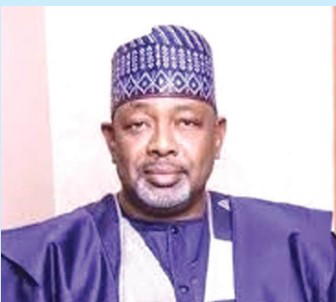
By Gabriel Ewepu
The agricultural sector in 2025 stood at the intersection of policy ambition, economic pressure and climate shocks, have combined to produce a year of mixed outcomes in the agriculture sector of Nigeria’s economy, leaving the stakeholders cautiously hopeful but deeply concerned about impact of the execution gaps.
Read Also: Dangote Refinery sells direct to marketers, as deal with depot owners crashes
From government interventions and private-sector engagement to food inflation, insecurity and devastating floods, the sector reflected both progress and persistent vulnerabilities.
Stakeholders who reviewed the year agreed that while agriculture remained central to the Federal Government’s food security and economic diversification agenda, structural challenges continued to blunt the impact of policies and programmes.
Presidency woos private sector
Early in the year, the Presidency renewed efforts to mobilise private capital into agriculture. In February 2025, Vice President Kashim Shettima urged the private sector to upscale investments in Nigeria’s food systems to tackle hunger and build resilience.
Speaking as Chairman of the Presidential Food Systems Coordinating Unit (PFSCU) at a Strategic Workshop on Agriculture and Food Security organised by PFSCU, the National Bureau of Statistics (NBS) and the Nigerian Economic Summit Group (NESG), Shettima assured investors of government’s commitment to confronting the food crisis.
He emphasised climate-smart agriculture, regenerative farming and digital solutions as key investment areas, noting that modern technologies were critical to optimising yields, reducing waste and improving productivity across agricultural value chains. According to him, stronger collaboration with the private sector would unlock the full potential of the sector and make food systems more inclusive and sustainable.
Food inflation dominates first half
Despite policy assurances, the lived reality for most Nigerians in the first half of the year was the high cost of food. By May 2025, rising prices of staples such as rice, garri, maize, millet, yam, beans, tomatoes, pepper and livestock products strained household budgets and deepened food insecurity.
However, official data suggested a modest easing. The NBS reported that food inflation slowed slightly on a year-on-year basis, though with wide regional disparities. Borno recorded the highest food inflation at 64.36 per cent, followed by Bayelsa at 39.85 per cent and Taraba at 38.58 per cent. Katsina, Rivers and Kwara recorded the slowest increases, with single-digit or low double-digit rates.
While consumers welcomed the marginal relief, analysts warned that the moderation was fragile and vulnerable to shocks from insecurity, climate events and rising production costs.
Falling prices, mixed reactions
By November, the Federal Government declared that prices of staple foods were falling and pledged to sustain the trend through continued interventions along agricultural value chains.
Minister of Agriculture and Food Security, Senator Abubakar Kyari, speaking at the 47th Regular Meeting of the National Council on Agriculture and Food Security (NCAFS) in Kaduna, said targeted market interventions were beginning to yield results.
“While we are not yet where we want to be, this positive trend confirms that we are moving in the right direction,” Kyari said.
But the optimism was not unanimous. ActionAid Nigeria’s Country Director, Dr Andrew Mamedu, argued that the price drop was largely driven by border openings and increased imports rather than improved local production.
According to him, the influx of imported food flooded markets, undermining local farmers who were already grappling with high input costs. He warned that without deliberate measures to protect and stimulate domestic production, short-term price relief could come at the expense of long-term food security.
High cost of farm inputs
For farmers, 2025 was particularly challenging due to the soaring cost of farm inputs. As the wet season began, prices of fertiliser, seeds, agrochemicals and other inputs rose sharply, pushing many smallholders to the brink.
A farmer in Kano recounted how desperation forced some farmers to remove roofing sheets from their houses or sell personal belongings to raise money for inputs. Across the country, many farmers reduced cultivated areas or delayed planting, raising concerns about future harvests.
Stakeholders noted that while government programmes existed to support input access, delays, limited coverage and inefficiencies meant that many farmers remained excluded.
Japan’s ¥12bn support
In April, the Federal Government secured a ¥12 billion loan from Japan to boost food production through the National Agricultural Growth Scheme and Agro-Pocket (NAGS-AP). The facility was targeted at improving rice seed quality, strengthening input delivery systems, enhancing extension services and expanding private-sector participation in agricultural input production.
Minister Kyari said the initiative, implemented in collaboration with institutions such as the National Cereal Research Institute and the National Agricultural Seed Council (NASC), would add value to the seed ecosystem. He stressed that improving seed quality must go hand in hand with knowledge dissemination to farmers.
Mechanisation push gains momentum
One of the most visible policy moves of the year came in June, when President Bola Tinubu unveiled 2,000 tractors and other farm equipment imported from Belarus under the Renewed Hope Agricultural Mechanisation Programme.
Unveiling the equipment at NASC headquarters in Abuja, Tinubu described the initiative as a fulfilment of his promise to mechanise agriculture and a foundation for scaling up food production, security and wealth creation.
He said the programme would complement efforts by state governments and make farming easier and more attractive, especially to young Nigerians. According to the President, mechanisation was essential for year-round cultivation and for moving Nigerian agriculture away from outdated methods.
The Nigeria-Belarus agreement covered tractors, ploughs, harrows, seed drills, sprayers, trailers, combine harvesters, mobile workshops and spare parts—equipment designed to support diverse agricultural operations across the country.
Shea nut export ban controversy
In August, the Federal Government announced a temporary six-month ban on the export of raw shea nuts to encourage local processing and value addition. While the policy was intended to deepen industrial activity and create jobs, its immediate impact was disruptive.
Shea nut prices crashed, leaving farmers and exporters exposed to losses. Many investors expressed frustration, arguing that the ban was implemented without adequate safeguards or complementary measures to cushion affected value-chain actors.
Floods devastate farmlands
Climate shocks dealt a heavy blow to agriculture in 2025. In October, the World Food Programme reported that floods affected over 315,700 people across 25 states, displacing more than 113,000 individuals and washing away more than 46,000 hectares of farmlands.
The floods compounded existing food security challenges, wiping out crops, destroying livelihoods and raising the risk of higher food prices in subsequent months.
Insecurity takes its toll
Beyond climate risks, insecurity remained a major constraint. In 2025, no fewer than 300 farmers were reportedly killed or kidnapped by bandits and terrorists across the North-West, North-East and North-Central zones.
Many farmers abandoned their fields, while others paid levies or surrendered part of their harvests to gain access to their farms. The persistent attacks underscored the link between security and food production, with stakeholders warning that agricultural reforms would remain fragile without improved rural security.
Global and financial support
On the financing front, the World Bank committed $500 million under the AgriConnect Programme to support productivity growth, agribusiness competitiveness, market access and private-sector-led agricultural transformation.
Domestically, the recapitalisation of the Bank of Agriculture marked a renewed attempt to revive agricultural finance. Several Memoranda of Understanding were signed with public and private partners to expand value-chain financing and credit access, though stakeholders said tangible impacts were yet to be widely felt.
Nigeria-Vietnam cashew pact
In October, Nigeria signed a landmark Memorandum of Understanding with Vietnam to upscale cashew production and processing. The agreement, signed at the 14th VINACAS Golden Cashew Rendezvous in Hanoi, aimed to facilitate technology transfer and expand trade partnerships.
The National Cashew Association of Nigeria described the deal as historic, noting that it was the first such agreement with the world’s largest cashew-processing nation.
EUDR compliance and export risks
Another key development came in November with the launch of a White Paper on Nigeria’s strategy for compliance with the European Union Deforestation Regulation (EUDR), alongside the signing of an MoU on agricultural produce traceability and deforestation-free supply chains.
Minister Kyari warned that failure to comply could cost Nigeria over $1 billion annually in direct export earnings. The initiative seeks to ensure that agricultural exports are traceable, legally produced and environmentally sustainable, safeguarding access to the EU market.
World Food Day and food losses
Nigeria marked World Food Day in October with renewed commitments to address rising food costs. The Federal Government announced the release of over 102,000 metric tonnes of food from national reserves and acknowledged the use of imports as a temporary measure to bridge shortages.
However, the Food and Agriculture Organisation highlighted the scale of post-harvest losses, estimating Nigeria’s food loss at 855,629 metric tonnes—enough to feed about 8.5 million people for six months.
Stakeholders score 2025
Stakeholder assessments of the year converged on one theme: mixed outcomes. DeBranch Farmers’ CEO, Sandra Victor-Gwafan, said 2025 recorded incremental gains in policy direction, local production support and value addition, but persistent challenges in implementation, coordination and security limited impact.
Similarly, Nigeria Agribusiness Group President, Arc Kabir Ibrahim, noted that while food inflation eased and consumers felt relief, farmers were squeezed by low produce prices and high input costs, threatening sustainability.
Chief Farmer of Africa, Jerry Olanrewaju, acknowledged progress in mechanisation, youth-focused programmes and sustainability initiatives but criticised weak coordination and unclear budgetary commitments. He called for fewer but bolder flagship projects, stronger accountability and better collaboration across institutions.
Outlook
As 2025 closed, Nigeria’s agricultural sector reflected both intent and inertia. Policies, prices and floods shaped outcomes in equal measure, underscoring the need for stronger execution, security, climate resilience and data-driven interventions. Stakeholders agree that turning policy ambition into lasting impact remains the defining challenge for the years ahead.
The post How policies, prices, floods shaped agriculture in 2025 appeared first on Vanguard News.

The World Bank has said Nigeria’s biggest fiscal challenge is weak revenue mobilisation rather than excessive borrowing, urging the government to prioritise efforts to boost revenue generation to support sustainable economic growth.
Speaking during an interview on Channels Television on Friday, the World Bank Country Director for Nigeria, Mathew Verghis, said Nigeria’s debt profile remains moderate by international standards and is significantly different from countries experiencing debt distress.
“From our assessment, Nigeria doesn’t have a high indebtedness problem; it has a low revenue problem,” Verghis said.
He explained that Nigeria’s debt-to-GDP ratio is lower than that of many comparable countries, stressing that concerns should focus on improving government revenue rather than limiting borrowing.
“When we looked at the numbers, Nigeria is a moderately indebted country, meaning it has less debt relative to its economy than most of its neighbours and many other countries,” he said.
“Nigeria is in a very different situation than Ghana, for example, which is going through a debt restructuring.”
Verghis defended government borrowing as a necessary tool for financing long-term investments that stimulate economic growth and improve living standards.
“Nigeria borrows for the same reasons that all countries borrow. If you want to deliver results to people, the money available on an annual basis is not enough. So you borrow, deliver results, and that improves your ability to repay,” he said.
He cited the expansion of electricity access as an example, noting that providing power to about 32 million Nigerians requires substantial upfront investment.
“To be able to connect and provide energy to 32 million Nigerians, Nigeria needs to borrow money now. But with increased access to energy, the country will become wealthier and better positioned to repay the loans,” he added.
The World Bank official, however, warned that low government revenue poses a greater threat to Nigeria’s fiscal sustainability than its current debt level.
“Nigeria’s debt is not particularly high, and in fact, it’s quite moderate by international standards. Its revenues are very low by international standards, and unless those revenues are raised, it will not be able to pay back debt,” Verghis said.
According to him, strengthening revenue mobilisation would enable the government to increase investments in infrastructure, healthcare, education and other sectors that drive job creation, improve human capital and reduce poverty over the long term.
The remarks come as the World Bank recently unveiled a new six-year Country Partnership Framework for Nigeria, which places job creation at the centre of its support for the country through investments in infrastructure, healthcare, agriculture and digital connectivity.

By Elizabeth Adegbesan
As part of the Federal Government (FG) borrowing plan for the 2026 budget, the Central Bank of Nigeria, CBN, has issued Treasury Bills, TBs, to raise N5.8 trillion in the third quarter of 2026 (Q3’26).
This represents a 241 percent year-on-year (YoY) increase when compared to N1.76 trillion sold in Q3’25.
CBN disclosed this in its Nigeria Treasury Bills Issue programme for Q3’26.
Treasury Bills are short term (less than one year) debt instruments used by the apex bank to borrow money from the Nigerian public on behalf of the federal government. CBN also uses TBs to control money supply in the economy.
The TB issue programme commenced on July 1st, and ends on September 23rd, 2026. The settlement date began yesterday and ends on September 24th, 2026.
During the period, the apex bank will issue TBs worth N900 billion on 91 days tenor, N900 billion on 182 days and N4 trillion on 364 days.
A breakdown of the programme revealed that in July, the apex bank plans to issue N2 trillion worth of TBs, comprising N300 billion worth of 91 days bills, N300 billion worth of 182 days bills and N1.4 trillion worth of 364 bills.
In August, the apex bank issued N2.1 trillion worth of TBs, comprising N300 billion worth of 91 days bills, N300 billion worth of 182 days bills, and N1.5 trillion worth of 364 days bills.
In September, CBN plans to sell N1.7 trillion worth of TBs comprising N300 billion worth of 91 days bills, N300 billion worth of 182 days bills and N1.1 trillion worth of 384 days bills.

By Emma Ujah
President and Chairman of the Board of the African Export-Import Bank (Afreximbank), Dr. George Elombi, has tasked African nations to stop the export of Lithium, the main raw material used in the production of electric vehicle (EV) batteries. Nigeria is a major exporter of Lithium in Africa, though most of the quantity is illegally exported.
Speaking at the bank’s Mid-Year Media Roundtable in Abuja on Wednesday, he said that rather than exporting raw lithium, African countries should use it to manufacture EV batteries on the continent.
He also said Afreximbank has sufficient funds to finance the production of EV batteries and is ready to provide the necessary funding to any individual or organisation willing to venture into the industry.
In his words, “African mineral resources must work for Africa’s development. EVs are the future of transportation, and the use of lithium to produce EV batteries is taking centre stage in the EV industry.
“Africa must take its position in the EV industry. We have lithium. We should produce EV batteries at home. We simply have to produce them here. There is enough money in Africa to manufacture batteries in Africa.
“If you know anyone who is interested in EV battery production, bring them to me. But if you see someone looking for funding to export lithium, don’t bring them to me.”
Dr. Elombi also said African leaders and institutions must work together to ensure that African funds held outside the continent are repatriated to support the region’s development.
Some rating agencies biased against Africa
Speaking on the bank’s credit ratings, Dr. Elombi, who advocated for African rating agencies, said some global rating agencies initially dismissed Afreximbank as too small and insignificant to drive Africa’s development, while questioning the bank’s trade finance mandate.
According to him, one agency’s 2014 assessment suggested that trade finance could not serve as a foundation for development and implied that the bank’s core mandate lacked relevance.


Jesse Marsch Called Out for ‘Weird’ Claim After Canada 0-3 Morocco

Jesse Marsch Explains Alphonso Davies’ Absence During Canada 0-3 Morocco

Liverpool Told Arsenal Lead Race For £116m Superstar

Simi Sanya and Femi Dapson Are Now Legally Married and It Is Beautiful to See

FCT Area Council Election: Live results from polling units

Premier League Set-Piece Goals (2025/2026)
-
 Sports2 days ago
FIFA Release Statement After VAR Call During Portugal 2-1 Croatia
-
 Sports2 days ago
Piers Morgan Slams BBC Commentators For Cristiano Ronaldo Treatment
-
 Sports2 days ago
Croatia’s Igor Matanovic Praised For Interview After Goal v Portugal is Ruled Out
-
 Sports2 days ago
What Cristiano Ronaldo Told Croatia Star After Controversy in World Cup Game
-
 Sports1 day ago
FIFA Set to Change England vs Mexico World Cup Kick-Off Time
-
 Sports15 hours ago
Footage Shows What Happened After Lionel Messi’s Post-Match Interview v Cape Verde
-
 Sports1 day ago
Egypt Stars Watch Kylian Mbappe Footage as Penalty Tactic vs Australia
-
 Sports1 day ago
8 Tunisia Players Fail Drug Tests As Mexican Food Contamination Suspected