
Business
Why many Nigerians choose non-interest banking — Summit Bank CEO

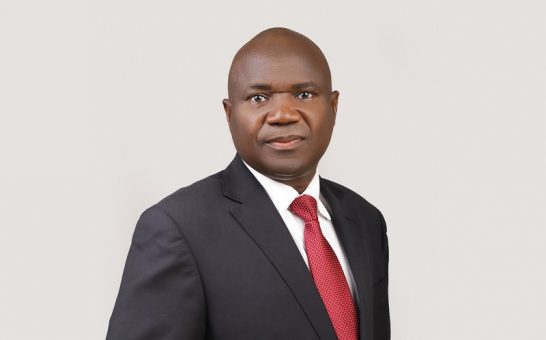
Non-interest banking appears to be gaining momentum in Nigeria’s financial landscape. In this interview with Emeka Anaeto, Business Editor of Vanguard Newspaper, the Managing Director of Summit Bank Limited, Dr. Sirajo Salisu, gave insight into the operations in the sub-sector as well as what his organization is bringing to the table.
Excerpts.
Licensed in February 2025 and starting operations in July 2025, what has the experience been like so far?
It is really challenging, but encouraging. It is encouraging in the sense that technology has changed almost everything. So even if you have a banking license, you have to begin to think of it as being a regular bank and a digital platform also, because that technology is now the key thing. As we are getting set to provide the banking services – the usual financing and the usual projects – we also have to be ready to go digital so that we can reach out to as many people as possible instead of spending much money building branches.
Most Nigerians are yet to have clear understanding or knowledge of what a non-interest bank is. How do you explain this to a layman? How is a non-interest bank different from other banks?
The conventional banking system has been around for more than 100 years, and everybody is used to the word interest. How much is your bank charging you? That is interest. How much is your bank paying you? That is interest.
Now, when you come with a terminology called non-interest, people will tend to think you are referring to an NGO or a non-profit system. This is because they are used to that word interest, and now you are talking about non-interest. People tend to assume it is going to be a free business. You go and collect N1m, you do your business, take your profit and return the same N1m, then, definitely that bank will not open its door for business after a while. So, the financial consequences to the customer is the same whether in non-interest or conventional banking. The difference lies in the process. Non-interest bank normally charges based on profitability. You take N1m, you do a business, you earn a profit of N300,000, you are going to share that profit with that non-interest bank. It is profit-sharing.
However, when people hear profit sharing, they always become very skeptical, thinking as if it is 50-50, not knowing 90-10 is sharing, and 95-5 is also sharing. So, when you share profit with non-interest bank, it is not usually a 50-50 thing. If you set up your business, you have your staff, you have your office, you get to pay all your administrative expenses. So, if you do a business because you collected N1m from us and you earn a profit of N300,000, and we say, take N150,000 and give us N150,000, then there is no fairness, because you are also dealing with so many other expenses. So probably out of the N300,000 profit, a non-interest bank will say, give me N70,000 or give me N50,000 depending also on the number of steps taken in the funding. So that is the notion of non-interest. But if you would go deeper to even call it Islamic banking, that is even more confusing, in the sense that either deliberately or religiously, people would assume Islamic Bank is only for Muslims. A non-Muslim can actually be a shareholder or even the single owner of an Islamic Bank, because Islamic banking is just a commercial bank doing business based on Sharia principles. A non-Muslim can also be a customer of an Islamic bank. A non-Muslim can be an employee of a non-interest or an Islamic bank. So whichever name you call it – non-interest, Islamic, or ethical bank – the moment you keep the sentiment aside, you have a very good understanding of how it works. It is called non-interest banking because we do profit sharing. It is called Islamic banking because we do profit sharing, not because of anything Islamic. It is called ethical banking because it is transparent and fair.
In conventional banking, interest applies to credit and deposit. You have explained the non-interest concept on the credit side, but can we know of the deposit side?
When you keep your deposit with a non-interest bank, you are not getting interest payment, but you will share from the bank’s profit, in other words profit sharing also applies. The money we lent out does not belong to us. The depositors or the owners of the money will also share in the same profit. When you keep your fixed deposit account for N1m and by end of the month, we do the calculation and see what we have, then we will also share with the customers, the depositors. In a conventional bank, when you keep a fixed deposit, they may give you 5% or 2% or 10% or 7% or whatever percentage. But in a non-interest bank, at the end of the month, whatever profit is realised will be shared with the deposit customers. We are also being very competitive. So, when we see a conventional bank can give you 5% of your fixed deposit, for instance, we can do our calculation for profit sharing that will attract you, and give you 7.5%, for instance. All of these can be translated into the same interest rate. That is why the best way to approach this is to use technology so that we can reach out to as many people as possible to enable them believe in the banking system. They trust the banking system and they do business with the banking system. They learn how to keep their money in the banking system. At this level, we are all one, encouraging or propagating the financial revolution. For me, we are propagating the general financial inclusion. However, at Summit Bank, we are targeting business people to bring them into the system, and where the competition is tight, we bring the advantage of a non-interest bank. So even where somebody has an account elsewhere, you can see them tending towards non-interest banking. And I am saying this with all sense of record. It is amazing to you to see the number of non-Muslims that are patronising the non interest banking; we are all very proud of it. And people are testifying.
As the latest entrant into the non-interest banking sub-sector, what difference are you going to make?
The first thing we did is to look for the best hands from the sector, and Summit Bank now came up with a very unique team that is very professional, very educated and very committed to doing the business with our customers as partners. So, one thing that we are bringing on board is the enhancement of professionalism. The second is that we bring customer value proposition to the table. If it is about looking for those who will open accounts, people already have five to six accounts in other banks. We sell the advantages of doing business with Summit Bank. If you are into importation, we give you some financial advice where you can see increase in profitability. If you are into export, we give you ideas of how to improve your export business. If you are into local buying and selling, we approach you from that business point of view, not from the point of view of common open account. This is one thing that we are doing differently, trying to add value to our customers, enabling partnerships with customers’ businesses.
From your response, one can see a form of partnership between Summit Bank and the customers by way of offering advisory services. Do you charge for the advisory services?
Indirectly, because when you make profit, we earn from it; and when your profit increases, our share also increases.
From the point of view of transparency, the burden of charges, and customer complaints, what form of transparency and integrity model are you putting in place to help businesses, and indirectly, the economy, grow?
Like I said, we are trying to protect the entire banking system. So even when people say there are hidden charges in your conventional banking, like you borrow N10,000 and tomorrow it is N15,000, we say there is nothing like hidden charges. All the charges that will make your N10,000 move to N15,000 were actually communicated in your offer letter. It is either somebody did not take time to read or did not want to read. However, what makes non-interest banking a little bit attractive and very specific is that we do not finance luxury. We finance business. If you are coming to a conventional bank to borrow N1m to pay you back in two months, they will give you. Whatever you do, whether profitable or not profitable, after two months, you have to pay back with the interest. In a non-interest bank, you do not just take the money, but you have to be very specific.
That is where the transparency comes in. If you ask for N1m to buy 15 laptops which you will sell for a profit of N300,000, we are not going to give you the money directly. You will look for where you will buy the laptops. We will buy the laptops and deliver the laptops to you and wait for you to sell them. We share the profit. That is one difference. We will not give you money, but we will buy what you say you will buy. If you say you are going to sell it in 10 days, we are going to monitor you to make sure that you sell in 10 days. However, because of the flexibility of the conventional banking system, you may approach a conventional bank to take N1m. After getting the money, you say that a friend told you that there is big money in selling rams, especially during festive periods.
Then you take the money and buy rams. You do not know anything about the business of ram. You only hear that people make profit, and before you know it, the money gets wiped out, and you have to pay back the loan. In a non-interest bank, a customer does not have the single room to do that diversion. You have to buy what you say you will buy, that is one. The second thing that makes it transparent is when we are going to share the profit with you.
We will propose 90-10 or 80-20. You have to do your calculation. You sign and we keep reminding you that this is what you are going to pay to us. Even if it turns out that your business made more profit than expected, the agreed profit sharing will not change. Even if the prevailing interest rate goes up or down, a transaction consummated in a non-interest bank will still adhere to the same profit-sharing agreement. Even if you are going to make double or three times the profit, our agreement will never change. So these are some of the transparency matters that show up when we talk about the difference between a non-interest bank and a conventional bank. But there is nothing hidden, and we believe in contractual agreement. So, whatever we agree on is what we are going to do.
The post Why many Nigerians choose non-interest banking — Summit Bank CEO appeared first on Vanguard News.

The World Bank has said Nigeria’s biggest fiscal challenge is weak revenue mobilisation rather than excessive borrowing, urging the government to prioritise efforts to boost revenue generation to support sustainable economic growth.
Speaking during an interview on Channels Television on Friday, the World Bank Country Director for Nigeria, Mathew Verghis, said Nigeria’s debt profile remains moderate by international standards and is significantly different from countries experiencing debt distress.
“From our assessment, Nigeria doesn’t have a high indebtedness problem; it has a low revenue problem,” Verghis said.
He explained that Nigeria’s debt-to-GDP ratio is lower than that of many comparable countries, stressing that concerns should focus on improving government revenue rather than limiting borrowing.
“When we looked at the numbers, Nigeria is a moderately indebted country, meaning it has less debt relative to its economy than most of its neighbours and many other countries,” he said.
“Nigeria is in a very different situation than Ghana, for example, which is going through a debt restructuring.”
Verghis defended government borrowing as a necessary tool for financing long-term investments that stimulate economic growth and improve living standards.
“Nigeria borrows for the same reasons that all countries borrow. If you want to deliver results to people, the money available on an annual basis is not enough. So you borrow, deliver results, and that improves your ability to repay,” he said.
He cited the expansion of electricity access as an example, noting that providing power to about 32 million Nigerians requires substantial upfront investment.
“To be able to connect and provide energy to 32 million Nigerians, Nigeria needs to borrow money now. But with increased access to energy, the country will become wealthier and better positioned to repay the loans,” he added.
The World Bank official, however, warned that low government revenue poses a greater threat to Nigeria’s fiscal sustainability than its current debt level.
“Nigeria’s debt is not particularly high, and in fact, it’s quite moderate by international standards. Its revenues are very low by international standards, and unless those revenues are raised, it will not be able to pay back debt,” Verghis said.
According to him, strengthening revenue mobilisation would enable the government to increase investments in infrastructure, healthcare, education and other sectors that drive job creation, improve human capital and reduce poverty over the long term.
The remarks come as the World Bank recently unveiled a new six-year Country Partnership Framework for Nigeria, which places job creation at the centre of its support for the country through investments in infrastructure, healthcare, agriculture and digital connectivity.

By Elizabeth Adegbesan
As part of the Federal Government (FG) borrowing plan for the 2026 budget, the Central Bank of Nigeria, CBN, has issued Treasury Bills, TBs, to raise N5.8 trillion in the third quarter of 2026 (Q3’26).
This represents a 241 percent year-on-year (YoY) increase when compared to N1.76 trillion sold in Q3’25.
CBN disclosed this in its Nigeria Treasury Bills Issue programme for Q3’26.
Treasury Bills are short term (less than one year) debt instruments used by the apex bank to borrow money from the Nigerian public on behalf of the federal government. CBN also uses TBs to control money supply in the economy.
The TB issue programme commenced on July 1st, and ends on September 23rd, 2026. The settlement date began yesterday and ends on September 24th, 2026.
During the period, the apex bank will issue TBs worth N900 billion on 91 days tenor, N900 billion on 182 days and N4 trillion on 364 days.
A breakdown of the programme revealed that in July, the apex bank plans to issue N2 trillion worth of TBs, comprising N300 billion worth of 91 days bills, N300 billion worth of 182 days bills and N1.4 trillion worth of 364 bills.
In August, the apex bank issued N2.1 trillion worth of TBs, comprising N300 billion worth of 91 days bills, N300 billion worth of 182 days bills, and N1.5 trillion worth of 364 days bills.
In September, CBN plans to sell N1.7 trillion worth of TBs comprising N300 billion worth of 91 days bills, N300 billion worth of 182 days bills and N1.1 trillion worth of 384 days bills.

By Emma Ujah
President and Chairman of the Board of the African Export-Import Bank (Afreximbank), Dr. George Elombi, has tasked African nations to stop the export of Lithium, the main raw material used in the production of electric vehicle (EV) batteries. Nigeria is a major exporter of Lithium in Africa, though most of the quantity is illegally exported.
Speaking at the bank’s Mid-Year Media Roundtable in Abuja on Wednesday, he said that rather than exporting raw lithium, African countries should use it to manufacture EV batteries on the continent.
He also said Afreximbank has sufficient funds to finance the production of EV batteries and is ready to provide the necessary funding to any individual or organisation willing to venture into the industry.
In his words, “African mineral resources must work for Africa’s development. EVs are the future of transportation, and the use of lithium to produce EV batteries is taking centre stage in the EV industry.
“Africa must take its position in the EV industry. We have lithium. We should produce EV batteries at home. We simply have to produce them here. There is enough money in Africa to manufacture batteries in Africa.
“If you know anyone who is interested in EV battery production, bring them to me. But if you see someone looking for funding to export lithium, don’t bring them to me.”
Dr. Elombi also said African leaders and institutions must work together to ensure that African funds held outside the continent are repatriated to support the region’s development.
Some rating agencies biased against Africa
Speaking on the bank’s credit ratings, Dr. Elombi, who advocated for African rating agencies, said some global rating agencies initially dismissed Afreximbank as too small and insignificant to drive Africa’s development, while questioning the bank’s trade finance mandate.
According to him, one agency’s 2014 assessment suggested that trade finance could not serve as a foundation for development and implied that the bank’s core mandate lacked relevance.


Ranking Man Utd’s Midfield Transfer Options From Worst To Best

Five Forwards De Zerbi Can Sign At Tottenham This Summer

Kebbi: Hisbah arrests 25 youths in hotel raid over alleged immoral acts

Simi Sanya and Femi Dapson Are Now Legally Married and It Is Beautiful to See

FCT Area Council Election: Live results from polling units

Premier League Set-Piece Goals (2025/2026)
-
 Sports1 day ago
FIFA Release Statement After VAR Call During Portugal 2-1 Croatia
-
 Sports1 day ago
Piers Morgan Slams BBC Commentators For Cristiano Ronaldo Treatment
-
 Sports1 day ago
Croatia’s Igor Matanovic Praised For Interview After Goal v Portugal is Ruled Out
-
 Sports1 day ago
What Cristiano Ronaldo Told Croatia Star After Controversy in World Cup Game
-
 Sports17 hours ago
FIFA Set to Change England vs Mexico World Cup Kick-Off Time
-
 Sports2 days ago
US Icon Brad Friedel Blasts Mexico Ahead of England Match
-
 Sports2 days ago
Harry Kane Points Out ‘Huge Advantage’ Mexico Have vs England
-
 Sports14 hours ago
Egypt Stars Watch Kylian Mbappe Footage as Penalty Tactic vs Australia