
Business
NBS drops old consumption habits, refreshes inflation data

By Cynthia Alo
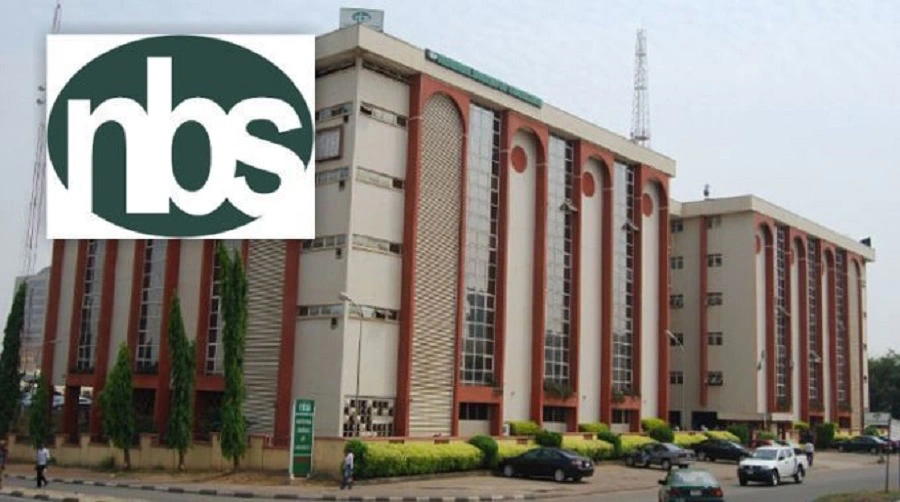
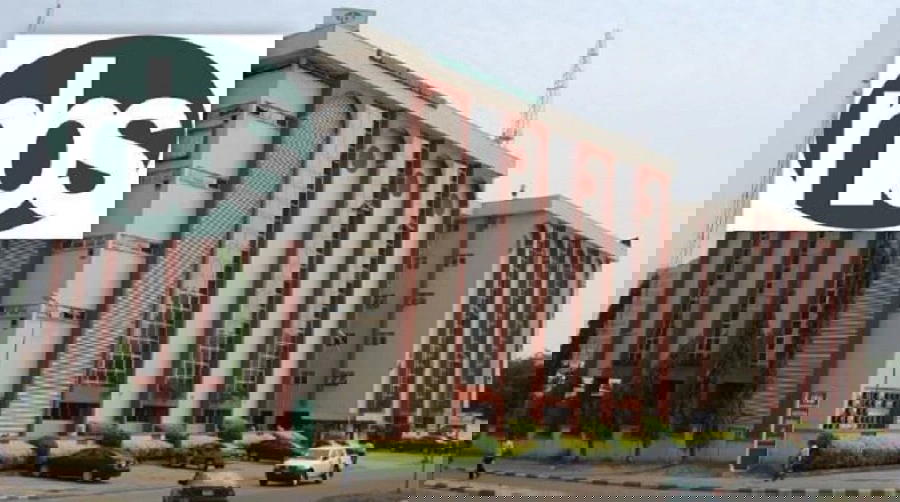
The National Bureau of Statistics, NBS, has dropped outdated consumption habits that no longer reflect how Nigerians live and spend, following a long-overdue rebasing of the Consumer Price Index, CPI.
Speaking at a virtual stakeholder engagement on the December 2025 inflation figure, organised with the Nigerian Economic Summit Group, NESG, the Statistician-General of the Federation and Chief Executive Officer of NBS, Mr Adeyemi Adeniran, said the overhaul was necessary to align inflation measurement with present-day realities.
“We were still tracking inflation with a basket built around a 2009 lifestyle,” Adeniran said. “After 15 years, that basket could no longer tell the true story of prices in Nigeria. This rebasing allows inflation data to reflect what people actually consume today.”
The CPI rebasing, completed in 2025 with 2024 as the new base year, is Nigeria’s first in 15 years, far beyond the five-year cycle recommended by international standards. According to NBS, the delay meant that inflation figures were increasingly shaped by obsolete items and distorted price movements.
As part of the exercise, a nationwide household expenditure survey conducted in 2023 and 2024 across all 36 states and the Federal Capital Territory revealed that Nigerians no longer consume 201 items previously included in the CPI basket.
Director of Price Statistics at NBS, Dr Ayo Anthony, said the items were removed strictly based on evidence from the survey. “It is not NBS that woke up and removed items,” he said. “People did not report spending on them for 12 months.”
Among the items quietly dropped are black-and-white televisions, Nokia 3310 phones and old Motorola handsets. “These are things people no longer spend their limited income on, so they cannot continue to influence inflation figures,” Anthony explained.
At the same time, 404 new products that Nigerians now regularly buy were added, expanding the CPI basket to 934 items from about 740 previously. According to NBS, the changes better capture modern consumption patterns, including new technologies and evolving household needs.
The rebasing, however, comes with technical challenges. Adeniran explained that using December 2024 as the new index reference period could create a misleading spike in December 2025 inflation due to a base effect.
“If we publish the figure the old way, it will show a sharp rise that is purely arithmetic,” he said, adding that NBS has adopted international best practice to normalise the figure and avoid misinterpretation.
In his remarks, NESG Chief Executive Officer, Dr Tayo Aduloju, welcomed the changes, stressing that credible data is crucial as Nigeria moves into a consolidation phase of reforms.
“When consumption habits change, statistics must change with them,” he said. “This new look at inflation data is essential for sound policy and investor confidence.”
The post NBS drops old consumption habits, refreshes inflation data appeared first on Vanguard News.

The World Bank has said Nigeria’s biggest fiscal challenge is weak revenue mobilisation rather than excessive borrowing, urging the government to prioritise efforts to boost revenue generation to support sustainable economic growth.
Speaking during an interview on Channels Television on Friday, the World Bank Country Director for Nigeria, Mathew Verghis, said Nigeria’s debt profile remains moderate by international standards and is significantly different from countries experiencing debt distress.
“From our assessment, Nigeria doesn’t have a high indebtedness problem; it has a low revenue problem,” Verghis said.
He explained that Nigeria’s debt-to-GDP ratio is lower than that of many comparable countries, stressing that concerns should focus on improving government revenue rather than limiting borrowing.
“When we looked at the numbers, Nigeria is a moderately indebted country, meaning it has less debt relative to its economy than most of its neighbours and many other countries,” he said.
“Nigeria is in a very different situation than Ghana, for example, which is going through a debt restructuring.”
Verghis defended government borrowing as a necessary tool for financing long-term investments that stimulate economic growth and improve living standards.
“Nigeria borrows for the same reasons that all countries borrow. If you want to deliver results to people, the money available on an annual basis is not enough. So you borrow, deliver results, and that improves your ability to repay,” he said.
He cited the expansion of electricity access as an example, noting that providing power to about 32 million Nigerians requires substantial upfront investment.
“To be able to connect and provide energy to 32 million Nigerians, Nigeria needs to borrow money now. But with increased access to energy, the country will become wealthier and better positioned to repay the loans,” he added.
The World Bank official, however, warned that low government revenue poses a greater threat to Nigeria’s fiscal sustainability than its current debt level.
“Nigeria’s debt is not particularly high, and in fact, it’s quite moderate by international standards. Its revenues are very low by international standards, and unless those revenues are raised, it will not be able to pay back debt,” Verghis said.
According to him, strengthening revenue mobilisation would enable the government to increase investments in infrastructure, healthcare, education and other sectors that drive job creation, improve human capital and reduce poverty over the long term.
The remarks come as the World Bank recently unveiled a new six-year Country Partnership Framework for Nigeria, which places job creation at the centre of its support for the country through investments in infrastructure, healthcare, agriculture and digital connectivity.

By Elizabeth Adegbesan
As part of the Federal Government (FG) borrowing plan for the 2026 budget, the Central Bank of Nigeria, CBN, has issued Treasury Bills, TBs, to raise N5.8 trillion in the third quarter of 2026 (Q3’26).
This represents a 241 percent year-on-year (YoY) increase when compared to N1.76 trillion sold in Q3’25.
CBN disclosed this in its Nigeria Treasury Bills Issue programme for Q3’26.
Treasury Bills are short term (less than one year) debt instruments used by the apex bank to borrow money from the Nigerian public on behalf of the federal government. CBN also uses TBs to control money supply in the economy.
The TB issue programme commenced on July 1st, and ends on September 23rd, 2026. The settlement date began yesterday and ends on September 24th, 2026.
During the period, the apex bank will issue TBs worth N900 billion on 91 days tenor, N900 billion on 182 days and N4 trillion on 364 days.
A breakdown of the programme revealed that in July, the apex bank plans to issue N2 trillion worth of TBs, comprising N300 billion worth of 91 days bills, N300 billion worth of 182 days bills and N1.4 trillion worth of 364 bills.
In August, the apex bank issued N2.1 trillion worth of TBs, comprising N300 billion worth of 91 days bills, N300 billion worth of 182 days bills, and N1.5 trillion worth of 364 days bills.
In September, CBN plans to sell N1.7 trillion worth of TBs comprising N300 billion worth of 91 days bills, N300 billion worth of 182 days bills and N1.1 trillion worth of 384 days bills.

By Emma Ujah
President and Chairman of the Board of the African Export-Import Bank (Afreximbank), Dr. George Elombi, has tasked African nations to stop the export of Lithium, the main raw material used in the production of electric vehicle (EV) batteries. Nigeria is a major exporter of Lithium in Africa, though most of the quantity is illegally exported.
Speaking at the bank’s Mid-Year Media Roundtable in Abuja on Wednesday, he said that rather than exporting raw lithium, African countries should use it to manufacture EV batteries on the continent.
He also said Afreximbank has sufficient funds to finance the production of EV batteries and is ready to provide the necessary funding to any individual or organisation willing to venture into the industry.
In his words, “African mineral resources must work for Africa’s development. EVs are the future of transportation, and the use of lithium to produce EV batteries is taking centre stage in the EV industry.
“Africa must take its position in the EV industry. We have lithium. We should produce EV batteries at home. We simply have to produce them here. There is enough money in Africa to manufacture batteries in Africa.
“If you know anyone who is interested in EV battery production, bring them to me. But if you see someone looking for funding to export lithium, don’t bring them to me.”
Dr. Elombi also said African leaders and institutions must work together to ensure that African funds held outside the continent are repatriated to support the region’s development.
Some rating agencies biased against Africa
Speaking on the bank’s credit ratings, Dr. Elombi, who advocated for African rating agencies, said some global rating agencies initially dismissed Afreximbank as too small and insignificant to drive Africa’s development, while questioning the bank’s trade finance mandate.
According to him, one agency’s 2014 assessment suggested that trade finance could not serve as a foundation for development and implied that the bank’s core mandate lacked relevance.


Who really owns NDC? – Vanguard News

US House of Reps honours Uzodimma for transformative leadership
Nigeria’s challenge is low revenue, not high debt – World Bank

Simi Sanya and Femi Dapson Are Now Legally Married and It Is Beautiful to See

FCT Area Council Election: Live results from polling units

Premier League Set-Piece Goals (2025/2026)
-
 Sports2 days ago
Real Reason Serena Williams Broke Strict Rule as $50,000 Fine Decision Made
-
 Sports21 hours ago
FIFA Release Statement After VAR Call During Portugal 2-1 Croatia
-
 Sports20 hours ago
Piers Morgan Slams BBC Commentators For Cristiano Ronaldo Treatment
-
 Sports2 days ago
VAR Expert Casts Clear Verdict on Folarin Balogun Red Card vs Bosnia
-
 Sports19 hours ago
Croatia’s Igor Matanovic Praised For Interview After Goal v Portugal is Ruled Out
-
 Sports8 hours ago
FIFA Set to Change England vs Mexico World Cup Kick-Off Time
-
 Sports17 hours ago
What Cristiano Ronaldo Told Croatia Star After Controversy in World Cup Game
-
 Sports2 days ago
US Icon Brad Friedel Blasts Mexico Ahead of England Match