
Business
Electricity: LCCI, others lament losses as national grid collapses again

By Udeme Akpan & Obas Esiedesa, Abuja
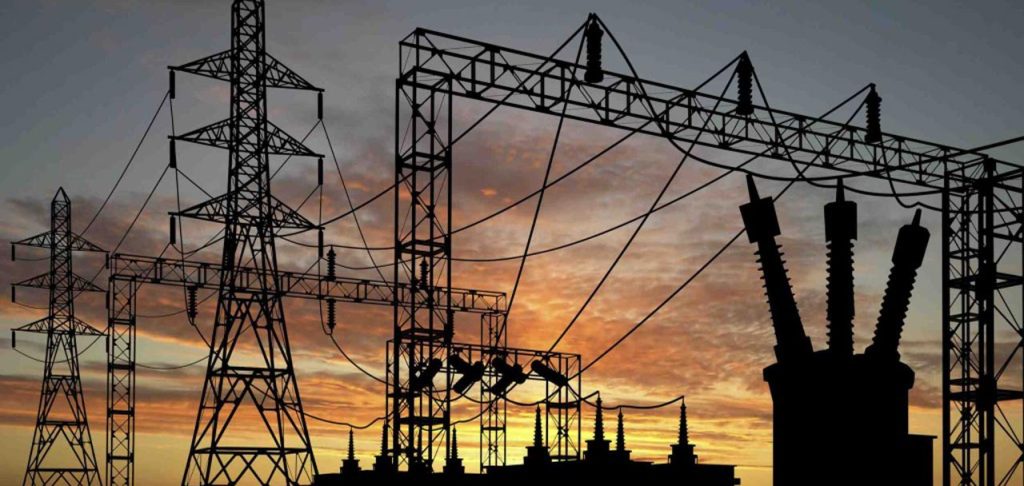
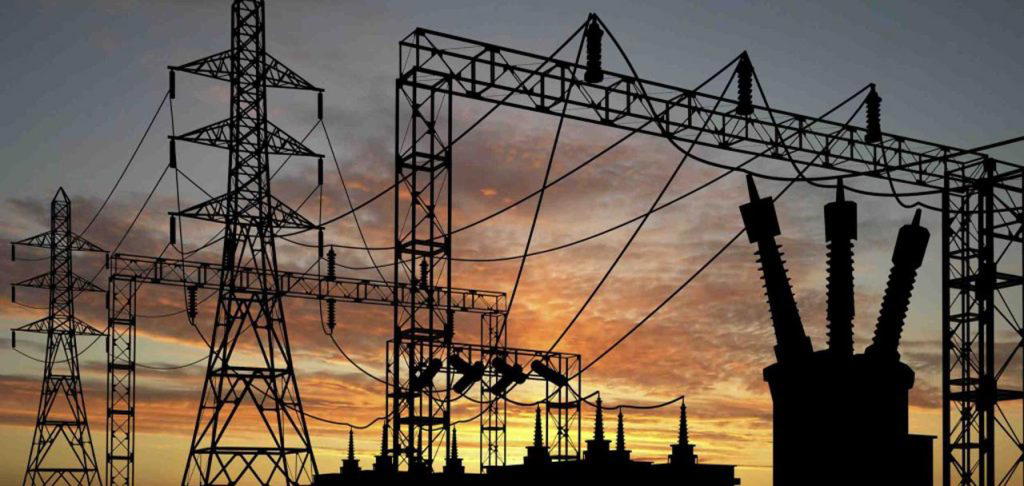
Nigeria’s national power grid suffered another disruption yesterday, the second in four days, triggering widespread outages that disrupted businesses and renewed concerns over the economic cost of power instability, even as the Nigerian Independent System Operator (NISO) described the incident as a partial system disturbance.
The disruption occurred at about 10:48am, leaving electricity distribution companies (DisCos) without load allocation and plunging several parts of the country into darkness. Data from the system operator showed that power generation, which was above 4,000 megawatts (MW) the previous day, dropped sharply, with all 12 DisCos initially recording zero allocation.
However, in a press statement, NISO said the incident was not a total grid collapse. According to the system operator, the disturbance originated from the Gombe Transmission Substation and rapidly propagated to Jebba, Kainji and Ayede transmission substations. The voltage disturbance led to the tripping of some transmission lines and generating units, resulting in a partial system collapse.
NISO said corrective actions were immediately implemented, with restoration beginning around 11:11am and subsequently completed. “The national grid has been fully restored and electricity supply across the affected areas has since returned to normal,” the statement said.
As at 4.56pm, checks showed that the grid was recovering, with 10 generation companies supplying about 1,417MW. Major plants, including Egbin Power as well as Kainji, Shiroro and Jebba hydropower stations, were still not fully back on the grid at the time. Azura Edo Independent Power Plant, generating 395MW, and Delta Power at 355MW, were the highest contributors during the recovery period.
Several DisCos confirmed the outage through messages to customers. Abuja DisCo announced a loss of supply across its network, while Port Harcourt and Eko DisCos also attributed widespread outages to the system disturbance, assuring customers that restoration efforts were ongoing.
Reacting, the Lagos Chamber of Commerce and Industry (LCCI) lamented the economic losses associated with repeated grid failures. Its President, Mr. Gabriel Idahosa, said frequent system disturbances and poor power supply have continued to undermine business operations, productivity and growth, especially in agriculture and manufacturing.
Similarly, Chief Executive Officer of the Centre for the Promotion of Private Enterprise, Dr. Muda Yusuf, said recurring grid failures erode investor confidence and raise operating costs for businesses. He stressed that no economy can achieve meaningful growth without reliable and affordable electricity.
National Secretary of the Nigeria Electricity Consumer Advocacy Network, Mr. Uket Obonga, also criticised the persistent outages, noting that consumers, particularly those on estimated billing, still pay unchanged charges despite supply disruptions. He blamed weak capacity and lack of accountability in grid management.
Despite reforms, including the unbundling of the Transmission Company of Nigeria into the Transmission Service Provider and NISO, stakeholders said sustained investment, decentralisation and stronger accountability are needed to curb recurring grid disturbances and limit economic losses.
The post Electricity: LCCI, others lament losses as national grid collapses again appeared first on Vanguard News.

By Elizabeth Adegbesan
Domestic air travel fares rose by 20.8 percent year-on-year (YoY) to N157,552 in May 2026 from N130,361 in May 2025.
The National Bureau of Statistics (NBS) disclosed this in its latest Transport Fare Watch which showed increases in fares across other transport categories.
The NBS stated: “In air travel, the average fare paid by air passengers for a specified route (single journey) was N157,552.19 in May 2026.
“On a year-on-year basis, the fare rose by 20.86 percent from N130,361.85 in May 2025.”
Analysing air transport charges for specified routes (single journey), the Bureau said Kano State recorded the highest average fare at N184,139.29, followed by Lagos State at N176,971.65. The lowest fares were recorded in Gombe State (N135,800.61) and Nasarawa State (N138,999.14).
On other transport categories, the NBS said:“The average fare paid by commuters for bus journeys within the city per drop was N1,431.25 in May 2026.
“On a YoY basis, the average fare recorded a significant increase of 38.63 percent compared to the N1,032.46 paid in May 2025.
“In another category, the average fare paid by commuters for an intercity bus journey per drop stood at N9,699.55 in May 2026.
“On a YoY basis, the average fare rose by 21.89 percent from N7,957.41 in May 2025.
“The average transport fare paid for Okada transportation stood at N1,072.51 in May 2026.
“On a YoY basis, the average fare rose by 52.45 percent from N703.54 in May 2025.
“For water transport (waterway passenger transportation), the average fare paid in May 2026 was N2,276.48.
“On a YoY basis, it increased by 30.88 percent from N1,739.32 in May 2025.”

By Yinka Kolawole
The Nigerian Economic Summit Group, NESG, has warned that export rerouting through neighbouring countries is undermining Nigeria’s trade competitiveness and depriving the economy of significant domestic value, despite the country’s impressive N7.55 trillion trade surplus recorded in the first quarter of 2026.
The warning comes as data from the National Bureau of Statistics, NBS, showed that Nigeria’s total merchandise trade rose to N34.79 trillion in Q1 2026, with exports valued at N21.17 trillion and imports at N13.62 trillion, resulting in a positive trade balance of N7.55 trillion.
While describing the surplus as encouraging, NESG cautioned that headline trade figures do not tell the full story, stressing that Nigeria continues to lose substantial economic benefits when locally produced goods are exported through neighbouring countries before reaching their final destinations.
Export rerouting happens when goods produced in one country are moved through another country before they reach buyers.
According to the group, export rerouting deprives Nigeria of logistics income, distorts trade statistics, weakens product branding and limits the country’s ability to capture the full value generated by its exports.
The private sector think tank identified weak quality assurance and certification systems, inefficient port operations and cumbersome export procedures as major factors pushing exporters to seek alternative trade routes outside Nigeria.
NESG called on the government to strengthen local certification and quality assurance infrastructure to ensure Nigerian products meet international standards without relying on third-country certification systems.
It noted that globally recognised certification has become a critical requirement for accessing international markets, warning that where Nigerian exporters cannot obtain credible certification domestically, neighbouring countries often benefit from providing the final export channel.
The group added that sectors such as agriculture, food processing, textiles, leather and manufacturing stand to gain significantly if certification processes are improved, enabling exporters to access foreign markets directly while retaining more value within the domestic economy.
NESG also urged authorities to address longstanding bottlenecks at Nigerian ports, including congestion, excessive documentation, delays and high logistics costs, arguing that these inefficiencies continue to discourage exporters and make neighbouring ports more attractive.
According to the group, improving port efficiency is not merely a transportation issue but a strategic imperative for boosting Nigeria’s export competitiveness under the African Continental Free Trade Area (AfCFTA) and the global trading system.
It stressed that beyond recording trade surpluses, Nigeria must focus on increasing domestic value capture by simplifying export procedures, modernising port infrastructure, investing in industrial processing zones and providing exporters with the infrastructure needed to compete globally.
“Trade growth should not be measured only by the size of the surplus,” the group said, insisting that the ultimate objective should be to ensure exports generate more jobs, foreign exchange earnings, industrial expansion and broader economic value within Nigeria.

The Federal Government is set to intensify efforts to drive industrial growth, expand trade, mobilise investment and boost non-oil exports in 2026 as part of its economic diversification agenda.
Minister of Industry, Trade and Investment, Dr. Jumoke Oduwole, stated this at a management retreat for directors-general, directors and chief executives of agencies under the ministry.
She said the focus is to translate policy into measurable economic outcomes through stronger implementation, collaboration and performance monitoring.
The retreat themed, “From Policy to Performance: Driving Industrial Growth, Trade Expansion and Investment Outcomes,” was convened to review the implementation of the Nigeria Industrial Policy (NIP), described as the country’s first comprehensive industrial framework aimed at rebuilding Nigeria’s manufacturing base.
According to the minister, the retreat seeks to assess progress on the policy and strengthen accountability, noting that previous policy initiatives often faltered at the implementation stage.
“Our immediate responsibility is to convert policy direction into tangible results through effective execution, inter-agency collaboration and rigorous performance monitoring,” she said.
Highlighting achievements recorded in 2025, Oduwole said policy alignment across trade, investment and industry delivered significant gains for the economy.
She disclosed that total capital importation rose to about $21 billion within the first 10 months of 2025, while non-oil exports exceeded $6.1 billion, reflecting sustained efforts to diversify Nigeria’s export base.
She also said intra-African trade climbed to approximately N4.82 trillion in the first half of 2025, driven by expanding opportunities under the African Continental Free Trade Area (AfCFTA).
According to the minister, more than 115,000 Micro, Small and Medium Enterprises (MSMEs) accessed grants, loans and trade finance through interventions implemented by the Bank of Industry, NEXIM Bank and the Nigerian Export Promotion Council.
Oduwole further revealed that Nigeria successfully completed Africa’s first comprehensive five-year review of the implementation of the AfCFTA, underscoring the country’s leadership in regional trade integration.
She said progress has continued in 2026 with improved export connectivity, enhanced investment facilitation, stronger intellectual property reforms and increased support for exporters and manufacturers.
The minister added that ongoing trade and investment agreements would unlock new export markets, attract foreign and domestic investments and strengthen Nigeria’s participation in global value chains.


Liverpool Target Two New Wingers Alongside Barcola Deal
Domestic air travel fare rises 20.8% in May

Arsenal Set For Transfer Windfall Thanks To Rivals Chelsea

Simi Sanya and Femi Dapson Are Now Legally Married and It Is Beautiful to See

FCT Area Council Election: Live results from polling units

Premier League Set-Piece Goals (2025/2026)
-
 Sports1 day ago
Jesse Marsch’s Full Speech After Canada vs South Africa
-
 Sports2 days ago
Statement Released as Lucas Trejo’s Wife and Children Die in Earthquake
-
 Sports2 days ago
Pele and Diego Maradona’s Private Chat About Lionel Messi in 2016
-
 Sports20 hours ago
How Much Emma Raducanu Will Earn Despite Withdrawing Through Injury
-
 Sports2 days ago
Steve Clarke Ridiculed For Comment About England in Scotland Resignation Letter
-
 Sports10 hours ago
FIFA Make Decision on Investigating 2026 World Cup ‘Match-Fixing’
-
 Sports2 days ago
AI Names & Ranks 20 Greatest Male Tennis Players in History
-
 Sports1 day ago
Christina Unkel’s Verdict on Penalty Controversy