
Business
Oil Theft: How criminal networks are moving from creeks to communities


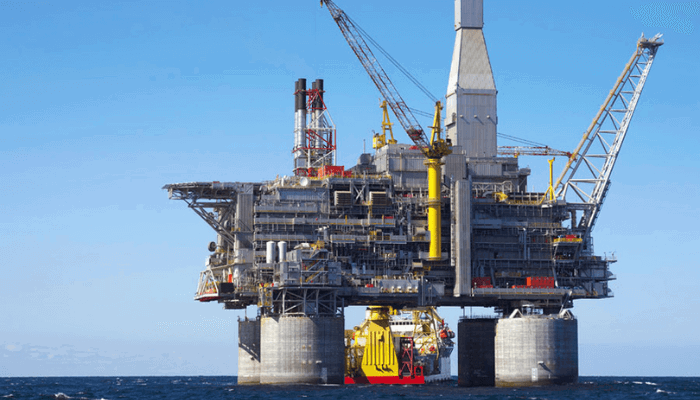
For decades, Nigeria’s oil theft crisis was largely associated with remote creeks, mangrove swamps and offshore vandalism in the Niger Delta.
Increasingly, however, security agencies say the trade is migrating inland-embedding itself within civilian communities, markets and transport corridors where it can operate under the cover of everyday commerce.
The recent exposure of Owaza Mami Market in Ukwa West Local Government Area of Abia State as a hub for illegal crude oil bunkering and artisanal refining underscores a broader national trend: oil theft networks are becoming more organised, decentralised and harder to detect.
On January 24, 2026, a joint, intelligence-led operation by Pipeline Infrastructure Nigeria Limited (PINL) and Government Security Agencies uncovered the market’s hidden role as a storage, processing and distribution centre for stolen crude oil and illegally refined petroleum products.
What appeared to commuters along the Port Harcourt-Aba Expressway as a routine roadside market was, in reality, part of a sophisticated illicit supply chain linked to the Trans-Niger Pipeline.
From Creeks to commercial hubs
Security officials say criminal groups are deliberately relocating operations closer to highways and population centres, blending illegal activities into legitimate economic spaces.
Markets, warehouses, hotels and residential compounds now increasingly serve as covers for storage, refining and distribution of stolen petroleum products.
In the Owaza case, investigators found warehouses stocked with crude oil and refined products, generators modified to run directly on crude oil, and active artisanal refining equipment operating within the market.
The discovery mirrors similar patterns reported across parts of Rivers, Imo, Abia and Delta states, where illegal refining has moved away from isolated camps into built-up areas.
According to energy security analysts, this shift reduces logistic costs for criminal networks, provides faster access to buyers, and complicates enforcement efforts by increasing the risk of civilian casualties during raids.
Security gaps and organised escape routes
The Owaza raid also exposed recurring weaknesses in Nigeria’s oil theft response architecture.
Investigators reported repeated disruptions to earlier enforcement efforts, including access restrictions, checkpoint delays and the presence of undocumented exit routes that allowed suspects to evade arrest.
Such escape corridors, security sources say, are not unique to Owaza but are increasingly common features of illegal oil hubs nationwide, reflecting advance planning and local intelligence support.
“These are no longer opportunistic crimes,” said a security source familiar with pipeline protection operations.
“They are organised, layered networks with logistics, intelligence and protection mechanisms.”
Economic and environmental toll
Nigeria loses billions of dollars annually to oil theft, with consequences ranging from reduced government revenue and foreign exchange inflows to environmental devastation and public health risks.
Artisanal refining sites often discharge waste directly into soil and waterways, contaminating farmlands and threatening livelihoods.
Enforcement shifts, role of surveillance contractors
The January 24 operation reflects a growing reliance on intelligence-driven enforcement and private pipeline surveillance contractors working alongside government security agencies.
PINL, which secures the Eastern Corridor of the Trans-Niger Pipeline, says sustained monitoring and local intelligence are critical to dismantling networks that thrive on anonymity and mobility.
However, analysts warn that raids alone are insufficient. Without follow-through prosecutions, permanent closure of illegal access routes and economic alternatives for host communities, dismantled networks often re-emerge elsewhere.
Problem hiding in plain sight
The exposure of Owaza Mami Market highlights a sobering reality: Nigeria’s oil theft problem is no longer confined to distant creeks or offshore pipelines.
It is increasingly woven into everyday spaces-markets, transport corridors and communities-where criminal operations coexist with legitimate economic life.
For now, the dismantled market stands as both a warning and a case study-illustrating how oil theft in Nigeria has evolved, and how much harder it has become to spot.
The post Oil Theft: How criminal networks are moving from creeks to communities appeared first on Vanguard News.

The World Bank has said Nigeria’s biggest fiscal challenge is weak revenue mobilisation rather than excessive borrowing, urging the government to prioritise efforts to boost revenue generation to support sustainable economic growth.
Speaking during an interview on Channels Television on Friday, the World Bank Country Director for Nigeria, Mathew Verghis, said Nigeria’s debt profile remains moderate by international standards and is significantly different from countries experiencing debt distress.
“From our assessment, Nigeria doesn’t have a high indebtedness problem; it has a low revenue problem,” Verghis said.
He explained that Nigeria’s debt-to-GDP ratio is lower than that of many comparable countries, stressing that concerns should focus on improving government revenue rather than limiting borrowing.
“When we looked at the numbers, Nigeria is a moderately indebted country, meaning it has less debt relative to its economy than most of its neighbours and many other countries,” he said.
“Nigeria is in a very different situation than Ghana, for example, which is going through a debt restructuring.”
Verghis defended government borrowing as a necessary tool for financing long-term investments that stimulate economic growth and improve living standards.
“Nigeria borrows for the same reasons that all countries borrow. If you want to deliver results to people, the money available on an annual basis is not enough. So you borrow, deliver results, and that improves your ability to repay,” he said.
He cited the expansion of electricity access as an example, noting that providing power to about 32 million Nigerians requires substantial upfront investment.
“To be able to connect and provide energy to 32 million Nigerians, Nigeria needs to borrow money now. But with increased access to energy, the country will become wealthier and better positioned to repay the loans,” he added.
The World Bank official, however, warned that low government revenue poses a greater threat to Nigeria’s fiscal sustainability than its current debt level.
“Nigeria’s debt is not particularly high, and in fact, it’s quite moderate by international standards. Its revenues are very low by international standards, and unless those revenues are raised, it will not be able to pay back debt,” Verghis said.
According to him, strengthening revenue mobilisation would enable the government to increase investments in infrastructure, healthcare, education and other sectors that drive job creation, improve human capital and reduce poverty over the long term.
The remarks come as the World Bank recently unveiled a new six-year Country Partnership Framework for Nigeria, which places job creation at the centre of its support for the country through investments in infrastructure, healthcare, agriculture and digital connectivity.

By Elizabeth Adegbesan
As part of the Federal Government (FG) borrowing plan for the 2026 budget, the Central Bank of Nigeria, CBN, has issued Treasury Bills, TBs, to raise N5.8 trillion in the third quarter of 2026 (Q3’26).
This represents a 241 percent year-on-year (YoY) increase when compared to N1.76 trillion sold in Q3’25.
CBN disclosed this in its Nigeria Treasury Bills Issue programme for Q3’26.
Treasury Bills are short term (less than one year) debt instruments used by the apex bank to borrow money from the Nigerian public on behalf of the federal government. CBN also uses TBs to control money supply in the economy.
The TB issue programme commenced on July 1st, and ends on September 23rd, 2026. The settlement date began yesterday and ends on September 24th, 2026.
During the period, the apex bank will issue TBs worth N900 billion on 91 days tenor, N900 billion on 182 days and N4 trillion on 364 days.
A breakdown of the programme revealed that in July, the apex bank plans to issue N2 trillion worth of TBs, comprising N300 billion worth of 91 days bills, N300 billion worth of 182 days bills and N1.4 trillion worth of 364 bills.
In August, the apex bank issued N2.1 trillion worth of TBs, comprising N300 billion worth of 91 days bills, N300 billion worth of 182 days bills, and N1.5 trillion worth of 364 days bills.
In September, CBN plans to sell N1.7 trillion worth of TBs comprising N300 billion worth of 91 days bills, N300 billion worth of 182 days bills and N1.1 trillion worth of 384 days bills.

By Emma Ujah
President and Chairman of the Board of the African Export-Import Bank (Afreximbank), Dr. George Elombi, has tasked African nations to stop the export of Lithium, the main raw material used in the production of electric vehicle (EV) batteries. Nigeria is a major exporter of Lithium in Africa, though most of the quantity is illegally exported.
Speaking at the bank’s Mid-Year Media Roundtable in Abuja on Wednesday, he said that rather than exporting raw lithium, African countries should use it to manufacture EV batteries on the continent.
He also said Afreximbank has sufficient funds to finance the production of EV batteries and is ready to provide the necessary funding to any individual or organisation willing to venture into the industry.
In his words, “African mineral resources must work for Africa’s development. EVs are the future of transportation, and the use of lithium to produce EV batteries is taking centre stage in the EV industry.
“Africa must take its position in the EV industry. We have lithium. We should produce EV batteries at home. We simply have to produce them here. There is enough money in Africa to manufacture batteries in Africa.
“If you know anyone who is interested in EV battery production, bring them to me. But if you see someone looking for funding to export lithium, don’t bring them to me.”
Dr. Elombi also said African leaders and institutions must work together to ensure that African funds held outside the continent are repatriated to support the region’s development.
Some rating agencies biased against Africa
Speaking on the bank’s credit ratings, Dr. Elombi, who advocated for African rating agencies, said some global rating agencies initially dismissed Afreximbank as too small and insignificant to drive Africa’s development, while questioning the bank’s trade finance mandate.
According to him, one agency’s 2014 assessment suggested that trade finance could not serve as a foundation for development and implied that the bank’s core mandate lacked relevance.


2027 polls: Parties rush to meet INEC’s uploading deadline

Report alleging ₦500bn offer to split S’South votes false, baseless – Jonathan

Neymar’s Comment to Norway Goalkeeper Orjan Nyland After Scoring Penalty

Simi Sanya and Femi Dapson Are Now Legally Married and It Is Beautiful to See

Premier League Set-Piece Goals (2025/2026)

FCT Area Council Election: Live results from polling units
-
 Sports1 day ago
Joe Hart Slams ‘Disgrace’ France vs Paraguay Referee
-
Sports5 hours ago
Neymar’s Comment to Norway Goalkeeper Orjan Nyland After Scoring Penalty
-
 Sports19 hours ago
Mexico vs England Referee Already Made World Cup Blunder
-
 Sports1 day ago
Vozinha Reveals What Lionel Messi Told Him After Argentina 3-2 Cape Verde
-
 Sports2 days ago
20 Players in England’s 2026 World Cup Squad Could’ve Represented Other Nations
-
 Sports2 days ago
Footage Shows What Happened After Lionel Messi’s Post-Match Interview v Cape Verde
-
 Sports2 days ago
Explanation Emerges as Ref Accused of Breaking FIFA Rule to Favour Argentina v Cape Verde
-
 Sports2 days ago
Paraguay Legend Chilavert Sparks Uproar With ‘Disgraceful’ Comments About France