
Business
Raw materials export soars, despite push for local processing


lt undermines backward integration policies —LCCI
lProposed 30% value-addition bill will foster industrial growth —MAN
lPolicy alone can’t solve problem —CPPE
By Yinka Kolawole
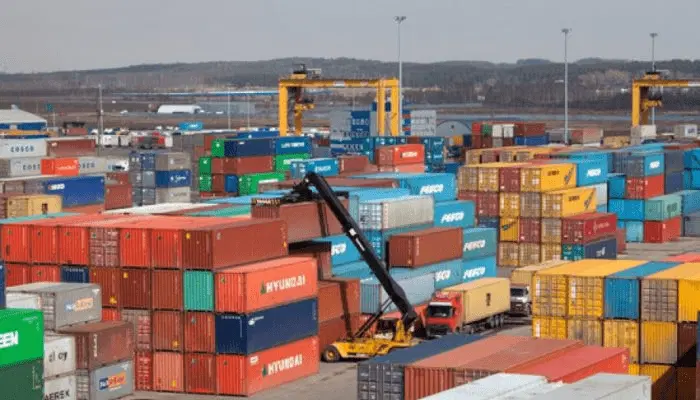
There are indications that the Federal Government’s drive towards value-added exports is failing as exports of unprocessed raw materials jumped to N2.9 trillion in the first nine months of 2025 (9M’25).
Data from the National Bureau of Statistics (NBS) shows that the 2025 figure represented about 147.4 per cent increase over the N1.174 trillion recorded in the corresponding period of 2024 (9M’24).
A breakdown of the NBS data shows that quarter-on-quarter the figure towered above previous year’s record.
A total of N1.045 trillion was recorded in Q1’25, far higher than N439.8 billion in Q1’24; in Q2’25 it was N819.7 billion against N381.745 billion in Q2’24; and N1.04 trillion was recorded in Q3’25 as against N352.7 billion in Q3’24.
The 2025 exports figure is also more than five times the N564.73 billion exported in the first nine months of 2023 (9M’23), translating to a 442.8 per cent jump.
Major non-oil exports include cocoa beans, raw cashew nuts, sesame seeds, raw lead ores, and various agricultural products like ginger, rubber, and palm kernel oil, with key partners including India, Spain, and the Netherlands.
Others are ‘Urea whether or not in aqueous solution’ and ‘Nonmonetary Gold (including gold plated with platinum) in Powder form’.
FG’s policy failing
The sharp rise in raw materials exports runs contrary to government initiatives designed to discourage the export of raw materials without value addition and to promote domestic processing, industrialisation, and job creation.
Key policies and initiatives include: Raw Material Protection/Ban where some specific sectors, such as the shea industry, are seeing bans on raw nut exports to encourage the production of refined products.
There is also the Incentive Alignment where the Central Bank of Nigeria (CBN) has been involved in rejecting export incentives for raw, unprocessed commodities, ensuring only value-added goods benefit.
There is also the Local Content Promotion where the government emphasizes backward integration and local sourcing, compelling manufacturers to process raw materials within Nigeria.
These policies are designed to enhance the quality and competitiveness of Nigerian products in the international market, ensuring sustainable industrial transformation, strengthening accretion to foreign reserves while conserving foreign exchange resources.
Proposed 30% value-addition bill
The most recent and structured efforts in the drive towards value-addition exports was made last year when the Raw Materials Research and Development Council (RMRDC) championed legislation mandating a minimum of 30 per cent local value addition on all raw materials before export.
The bill, which is currently before the National Assembly, seeks to halt the export of unprocessed commodities, encourage local beneficiation, create jobs, and accelerate industrialisation.
The proposed law aligns with a 2009 ECOWAS directive that promotes value addition as a condition for duty-free exports within the sub-region. Under the framework, the 30 percent requirement would apply to natural resources, solid minerals, and agricultural products, with an emphasis on local processing prior to export.
Policymakers argue that the initiative is critical to ending what they describe as the economic drain of exporting raw materials while importing finished goods—a pattern that weakens GDP growth and deepens import dependence. To support the transition, the government is considering a package of incentives, including tax breaks, reduced tariffs, and technical assistance for firms investing in local processing facilities.
Director General of RMRDC, Prof. Martin Muonso, said the legislation stipulates that any exporter who fails to meet the 30 percent processing requirement will be subjected to a 15 percent levy on the export value of the raw materials, and may face suspension or revocation of their raw material value addition certificate.
The bill also aims to encourage local industries by cutting down the importation of materials that can be sourced or processed domestically.
The former Minister of Innovation, Science and Technology, Uche Nnaji, last year, unveiled a 10-year roadmap aimed at transforming Nigeria’s raw materials sector, with a target of achieving 60 per cent value addition by 2034.
According to him, increasing the level of processing before export would support employment generation, stimulate local manufacturing, and strengthen the naira.
“We must work together to unlock the immense potential of Nigeria’s raw material sector,” Nnaji said at the time, adding that the roadmap was developed in collaboration with the African Development Bank (AfDB).
In a similar vein, the current Minister of Innovation, Science and Technology, Dr Kingsley Udeh, said the bill will enable Nigeria end the long-standing economic drain caused by exporting raw materials cheaply and buying back finished goods at painful costs.
According to him, “the proposed 30% value-addition bill will be the turning point that forces local processing, protects jobs, strengthens industries, and finally stops the nation from losing value it can and should create at home”.
In the words of the Chairman of the Nigeria Revenue Service (NRS), Zacch Adedeji, “relying on raw exports keeps the Naira weak. By exporting cheap raw goods and importing expensive finished ones, Nigeria is essentially importing inflation and unemployment”.
Stakeholders react
Meanwhile, stakeholders warned that the continued reliance on exporting unprocessed raw materials remains a major concern for economic sustainability and called for improving infrastructure, providing low-interest financing, ensuring stable power, and banning the export of certain raw commodities to encourage local processing.
According to them, whereas exporting raw materials hinders economic growth, processing them locally creates jobs and increases revenue.
Commenting, the Director General of the Manufacturers Association of Nigeria (MAN), Segun Ajayi-Kadir, emphasised the need to encourage local processing and value addition, rather than exporting raw materials, to foster industrial growth and job creation.
“The association believes that exporting raw materials contributes to job losses, limits technological innovation, and hinders economic diversification.
“MAN supports initiatives like the amendment to the Raw Materials Research and Development Council Act, which aims to end raw material export, unprocessed materials and develop local industries by mandating a minimum of 30% local processing,” he stated.
“Mixed development—LCCI
Also reacting, Director General of the Lagos Chamber of Commerce and Industry (LCCI), Dr. Chinyere Almona, viewed the significant rise in Nigeria’s raw materials exports as a mixed development.
Her words: “On the positive side, the 147.4 percent increase to N2.904 trillion in the first nine months of 2025 reflects strong external demand for Nigeria’s primary commodities and provides short-term foreign exchange inflows. It also indicates improved export logistics and market access for specific raw material segments.
“However, from a structural and long-term perspective, this trend is not entirely encouraging.
‘‘The continued dominance of unprocessed and semi-processed commodities in Nigeria’s export profile underscores the economy’s limited progress in domestic value addition.
‘‘Exporting raw materials in their primary form deprives the country of higher export earnings, industrial employment opportunities, and stronger linkages between agriculture, mining, and manufacturing.
‘‘It also exposes the economy to global commodity price volatility and weakens efforts to build a more diversified and resilient export base.”
Almona said the proposed RMRDC legislation mandating a minimum of 30 per cent local value addition before export is a step in the right direction, noting that if implemented pragmatically, it could incentivise investment in domestic processing and strengthen local industries.
She, however, cautioned that such a policy must be accompanied by adequate infrastructure, affordable energy, access to finance, and efficient logistics to avoid unintended consequences such as smuggling, loss of competitiveness, or disruption to producers’ incomes.
Undermines backward integration objectives
The LCCI DG affirmed that the development is directly relevant to Nigeria’s backward integration policy.
“The sharp increase in raw materials exports suggests that a substantial share of locally produced raw materials is being channelled to foreign processors rather than serving domestic manufacturing needs.
“This trend undermines backward integration objectives by limiting the availability of inputs to local industries and constraining the growth of agro-processing and mineral-based manufacturing.
‘‘Instead of serving as feedstock for Nigerian factories, many of these raw materials are exported and later re-imported as finished or semi-finished goods at much higher prices, undermining industrial competitiveness and worsening the trade balance.
“For backward integration to succeed, policies must encourage a stronger domestic processing ecosystem. This requires targeted infrastructure and incentives for processors, investment in industrial clusters near raw-
material sources, and trade measures that favour value-added exports over primary commodities.
‘‘A phased implementation of the 30 percent value-addition requirement, combined with supportive measures for producers and manufacturers, would help align export performance with the goals of backward integration.
“In short, while rising raw materials exports reflect short-term trade gains, they also highlight structural gaps in Nigeria’s industrial development. The trend reinforces the urgency of strengthening backward integration through deliberate policies that prioritise domestic processing, build industrial capacity, and shift the export structure from raw commodities to higher-value products,” she stated.
Dissenting view
However, some experts warned that policy alone cannot solve the problem, adding that structural hurdles must be addressed, such as poor power supply, high operating costs, logistics bottlenecks at the ports, limited financing, and failure to meet international quality standards.
Chief Executive Officer, Centre for the Promotion of Private Enterprise (CPPE), Dr Muda Yusuf, argued that the proposed legislation mandating a minimum of 30 per cent local value addition before export could stifle manufacturing and create logistical nightmares for exporters who lack immediate processing capacity.
His words: “CPPE acknowledges the growing policy emphasis and advocacy on domestic value addition as a strategic pathway to industrialisation, employment generation, export diversification, and improved foreign-exchange earnings. Efforts to move Nigeria up the value chain in the production and export of primary commodities are both legitimate and consistent with the country’s broader economic transformation agenda.
“However, any policy framework that mandates compulsory domestic processing prior to export must be guided by a fundamental economic principle, which is that adequate, efficient, and competitive domestic processing capacity must exist before export restrictions on primary products are imposed.
‘‘Where such foundational capacity is absent, compulsory value-addition policies risk generating distortions across commodity markets and imposing significant hardship on actors within the primary production value chain.”
The post Raw materials export soars, despite push for local processing appeared first on Vanguard News.

The World Bank has said Nigeria’s biggest fiscal challenge is weak revenue mobilisation rather than excessive borrowing, urging the government to prioritise efforts to boost revenue generation to support sustainable economic growth.
Speaking during an interview on Channels Television on Friday, the World Bank Country Director for Nigeria, Mathew Verghis, said Nigeria’s debt profile remains moderate by international standards and is significantly different from countries experiencing debt distress.
“From our assessment, Nigeria doesn’t have a high indebtedness problem; it has a low revenue problem,” Verghis said.
He explained that Nigeria’s debt-to-GDP ratio is lower than that of many comparable countries, stressing that concerns should focus on improving government revenue rather than limiting borrowing.
“When we looked at the numbers, Nigeria is a moderately indebted country, meaning it has less debt relative to its economy than most of its neighbours and many other countries,” he said.
“Nigeria is in a very different situation than Ghana, for example, which is going through a debt restructuring.”
Verghis defended government borrowing as a necessary tool for financing long-term investments that stimulate economic growth and improve living standards.
“Nigeria borrows for the same reasons that all countries borrow. If you want to deliver results to people, the money available on an annual basis is not enough. So you borrow, deliver results, and that improves your ability to repay,” he said.
He cited the expansion of electricity access as an example, noting that providing power to about 32 million Nigerians requires substantial upfront investment.
“To be able to connect and provide energy to 32 million Nigerians, Nigeria needs to borrow money now. But with increased access to energy, the country will become wealthier and better positioned to repay the loans,” he added.
The World Bank official, however, warned that low government revenue poses a greater threat to Nigeria’s fiscal sustainability than its current debt level.
“Nigeria’s debt is not particularly high, and in fact, it’s quite moderate by international standards. Its revenues are very low by international standards, and unless those revenues are raised, it will not be able to pay back debt,” Verghis said.
According to him, strengthening revenue mobilisation would enable the government to increase investments in infrastructure, healthcare, education and other sectors that drive job creation, improve human capital and reduce poverty over the long term.
The remarks come as the World Bank recently unveiled a new six-year Country Partnership Framework for Nigeria, which places job creation at the centre of its support for the country through investments in infrastructure, healthcare, agriculture and digital connectivity.

By Elizabeth Adegbesan
As part of the Federal Government (FG) borrowing plan for the 2026 budget, the Central Bank of Nigeria, CBN, has issued Treasury Bills, TBs, to raise N5.8 trillion in the third quarter of 2026 (Q3’26).
This represents a 241 percent year-on-year (YoY) increase when compared to N1.76 trillion sold in Q3’25.
CBN disclosed this in its Nigeria Treasury Bills Issue programme for Q3’26.
Treasury Bills are short term (less than one year) debt instruments used by the apex bank to borrow money from the Nigerian public on behalf of the federal government. CBN also uses TBs to control money supply in the economy.
The TB issue programme commenced on July 1st, and ends on September 23rd, 2026. The settlement date began yesterday and ends on September 24th, 2026.
During the period, the apex bank will issue TBs worth N900 billion on 91 days tenor, N900 billion on 182 days and N4 trillion on 364 days.
A breakdown of the programme revealed that in July, the apex bank plans to issue N2 trillion worth of TBs, comprising N300 billion worth of 91 days bills, N300 billion worth of 182 days bills and N1.4 trillion worth of 364 bills.
In August, the apex bank issued N2.1 trillion worth of TBs, comprising N300 billion worth of 91 days bills, N300 billion worth of 182 days bills, and N1.5 trillion worth of 364 days bills.
In September, CBN plans to sell N1.7 trillion worth of TBs comprising N300 billion worth of 91 days bills, N300 billion worth of 182 days bills and N1.1 trillion worth of 384 days bills.

By Emma Ujah
President and Chairman of the Board of the African Export-Import Bank (Afreximbank), Dr. George Elombi, has tasked African nations to stop the export of Lithium, the main raw material used in the production of electric vehicle (EV) batteries. Nigeria is a major exporter of Lithium in Africa, though most of the quantity is illegally exported.
Speaking at the bank’s Mid-Year Media Roundtable in Abuja on Wednesday, he said that rather than exporting raw lithium, African countries should use it to manufacture EV batteries on the continent.
He also said Afreximbank has sufficient funds to finance the production of EV batteries and is ready to provide the necessary funding to any individual or organisation willing to venture into the industry.
In his words, “African mineral resources must work for Africa’s development. EVs are the future of transportation, and the use of lithium to produce EV batteries is taking centre stage in the EV industry.
“Africa must take its position in the EV industry. We have lithium. We should produce EV batteries at home. We simply have to produce them here. There is enough money in Africa to manufacture batteries in Africa.
“If you know anyone who is interested in EV battery production, bring them to me. But if you see someone looking for funding to export lithium, don’t bring them to me.”
Dr. Elombi also said African leaders and institutions must work together to ensure that African funds held outside the continent are repatriated to support the region’s development.
Some rating agencies biased against Africa
Speaking on the bank’s credit ratings, Dr. Elombi, who advocated for African rating agencies, said some global rating agencies initially dismissed Afreximbank as too small and insignificant to drive Africa’s development, while questioning the bank’s trade finance mandate.
According to him, one agency’s 2014 assessment suggested that trade finance could not serve as a foundation for development and implied that the bank’s core mandate lacked relevance.


Footage Shows How Jordan Henderson Suffered ‘Really Bad’ Injury After Mexico 2-3 England

Harry Kane’s Interview After Mexico 2-3 England Was Comedy Gold

2027 polls: Parties rush to meet INEC’s uploading deadline

Simi Sanya and Femi Dapson Are Now Legally Married and It Is Beautiful to See

Premier League Set-Piece Goals (2025/2026)

FCT Area Council Election: Live results from polling units
-
 Sports6 hours ago
Neymar’s Comment to Norway Goalkeeper Orjan Nyland After Scoring Penalty
-
 Sports1 day ago
Joe Hart Slams ‘Disgrace’ France vs Paraguay Referee
-
 Sports20 hours ago
Mexico vs England Referee Already Made World Cup Blunder
-
 Sports1 day ago
Vozinha Reveals What Lionel Messi Told Him After Argentina 3-2 Cape Verde
-
 Sports2 days ago
20 Players in England’s 2026 World Cup Squad Could’ve Represented Other Nations
-
 Sports2 days ago
Footage Shows What Happened After Lionel Messi’s Post-Match Interview v Cape Verde
-
 Sports2 days ago
Explanation Emerges as Ref Accused of Breaking FIFA Rule to Favour Argentina v Cape Verde
-
 Sports2 days ago
Paraguay Legend Chilavert Sparks Uproar With ‘Disgraceful’ Comments About France