
Sports
The Last Time Every Premier League Club was Relegated (2025/26)


The icy grip of relegation gets everyone in the end. Since William McGregor first came up with the idea of organised league football in 1888, every club to ever grace England’s top flight has bowed out of the grand old competition.
Relegation is an all too recent memory for some sides, while others have gone more than 100 years without facing that bleak fate. Riches brought in by the advent of the Premier League in 1992 ensure that certain giants are practically impervious to the drop – as many as six clubs have contested every season. But history has proven that no team is safe.
Staying in the division for a newly promoted team has proven to be harder than ever in recent season, although Sunderland and Leeds are fighting back this term.
For the first time since 1998, all three clubs that came up from the Championship were sent straight back down into the second tier at the end of the 2023/2024 campaign. That trend was continued in the 2024/2025 Premier League season when Southampton, Leicester City and Ipswich all got relegated, highlighting the real gap that is developing between the established sides and those coming up. Below is a look at just when every Premier League team was last relegated.
20
Burnley
11th May 2024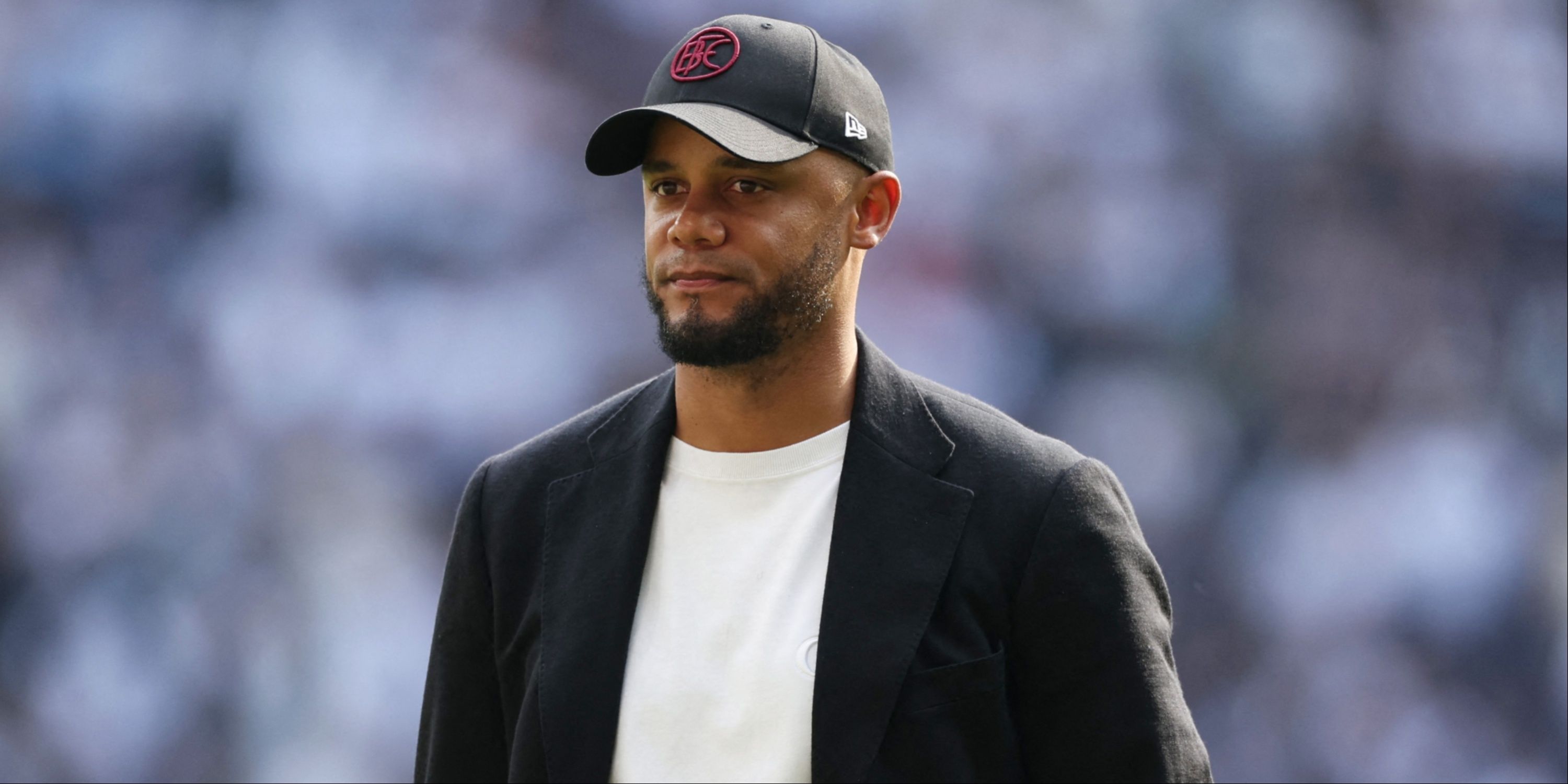
Having won the Championship at a canter in 2023, Burnley and Vincent Kompany were given a rude awakening in the Premier League as they were immediately relegated back to England’s second tier.
The attacking football that was so successful under the Belgian in the Championship failed to translate to the Premier League, with missed chances and defensive mistakes costing the Clarets throughout the campaign.
Burnley also lost all of their 12 matches against the top six Premier League sides on the day they suffered relegation away at Tottenham Hotspur.
The Lancashire outfit are currently on course for another instant relegation, having been promoted in 2024-25.
|
Relegation Campaign |
|
|---|---|
|
Season |
2023/24 |
|
Position |
19th |
|
Games |
38 |
|
Wins |
5 |
|
Draws |
9 |
|
Losses |
24 |
|
Goals for |
41 |
|
Goals against |
78 |
19
Leeds
28th May 2023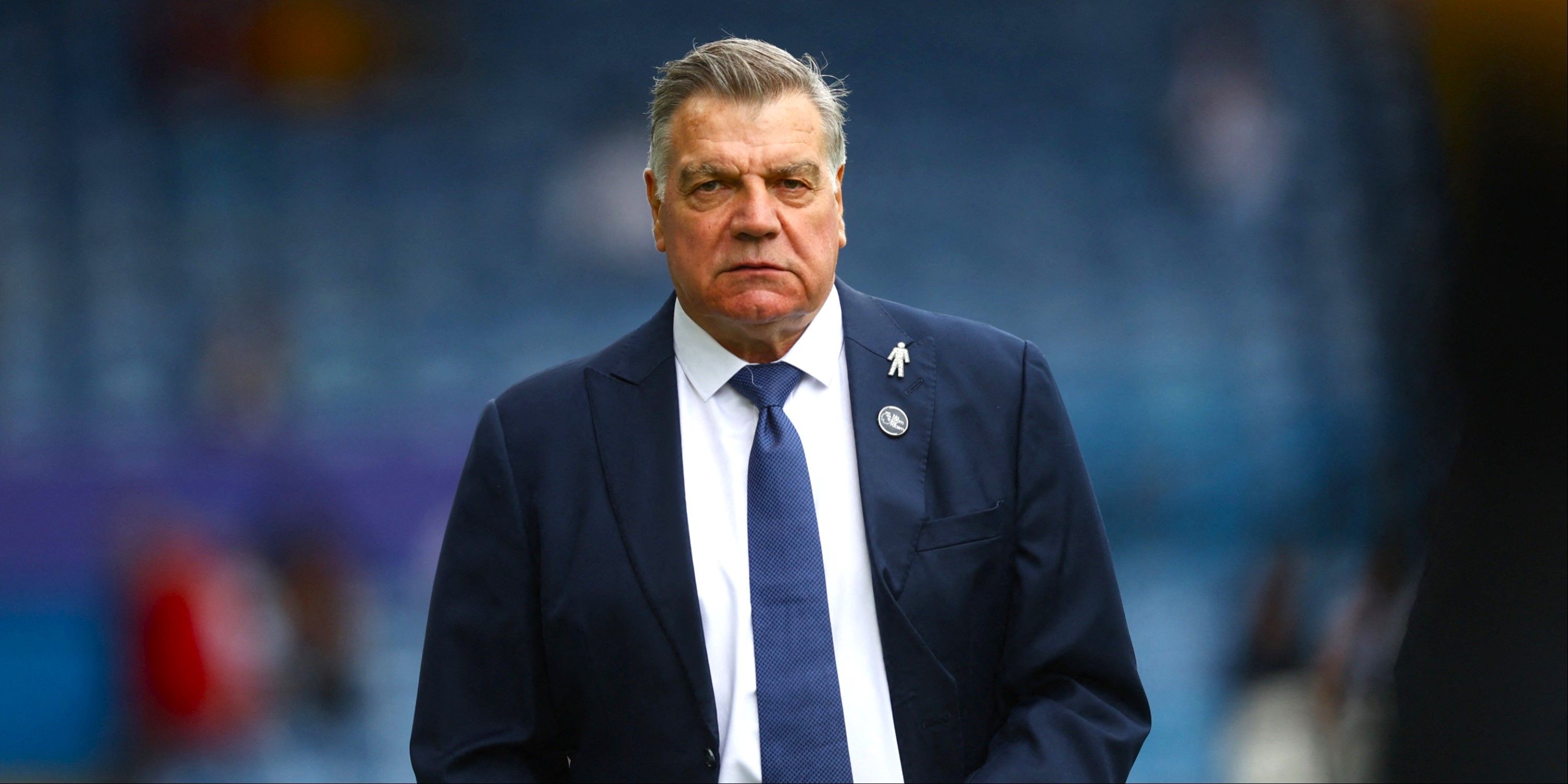
Leeds United’s relegation to the Championship was confirmed following a heavy 4-1 defeat against Tottenham Hotspur on the final day of the Premier League campaign at Elland Road.
It was a result which summed up their season as they went into the clash with Spurs knowing they needed to win, before conceding two minutes into the game and then two minutes into the second half.
Leeds conceded a league-high 78 goals across the season, while manager Sam Allardyce described his side’s finishing as “inept” on the final day.
|
Relegation Campaign |
|
|---|---|
|
Season |
2022/23 |
|
Position |
19th |
|
Games |
38 |
|
Wins |
7 |
|
Draws |
10 |
|
Losses |
21 |
|
Goals for |
48 |
|
Goals against |
78 |
18
Fulham
10th May 2021

Relegation was a depressingly familiar sensation for Fulham fans by the summer of 2021 as the west London outfit fell out of England’s top flight for the third time in seven years. Former club captain Scott Parker was at the helm throughout a campaign short on excitement.
Bobby Decordova-Reid mustered a team-high five goals, the lowest tally of any top scorer in the club’s history. Parker was adamant that Fulham would avoid relegation right up until it became a mathematical certainty, railing against the majority who may have thought that he was “living in cuckoo land”. His confidence was misplaced.
|
Relegation Campaign |
|
|---|---|
|
Season |
2020/21 |
|
Position |
18th |
|
Games |
38 |
|
Wins |
5 |
|
Draws |
13 |
|
Losses |
20 |
|
Goals for |
27 |
|
Goals against |
53 |
17
Bournemouth
26th July 2020

Eddie Howe took over as Bournemouth boss in 2008 when the club was inside League Two’s relegation zone. The Cherries avoided the drop despite a 17-point deduction and spent five seasons in the Premier League before going through the trap door.
Bournemouth were still under Howe’s stewardship when they fell one point short of safety in 2020, tumbling into the Championship despite defeating an Everton side which finished in mid-table on the final day. The south coast outfit conceded at least 60 goals in each top-flight campaign under Howe and injuries to their forward line that season robbed them of the firepower which had offered salvation in the past.
|
Relegation Campaign |
|
|---|---|
|
Season |
2019/20 |
|
Position |
18th |
|
Games |
38 |
|
Wins |
9 |
|
Draws |
7 |
|
Losses |
22 |
|
Goals for |
40 |
|
Goals against |
65 |
16
Sunderland
29th April 2017

Sunderland’s 10-year stay in the Premier League ended with four matches of the season left to play as Bournemouth came to the Stadium of Light and secured a 1-0 win.
The result against the Cherries was the Black Cats’ 23rd defeat of a poor campaign in which they didn’t win their first until November, and they would go on to record three more losses in their final four games.
Sunderland’s blank against Bournemouth was their 18th in 34 matches, with their lack of ruthlessness one of the reasons why they finally lost their Premier League status in David Moyes’ first season in charge.
The Wearsiders are on course to preserve their Premier League status this term having been promoted via the Championship playoffs last term.
|
Relegation Campaign |
|
|---|---|
|
Season |
2016/17 |
|
Position |
20th |
|
Games |
38 |
|
Wins |
6 |
|
Draws |
6 |
|
Losses |
26 |
|
Goals for |
29 |
|
Goals against |
69 |
15
Newcastle
11th May 2016

There have been few bleaker days in the history of Newcastle United than 11th May 2016. The club’s fierce local rivals Sunderland, who were led by former Newcastle boss Sam Allardyce, earned a commanding victory over Everton to send the Magpies into the Championship.
A buoyant crowd at the Stadium of Light bellowed: “Are you watching Newcastle?” Only those with a penchant for punishment were still tuning in to see Lamine Kone lash Sunderland into a 3-0 lead. Their fate may have been confirmed by the final day of the season, but Newcastle romped to a 5-1 win against a Tottenham team that had spent most of the campaign fighting for the title.
|
Relegation Campaign |
|
|---|---|
|
Season |
2015/16 |
|
Position |
18th |
|
Games |
38 |
|
Wins |
9 |
|
Draws |
10 |
|
Losses |
19 |
|
Goals for |
44 |
|
Goals against |
65 |
14
Aston Villa
16th April 2016

Aston Villa finished the 2015/16 campaign with more managers (four) than victories (three). Remi Garde was the third forlorn figure through the door by November and lost the dressing room immediately. Former Premier League winner Micah Richards described Garde’s first set of drills as “pathetic” and “under-8s football”.
“So from that moment in the training session, we knew full well that we were going down,” Richards revealed. The French coach was in charge of a 6-0 thrashing at home to Liverpool which began a sequence of 11 consecutive defeats. Garde and his children’s games were gone before Villa stopped the rot.
|
Relegation Campaign |
|
|---|---|
|
Season |
2015/16 |
|
Position |
20th |
|
Games |
38 |
|
Wins |
3 |
|
Draws |
8 |
|
Losses |
27 |
|
Goals for |
27 |
|
Goals against |
76 |
13
Wolves
22nd April 2012

After consecutive victories to begin the 2011/12 campaign, mutiny had broken out in the ranks of Wolverhampton Wanderers before Halloween. Manager Mick McCarthy labelled fans who had called for his departure “mindless idiots.” The club directors eventually sided with the supporters and let McCarthy go in February.
There was no bad blood as McCarthy signed off with a message for his successor: “Please stay up!” Terry Connor couldn’t even earn a win, let alone Premier League survival during the final three months of the campaign. Wolves subsequently suffered the ignominy of consecutive relegations, dropping into League One the following season.
|
Relegation Campaign |
|
|---|---|
|
Season |
2011/12 |
|
Position |
20th |
|
Games |
38 |
|
Wins |
5 |
|
Draws |
10 |
|
Losses |
23 |
|
Goals for |
40 |
|
Goals against |
82 |
12
West Ham
15th May 2011

Avram Grant didn’t even make it into the changing room of the DW Stadium before he was bluntly informed of his sacking. The unpopular West Ham manager had just watched his side slip into the second tier after giving up a two-goal lead to fellow relegation battlers Wigan Athletic.
The crowd was still celebrating Charles N’Zogbia’s 94th-minute winner when Grant learned his fate in the tunnel. “It is a very sad day, the saddest since I started football almost 40 years ago,” the former Chelsea boss glumly reflected. West Ham boasted the freshly crowned FWA Player of the Year Scott Parker, but individual quality wasn’t enough.
|
Relegation Campaign |
|
|---|---|
|
Season |
2010/11 |
|
Position |
20th |
|
Games |
38 |
|
Wins |
7 |
|
Draws |
12 |
|
Losses |
19 |
|
Goals for |
43 |
|
Goals against |
70 |
11
Crystal Palace
15th May 2005

Crystal Palace needed to defeat Charlton Athletic on the final day of the 2004/2005 season to avoid relegation. The Eagles were 2-1 up with eight minutes left when Jerome Thomas swung a free-kick into the box.
Palace boss Iain Dowie plastered posters which read: “How much do I want it?” around the club’s training ground heading into the final months of the season. Goalkeeper Gabor Kiraly wanted it less than Charlton’s Jonathan Fortune, jumping under the ball as the defender headed the hosts level. Dowie looked on dumbfounded – perhaps he should have provided an answer to his rhetorical question – as Palace sank into the second tier.
|
Relegation Campaign |
|
|---|---|
|
Season |
2004/05 |
|
Position |
18th |
|
Games |
38 |
|
Wins |
7 |
|
Draws |
12 |
|
Losses |
19 |
|
Goals for |
41 |
|
Goals against |
62 |

With the 2026 World Cup making history due to the inclusion of 48 teams — the most ever in the tournament’s history — there are more team nicknames than ever to wrap your head around.
A key piece of the culture of bringing all of these different nations together is experiencing their traditions all at once, and one form of that is through team nicknames.
Every nickname brings a unique flavour, a different story and a distinct identity. GiveMeSport has charted all 48 teams and their individual nicknames — covering the imaginative and the not-so-imaginative in all of their glory.
Group A

|
Team |
Nicknames |
|---|---|
|
Mexico |
El Tri |
|
South Korea |
Taegeuk Warriors |
|
Czech Republic |
Narodak (The National Team) |
|
South Africa |
Bafana Bafana (The Boys) |
Many will know the words ‘Bafana Bafana‘ thanks to Peter Drury’s iconic commentary of their opening goal at the 2010 World Cup. Its history is rich given that in 1992 it was adopted following their return to international football after the end of apartheid.
South Korea‘s ‘Taegeuk Warriors‘ refers to the symbol at the centre of their flag, ‘Taegeuk’, which represents balance and cosmic harmony in their culture, whereas Warriors is an add-on to describe their playing style.
The host nation, Mexico, boasts ‘El Tri‘ (short for El Tricolor), which is a reference to the three colours of their national flag. It is a theme that repeats itself often across this list.
Lastly, the Czech Republic’s ‘Narodak‘ is a shorthand for the national team.
Group B

|
Team |
Nicknames |
|---|---|
|
Canada |
The Canucks |
|
Switzerland |
Nati/Rossocrociati (Red Crosses) |
|
Bosnia-Herzegovina |
Zmajevi (The Dragons) |
|
Qatar |
Al-Annabi (The Maroons) |
For Canada, the term ‘Canucks‘ will be well-known due to its usage in the NHL Ice Hockey franchise with Vancouver.
‘Zmajevi‘ translates to ‘The Dragons‘ for Bosnia and Herzegovina, which stands as a powerful symbol of strength and ferocity in their folklore.
Qatar’s nickname references the colour of their national kit, with ‘Al-Annabi‘ translating into ‘The Maroons‘.
Switzerland go by ‘Nati‘ or ‘Rossocrociati‘ and the former reflects the Swiss’ German linguistic community (the country’s largest) with the latter meaning “Red Crosses”, which is a direct reference to their flag.
World Cup 2026 Top Scorers: Players with Most Goals in Race for Golden Boot
The battle for the World Cup Golden Boot is already heating up, with a number of familiar faces and a few surprise standouts in contention.
Group C

|
Team |
Nicknames |
|---|---|
|
Brazil |
Selecao / Canarinho (Little Canary) |
|
Morocco |
The Atlas Lions |
|
Scotland |
The Tartan Army |
|
Haiti |
Les Grenadiers / Le Rouge et Bleu |
For Brazil, there’s “Selecao” and “Canarinho“. The first refers to ‘The Selection’ of the national team, which is holy for a country that celebrates football as a religion. Whereas “Little Canary” refers to the yellow in their kit.
Morocco‘s ‘Atlas Lions’ tag refers to the Atlas Mountains that run across Northern Morocco and the Barbary Lion, a now-extinct subspecies.
History is the key reference point for Haiti as ‘Les Genadiers’ honours the grenadier soldiers who fought in the country’s revolutionary war, which paved the way for it to become the first black republic in the world in 1804.
Scotland‘s ‘Tartan Army‘ refers to its incredible fans rather than the team itself.
Group D

|
Team |
Nicknames |
|---|---|
|
United States |
The Stars and Stripes |
|
Australia |
The Socceroos |
|
Paraguay |
Los Guaranies / La Albirroja (The White and Red) |
|
Turkey |
Ay-Yildizhlar (The Crescent-Stars) |
The host nation, the United States, has a clear and distinct name — ‘The Stars and Stripes‘ — which is an almost universally known reference to their national flag.
For Paraguay, their name, ‘Los Guaranies‘, honors the indigenous Guaraní people, the largest indigenous group in the country whose language is still spoken by the majority of the population today.
Perhaps the most enjoyable name to say, ‘The Socceroos‘ of Australia is a combination of soccer and kangaroo which dates back to the 1960s.
Turkey‘s reference to ‘The Cresent-Stars‘ of their flag translates to ‘Ay-Yildizhlar‘ — which is rooted deeply in Turkish and Islamic cultural identity.
Group E

|
Team |
Nicknames |
|---|---|
|
Germany |
Die Mannschaft (The Team) |
|
Ivory Coast |
Les Elephants (The Elephants) |
|
Ecuador |
La Tri (The Tri) |
|
Curaçao |
The Blue Family / The Blue Wave |
Germany‘s name ‘Die Mannschaft’ is a truly flamboyant way to say “The Team”, but it has been mocked for its bluntness.
‘The Blue Family‘ and ‘The Blue Wave‘ paint an exotic image of Curaçao.
Another brilliant name is ‘Les Elephants’. Named after the African elephant, the Ivory Coast is a major hub of the ivory trade, and it also links to wisdom and longevity.
Ecuador’s nickname mirrors Mexico, as ‘La Tri’ defines the three colours of their flag for yellow, blue and red.
Group F

|
Team |
Nicknames |
|---|---|
|
Netherlands |
Oranje (Orange) |
|
Japan |
Samurai Blue |
|
Sweden |
Blagult (The Blue and Yellow) |
|
Tunisia |
Eagles of Carthage |
Japan‘s ‘Samurai Blue‘ is synonymous with honour, discipline and skill — and the nation certainly embodies that message.
Another African name from Tunisia brings rich history as the ‘Eagles of Carthage‘ refers to the eagle, a symbol of power, and Carthage, the ancient North African civilization.
A colourful addition is the Netherlands‘ ‘Oranje‘, which is derived from the house of Orange-Nassau, the Dutch royal family who led the country’s struggle for independence in the 16th century.
Rounding off this bold group is Sweden‘s ‘Blagult‘, which describes their Blue and Yellow. No fuss — very Scandinavian.
Top 100 Players at the FIFA World Cup 2026
GIVEMESPORT ranks the best 100 footballers involved in this summer’s World Cup, from Neymar to Kylian Mbappe.
Group G

|
Team |
Nicknames |
|---|---|
|
Egypt |
The Pharaohs |
|
Iran |
Team Melli (The National Team) |
|
Belgium |
Red Devils |
|
New Zealand |
All Whites |
‘The Pharaohs‘ links Egypt to one of the greatest civilisations in human history.
New Zealand’s ‘All Whites‘ is a play on the All Blacks — New Zealand’s iconic rugby union team, which is a clear contrast to separating themselves from the sport.
‘Team Melli’ for Iran simply means National, which is widely used and deeply felt.
For Belgium, the ‘Red Devils‘ are inspired by the red kit and is shared by England’s Manchester United, which refers to a fearsome reputation.
Group H

|
Team |
Nicknames |
|---|---|
|
Spain |
La Roja (The Red One) |
|
Uruguay |
La Celeste / Los Charruas |
|
Cape Verde |
Tubaroes Azuis (Blue Sharks) / Crioulos (Creoles) |
|
Saudi Arabia |
The Green Falcons |
Both Spain and Uruguay relate to their kits, with ‘La Roja‘ describing the Spanish red and ‘La Celeste‘ referring to the Sky Blue in their kit. However, ‘Los Charruas‘ has a deeper meaning as it honours the indigenous Charraui people.
Saudi Arabia’s ‘The Green Falcons‘ is a symbol of nobility and power in Saudi culture.
And Cape Verde’s ‘Tubaroes Azuis‘ (Blue Sharks) and ‘Ciroules‘ refers to the country’s mixed cultural heritage.
Group I

|
Team |
Nicknames |
|---|---|
|
France |
Les Bleus (The Blues) |
|
Norway |
Red, White and Blue |
|
Senegal |
The Lions of Teranga |
|
Iraq |
Lions of Mesopotamia |
For France, ‘Les Blues‘ is an obvious one. The historic blue kit.
Senegal‘s is a beautifully layered nickname; ‘Teranga‘ refers to the Wolof word meaning hospitality and generosity. The lion is a symbol of courage and strength.
Iraq also refers to lions — the ‘Lions of Mesopotamia‘ refers to the land between the rivers in ancient Greek. And the lion was the royal symbol of ancient Mesopotamian culture.
Norway keeps it simple — red, white and blue to reflect the kit.
You scored
out of 20
Group J
|
Team |
Nicknames |
|---|---|
|
Argentina |
La Albiceleste (The White and Sky Blue) |
|
Austria |
Das Team/Unsere Burschen (Our Boys) |
|
Algeria |
Les Fennecs (Fennec Foxes) |
|
Jordan |
Al Nashama (The Chivalrous Ones) |
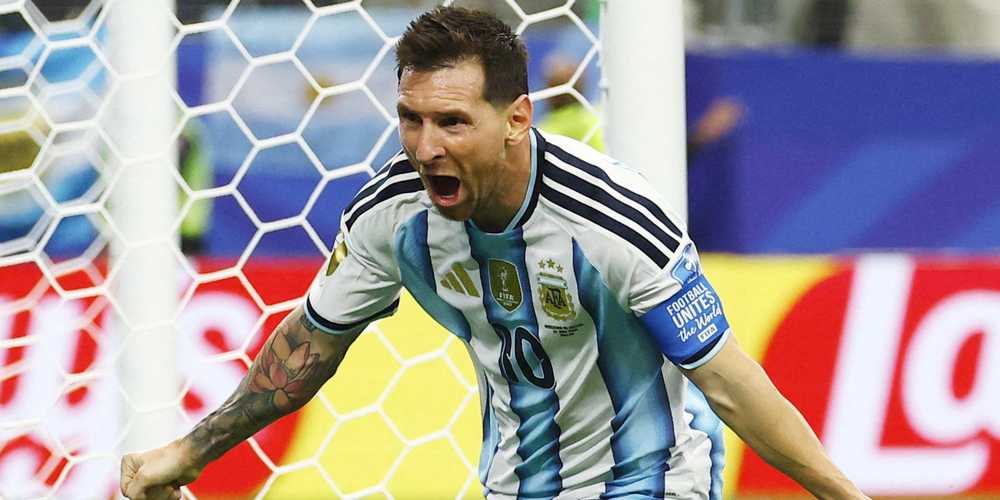
For Argentina, ‘La Albiceleste‘, reflects the ‘The White and Sky Blue’ of the kit, with its inception dating back to 1812.
Algeria is named after the fennec fox, which is a small, nocturnal desert fox native to North Africa.
Whereas Austria’s ‘Das Team‘ and ‘Unsere Burshen‘ translate to ‘The Team‘ and ‘Our Boys‘.
For Jordan, ‘Al Nashama‘ refers to ‘The Noble Ones.’
Group K

|
Team |
Nicknames |
|---|---|
|
Portugal |
Selecao das Quinas (The Selection of the Shields) |
|
Colombia |
Los Cafeteros (The Coffee Growers) |
|
DR Congo |
The Leopards |
|
Uzbekistan |
White Wolves |
Portugal‘s ‘Seleco das Quinas‘ are the five blue shields on the Portuguese flag, dating back to the 12th century.
DR Congo’s ‘The Leopards‘ has long been a symbol of strength in Congolese culture.
The Uzbekistan ‘White Wolves’ tag is a sacred animal in Turkic mythology.
For Colombia, ‘Los Cafeteros‘ is a direct translation of ‘The Coffee Growers‘.
Group L

|
Team |
Nicknames |
|---|---|
|
England |
The Three Lions |
|
Croatia |
Vatreni (Fiery Boys) / Kockasti (The Chequered Ones) |
|
Ghana |
Black Stars |
|
Panama |
Los Canaleros (The Canal Men) |
England‘s ‘The Three Lions‘ dates back to the 12th century, first used by King Richard 1 and later immortalised by the famed song, released ahead of Euro 96.
Croatia‘s ‘Vatreni‘ refers to the passionate and intense style of the country, translating into ‘Fiery Ones‘.
The ‘Black Stars‘ for Ghana has a deep political and cultural resonance.
Lastly, Panama’s ‘Los Canaleros‘ refers to ‘The Canal Men‘, a proud callback to the Panama Canal, respected as one of the greatest engineering achievements in human history.

There is a reason Lionel Messi has spent over two decades performing at the highest level of football. It’s not just the genius-level dribbling or the uncanny ability to find the top corner from any angle. It is the relentless commitment to his body, the meticulous attention to what goes into it and what he puts it through every day.
He hasn’t become the GOAT by accident or simply his natural ability: it happens because a player treats their body like a finely-tuned machine.
The Argentine’s longevity across his Barcelona, PSG and Inter Miami chapters has been extraordinary. While some players start to slow down and fade into mediocrity when they hit their thirties, Messi has remained at the elite level. To some, it may seem like natural talent, but there is more than that.
It is the deliberate sacrifice, waking up early every day and choosing to do the work that separates legendary players from everyone else.
What Does Lionel Messi Eat To Stay In Shape?

For athletes like Messi, training is only half the battle. What happens off the pitch, especially in the kitchen, is equally crucial for performance and recovery. Diet is key to it all.
The transition of Messi’s nutritional routine came at a critical moment in his career. In 2014, he brought on Italian nutritionist Giuliano Poser to overhaul his eating habits. The timing proved to be perfect, with Messi scoring 58 goals and contributing 23 assists in the following season whilst winning the Champions League, Copa Del Rey and LaLiga with Barcelona.
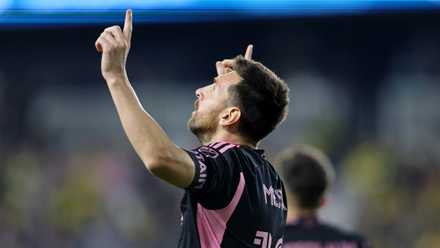
Why Lionel Messi Points to the Sky When He Scores
It’s one of the most recognisable celebrations in all of football.
According to ESPN, before Poser’s influence, Messi had followed less structured habits and had been accused of “eating too many pizzas” in earlier years.
Messi was introduced to Poser via his Argentine teammate Martín Demichelis. Poser immediately eliminated processed foods from Messi’s diet, insisting that a more natural diet allowed Messi to train with greater intensity.
In an interview with Mundo Deportivo, later picked up by The Independent, Poser had identified five key foods in Messi’s diet: water, good-quality olive oil, whole grains, fresh fruits, and fresh vegetables.
“Also very good are nuts and seeds,” Poser stated, but added his hatred for sugar.
“Sugar is the worst thing for the muscles. The further he stays away from sugar, the better. Refined flours are also a big problem these days.”
Although Messi has admitted in an interview with Marca that his favourite Spanish dish is roast Milanesa (breaded meat fillet) or pasta. He also added that he likes to eat a little chocolate, caramel and ice cream, although he tries not to eat too much of it.
Lionel Messi Fitness and Exercise Routine
Messi’s training regime is built around his core athletic requirements: explosive power, rapid acceleration and agility. He won’t necessarily target bulk, his gym work targets functional fitness that translates to his match performance.
His workouts can include:
- Pull-ups
- Bicep curls
- Seated sit-ups and ab-focused exercises.
- Medicine ball throws
- Cable resistance chest work
- Medicine Ball seated rotations
- Dumbbell Holds/Carries
What stands out is the absence of heavy barbell work or maximal strength training. Instead, the focus is on explosive power, functional movements and core stability.
Work with medicine balls, dumbbells and bodyweight dominates because they help develop the kind of athletic fitness that still keeps him sharp at 38.
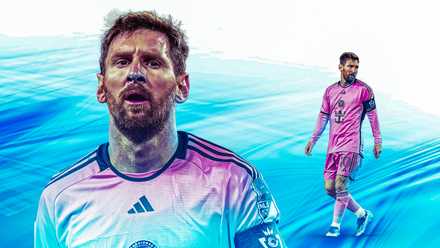
Why Does Lionel Messi Walk so Much During Matches
Lionel Messi spends a lot of time walking during matches – and now he’s revealed why
What Does Messi Focus on In Training?

Away from the gym and the kitchen, Messi’s on-pitch training sessions emphasise technical work and match replication. There is less focus on tactical work, which isn’t a surprise when you consider that he can do anything with a ball at his feet.
Como manager and former Barcelona midfielder, Cesc Fabregas still remembers his first-ever training session with the Argentine forward during their time in Spain.
Fabregas said:” I saw that he was coming with speed that is not normal, he was coming very fast at me. I was shocked as I was already on the floor, and he scored the goal.”
Fabregas wasn’t the only one, with Dani Alves also having his own stories about Messi during their training sessions.
Alves said, “Messi was doing things with the ball at his feet that defied logic. He was dribbling through the defence and scoring like a killer.”
What’s clear across his entire career is the commitment; there hasn’t ever been an off-season for Messi, he has been relentless for over two decades. That is how you become the greatest player of your generation.

Sharaputdin Magomedov has certainly made a name for himself during his brief career in the UFC, winning five of his six fights in the promotion so far. However, one thing that everyone has noticed about the Russian is the fact that he’s never been on a card that is held in America.
Four out of his six UFC fights to date have been in Abu Dhabi, while the other two have been in Riyadh, Saudi Arabia, and his next fight, which takes place this weekend, is also taking place away from the United States of America.
When asked previously about whether Magomedov would be able to fight in the United States, UFC honcho Dana White said: “Can he? Probably not. We’ll keep him out here.”
This may seem like a strange comment about a fighter who is five from six in his UFC career, but Magomedov may not be able to fight in the US due to an eye condition.
Sharaputdin Magomedov’s Eye

The Dagestani suffered an injury to his right eye back in 2016, and a lack of care meant that he required eight surgeries to try to salvage his vision.
In an interview with ATHLETISTIC, he said: “Before the operation, I was mainly afraid of an injection in the eye. I watched this video. Very unpleasant. I thought that was the most boring thing ever. And there were such operations when an injection in the eye had to be made, where it was removed, one might say. At this time, local anesthesia is administered, but you feel everything.”

What Happened to UFC Fighter Shara Magomedov’s Eye
Sharaputdin Magomedov is now contender in the UFC middleweight division – and he’s done it all with just one eye…
It is unlikely that the American fighting commissions would approve a one-eyed fighter, so it may be that Magomedov is forced to fight in the Middle East and elsewhere for the foreseeable future.
Other Controversies Surrounding Sharaputdin Magomedov
Perhaps White is also scared of the American backlash against supporting such a controversial figure outside of the Octagon.
In May 2022, Magomedov was involved in an assault at a shopping centre. He took offence to a couple kissing in public on an escalator, leading to an altercation in which he assaulted the boyfriend.
There was an initial confrontation after alighting the escalator in which the civilian threw the first punch, and then proceeded to somewhat hold his own against the MMA star. They were broken up by onlookers and security.
That was not the end of it, though, as Magomedov waited for the man by one of the exits to finish the business. The fighter threw a sucker punch that knocked the man to the ground, and he continued to stamp on his head. It was an ugly scene, with the civilian not being able to keep his guard up as he had done earlier.
With such controversial allegations, it would not be surprising if Dana White continues to utilise Magomedov’s services in the UFC away from the US, somewhat out of the limelight from the major events. This is also not the only time in which Magomedov has used his fighting background to embroil himself in controversy.
|
Shara Magomedov’s professional MMA record (as of 24/06/26) |
||
|---|---|---|
|
17 fights |
16 wins |
1 loss |
|
By knockout |
12 |
0 |
|
By decision |
4 |
1 |
At the ADCC Southeast Asia tournament, he feigned a tap and continued to jump on and kick his opponent. He was not awarded the victory, and it highlighted his volatile nature in the Octagon. Allegedly, the cause of the anger towards his opponent was that he had gone back on his promise to use ankle locks before the fight. This has not been confirmed, though, so the lashing out could be due to the Dagestani just being a sore loser.


2027: Presidential election between Tinubu, Atiku – Segun Sowunmi predicts
Every World Cup 2026 Team Nickname Explained

Two shot dead as suspected terrorists attack commuters in Kogi

Simi Sanya and Femi Dapson Are Now Legally Married and It Is Beautiful to See

FCT Area Council Election: Live results from polling units

Premier League Set-Piece Goals (2025/2026)
-
 Sports2 days ago
FIFA Want to Change Rule For World Cup Penalty Shootouts
-
 Sports2 days ago
World Cup Commentator Banned by FIFA After Epic On-Air Meltdown During Game
-
 Sports2 days ago
Djed Spence Refuses Thomas Partey Handshake
-
 Sports13 hours ago
Bastian Schweinsteiger Sparks Outrage With Comments Ahead of Germany v Ivory Coast
-
 Sports2 days ago
Why Senegal and Iraq Haven’t Been Eliminated Despite Being on 0 Points
-
 Sports14 hours ago
Why Austria and Algeria May Both Want to Lose Their Final Group Game
-
 Sports2 days ago
‘Real Reason’ Behind Ibrahimovic and Lalas’ World Cup ‘Hatred’
-
 Sports1 day ago
Jude Bellingham Avoids Red Card For Banned Gesture vs Ghana