
Business
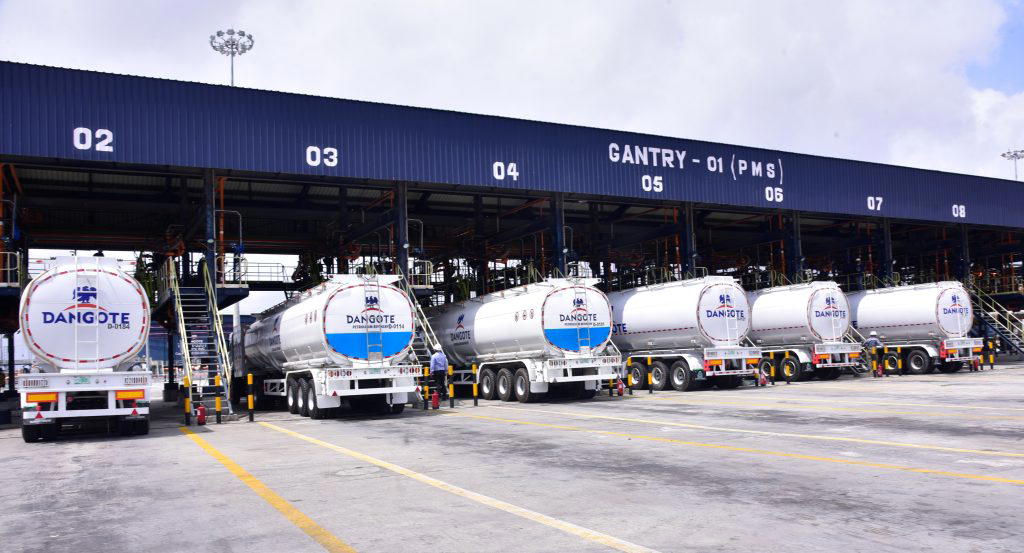
Dangote Refinery commits to energy stability amid global refineries shutdown


By Udeme Akpan
Dangote Petroleum Refinery & Petrochemicals has indicated its commitment to stabilising energy supply to Nigeria amid recent shocks in the international oil market.
The ongoing conflict in the Middle East has led to the shutdown of some refineries and cuts in refinery production across the world, resulting in a global scarcity of petroleum products. In addition, China has banned the export of gasoline and diesel.
However, Dangote Refinery said Nigeria is insulated from these supply shocks because it is prioritising supply to the domestic market, noting that this represents one of the key benefits of domestic refining.
According to the company, the conflict has driven global crude oil and freight prices sharply higher, with benchmark Brent prices rising by about 26 percent within a short period to over $84 per barrel.
In response, the refinery said it implemented a measured adjustment of N100 per litre in its ex-depot price of Premium Motor Spirit, PMS, representing an increase of about 12 percent.
The refinery added that it has absorbed about 20 percent of the cost escalation for now in order to cushion the impact on the domestic market. This, it said, is despite continuing to source crude oil at prevailing international market prices, whether purchased locally or from foreign suppliers.
“It is worth noting that Nigerian crude oil is more expensive than the Brent benchmark price by $3 to $6 per barrel.
“After adding freight of $3.50 per barrel, crude oil will be landing in our tanks between $88 and $91 per barrel. For context, crude oil was landing in our tanks at about $68 per barrel when our ex-depot price was N774 per litre,” the company stated.
The refinery further disclosed that while it receives about five cargoes of crude oil per month from the Nigerian National Petroleum Company Limited, NNPC, which it pays for in naira, the volume is significantly below the 13 cargoes required monthly to meet domestic demand.
It explained that the cargoes supplied by NNPC are also priced at international market rates plus a premium.
Consequently, the refinery said it is forced to procure foreign exchange at open market rates to pay for crude cargoes sourced from both local and international traders.
According to the company, the situation is worsened by the failure of some upstream producers to supply crude oil to the refinery as required under the Petroleum Industry Act, PIA, forcing it to source a substantial portion of its crude through international traders who charge additional premiums.
The post Dangote Refinery commits to energy stability amid global refineries shutdown appeared first on Vanguard News.

•Says Nigeria’s development hinges on gas utilisation
By Ediri Ejoh
The Federal Government has reaffirmed its commitment to expanding gas utilisation, saying it is targeting five million households to transition from firewood, kerosene and other biomass fuels to Liquefied Petroleum Gas (LPG) as part of efforts to cut carbon emissions and improve public health.
Speaking at the 2026 Nigeria Oil and Gas (NOG) Conference and Exhibition, the Minister of State for Petroleum Resources (Gas), Ekperikpe Ekpo, said Nigeria’s economic development depends largely on harnessing its vast gas resources.
According to him, “Nigeria sees gas as its transition fuel. We are not opposed to the global energy transition, but every country must transition based on its available resources. For Nigeria, that resource is natural gas.”
He added, “Gas is essential because its utilisation cuts across power generation, industrialisation, fertiliser production, household energy and transportation. Gas is the solution for Nigeria. That is why Mr. President created the office of the Minister of State for Gas and provided incentives under the Petroleum Industry Act (PIA) to deepen gas utilisation.”
Ekpo said, “In the past, gas was undervalued, but today it has become central to addressing climate change. We are intentionally deploying technologies that reduce carbon emissions through greater gas utilisation.”
He further stated, “Under the Decade of Gas Initiative, we have identified key projects that will bring gas closer to Nigerians. We are targeting about five million homes to switch from firewood, kerosene and biomass to LPG. This will improve household health while reducing carbon emissions. We are driving this because Nigeria has enormous gas reserves.”
Also speaking, the Minister of State for Petroleum Resources (Oil), Heineken Lokpobiri, said ongoing fiscal and sector reforms have strengthened investor confidence.
He said, “Nigeria is strategically positioned for growth. Investors can be assured that their capital is safe and will generate returns. We are positioning the country for global competitiveness.”

By Progress Godfrey
The Federal Government has suspended the enforcement of new regulations affecting internet platforms, online intermediaries and other cross-cutting digital economy issues pending the completion of a national policy review.
The directive was contained in a statement issued by the Minister of Communications, Innovation and Digital Economy Dr Bosun Tijani, on Tuesday, after a strategic meeting with the leadership of the Nigerian Communications Commission (NCC), National Information Technology Development Agency (NITDA), and Nigeria Data Protection Commission (NDPC).
Tijjani said the decision aimed to maintain the current regulatory position while work continues on a harmonised national policy and governance framework for the digital economy.
He explained that the rapid growth of the digital economy has created overlaps in the responsibilities of sector regulators, making closer coordination necessary to provide legal certainty and support investment, innovation and consumer confidence.
As part of the directive, agencies have been asked to defer the implementation or enforcement of any recently issued regulation, code, guideline, framework, directive or administrative requirement relating to internet platforms, online intermediaries and other cross-cutting digital economy issues that are under policy harmonisation.
Tijani said: “The existing regulatory status quo shall be maintained with respect to matters relating to internet platforms, online intermediaries and other cross-cutting digital economy issues currently undergoing inter-agency policy harmonisation under the Ministry’s coordination.
“Relevant agencies are to defer the implementation or enforcement of any recently issued regulation, code, guideline, framework, directive or administrative requirement relating to Internet platforms, online intermediaries or other cross-cutting digital economy matters, to the extent that such provisions concern areas currently undergoing policy harmonisation under the Ministry’s coordination.
“The above direction is without prejudice to the statutory responsibilities of the respective institutions. Accordingly, all other provisions of existing regulations, guidelines, codes and directives that fall squarely within the express mandates of the relevant agencies under extant laws shall remain fully operational and enforceable, provided they are consistent with the policy direction issued by the Minister.” The minister also announced the establishment of a Joint Technical Coordination Committee comprising representatives of the NCC, NITDA and NDPC under the Office of the Minister.

By Yinka Kolawole
Dangote Cement Plc has unveiled plans to cut net carbon dioxide (CO‚ ) emissions intensity by 20 per cent while expanding production capacity to 80 million tonnes per annum (mtpa) by 2030, as it pursues its ambition of becoming Africa’s most sustainable and globally competitive cement producer.
Presenting the company’s 2025 Sustainability Scorecard at its 17th Annual General Meeting in Lagos, Chairman, Emmanuel Ikazoboh, said sustainability has become a core business strategy driving growth, competitiveness and long-term value creation across its African operations.
He disclosed that the company has approved a new decarbonisation roadmap, including migrating virtually its entire Nigerian truck fleet to Compressed Natural Gas (CNG) by 2027, excluding the Gboko plant, while electric trucks will be introduced from 2026.
Ikazoboh also said the company is expanding port infrastructure at Apapa, Onne and Lekki to strengthen export capacity, while pursuing investments that will increase installed production capacity to 80mtpa by 2030, including new operations in Botswana and Zimbabwe.
On environmental performance, he said Dangote Cement has reduced CO‚ emissions intensity by 6.5 per cent from its 2021 baseline, cut energy intensity by 1.7 per cent, lowered overall energy consumption by four per cent and reduced water use by eight per cent through increased deployment of alternative fuels, energy-efficient technologies and lower clinker production.
According to him, the company also co-processed over 437,000 tonnes of waste as alternative fuel, reducing dependence on fossil fuels and improving resource efficiency.
Ikazoboh added that Dangote Cement created 625 direct green jobs during the year, increased social investment spending by 56 per cent, raised graduate trainee recruitment by 74 per cent and invested N2.1 billion in employee training.
He said the company also strengthened its ESG framework with new Artificial Intelligence Risk Management, Biodiversity and Disability Inclusion policies, while integrating 297 local vendors into its ESG-focused supply chain programme, positioning it for sustainable growth and supporting Africa’s low-carbon industrial transition.


France Boss Didier Deschamps Praises Argentina vs Egypt Referee

Liverpool Eyeing Move to Sign Wolves Star Mateus Mane

Osun AAC guber candidate calls for sweeping reforms in Nigeria’s political system

Meaning Behind Egypt Manager’s ‘X’ Gesture vs Argentina

Simi Sanya and Femi Dapson Are Now Legally Married and It Is Beautiful to See

Premier League Set-Piece Goals (2025/2026)
-
Sports1 day ago
Meaning Behind Egypt Manager’s ‘X’ Gesture vs Argentina
-
 Sports16 hours ago
Ian Wright Claims Argentina Winning Goal vs Egypt Should Have Been Disallowed
-
 Sports1 day ago
‘Real Reason’ Why Sami Zayn Lost His Title to CM Punk
-
 Sports2 days ago
Rodri Addresses Bernardo Silva Incident During Spain 1-0 Portugal
-
 Sports1 day ago
VAR Expert Claims Egypt Should Have Had Penalty vs Argentina
-
 Sports12 hours ago
Arsene Wenger Says Only Spain Can Stop France Winning the 2026 World Cup
-
 Sports1 day ago
The ‘Real Reason’ Roger Federer Was Sitting Alone at Wimbledon
-
 Sports2 days ago
Cristiano Ronaldo’s ‘Arrogant’ Interview After Portugal World Cup Exit