
Sports
Alex Zendejas Still Eyeing Place On Pochettino’s ‘Amazing’ USMNT Squad


Finally, Alex Zendejas was playing in a meaningful match again on American soil.
Finally, he was starting consecutive matches for Club America after months of dealing with nagging ailments.
Finally, he could look toward an upcoming  United States Soccer men’s national team camp with anticipation as Mauricio Pochettino hones in on his 26-man World Cup squad in late-March friendlies against
  Belgium and
  Portugal.
“Obviously, everybody is trying to get a spot in that camp,” Zendejas told reporters following his 67-minute shift in Tuesday night’s 1-0 victory at the  Philadelphia Union in Leg 1 of the teams’ Concacaf Champions Cup clash. “Like I’ve always said, it depends on me. I’ve been battling some injuries now, but I’m feeling good, feeling healthy. So my main goal is to just have good rhythm and just wish for the best, and I’ll be working hard to make that roster.”
Outsized Influence
Zendejas’ previous USMNT appearance was pivotal for Poch

Zendejas is one of the more intriguing stories in the American player pool, a Juarez-born, El Paso-raised dual national who declared his USMNT allegiance in 2023 as he was emerging as a Liga MX star.
And while the 28-year-old attacking midfielder has mostly been on the periphery during Pochettino’s tenure, he has paradoxically been one of its most influential figures. After Pochettino’s uneven first year in charge, it was Zendejas who helped the former  Tottenham Hotspur,
  Chelsea and
  Paris Saint-Germain boss capture some desperately needed positive momentum when he scored and earned man of the match plaudits in a 2-0 friendly win against Japan on Sept. 9.
But Zendejas departed October USMNT camp with a knee injury before seeing the field, and since then has been fit only in spurts. Tuesday’s outing marked the longest of three appearances after missing nearly a month from Feb. 7 to March 4, and his first consecutive starts since the Liga MX Apertura quarterfinals last November.
“It’s hard, man,” he admitted. “Especially because I like to think that I’m not a guy who usually goes through a lot of that stuff. I’m just trying to focus on staying healthy, focus on what my body can do. And now that I’m healthy — fit, healthy — try to get into that rhythm to be able to play 90 minutes without any worries.”
Shapes and Numbers
The 3-4-3 should help Zendejas, but midfield competition is stiff
Pochettino’s insertion of Zendejas last September also coincided with a switch to a 3-4-3 formation that has become the USMNT default since. It’s a setup that allows for a heavier reliance on attacking midfielders, and one that could work in Zendejas’ favor in terms of the positional numbers game.
At the same time, it’s a pretty deep group right now: Christian Pulisic, Weston McKennie, Malik Tillman and Brenden Aaronson are all in that cohort, and all producing for their respective Big Five European clubs. There’s also  Real Salt Lake‘s Diego Luna, though he’s also been bitten by the injury bug to start the MLS campaign.
“It’s good, healthy competition,” Zendejas insisted. “It’s going to be an amazing team. I think it’s going to be one of the best USA teams that we’ve had in the past couple years. But yeah man, a bunch of guys are in good rhythm.”
Consistent Threat
Zendejas active against Union despite absence from scoresheet

Unlike his two most-recent Liga MX appearances, Zendejas did not register a goal or an assist at Subaru Park despite some strong moments before halftime.
In the 25th minute, he cut in from the right while closely defended, worked into a good shooting position and unleashed a left-footed strike that missed narrowly wide of Andrew Rick’s far post.
In the 32nd, Rick let Zendejas’ next effort squeeze through his hands briefly before recovering in time to avert disaster.
And in first-half stoppage time, Zendejas appeared to have dispossessed Milan Iloski in a dangerous spot, only for Costa Rican referee Keylor Herrera’s whistle to generously rescue the Union attacker.
It was another strong night, all things considered. One Zendejas knows he needs more of in these next couple of months, whether he earns a look in March or not.
“Regardless of what happens, just use that as motivation, you know?” Zendejas said of his March fate. “You never know, we’re still a couple months away from the World Cup, and anything can happen. Whether I get the opportunity to go or not, just keep on getting fit, getting healthy, and just using it as motivation.”

Pochettino Defends MLS Quality Over Europe’s Best, And The Data Supports Him
The United States men’s national team manager raised eyebrows on Tuesday with his remarks about Europe relative to MLS.

It begins with a handful of people. Someone jumps to their feet, arms in the air, and then the person next to them follows, then the next, then the next, until a ripple of human hands is sweeping around an entire stadium like a tide rolling in from the sea.
The Mexican wave is one of sport’s most universally recognised rituals, a piece of collective theatre that can turn 50,000 strangers into a single, synchronised unit. It needs no instruction, no referee and no training; it just happens.
But where did it come from, why does it work the way it does, and what does Mexico have to do with any of it? The answers are more surprising than you might expect.
What is a Mexican Wave?

In technical terms, a Mexican wave is what’s called a transverse wave: the spectators themselves move only vertically, standing up and sitting back down, but the wave they create travels horizontally around the stadium. The result, when viewed from above or from a camera on the far side, is a ripple of people moving in near-perfect unison, like a slow-motion breaker rolling along a coastline.
The mechanics are simple. A small cluster of fans in one section stands up with their arms raised, then immediately sits back down. The section beside them, seeing this, follows. Then the next section. Then the next. The wave is self-sustaining; each group of fans is simultaneously reacting to those just before them and triggering those just ahead.
It can take as few as 30 fans standing simultaneously to trigger a wave, with most going in a clockwise direction. The wave is, in short, a beautifully simple piece of crowd physics.
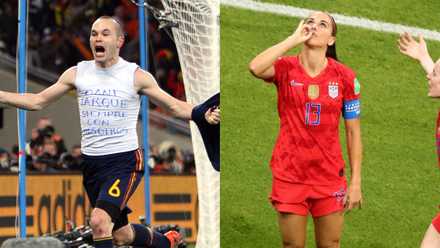
The 12 Best World Cup Celebrations All Time [Ranked]
From Brandi Chastain making the cover of Time magazine to Roger Milla’s corner flag shimmy — here are the 12 greatest World Cup celebrations.
Where and When Did it Originate?

For many people around the world, it may seem like an obvious question. But the truth is considerably more complicated, and the real origin of the wave lies several thousand miles to the north, in the stadiums of the United States.
The strongest claim to inventing the wave belongs to a professional cheerleader known as Krazy George Henderson. Armed with a drum, a pair of cut-off jeans and an almost supernatural ability to animate a crowd, Henderson had spent years refining his craft at sporting events across North America.
⚽
World Cup History Quiz
You scored
out of 20
On October 15 1981, at the Oakland Coliseum during a Major League Baseball playoff game between the Oakland Athletics and the New York Yankees, he finally unleashed it on a major stage. After a couple of failed attempts, it clicked. The wave circled all three decks of the stadium multiple times. It was nationally televised, and Henderson claims that this was the day the wave was born.
From those American beginnings in the early 1980s, the wave spread rapidly through US sports culture, appearing at NFL games, College Football, Baseball and beyond. By 1984, Henderson had even led one at a football match at the Los Angeles Olympics. Mexican crowds picked it up too, took to it enthusiastically, and made it a fixture of their football culture.
Why is it Called the Mexican Wave?

The name comes down to one tournament: the 1986 FIFA World Cup, held in Mexico. While the wave had been circulating through North America stadiums for several years by that point, it was the global broadcast of the 1986 competition that introduced the spectacle to the television audiences across Europe, Asia, Africa and beyond, most of whom had never seen anything like it.
To those watching from outside the Americas, the wave appeared to be a Mexican invention. The packed, passionate crowds at The Azteca and other venues performed it so often, and so joyfully, that it became inseparably associated with that summer. Broadcasters and commentators from English-speaking countries began calling it the Mexican wave, and the name stuck.
In North America, where people had been doing it for five years before 1986, it is still known simply as the wave. But for the rest of the world, Mexico got the credit, and Mexico got the name. It is perhaps one of the most ironic pieces of sporting branding in history: an American invention that became a Mexican icon.
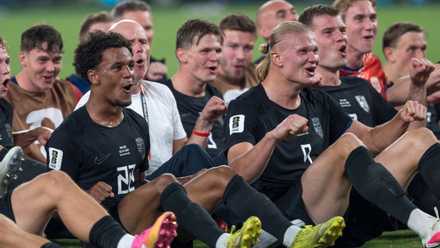
Norway fans’ ‘Viking Row’: Viral World Cup Trend Explained
The Norwegian supporters’ catchy choreography is as simple as it is viral.

Manchester United’s pursuit of midfield reinforcements has been well documented so far this summer, as the Red Devils look to build under Michael Carrick.
Carrick led United to a third-place finish in the Premier League and subsequent Champions League qualification as interim manager and has since had his contract made permanent.
Now, the English giants are looking to build a squad capable of competing in all four competitions this season and a major part of that refurbishment is in the middle of the park.
Casemiro has already departed following the expiration of his contract while Manuel Ugarte is set for a significant period of time on the sidelines after suffering knee ligament damage while playing for Uruguay at the World Cup.
The Red Devils have already seen an attempt to sign Elliot Anderson from Nottingham Forest fail with the England star set to join rivals Manchester City instead. However, United are still making progress in their bid to reinforce their core.
Man Utd still pushing for Mateus Fernandes

One of the midfielders most strongly linked with a move to Old Trafford this summer has been West Ham United’s Mateus Fernandes.
According to Fabrizio Romano, the Red Devils, as well as Tottenham Hotspur, are in contact with West Ham and Fernandes’ agent “every day”.
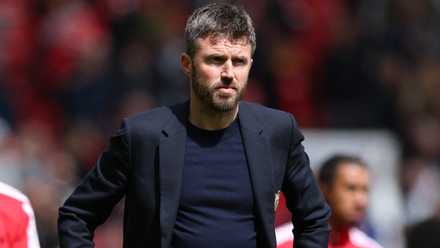
He’s Agreed To Join: Man Utd Close In On £65m Signing
Manchester United could tie up their second midfield deal soon
“Man United and Tottenham are every day in contact with West Ham and every day in contact with the agent of the player, Jorge Mendes,” Romano said on his YoutTube channel. “I told you that the player is open to joining both clubs, Tottenham or Man United. This depends on the clubs, on who can go to West Ham and agree the fee.
“So, that’s the point. The transfer fee [is] around £85million-plus, and also [it is] important to mention payment terms, so details of the Mateus Fernandes story depend on the club. I keep telling you West Ham will sell to the club ready to spend the best money. Then, [it is] important to say, even after the injury of Manuel Ugarte, Manchester United remained in active conversations for Mateus Fernandes. They are not giving up on him.”
West Ham are not in a position where they have to sell Fernandes having bought the Portuguese from Southampton less than a year ago. However, the Hammers’ relegation to the Championship means it is going to be increasingly difficult for them to keep hold of the 21-year-old who is subject to significant interest from clubs in the Premier League and across Europe.
United would be the best destination for Fernandes

After two seasons in the Premier League with two clubs, Fernandes has ended up being one of the star players in poor teams that have been relegated.
The 21-year-old featured in 36 of West Ham’s 38 Premier League matches last season, scoring three goals and registering four assists but is considered one of the most exciting young midfielders in Europe.
Now, he deserves the opportunity to see how he copes on the biggest stage playing for one of the biggest clubs in the world.
⚽
World Cup History Quiz
You scored
out of 20
United are not only that but can also offer Champions League football this season, while at Spurs there is still some uncertainty around just how much improved they are going to be on the back of their disastrous campaign last term.
£85million is a significant transfer fee for a player who hasn’t yet proven himself in such an environment, but there is plenty of excitement about what the midfielder can develop into if nurtured properly.
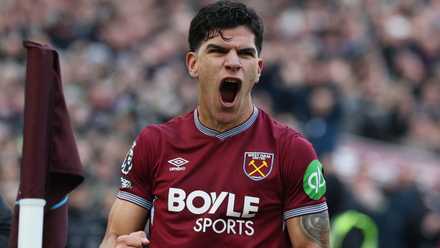
Club in Pole Position to Sign Mateus Fernandes After Man Utd and Tottenham Talks
Manchester United and Spurs are trying to sign Mateus Fernandes this summer

Germany fans aren’t happy with one player in particular after a damning report emerged following their penalty shootout defeat against Paraguay at the 2026 World Cup.
Julian Nagelsmann’s side finished top of Group E after beating Ivory Coast and Ecuador. Their reward was a last 32 tie against Paraguay.
Germany would have fancied their chances of defeating Paraguay and making it to the last 16. However, they were far from their best at the Boston Stadium.
Julio Enciso gave the Paraguayan’s a shock lead just before half-time, before Kai Havertz restored parity just after the break. The match went all the way to a penalty shootout and it was Paraguay who progressed in sudden death.
Germany Star Blasted For Actions During Penalty Shootout

Jonathan Tah, who had a goal controversially ruled out in the 103rd minute, stepped up to take Germany’s sixth penalty. The Bayern Munich defender sent his spot-kick flying over the bar, condemning Germany to defeat.
It has now been revealed that Tah took the sixth spot-kick after several of his teammates shied away.
According to BILD, there was internal difficulties in finding a sixth penalty taker. It’s reported that several players ‘hesitated and ducked out of’ taking the spot-kick.
Leon Goretzka, Waldemar Anton, Nathaniel Brown, Malick Thiaw and goalkeeper Manuel Neuer were all on the pitch and could have taken the sixth penalty, but none of them fancied their chances. With others hesitating, Tah, who has never taken a spot-kick in his professional football career, stepped up, but he could not hit the target.
Germany fans are not happy at all with Goretzka. Many think the experienced midfielder, who was subbed on in the second half, should have stepped up and taken a penalty.
“This is disgraceful,” one wrote, while another said: “Letting a central defender take a decisive penalty. Serious cowardice from a player with over seventy caps for his country.”
A third commented: “Goretzka is such a coward. He’s a 31-year-old attacker who has experience of scoring in a shootout yet leaves a centre-back to step up for his first kick.”
A fourth wrote: “If a player with as much experience as Goreztka backs out and lets a guy who’s never taken a penalty before take his place, that should be the end of his international career.”
A fifth said: “Goretzka should never be named to the national team again. What a coward move,” while a sixth stated: “It’s legitimately insane that Goretzka, one of the most senior members of the team, a part of multiple World Cups and probably seen as one of the locker room leaders, didn’t step up when needed.”
You scored
out of 20
Julian Naglesmann Won’t Resign as Germany Manager

Nagelsmann has expressed his desire to continue as Germany manager despite their shock exit. He said, per the Guardian:
“I am not someone who runs away. This is not the first time this has happened, and there are some things about today that need to be changed. But if the DFB wants me to continue I am going to continue. I know the mechanics of football, I know how the industry works. I know a lot of people will want me to leave but I would love to continue if the football association wants me to.”
He added: “If we did a survey today in Germany people would not speak positively about me today. But in football you win some and you lose some, it’s always been that way, we haven’t really done much in this tournament to make people celebrate, but I have a lot of confidence that we could have done a better job.
“But I don’t think that everyone in Germany will agree with me staying on as manager of the Mannschaft. It was very difficult because they were ultra-defensive. We didn’t give enough. When you exit the World Cup after you play Paraguay then it is very bitter. If you do not score many goals then it is not enough. It is very hurtful.”
Nagelsmann has been Germany’s manager since 2023. He has won 23 of his 37 games in charge.


Gunmen storm mining site, gun down three workers in Plateau

‘Publish candidates’ academic certificates, credentials’ – Peter Obi tells INEC
History of the ‘Mexican Wave’ Explained

Simi Sanya and Femi Dapson Are Now Legally Married and It Is Beautiful to See

FCT Area Council Election: Live results from polling units

Premier League Set-Piece Goals (2025/2026)
-
 Sports6 hours ago
Virgil van Dijk Slammed For Comments After Netherlands’ World Cup Exit v Morocco
-
 Sports9 hours ago
Zlatan Ibrahimovic Blames Netherlands’ Shock World Cup Exit on Ronald Koeman
-
 Sports2 days ago
Jesse Marsch’s Full Speech After Canada vs South Africa
-
 Sports2 days ago
Statement Released as Lucas Trejo’s Wife and Children Die in Earthquake
-
 Sports1 day ago
How Much Emma Raducanu Will Earn Despite Withdrawing Through Injury
-
 Sports5 hours ago
Carlo Ancelotti Explains Why He Didn’t Celebrate Brazil’s Winner v Japan
-
 Sports18 hours ago
FIFA Make Decision on Investigating 2026 World Cup ‘Match-Fixing’
-
 Sports1 day ago
Roger Federer Names His Top 5 Tennis Players of All Time