
Sports
30 Nations Competing at 2026 World Cup Now Face Financial Blow


Thirty nations competing at this summer’s 2026 World Cup finals in the United States, Mexico and Canada now face additional costs and potential losses.
The Guardian are reporting that FIFA have failed to agree a blanket tax exemption with the United States government ahead of the showpiece international tournament, which gets underway on June 11.
Only 18 of the 48 qualified countries have signed a double taxation agreement (DTA) with the United States. This exempts the delegations from those 18 nations from paying federal taxes. All the countries that have signed DTAs are European, except for Australia, Egypt, Morocco and South Africa.
Smaller Nations Impacted

The report adds that FIFA has had tax-free status in the United States since the 1994 World Cup; however, that exemption doesn’t apply to all of the 48 qualifiers. National associations without signed DTAs will need to pay various federal, state and city taxes on their earnings from this summer’s tournament.
Many of the smallest nations competing at the 2026 World Cup, including tournament debutants Curacao and Cape Verde, subsequently face larger tax bills than the likes of England and France, whose government are covered with signed DTAs.
However, the exemption does not apply to players’ earnings. Athletes and artists are obliged to pay tax when they perform in the US under federal law. Backroom staff and coaches, such as England head coach Thomas Tuchel, are covered.
Tax consultant Oriani Morrison was quoted by The Guardian as saying: “The teams that come from more advanced, sophisticated jurisdictions that have a tax treaty with the US, such as England and Spain, will have much lower costs than smaller countries such as Curacao and Haiti, for example.”

How Italy Can Still Qualify For 2026 World Cup Despite Shock Play-Off Defeat vs Bosnia
Italy suffered a heartbreaking play-off defeat to Bosnia – but there’s still a chance they will appear at this summer’s showpiece tournament
Carlo Ancelotti to Pay Tax in Brazil and United States

While Tuchel will only be taxed in the UK, FIFA’s failure to agree a blanket exemption is bad news for Brazil boss Carlo Ancelotti – one of the world’s best managers – who will be forced to pay tax on his earnings in both Brazil and the United States.
While the Brazilian Football Confederation (CBF) is likely to cover Ancelotti’s additional tax bill, the double taxation threatens to cause a bigger problem for smaller associations. Higher-rate taxpayers, including international footballers and coaches, will need to pay 37% income tax.
“Many of the smaller teams, ones for whom this kind of windfall would have made a huge difference to their football industries, are going to be penalised with massive US tax bills,” Morrison added.
“That is money that could have developed their football industries locally a lot better, but it’s going to stay in the US. There’s a huge discrepancy. It’s going to cost most non-European countries a lot of money to go to the World Cup.”
World Cup co-hosts Canada and Mexico have granted tax exemptions to all associations, which means lower bills for national teams playing group games in either country.
FIFA declined to comment when contacted by The Guardian, although sources at world football’s governing body say they are working with all nationals associations to provide help and assistance on tax issues.
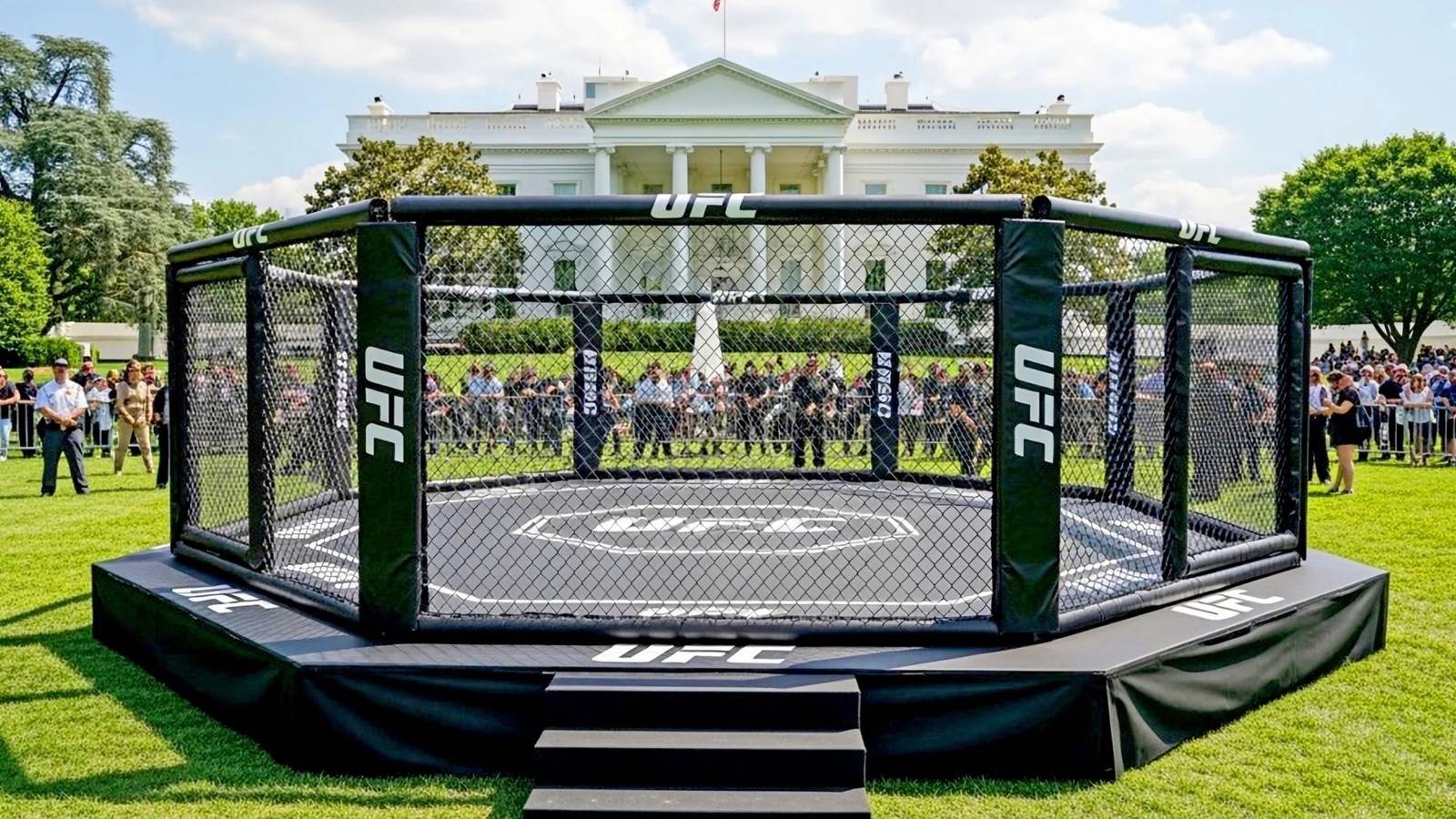
Predicting the weather is all but an impossible task. Sure, we can look at forecasts and look at reports, but no one truly knows what’s going to happen at any given time on any given day.
When you’re hosting an outdoor event, this becomes a problem. Whether it be a family BBQ in your own back garden, or it be a UFC event with millions set to watch around the world.
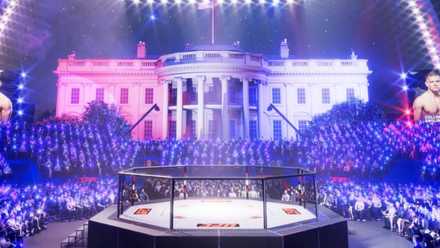
That’s exactly what Dana White is set to do this weekend as UFC Freedom 250 takes centre stage on the South Lawn of the White House, to help celebrate America’s 250th birthday and also President Donald Trump’s 80th birthday.
However, with the Octagon set to be outside, this means the weather is VERY important, and it’s something White has addressed in the past, admitting that should it be storms, it could derail the entire show.
What Dana White Has Said About Weather Issues

Putting on an event outside is difficult for a number of reasons. It takes a mad amount of planning, and even then, things could so easily go wrong.
White has already spoken out about the issues they’ve faced from a logistical standpoint, from insects to lightning, and it’s the latter that has him the most concerned.

‘I Have Fought Both Ilia Topuria and Justin Gaethje – Here’s Who Wins at UFC Freedom 250’
The main event for UFC Freedom 250 at the White House is set and a mutual opponent has already made his prediction.
He said: “The three big problems, as far as I am seeing right now, are rain, lightning, and a tonne of bugs.
“So imagine this massive, powerful claw, and the lights that are going to come with it – you’re going to have gnats, moths, maybe bats. I don’t know what the hell’s going to show up, but you know these are all the things that you have to think of leading up to this thing.”

Despite the possible issue with bugs, White was adamant that the only thing stopping the show from going ahead would be lightning, as he stated: “We’ve gone over this, you know. If it rains, we’re going. If it snows, we’re going. The only thing that will stop us is lightning.”
So, what’s the weather saying for this weekend?
Well, earlier this week it was reported that there was a 65% chance of rain on the day, but more concerningly, a 39% chance of thunderstorms.
Current Weather Forecast For UFC Freedom 250
As we know with the weather, however, things can change by the hour, so what’s the latest?
Well, according to the Weather Channel, there is a 37% chance of rain in the evening of the 14th of June, with a 30% chance of rain during the day. Temperatures are set to sit between 70 degrees Fahrenheit and 93 degrees Fahrenheit throughout the entire day.
What Octagon Girls Will Be Wearing For UFC Freedom 250 Has Caused a Stir
Their outfits for the weekend have been released and they’ve got everyone talking online.
During the night of the 14th of June, the Weather Channel stated: “A few showers early with mostly cloudy conditions late. Low near 70F. Winds WSW at 5 to 10 mph. Chance of rain 40%.”
In terms of the day, they said: “A mix of clouds and sun with the chance of an isolated thunderstorm in the afternoon. Hot. High 93F. Winds SSW at 10 to 15 mph. Chance of rain 30%.”
So, as things stand, everything should go ahead as planned, but as we’ve already stated, weather can change in an instant.

More details have emerged regarding why top African referee Omar Artan was denied entry into the United States ahead of the 2026 World Cup.
The Somali was one of eight African referees chosen to officiate at this summer’s tournament, which is being co-hosted by the United States, Canada and Mexico.
However, Artan, who has officiated at the Africa Cup of Nations, was barred from entering the USA at Miami International Airport and was sent to Turkey.
FIFA have confirmed the 34-year-old will now miss this summer’s showpiece international tournament after speaking to US authorities.
Why Omar Artan Was Denied Entry Into the United States
Artan was devastated after his World Cup dream was dashed. Artan told the New York Times: “I am very, very disappointed. I’m just simply a referee who’s trying to live his dream, the biggest dream of my life, to come to the World Cup. I had the right papers and everything. I had the right visa. I think that they have a problem with my country.”
Artan added he was interviewed at the Miami airport for 11 hours by border officials. He was asked why he’d traveled to the U.S. and questioned him about Somali politics and the al-Shabab militant group that is fighting an insurgency against the government in his home country.
The officials were not satisfied with his answers and he was put in a holding cell and sent back on a plane to Istanbul.
Artan was not told why he was not being allowed entry into the country. U.S. Customs and Border Protection said in a statement that he wasn’t being allowed in due to ‘vetting concerns’.
An unnamed United States official has now told ESPN that he was refused admission due to “association with suspected members of terror organisations.”
Despite the setback, Artan is trying to stay positive. In another interview, he said: “Despite the circumstances, I am in a positive mood and I am focused on the next challenges in my refereeing career.
“I would like to thank FIFA and CAF for all their support and I promise to keep my refereeing levels up as I concentrate on the future.
“I want to thank the football family for their messages and wish my colleagues all the best success during the World Cup and I look forward to joining them again in future competitions.”
You scored
out of 20
US Official Defends Decision to Deny Artan Entry
The head of the White House Task Force for the World Cup, Andrew Giuliani, has defended the decision not to grant visas to a Artan and some support staff for the Iranian team.
He said at an event hosted by the Atlantic Council in Washington, per the Journal: “To this point we’ve had 35 teams that have come into the United States.
“No players, no coaches have been denied. There have been some officials that have been denied, and for good reason.”
He added: “We’re striking that balance between making sure that any bad actors that…try to come into the country under the guise of the World Cup will not get access to the United States.”
The World Cup gets underway on Thursday, June 11 when Mexico take on South Africa at the Azteca Stadium.

Football is arguably the world’s most popular sport, but for those new to ‘the beautiful game’, the language surrounding football can be a challenge of its own. From everyday terms used by commentators and pundits, to tactical phrases that dominate post-match analysis, understanding the vocabulary of the game is essential to an enjoyable viewing experience and understanding how the action is unfolding at a deeper level. Whether the 2026 World Cup is your first time watching football, or you’re simply looking to brush up your knowledge on all things soccer, this glossary breaks down some of the key terms you’ll hear throughout the tournament held in the USA, Canada and Mexico.
The World Cup brings its own unique set of phrases and storylines. As the tournament progresses from the group stage to the knockout rounds, casual viewers who may have only watched domestic, club-league football will be met with new terms such as extra time and penalty shootouts. To help you follow every twist and turn of what will be the biggest World Cup in history, we’ve also compiled a guide to the key World Cup phrases that define football’s biggest stage.

Clean Sheet: To finish a match without conceding a goal, with teams who have kept multiple clean sheets providing evidence of strong, defensive performances.
Hat-Trick: A single player who has scored three goals in the same match is said to have scored a ‘hat-trick’, likening the players’ performance to that of a magician.
Offside: The offside rule prevents attacking players from gaining an unfair advantage by being ahead of the last defender when the ball is played to them, which results in a free-kick to the defending team. Strictly speaking, the player receiving the ball must not be ahead of two players on the opposing team, but in almost all scenarios one of these players will be the opposition goalkeeper, meaning the offside threshold is usually determined by the outfield defender closest to his own goal.
Stoppage/Injury Time: A period of time that is added on to the end of each 45-minute half, used to make up for moments in the game when the ball is not in play, such as at substitutions, corner-kicks and goal celebrations. Not to be confused with extra-time, which is a tie-breaking mechanism (see Key Phrases for the 2026 World Cup)
Set-Piece: A restart situation for when the ball has gone out of play or the game has stopped. It predominantly refers to corner kicks and throw-ins, when the attacking team are expected to execute a rehearsed routine of movement to improve their chances of scoring.
VAR: Short for Video Assistant Referee, the VAR is an extra official who watches the game via a live feed and is able to review footage to aid the referee in making fair and accurate decisions.
Pitch-Side Monitor: An extension of VAR, the Video Assistant Referee can refer the on-pitch referee to the pitch-side monitor to review footage themselves and potentially reverse their initial decision.
Sitter: Originally a term used in cricket, a ‘sitter’ is a goal-scoring opportunity that is so easy to score, the player could score the chance whilst sitting down. It is only really used when a player has missed a glaring chance to score — usually from short distance and unopposed by defenders.
Building from the Back: A style of play in which a team starts their attacking move by playing short, safe passes between the goalkeeper and the defenders, in the hopes of drawing opposition players out of position.
Route One: The opposite of ‘building from the back’, the ‘route one’ approach is a very direct way of starting attacks and often involves a goalkeeper or defender playing a long, flighted pass towards a fast and physical forward.
Counter-Attack: A fast-paced attack that occurs when there is an advantageous turnover of possession, usually when a team’s defensive players are high up the pitch or out of position, resulting in vast amounts of open space and a clearer route to goal.
Parking the Bus: A way of defending, often deployed by sides who are winning late on in a game, in which the defending players will set up very deep and compact, aiming to prevent open space in their own defensive area and limit shots on goal. The phrase originates from the concept of a team being so defensive that they parked their own players’ bus in front of their goal.
Squeaky Bum Time: Famously coined by legendary Manchester United manager Sir Alex Ferguson, the phrase refers to the highly anxious and nerve-wracking closing stages of a match, tournament or season — often the final stages of stoppage time.
One-Two: Also called a ‘give-and-go’, a ‘one-two’ is a passing maneuver in which a player passes the ball to a teammate, before moving into open space and then receiving the ball back, playing the ball around at least one defender in the process.
Cut Inside: A technique mastered by Dutch winger Arjen Robben, the move is performed by a player who starts out near to the touchline, and then quickly shifts the ball inside, wrong-footing defenders and opening up passing or shooting lanes.
Ballon d’Or: French for ‘Golden Ball’, the Ballon d’Or is the most prestigious individual award in world football. It is presented by French magazine France Football and celebrates the best male and female players of the season. In recent years, it has been heavily influenced by performances and success in the Champions League and international competitions – you can keep up to date with the race for the 2026 Ballon d’Or with our Power Rankings.
Substitutions: Players who do not start the game, but are able to replace those who did. Managers use these players to make tactical changes and influence games late on. Teams are now allowed five regular substitutes made within three substitution windows – historically, teams could only make three subtitutions and at one point weren’t allowed any substitutes at all!
Key Phrases for 2026 World Cup

Host Nation: A team who qualifies automatically for the tournament as it is the country in which the competition is taking place. This year, the three host nations are the USA, Canada and Mexico. Many previous tournaments have had just one host nation.
Group Stage: The opening phase of the World Cup in which each nation is placed in a four-team group, where each team plays each other once, with a win awarding three points, a draw awarding a point each and a loss resulting in no points. It is sometimes known in other sports as a ‘Round Robin’.
Knock-Out Stage: The phase following the group stage in which the top two of each group, along with the eight best third-placed teams, qualify, and where teams are knocked out of the tournament if they fail to win.
Extra-Time: Not to be confused with injury time (see Key Football Phrases), ‘extra-time’ consists of two, additional 15-minute halves which are only played in knock-out games if the score is level after 90 minutes. It differs from overtime in other sports as it’s not a sudden death scenario. Extra-time is played in full and the result is determined by the score at the end of the 30 minutes. If the scores are still level, the next tie-breaker is the penalty shootout.
Penalty Shootout: A decider which only takes place if the scores remain level following the 30 minutes of extra time. Each team must take five penalties, where players try to score past the goalkeeper from 12 yards out. If both teams have scored an equal number of penalties, the shootout enters into sudden death.
Sudden Death: The penalties that follow if each team has scored the same number of their five original penalties. If either team takes a one-goal lead after taking the same number of penalties, they are declared the winners.
Sixth Substitution: In knock-out football, teams are allowed to make an additional sixth substitution during extra time.
Playing for Penalties: As many people call penalties a game of luck, teams who do not have the same quality of players as their opponent may choose to ‘play for penalties’, meaning they are intentionally playing conservatively in the hope of keeping the scores level and therefore forcing a penalty shootout.
Jules Rimet Trophy: The predecessor to the modern World Cup trophy, the Jules Rimet was the original trophy awarded to World Cup winners and was named after the FIFA president who oversaw the first tournament in 1930.
Gianni Infantino: The current FIFA president who will oversee his third World Cup after being elected in February 2016, before subsequent re-elections in June 2019 and March 2023.
Group of Death: A group that contains several highly-rated teams, this year’s example being Group I, with France, Senegal and Norway all entering the tournament with high FIFA rankings.
Dark Horses: A term used to describe teams that, whilst not the bookies’ favorites, many people believe to have the quality to progress far into the tournament.
Giant Killing: A term used when a lesser-ranked team beats a major footballing powerhouse. One example from the 2022 World Cup being Argentina 1-2 Saudi Arabia.
Golden Boot: The trophy given to the player who finishes with the most goals at the tournament, with France’s Kylian Mbappé taking home the trophy in 2022.
Golden Glove: Similar to the golden boot, the golden glove is given to the goalkeeper who has kept the most clean sheets across the tournament, with the 2022 winner being Argentina’s Emi Martinez.
Golden Ball: A more subjective award, the Golden Ball is the award for the best player at the tournament, as decided by a specialist FIFA panel.


NDC approves key appointments amid growing crisis

UFC Freedom 250: Updated Weather Forecast

N5bn suit: ‘Ask for help if you need money to campaign’ – Kenneth Okonkwo mocks Peter Obi

Simi Sanya and Femi Dapson Are Now Legally Married and It Is Beautiful to See

FCT Area Council Election: Live results from polling units

Premier League Set-Piece Goals (2025/2026)
-
 Sports2 days ago
Denmark FA Announce Special Measures For Players After Christian Eriksen Collapses
-
 Sports2 days ago
FIFA Referee ‘Denied Entry’ into the US Ahead of 2026 World Cup
-
 Sports15 hours ago
Simon Jordan Defends the US Decision to Ban World Cup Referee
-
 Sports22 hours ago
Ian Wright’s Reaction to Ref Being Denied Entry to the US Goes Viral
-
 Sports2 days ago
George Russell’s Mercedes Contract Could Soon Be ‘Void’
-
 Sports2 days ago
Iran World Cup Stars Arrive in the US With ‘168’ Pinned to Shirts
-

 Sports2 days ago
Tyson Fury’s Final Opponent Before Facing Anthony Joshua ‘Leaked’
-
 Sports2 days ago
Lewis Hamilton Seriously Slammed For ‘Hypocritical’ Billionaire Comments