
Politics
2027: Obi–Kwankwaso push mounts in ADC, sparks unity debate


By Luminous Jannamike
ABUJA — A growing push within the African Democratic Congress (ADC) for a joint presidential ticket between Peter Obi and Rabiu Musa Kwankwaso ahead of the 2027 elections is gaining ground, and already stirring debate over the party’s unity.
What began as supporter enthusiasm is fast becoming organised, visible, and harder to ignore. Across the party, a quiet but pressing question is emerging: can the ADC hold together when the real contest, who gets the ticket, finally begins?
The timing is critical. In recent months, the party has drawn in prominent figures with presidential ambitions, including Atiku Abubakar, Peter Obi, Rabiu Musa Kwankwaso, Rotimi Amaechi, and Mohammed Hayatu-Deen, under the leadership of National Chairman David Mark and Secretary Rauf Aregbesola, raising expectations that the ADC could emerge as a serious opposition platform in 2027.
Driving the latest momentum is the Obi–Kwankwaso (OK) Movement, unveiled in Abuja, with structures already spread across the 36 states and the Federal Capital Territory. Backers say it is not just another political group, but a coordinated effort to build early national support around a joint ticket.
Justin Ijeh, National Publicity Secretary of the OK Movement, said:
“This is more than a political milestone; it is the birth of a coordinated, nationwide engine for systemic reform and national rebirth. We reject the politics of tribalism, regionalism, and religious sentiment.”
Supporters of the proposed ticket say it offers the opposition its clearest path; pairing Obi’s broad, youth-driven appeal with Kwankwaso’s strong northern base, and potentially uniting key voting blocs.
Dr. Yunusa Tanko, National Coordinator of the Obidient Movement, said: “Well, since 2023, we started this discussion. It will make a lot of meaning if we have the Obidient and the Kwankwaso group working together, they can climb anything they want to climb.”
Inside the party, however, the reality is more complex. The field is crowded, and ambitions are firmly in play.
Atiku, backed by long-standing national structures, is also in the race and has made it clear he is not stepping aside lightly, even as he signals this may be his final attempt.
Kwankwaso, too, has resisted assumptions that he would settle for a running mate role, insisting that the party’s rules must guide the process.
For now, the party leadership is working to steady the ground, describing the agitation as a normal feature of internal politics rather than a sign of crisis.
Bolaji Abdullahi, ADC National Publicity Secretary, said: “The party is not worried. It is not unusual for party members to express their preferences, as long as they are not flouting any party rules.”
At the same time, calls for unity continue from within. Obi has repeatedly urged opposition figures to prioritise collaboration over division as the political season gathers pace.
He said: “This is the time for all opposition forces and well-meaning Nigerians to set aside their differences and work together in unity of purpose.”
Beyond the party, reactions remain mixed. Some see the proposed alliance as a potential game-changer capable of reshaping the 2027 race. Others are more cautious.
Ayodele Fayose, former Ekiti State governor, said: “I told you that if Obi is not on the ballot of ADC, that is the end of ADC. Obi is a good guy; he’s a fantastic guy, but to become the president at this time is difficult.”
Ibrahim Abdulkarim, a political associate of Obi, said: “Kwankwaso has ‘agreed’ to be running mate to Peter Obi.”
Among supporters, the message is more direct; many see the pairing as not just an option, but a necessity.
Abba Gwale, a Kwankwaso support group leader, said: “We have proposed and thrown our weight behind a joint presidential ticket, especially with Peter Obi If the duo gets the mandate in the upcoming election, Nigeria will be a better place.”
Still, some observers urge caution, noting that early enthusiasm does not always translate into electoral success.
Dr. Thaddy Asogwa, a town planner and political analyst, said: “The implications are hard to ignore. An Obi–Kwankwaso ticket could redraw political loyalties, disrupt established party calculations, and reshape voter alignments across regions. But the real question is this: can this alliance move beyond enthusiasm and actually convert influence into votes when it matters most?”
For now, no major bloc within the ADC has broken ranks, and the party continues to insist that its processes will determine the eventual candidate.
But with pressure building, ambitions hardening, and alignments quietly taking shape, the contest for the ADC’s 2027 ticket is already underway, long before the first ballot is cast.
www.vanguardngr.com
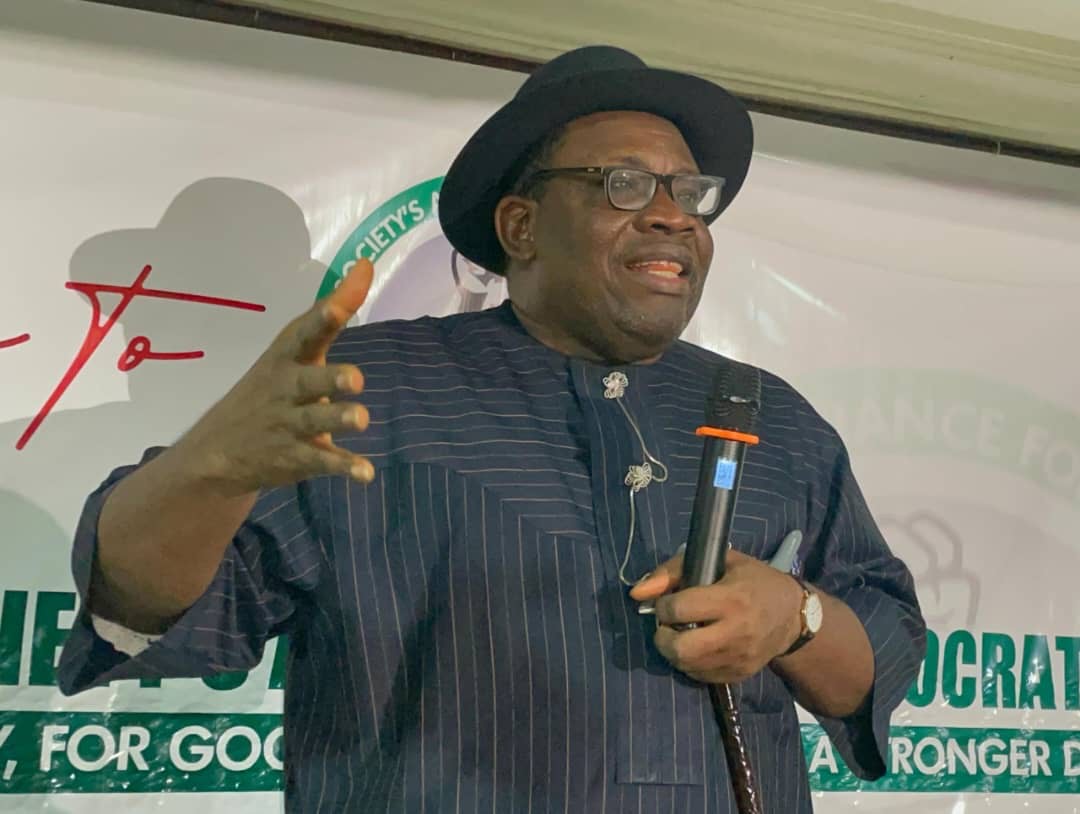
Former Bayelsa State governor and senator, Seriake Dickson, has rejected allegations that the National Democratic Congress (NDC) awards nomination tickets to the highest bidders, while acknowledging shortcomings in the party’s recently concluded primary elections.
Responding to questions during an Arise Television interview on Wednesday, Dickson said the party was actively addressing grievances raised by members in several states, including Edo and Imo, where aspirants have protested alleged irregularities and breaches of electoral guidelines.
“I have never claimed that the primary process was perfect. Far from it,” he said, adding that the party had intended to introduce electronic voting to improve transparency but lacked the time and logistical capacity to implement it.
He explained that the adoption of direct primaries under Nigeria’s electoral framework significantly complicated the process, especially for a newly established political platform managing large numbers of aspirants.
“In many cases, there were 15 or 20 aspirants seeking the same position, that naturally created intense competition and disputes,” he noted.
Addressing claims that party structures in some states had been captured by influential individuals who allegedly control access to party tickets, Dickson maintained that such narratives were not supported by evidence at the national leadership level.
On accusations that wealth determined access to governorship tickets, he was categorical in his response: “The NDC does not sell nomination forms or tickets based on wealth. Nobody has come forward with evidence that the National Working Committee or the national leadership collected money in exchange for tickets.”
However, he acknowledged that financial capacity remains a practical consideration in electoral politics.
“In politics, resources matter. Every political party considers whether an aspirant has the capacity and resources to run a viable campaign,” he said, stressing that this should not be misconstrued as commercialisation of party tickets.
Dickson maintained that while internal disagreements exist, they are being managed within the party’s structures and should not be interpreted as evidence of systemic collapse.
dailypost.ng

National Leader of the Nigeria Democratic Congress (NDC) and former Bayelsa State Governor, Seriake Dickson, has renewed his criticism of Nigeria’s direct primary system, arguing that it is a major driver of internal party disputes and widespread complaints across political parties.
Speaking during an Arise Television interview, Dickson said the inclusion of mandatory direct primaries in the Electoral Act was, in his view, a legislative error that stripped political parties of the flexibility to determine their own candidate selection processes.
He argued that political parties should have been allowed to choose between direct and indirect primaries, insisting that the imposition of a single model has created avoidable tensions.
According to him, the previous delegate system offered greater structure and control, reducing disputes and limiting the scale of contestation compared to the current arrangement.
“We did not have this deluge of complaints under the delegated system,” he said, adding that reforms were intended to deepen democracy but had also introduced significant logistical and administrative challenges.
Dickson noted that under the current framework, electoral bodies such as INEC are required to coordinate extensive ward-level processes, a task he described as highly complex, especially for new and emerging political parties.
He further argued that the direct primary system has created an environment where multiple aspirants can independently declare victory based on differing claims and interpretations of results, leading to parallel announcements and disputes.
“In a direct primary situation, people go into the field, gather supporters, declare themselves winners and begin to brandish results,” he said.
While acknowledging that grievances are not unique to any single party, Dickson maintained that the system itself contributes significantly to internal conflicts and competing claims within political organisations.
dailypost.ng
The National leader of the Nigeria Democratic Congress, NDC, Seriake Dickson, has revealed why he left the Peoples Democratic Party, PDP, and formed the NDC.
Featuring in an interview on Arise Television’s ‘Prime Time’ on Wednesday, Dickson said there is no democracy without the opposition.
According to the former Bayelsa state governor, he does not move with the crowd.
He said people defect to the ruling party, they can have appointments, contracts and enjoy federal and state patronage.
“We should encourage people to be in opposition because there’s democracy without opposition.
“People join the ruling party to be assisted by so-called federal mights, to write results and have security support to terrorize and humiliate their people in the name of rigging elections, and so on.
“I am not a politician of that mode. Since 2015 PDP lost federal power, I was the first opposition governor who bore the brunt of that federal loss of power.
“I have been in for sometime as an opposition politician. So, being in the opposition doesn’t scare me,” he said.
dailypost.ng


Dickson denies claims NDC sells nomination tickets to highest bidders

Gianni Infantino Addresses World Cup Referee Being Denied US Entry
Direct primaries fuel internal party conflicts – Dickson

Simi Sanya and Femi Dapson Are Now Legally Married and It Is Beautiful to See

FCT Area Council Election: Live results from polling units

Premier League Set-Piece Goals (2025/2026)
-
 Sports1 day ago
Simon Jordan Defends the US Decision to Ban World Cup Referee
-
 Sports1 day ago
Ian Wright’s Reaction to Ref Being Denied Entry to the US Goes Viral
-
 Sports1 day ago
Why Lewis Hamilton Stopped Speaking to Martin Brundle at F1 Races
-
 Metro2 days ago
Abia community mourns as auto accidents claim two indigenes
-
 Sports2 days ago
Man Utd Preparing Offer to Sign Tottenham Star Cristian Romero
-
 Sports2 days ago
How Much 2026 FIFA World Cup Referees Get Paid
-
 Sports2 days ago
Tottenham Working to Sign Player Better than Van Hecke
-
 Politics2 days ago
Beware of Obi, his supporters — Abure advises Dickson to learn from LP crisis