
Politics
Lagos 2027: Hamzat’s governorship bid gains momentum as Ojelabi, Obasa, others declare support


The governorship ambition of Lagos State Deputy Governor, Obafemi Hamzat, received a boost on Thursday following backing from key figures within the All Progressives Congress, APC.
Among those who expressed support were the Lagos APC Chairman, Cornelius Ojelabi, Speaker of the State House of Assembly, Mudashiru Obasa, and Senator Ganiyu Solomon, alongside other party stakeholders.
This came during a series of consultation visits by Hamzat to party leaders across the state.
He first visited the APC secretariat on Acme Road, Ogba, where he met with Ojelabi and members of the State Working Committee.
He also held separate consultations with Obasa and Solomon at their residences.
Speaking during the engagements, Hamzat outlined his vision for Lagos, emphasising the strategic importance of the state to national stability and development.


“The truth of the matter is that if Lagos fails, Nigeria will have problems and we must not fail.
“We must ensure what happened in 2023 should not happen again in 2027. We must ensure a resounding victory for our leader, President Bola Ahmed Tinubu, in the next election and ensure a similar victory for APC in Lagos.
“Our opponents are trying to de-market our election, simply because they cannot win. This is why they’re doing everything possible to disapprove of the good things that have been done by the Tinubu administration,” he said.
In his response, Ojelabi assured Hamzat of the party’s backing, expressing confidence in his leadership qualities.
“We will support you, we trust you and we are very confident of your competency and humility,” he stated.
At a separate meeting hosted by Obasa, former Minister Musiliu Obanikoro also commended Hamzat, describing him as capable of sustaining Lagos’ growth trajectory.
“Lagos must not decline, but must grow higher and higher. With Dr Hamzat at the helm, Lagos will continue to soar,” Obanikoro said.
Obasa, in his remarks, described Hamzat’s candidacy as settled, stating that his emergence had effectively been “sealed.”
Similarly, Solomon urged residents of Mushin to participate actively in the electoral process, stressing that voting remains the clearest demonstration of loyalty to the party and its leadership.
dailypost.ng

By Clifford Ndujihe, Politics Editor
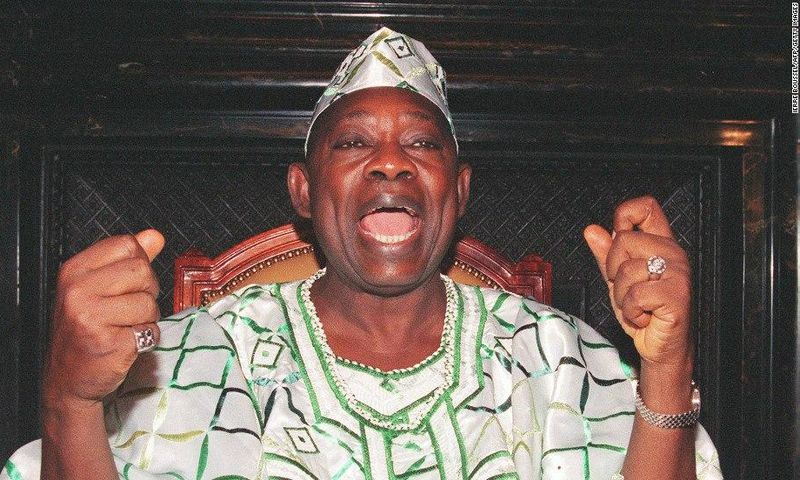
THE process was crude but transparent. The organisers called it Option A4. Only two candidates stood for the election. No thumb-printing was required. Voting was done by queuing behind the candidate/party of your choice. Those on the queues were properly counted separately and figures entered into the result sheets against the respective candidates or parties.
It was as clear as daylight who won or lost. Welcome to the June 12,1993 presidential election won by late Business tycoon and politician, Chief MKO Abiola.
Conducted by then National Electoral Commission, NEC, as the electoral umpire was called, led by late Professor Humphrey Nwosu, the June 12 election has, arguably, remained the freest and fairest poll in the history of electioneering in Nigeria, 33 years after.
It was also one of the keenest. Of the over 14 million voters that took part, Chief MKO Abiola of the Social Democratic Party, SDP, got over eight million while his challenger, Bashir Othman Tofa, of the National Republican Convention, NRC, garnered about six million.
Controversial annulment
Results of most the states had been tallied before the military regime of General Ibrahim Badamasi Babangida annulled the election and flung the nation into bloody political crisis that took another six years to be partially resolved in 1999 with the election of Chief Olusegun Obasanjo also from South-West as Abiola, as president.
Ever since that election, Nigeria has not had another comparable poll in terms of conduct and credibility.
In last month’s primaries, some parties tried to replicate the June 12 model but ended up counting those on the queues geometrically instead of arithmetically as shamefully displayed in an avalanche of trending videos.
That is why today is a unique day in Nigeria’s electioneering history.
It is the 33rd anniversary of the June 12, 1993 presidential poll. Today is also the 8th anniversary of the Federal Government’s recognition of June 12 as Democracy Day, and the third that will be marked by President Bola Tinubu.
While marking June 12 in 2018, President Muhammadu Buhari apologized to the family of Chief M.K.O Abiola, the presumed winner of the 1993 presidential election, and conferred a posthumous award on him as the Grand Commander of the Federal Republic of Nigeria, GCFR.
In 2019, President Buhari took a step further by assenting a bill into law and officially recognised the date as the nation’s day for commemorating the return to civil rule.
By the Act, May 29 gave way to June 12 as the country’s Democracy Day.
Cloud of challenges
As the nation marks June 12 amid a cloud of insecurity and a salad of unity-threatening challenges, forthcoming polls beginning with June 20 governorship election in Ekiti and bye-elections in six constituencies in four states, as well January 2027 general polls,, many questions are begging for answers.
Abiola’s aborted welfare programme
Late Chief M.K.O Abiola’s campaign was anchored on welfare of the people with ‘’Farewell to Poverty’’ as the theme. His campaign theme was Hope 93.
Thirty- three years after, has Nigeria waved poverty farewell? If Abiola had been allowed to exercise his mandate would things have been different?
Few months before the 1993 election, according to the Nigeria Bureau of Statistics, NBS, 1992 data, no fewer than 39.2 million Nigerians were living below the poverty line, that is 42.7 percent of the then 91.5 million population.
Following the truncation of the 1993 transition programme, the number of those living below the poverty line (less than $1a day as of then) jumped to 67.1 million, representing 65.6 per cent of the 102.3 million population, NBS data showed.
In 2018, a report by Brooking’s Institution said at the end of May 2018, Nigeria had about 87 million people living in extreme poverty, compared with India’s 73 million. And extreme poverty in Nigeria was growing by six people every minute, while poverty in India continued to fall.
Today, no fewer than 131 million Nigerians are multi-dimensionally poor
Another question is: When will Nigeria have free and fair polls like that of June 12, 1993? It was an election that the results were known to all parties – Social Democratic Party, SDP; and National Republican Convention, NRC’s agents without disputation before being officially announced by the electoral commission.
There were no incidents of ballot box-snatching, and falsification of election results at collation centres among other electoral infringements.
Beginning from the first series of elections on December 5, 1998 when the first local council polls of the Fourth Republic were conducted to the 2023 general elections, balloting has been characterised by ballot snatching, falsification of figures, fielding of unqualified candidates, malfunctioning of card readers, intimidation and harassment of voters, and violence among others.
Consequently, the outcome of many elections have been nullified by the courts, a reason we now have staggered governorship elections in eight states.
So far, transmission of election results is still an issue. Diaspora and electronic voting is far from sight.
Already, future polls and the 2027 general polls are being threatened by insecurity, and voter apathy with youths shunning the ongoing continuous voters registration,CVR, citing lack of faith in the process and saying their votes won’t count despite repeated assurances by INEC officials.
Disputed polls
After the 1999 general elections, outcomes of most polls were decided by the courts as attention shifts to the courts after every poll.Apart from 2015, when out-going President Goodluck Jonathan of the Peoples Democratic Party, PDP, refused to challenge the victory of Major General Muhammadu Buhari of the All Progressives Congress, APC, other presidential polls had been subjects of litigation.
In 1999, Chief Olu Falae, who flew the Alliance for Democracy/All Peoples Party joint ticket challenged former President Olusegun Obasanjo’s victory in 1999 but did not pursue it to the Supreme Court. Buhari and other candidates challenged the victories of Obasanjo, late Umaru Musa Yar’Adua and President Goodluck Jonathan in 2003, 2007 and 2011 respectively.
After the 2019 general polls, focus immediately shifted to the judiciary where 77 election tribunals constituted by President of the Court of Appeal, Justice Zainab Bulkachuwa, addressed 786 petitions.
The 786 petitions were the second highest since the return to democratic rule in 1999. The highest was in 2007 when 1,291 petitions heralded the infamous ‘’do-or-die’’ elections held that year. The winner of the 2007 presidential election, late Dr Umaru Musa Yar’Adua admitted that the election that brought him to power was flawed. Consequently, he set up the Justice Mohammed Uwais Election Reform Committee to hammer out solutions.
Indeed, the Uwais panel made far-reaching recommendations that have been implemented in breach or piece meal hence the country is still mired in controversial elections.
Uwais committee’s work
Following the work of the Uwais’ committee, noticeable improvements were witnessed in the 2011 general elections when the number of petitions went down to 732. More improvements were recorded in 2015 as the figure further went down to 611 petitions.
However, the gains of 2015 appeared to have been eroded in 2019 as the number of petitions rose to 786. And in the “go to court” elections of 2023 1196 petitions were filed.
According to data released by Engr Iro Gambo, director Voter Registry of the Independent National Election Commission, INEC, dated April 19, 2017, the electoral body conducted 167 elections after the 2015 electoral cycle and most of them by the Professor Yakubu Mahmood regime.
Three types of elections conducted since 2015 were: Re-run elections by court order following nullification of 80 elections; End of tenure (four governorship, and 68 Area Council, Abuja), 72; and Bye elections caused by death or resignation of lawmakers, 16. Of this number, 123 were concluded at first ballot and 44 were inconclusive.
And at the law courts, 80 of the 167 elections were nullified of which Rivers State accounted for 37 of the 80 annulled polls. Also, of 44 polls concluded with supplementary elections, two happened in Rivers Of the re-run election ordered by the Court of Appeal in 2015, the North-Central had 14; North-East six, North-West, one; South-East 13; South-South, 46. And upturned elections for which certificates of return were issued by court order were as follows, North-Central, five; North-East, three; North-West, one; South-East, four; South-South, eight; and South-West, two.
The post 33 years after: Can Nigeria ever have another election like June 12? appeared first on Vanguard News.
www.vanguardngr.com
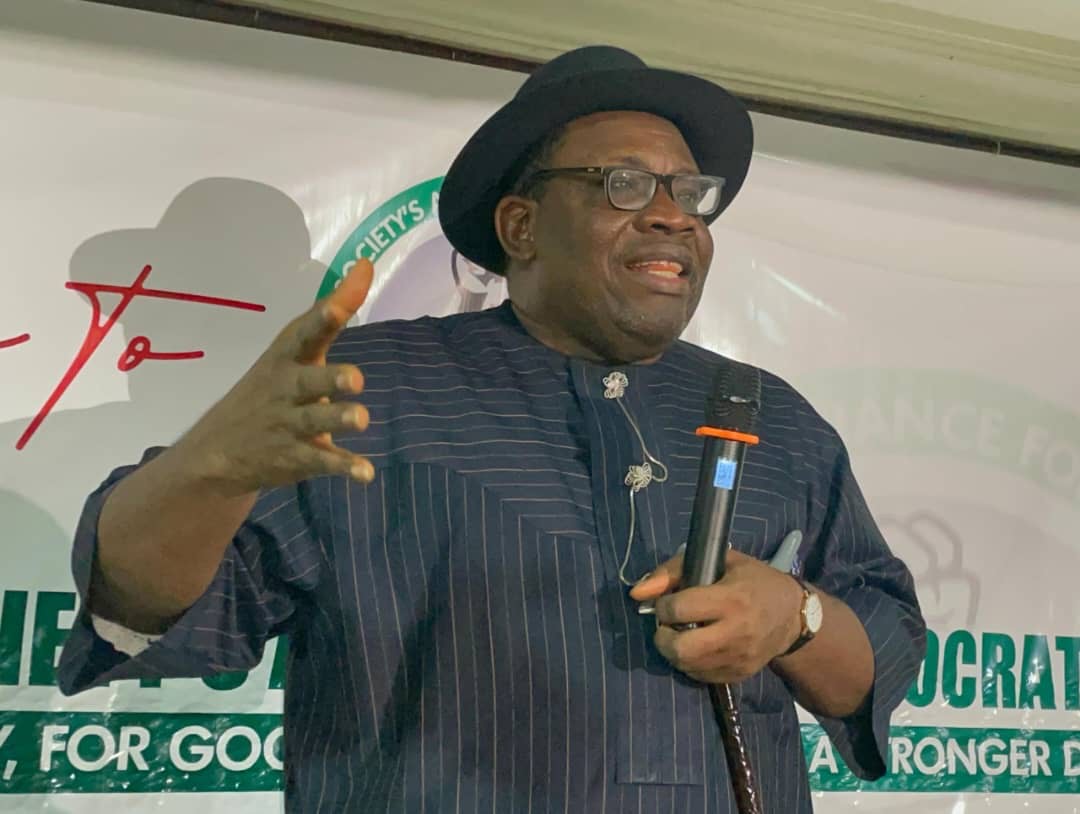
National Leader of the Nigeria Democratic Congress, NDC, Seriake Dickson, has revealed that the poo party’s presidential candidate, Peter Obi, was president when the motion for party supremacy was passed.
Speaking at the NDC stakeholder’s meeting on Thursday, Dickson said appointments and nominations will be done with consensus of the party and stakeholders.
Dickson was speaking on the party’s directive mandating affiliated groups like the Obidient Movement to operate under NDC supervision
According to him, they do not want somebody to win and run a one man show.
“His Excellency, Peter Obi was there when this motion on party supremacy was moved by Senator Ovie Omo-Agege and seconded by Senator Victor Umeh, and it was put to vote and passed.
“Every elected officer of this party must implement the programmes and policies not according to his or her whims and caprices, but programmes and policies of this party that will be analyzed, discussed, debated, and agreed.
“So, whether in the National Assembly or everywhere, we want to build an institution in this country. We may not get it one year or two years, but that’s our vision. So we say government policies and programmes must align with the parties, and a team is fine tuning certain things, which we will present to the public.
“Now, the second element is that appointments and nominations will be done with consensus of the party and stakeholders at all levels,” Dickson said.
dailypost.ng
Members of the APC Elders Forum in Adamawa Central senatorial zone have warned that President Bola Tinubu could face difficulties winning Adamawa State in the 2027 election if concerns over the alleged imposition of candidates are not addressed.
Speaking at a press conference in Yola on Thursday, the group’s spokesperson, Mohammed Jimeta, said the ruling party risks repeating mistakes that contributed to the PDP’s defeat in 2015.
Referring to the 2015 governorship election in Adamawa, Jimeta said, “In 2015, President Goodluck Jonathan and other PDP chieftains sat in Abuja and appointed the present National Security Adviser, Malam Nuhu Ribadu, as the governorship candidate, but the people of Adamawa State voted for the person they wanted as governor.”
He questioned the emergence of Mustapha Salihu as the party’s senatorial candidate, arguing that Salihu contested for governorship rather than the Senate during the primaries.
“The President himself knows that Mustapha Salihu did not contest for the Senate; he contested for governor. It was Abdulraheem Abbati who contested for the Senate in the Central senatorial zone. So, how can Salihu become the senatorial candidate in the zone?” Jimeta asked.
The elders insisted that, for fairness and justice, the ticket should be given to Abdulraheem Abbati, who they said legitimately contested for the seat.
Jimeta also argued that several local government areas in the zone have produced senators over the years, while Yola North has yet to be given the opportunity.
“Salihu and Senator Abbas are from the same local government area, so why is the APC showing bias against the people of Yola North? A few individuals are trying to deny Abbati the ticket,” he said.
The group further called on National Security Adviser Nuhu Ribadu to help prevent what they described as an injustice, warning that failure to resolve the issue could hurt both the APC governorship candidate and President Tinubu in future elections.
“There will be two losers—the Adamawa State APC governorship candidate and the President. To avert the looming political setback, the issue should be addressed now,” Jimeta stated.
He added that Abbati worked for Tinubu’s success in the state during the last election, saying, “Abbati was the returning officer for President Tinubu in Shelleng Local Government Area, even when some enemies of the APC in Adamawa State were working secretly against him.”
dailypost.ng

33 years after: Can Nigeria ever have another election like June 12?

Tottenham Enter Race to Sign Viery

Why Donald Trump Won’t Be at USA vs Paraguay

Simi Sanya and Femi Dapson Are Now Legally Married and It Is Beautiful to See

FCT Area Council Election: Live results from polling units

Premier League Set-Piece Goals (2025/2026)
-
 Sports19 hours ago
Thierry Henry Names Two ‘Surprise’ Teams That Can Win the 2026 World Cup
-
 Sports1 day ago
Uzbekistan Coach Fabio Cannavaro Calls Out US Security at World Cup
-
 Sports2 days ago
Body Language Expert Reveals Lewis Hamilton and Kim Kardashian’s Relationship Red Flags
-
 Sports1 day ago
England Fans Claim Noni Madueke ‘Cannot Start’ at World Cup
-

 Sports1 day ago
Premier League Clubs Plan to Sue if Man City Found Guilty of 115 Charges
-
 Sports8 hours ago
Gary Neville and Roy Keane Slam the US For Banning World Cup Referee
-
 Sports2 days ago
Liverpool Set to Complete Signing of ‘Elite’ Man City Talent Xavier Parker
-
 Sports2 days ago
‘Real Reason’ Why CM Punk Hasn’t Been on TV Since WrestleMania 42