
Business
AXA Mansard grows insurance revenue by 22% to ₦160.6bn, navigates profit dip amid FX volatility


By Rosemary Iwunze
AXA Mansard Insurance Plc has reported a 22 per cent increase in insurance revenues to ₦160.56 billion for the financial year ended December 31, 2025, underlining sustained growth momentum despite a challenging macroeconomic environment marked by inflationary pressures and foreign exchange volatility.
The insurer, a member of the AXA Group, disclosed this in its audited financial results released in Lagos on Monday, showing broad-based expansion across its core business segments of Property & Casualty, Life & Savings, and Health.
Gross Written Premiums (GWP) rose by 23 per cent to ₦170.87 billion from ₦138.55 billion recorded in 2024, driven by improved customer retention, new business acquisitions, and expansion of its distribution network.
A breakdown of the performance shows that Property & Casualty revenues grew by 11 per cent to ₦68.48 billion, Life & Savings increased by 14 per cent to ₦25.77 billion, while the Health segment recorded the strongest growth, rising by 40 per cent to ₦66.32 billion.
Similarly, GWP in the Property & Casualty business climbed 20 per cent to ₦73.42 billion, while Life & Savings rose 15 per cent to ₦26.84 billion. Health premiums also expanded significantly by 31 per cent to ₦70.60 billion.
Speaking on the results, Chief Financial Officer, Ngozi Ola-Israel, said the company’s performance reflects strong execution and resilience across its diversified portfolio.
She noted that although Profit Before Tax (PBT) declined sharply by 81 per cent to ₦6.12 billion, compared to ₦31.69 billion in 2024, the drop was largely due to the absence of significant foreign exchange gains recorded in the prior year.
“In FY 2024, earnings were boosted by ₦27 billion in FX gains, compared to a ₦1 billion FX loss in 2025. Adjusting for this non-recurring impact, underlying profit would have grown by 50 per cent year-on-year,” she explained.
According to her, the Group maintained a solid financial position supported by strong premium growth, prudent capital management, and adequate liquidity buffers, even as rising claims and inflation weighed on margins.
Also commenting, Chief Executive Officer, Kunle Ahmed, said the company delivered strong topline growth and stable underlying earnings despite cost pressures and global economic uncertainties.
He added that AXA Mansard’s 2025 audited results position it to exceed the new minimum capital requirements recently introduced under Nigeria’s insurance reform framework.
“In line with the new capital thresholds, our current financial position comfortably exceeds the ₦15 billion requirement for non-life business and ₦10 billion for life operations. To further strengthen capital buffers, the board has decided not to propose dividend payments for the 2025 financial year,” Ahmed said.
Industry analysts note that AXA Mansard’s decision to retain earnings aligns with a broader trend among Nigerian insurers repositioning ahead of recapitalisation requirements expected to reshape the competitive landscape.
The firm’s Insurance Service Result rose by 9 per cent to ₦14.87 billion, supported largely by a 65 per cent surge in earnings from the Property & Casualty segment. However, performance in the Life & Savings and Health segments moderated, declining by 4 per cent and 42 per cent respectively due to higher technical reserves and increased claims severity.
Operating expenses also rose during the period, with insurance service expenses increasing by 32 per cent, reflecting elevated claims across key portfolios, particularly in general accident and aviation businesses.
Despite the pressure on profitability, AXA Mansard’s balance sheet remained robust. Total assets grew by 18 per cent to ₦227.94 billion, while shareholders’ funds rose by 11 per cent to ₦52.3 billion, reinforcing its capital strength.
However, Profit After Tax dropped significantly by 98 per cent to ₦0.62 billion, impacted not only by FX-related effects but also by changes in tax regulations, including an increase in capital gains tax from 10 per cent to 30 per cent, which led to a one-off deferred tax adjustment.
From an industry perspective, analysts say the company’s performance mirrors wider trends in Nigeria’s insurance sector, where premium growth remains strong but profitability is increasingly influenced by macroeconomic headwinds, regulatory changes, and claims inflation.
The sharp contrast between revenue growth and bottom-line performance highlights the sector’s ongoing transition under IFRS 17 reporting standards, which place greater emphasis on underwriting discipline and earnings quality rather than one-off gains.
Experts also point to the rapid expansion of the health insurance segment as a key industry driver, fueled by rising healthcare costs, increased awareness, and corporate demand for employee health coverage.
Looking ahead, AXA Mansard said it would focus on strengthening underwriting discipline, enhancing operational efficiency, and deepening digital capabilities to drive sustainable growth.
Ahmed expressed optimism that as macroeconomic conditions stabilise and FX volatility eases, the company’s underlying earnings strength will become more evident.
“With a strong balance sheet, disciplined execution, and clear strategic priorities, we are well positioned to improve profitability and deliver long-term value to shareholders,” he said.
Market watchers believe insurers that successfully balance growth with cost control, capital adequacy, and innovation will emerge stronger as the industry enters a new phase of consolidation and regulatory tightening.

By Emeka Anaeto, Business Editor
Nigeria’s leading economists and financial experts have disagreed with some of the latest policy prescriptions by the International Monetary Fund, IMF, for Nigeria, even as they endorsed the Fund’s warning against the Federal Government’s proposed $5 billion loan from a bank in Abu Dhabi.
Highlights of the IMF positions contained in its 2026 Article IV Mission Concluding Statement include a warning against the plan of the Federal Government (FG) to borrow $5b from First Abu Dhabi Bank of United Arab Emirate (UAE) saying that it comes at a dangerous collateral amounting 133.3% of the loan.
Other high points of the IMF statement include that Nigeria should raise its VAT rate because it is still low compared to other countries within the region; CBN should continue monetary tightening since inflationary pressures have returned; CBN should guard against excessive reliance on portfolio investments; FG should step up funding cash transfers program as poverty rate is increasing; Inflation is going to moderate in the second half of this year; reforms have strengthened macroeconomic stability; FG’s budgetary spending should be more transparent; and FG’s 2026 deficit to be around 4.4% of 2025 GDP.
The Federal Government has described the IMF statement on Nigeria as a validation of its economic reform programme, with the Minister of Finance and Coordinating Minister of the Economy, Mr. Taiwo Oyedele, stating, “The report provides further independent validation that the bold and necessary reforms undertaken under the leadership of President Bola Ahmed Tinubu, are strengthening macroeconomic stability, restoring confidence, and laying the foundation for sustainable and inclusive growth.”
Concerns over borrowing justified – Muda Yusuf
The Chief Executive officer of the Centre for the Promotion of Private Enterprise (CPPE), Muda Yusuf, has backed IMF’s concerns over Nigeria’s proposed $5 billion borrowing from First Abu Dhabi Bank, stressing the need for greater caution in the country’s debt accumulation strategy.
Commenting on the IMF’s Article IV report Yusuf said he strongly agreed with the Fund’s emphasis on debt sustainability and prudent fiscal management, noting that the country’s growing debt-service burden remains a major source of concern.
According to him, while Nigeria’s debt-to-GDP ratio may appear relatively moderate, the more critical issue is the proportion of public revenue being committed to debt servicing.
“A substantial share of public revenue is now devoted to debt-service obligations, leaving less fiscal space for infrastructure, healthcare, education, security and other growth-enhancing investments,” he said.
Yusuf noted that fiscal sustainability should not be measured solely by the size of public debt but by the government’s capacity to service such obligations without undermining critical development priorities.
He therefore shared IMF’s reservations about the proposed $5 billion facility from First Abu Dhabi Bank, urging the government to carefully assess the cost, tenor, repayment terms, currency risks and developmental impact of the loan before proceeding.
According to the CPPE boss, Nigeria should prioritise affordable and concessional financing while ensuring that any new borrowing is channelled into productive investments capable of generating economic returns, boosting exports and strengthening future revenue streams.
“Borrowing should support growth, not merely increase future debt-service pressures,” he stated.
Yusuf also called for a more balanced policy mix, arguing that while tight monetary policy has contributed to exchange-rate stability and inflation moderation, elevated interest rates are constraining investment, business expansion and job creation.
Also commenting on the IMF’s position, Head of Equity Research at Quest Merchant Bank, Mr. Tunde Abidoye, supported the Fund’s reservations on the proposed UAE loan, describing the transaction as risky.
According to him, the loan is structured as a total return swap, a derivative instrument that exposes the country to significant volatility.
“The IMF is right on this. Since the loan is essentially a derivative, it entails significant volatility which could crystallise through margin calls in the event of adverse shocks such as a sharp drop in oil prices. While it provides immediate liquidity, the risks are substantial,” he said.
Also commenting, Chief Economist at United Capital Plc, Mr. Ayodele Akinwunmi, took a different position on external borrowing, saying foreign loans could be beneficial if deployed to productive infrastructure projects.
“Nigeria’s current macroeconomic environment presents a compelling case for external borrowing, provided such funds are channelled into infrastructure development. Expectations of a stable naira, relatively lower international interest rates and concessionary loan terms make external financing attractive at this time,” he said.
Commenting on the counsel by the IMF against borrowing, David Adonri, Analyst and Executive Vice Chairman at High Cap Securities Limited, said: “IMF’s counsel to FGN against borrowing whether from Abu Dhabi or any other foreign country is reasonable. However, I doubt if FGN will heed the advice because being in debt trap, FGN requires new foreign debt to service existing obligations. Otherwise, a sovereign default with dire consequences may become imminent.”
VAT increase
On the IMF’s recommendation for a VAT increase, Abidoye disagreed, arguing that Nigerians have already borne the burden of recent reforms.
“VAT provides an easy avenue for governments, particularly sub-national governments, to increase revenue. However, Nigerians have absorbed significant reform-induced pressures over the past three years. I do not think the timing is right for a VAT increase,” he stated.
However, Akinwunmi joined Abidoye in rejecting the IMF’s call for a VAT increase.
“What Nigeria needs is not higher tax rates but broader tax compliance. Expanding the number of individuals and institutions paying taxes will strengthen government revenue without stifling growth,” he stated.
On the recommendation given by the IMF to raise VAT, Adonri said: “IMF’s advice to FGN to raise VAT in order to equalize with neighboring countries is unacceptable. The reason is too pedestrian. Taxation is a serious fiscal tool aimed at specific strategic imperatives of the economy. VAT is a consumption levy that can worsen the poverty level of consumers. This is the time for relief and not extra burden.
Monetary tightening, inflation
On monetary policy stance Abidoye argued that although inflationary pressures may eventually compel the Central Bank of Nigeria, CBN, to tighten monetary policy further, an immediate rate hike may not be necessary.
“The current inflationary pressure is largely driven by supply-side energy shocks. Monetary policy can do little to address first-round effects. Central banks usually respond after a few months to contain second-round effects,” he explained.
On monetary policy, Akinwunmi said the current stance of the CBN remains appropriate, warning that additional rate hikes could undermine economic growth.
According to him, inflation is likely to remain in double digits in the second half of the year due to elevated oil prices, election-related spending and persistent security challenges.
He said: “The Central Bank is unlikely to lower rates hastily because inflationary pressures remain significant. However, raising rates further may be counterproductive under present conditions.”
On monetary policy tightening, Adonri said: “The IMF recommendation is justifiable. CBN loosened monetary policy prematurely because the policy objective of forcing inflation rate to single digit had not been achieved when money supply was increased.”
Speaking on inflation Adonri said: “Official figures indicate that inflation is moderating and will continue into the future but the reality on ground shows otherwise. Macroeconomic reforms have stabilized the demand side of the economy as they were majorly demand management policies but the structural reforms necessary to propel the supply side are yet to be forcefully embarked upon. The most critical element which is restoration of national security is callously treated with levity. Instead of focusing on foundational production infrastructure, fiscal policy is centered on secondary infrastructure. As a result, the economy remains heavily import dependent and unable to generate productive employment.”
Dependence on FPIs
Both Abioye and Akinwunmi agreed with the IMF’s position that Nigeria should reduce excessive dependence on Foreign Portfolio Investment (FPI) and attract more productive Foreign Direct Investment (FDIs) capable of supporting long-term economic growth.
While supporting social intervention programmes, they stressed the need for effective targeting and complementary investments in skills acquisition to create sustainable livelihoods for vulnerable Nigerians.
Their views came as the IMF maintained that Nigeria’s economic reforms have strengthened macroeconomic stability and projected that inflation would moderate in the second half of the year despite persisting pressures.
Commenting on FPI, Adonri said: “Portfolio Investment is hot money which is very volatile. What the economy needs now is patient capital (FDI) to boost the supply side of the economy.”
Babajide Komolafe, Peter Egwuatu and Yinka Kolawole contributed to this report
The post IMF, economists disagree over Nigeria’s economic prescriptions appeared first on Vanguard News.

By Godwin Oritse
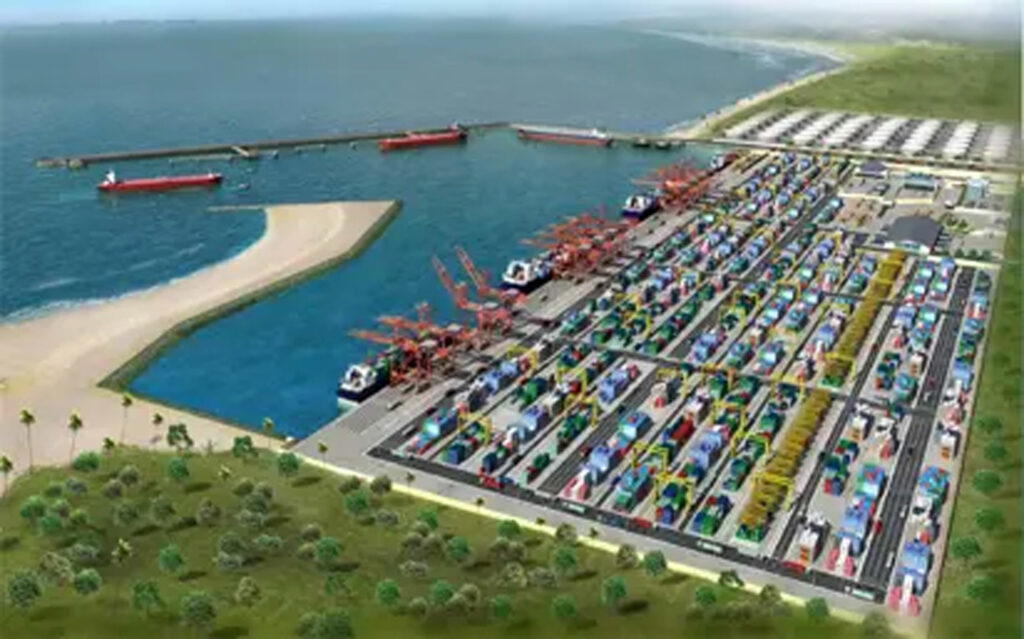
Lagos State Governor, Babajide Sanwo-Olu, has announced that work on Phase 2 of the Lekki Port project will commence soon, a move aimed at strengthening the state’s position as West Africa’s leading maritime and logistics hub.
Speaking at the Invest Lagos Summit 3.0 held in Lagos earlier in this week, Sanwo-Olu highlighted the State’s commitment to expanding critical infrastructure and attracting investment.
He explained that the expansion of the Port will significantly enhance cargo handling capacity, strengthen maritime trade, and deepen Lagos’ role as a gateway to the African Continental Free Trade Area (AfCFTA) market of over 1.4 billion people.
He stated: “With AfCFTA creating a market of over 1.4 billion people and a combined GDP exceeding $3 trillion, Lagos occupies a uniquely strategic position.
“The Lekki Deep Sea Port, within five years, is moving to phase two because it is almost reaching the full potential of its installed capacity. And just within five years, it is moving to phase two. These are not just aspirations but projects that have been implemented and are under implementation. They have been funded, progressing, and transforming the investment landscape of our State”.
In his remark, the Managing Director, Lekki Port, Wang Qiang, commended the Lagos State Government for maintaining a stable and investment-friendly environment.
He noted that the next phase of development will play a key role in expanding the port’s operational and cargo-handling capacity, improving logistics efficiency along the Lekki corridor, and attracting additional global shipping and logistics investments.
Qiang noted that the expansion aligns with Nigeria’s broader trade facilitation agenda and the increasing demands of regional and international shipping networks.
He stated: “We are deeply encouraged by the continued support of the Lagos State Government, whose infrastructure-led policies have created a stable and forward-looking environment for long-term maritime investment.
“The commencement of the next phase of development represents a significant milestone in our journey to expand capacity, enhance operational efficiency, and strengthen Lekki Port’s position as a premier gateway for West African trade under the AfCFTA framework.”
The post Lekki Port Phase 2 construction set for kick-off, says Lagos govt appeared first on Vanguard News.

By Udeme Akpan & Obas Esiedesa
The Nigerian National Petroleum Company Limited (NNPC Ltd.) and security agencies have intensified efforts to combat pipeline vandalism following the discovery of a damaged section of the Nigerian Pipelines and Storage Company (NPSC) crude oil pipeline at Pai Community, Kwali Area Council of the Federal Capital Territory (FCT), Abuja.
The joint inspection involved NNPC’s Industry-wide Security Architecture (IWSA), NPSC, the Office of the National Security Adviser (ONSA) Special Prosecution Team (SPT), the FCT Police Command, the Nigerian Army and other security stakeholders.
The exercise was aimed at assessing the extent of damage, advancing investigations and strengthening coordinated measures to protect critical national energy infrastructure from economic sabotage.
The visit followed the arrest of three suspected pipeline vandals in Piri and Pai communities through a joint operation involving ONSA’s Special Prosecution Team, the FCT Police Command and NNPC Ltd.’s IWSA.
NPSC, a subsidiary of NNPC Ltd., operates more than 5,000 kilometres of crude oil and petroleum products pipelines across Nigeria. However, pipeline attacks have increased in recent years, with criminal groups targeting infrastructure for illegal removal and theft.
Industry records show that 19 pipeline vandalism cases were recorded in 2025, leading to the theft of about nine kilometres of pipeline sections along the Enugu-Makurdi-Yola route and the Piri-Izom section of the Warri-Kaduna pipeline corridor.
So far in 2026, five cases have been reported, including incidents around Piri-Kwali and Gwagwalada along the Warri-Kaduna crude oil pipeline route, as well as Badanga on the Jos-Gombe pipeline corridor.
Speaking during the inspection, Group Chief Executive Officer of NNPC Ltd., Engr. Bashir Bayo Ojulari, represented by Chief Interface Officer, Dahiru Sani-Gwarzo, said the arrests represented an important step towards dismantling criminal networks behind attacks on energy infrastructure.
He said the security architecture was focused not only on apprehending those directly involved but also identifying sponsors and receivers of stolen pipeline materials.
The post NNPCL, security agencies intensify crackdown on pipeline vandals appeared first on Vanguard News.


Bauchi man found slaughtered in room as rights group faults police investigation

Liverpool’s Carter Pinnington Set to Join West Brom in Permanent Deal

BREAKING: Amaechi finally agrees to become Atiku’s running mate

Simi Sanya and Femi Dapson Are Now Legally Married and It Is Beautiful to See

FCT Area Council Election: Live results from polling units

Premier League Set-Piece Goals (2025/2026)
-
 Sports1 day ago
Lewis Hamilton’s Awkward Response to Kimi Antonelli Trolling Kim Kardashian
-
 Sports1 day ago
Fox Break FIFA Broadcasting Rule During Mexico v South Africa
-
 Sports13 hours ago
Referee Michael Oliver Out of 2026 World Cup Match Due to Injury
-
 Sports2 days ago
‘I’m a 10-Handicap Golfer – Here’s What I Scored Around Shinnecock Ahead of the 2026 US Open’
-
 Sports14 hours ago
12 Hardest Football Competitions to Win [Ranked]
-
 Sports20 hours ago
England Fan Denied World Cup Access After Breaking Trump Rule
-
 Sports2 days ago
Gary Neville and Roy Keane Slam the US For Banning World Cup Referee
-
 Sports4 hours ago
‘Mistaken Identity’ VAR Check Seen For First Time at 2026 World Cup