
Politics
2027: Despite crisis, ADC shows strength in 22 battleground states


By Luminous Jannamike
Fresh legal battles, shifting alliances and mounting political pressure across key states are reshaping the opposition’s 2027 map, reinforcing both the strength and fragility of the African Democratic Congress (ADC)-led coalition, with implications for ballot access, voter mobilisation and the balance of power.
Across 22 states and the Federal Capital Territory, the opposition is building strength through personal political networks and regional blocs, even as internal disputes within the ADC threaten its ability to convert that momentum into a unified electoral challenge.
In several battlegrounds, especially across the North-West, recent developments have added a new layer to the contest. Some of the coalition’s most influential figures are now facing legal and political headwinds. Yet, rather than slowing momentum, these pressures are, in some cases, strengthening their support base and sharpening the political narrative.
Key figures such as Peter Obi, Atiku Abubakar, Rabiu Musa Kwankwaso, Rotimi Amaechi and Nasir El-Rufai; a mix of former governors, presidential contenders and political heavyweights, are driving the coalition’s momentum through their individual networks and regional influence.
This is happening even as the ADC itself remains divided, with rival factions linked to David Mark, Dumebi Kachikwu and Nafiu Bala Gombe locked in disputes over leadership, legitimacy and control of party structures.
The contradiction is stark. The party is struggling internally, but the coalition around it is expanding.
The Numbers Behind the Strategy
The opposition’s confidence is rooted in the outcome of the 2023 presidential election. Bola Tinubu won with 8.79 million votes. Atiku Abubakar followed with 6.98 million, while Peter Obi secured 6.10 million.
Rabiu Musa Kwankwaso added another 1.50 million. Put together, the opposition vote crosses 14.5 million.
Those votes were not scattered. They came from clear regional bases; Obi in the Southeast and major cities, Atiku across parts of the North, Kwankwaso in Kano.
In states such as Lagos and Kano, as well as across the Southeast, those votes were not just strong, they were concentrated enough to flip outcomes under the right coalition.
What the opposition is attempting now is straightforward in theory but difficult in execution: bring those blocs under a single, coordinated platform.
As Peter Obi put it, “The 2027 election will be Nigerians versus bad leadership.”
North-West: Where Pressure is Shaping Politics
From the pressure politics of the North-West, the contest takes on a sharper, more confrontational tone; one increasingly defined by courtroom battles, public perception and control of the narrative.
Kaduna
Kaduna is fast becoming a defining battleground, largely because of what is happening around Nasir El-Rufai. The former governor is dealing with multiple legal cases, and his movement between courts and security agencies has kept him in the spotlight. But on the ground, the story is shifting.
Among his supporters, there is a growing belief that the cases are politically motivated.
That perception is quietly building sympathy and, in some quarters, strengthening his standing.
Kaduna’s large voter base and complex political makeup mean even subtle shifts in sentiment could have outsized electoral consequences.
Kebbi
In Kebbi, Abubakar Malami is navigating a complicated political return. Despite scrutiny, his structures remain visible and active. His gatherings still draw crowds, and his name continues to feature prominently in discussions around 2027. Within the coalition, Kebbi is less about outright victory and more about contributing to a wider North-West vote pool where margins will matter.
Kano
Kano offers something different; stability. Rabiu Musa Kwankwaso’s Kwankwasiyya movement remains disciplined, organised and intact. At a time when other regions are dealing with uncertainty, Kano provides a dependable base. The outstanding question is alignment, how this structure fits into a broader coalition ticket without losing its identity.
Sokoto
Sokoto is moving with less noise but clear intent. Aminu Tambuwal is strengthening alliances, maintaining legislative influence and quietly consolidating political ground. It is a measured strategy that keeps Sokoto firmly within the northern opposition framework.
Katsina/Jigawa
Katsina and Jigawa remain fluid, but not static. Political actors here are watching developments in Kaduna closely. If the narrative around El-Rufai deepens, it could ripple across the wider North-West, influencing alignments in both states.
North-East: Steady Ground, Shifting Signals
From the volatility of the North-West, the map shifts to a more stable, but still evolving, landscape in the North-East.
Adamawa
Adamawa remains firmly anchored by Atiku Abubakar. His long-standing political network continues to hold, providing stability despite the ADC’s internal disputes. Loyalty here is deeply rooted and remains one of the coalition’s most dependable assets.
Bauchi
Bauchi has moved into the spotlight as a strategic swing state. Governor Bala Mohammed’s engagement with opposition figures across regions points to an evolving political direction. If the state tilts decisively, it could serve as a pivotal bridge linking northern and southern voting blocs in favour of the ADC coalition, a shift that would significantly alter the electoral map.
Taraba
Taraba remains quieter, but its importance lies in alignment. The state often mirrors broader regional trends, and current signals point toward gradual consolidation within the opposition fold.
North-Central: Where Presidential Elections are Often Decided
From there, the focus shifts to the North-Central, a region that has historically acted as a hinge in national elections.
Benue
In Benue, politics is increasingly shaped by security concerns. While David Mark provides organisational leadership within the ADC, voter sentiment is driven by issues of safety, displacement and governance. These concerns are likely to outweigh traditional party loyalties.
Kwara
Kwara is becoming more unpredictable. Under Bolaji Abdullahi, different political streams are converging; former PDP loyalists, disaffected APC members and independent actors. This convergence is opening up the state and making it genuinely competitive.
Nasarawa
Nasarawa is changing quietly but steadily. Its proximity to Abuja, combined with population growth and defections involving figures like Ogoshi Onawo, is reshaping its political character. The state is increasingly viewed as a swing territory rather than a predictable outcome.
South-West: Cracks in a Stronghold
From the North-Central, attention turns to the South-West, where long-standing political dominance is beginning to show signs of strain.
Lagos
Lagos, once considered politically unassailable, is now competitive territory. In 2023, Peter Obi outpolled the APC presidential candidate in the state, a result that continues to reshape expectations. Gbadebo Rhodes-Vivour is building on that momentum through youth mobilisation and voter engagement. The APC retains structural strength, but the psychological edge has shifted.
Oyo
In Oyo, Governor Seyi Makinde remains a pivotal figure. His political direction, whether alignment with the ADC coalition or an independent course, could shape outcomes across the South-West.
Osun
Osun remains contested terrain. Former governor and current ADC National Secretary Rauf Aregbesola continues to operate a parallel political structure, independent of the ruling party at both the federal and state levels, ensuring that no single bloc holds absolute control. That balance keeps the state firmly in play within the ADC coalition.
South-South: Rivalry Driving Mobilisation
From the South-West, the contest moves into the South-South, where rivalry is shaping both strategy and turnout.
Rivers
Rivers is defined by political rivalry, and former governor Rotimi Amaechi remains central to that equation. His continued relevance ensures sustained opposition activity. As he put it, “If we are on the ballot, they (APC) will lose.” The intensity of the contest with FCT Minister Nyesom Wike, who has pledged to work for the APC in 2027, is likely to drive voter mobilisation.
Edo
Edo is increasingly tense. Opposition figures, including John Odigie-Oyegun and Olumide Akpata, are active, but resistance from Governor Monday Okpebholo and other APC figures such as Senator Adams Oshiomhole is equally strong. Reports of confrontations underline how fiercely contested the state has become.
Bayelsa
In Bayelsa, Seriake Dickson, national leader of the National Democratic Congress (NDC), remains influential. Internal divisions within the established structures of both the PDP and the APC in the state are creating openings that opposition actors within the ADC coalition are beginning to explore as part of a broader alliance against the APC in 2027.
Delta
Delta is shifting more gradually, but the direction is clear. Dissatisfaction within traditional party bases is creating space for new alignments.
Southeast: The Most Stable Base
From the volatility of other regions, the Southeast stands out for its relative stability.
Abia
Abia remains firmly aligned with the opposition, driven by the sustained influence of Peter Obi and reinforced by figures like Enyinnaya Abaribe. The political mood is consistent and deeply rooted.
Anambra
Anambra, Obi’s home base, reflects support built on identity and trust. Here, personal credibility carries more weight than party structures.
Enugu
Despite the Governor Peter Mba’s defection to the APC, Enugu has become a coordination hub for ADC coalition strategy in the Southeast, hosting key meetings that help maintain regional cohesion.
Ebonyi
Ebonyi is more fluid, but the ADC coalition activity is growing. Local alliances are gradually reshaping the political terrain.
Imo
Imo remains competitive. While the APC holds incumbency advantage, opposition momentum, particularly among younger voters, continues to influence the political conversation in favour of the ADC coalition.
FCT Abuja: Where Strategy is Written
The Federal Capital Territory is the strategic centre of the coalition. With Senator Ireti Kingibe providing legislative presence at the National Assembly, Abuja is where ADC coalition alliances are negotiated, legal strategies are shaped and national messaging is coordinated.
The Bigger Picture
What is emerging is not a traditional, party-driven opposition, but a decentralised political movement held together by personalities, regional loyalties and shared dissatisfaction.
Across these 22 states and the FCT, three dynamics are clear. Legal pressure is now a political factor, shaping narratives around figures like Nasir El-Rufai and Abubakar Malami; Strength is decentralised, spread across individuals and regional networks rather than a single party structure; And unity remains unresolved, the coalition still needs a single ticket, a coherent platform and coordinated execution.
Bottom Line
The ADC coalition is not collapsing under pressure. In some regions, it is adapting. In others, it is gaining strength. It has numbers, spread and momentum. What it lacks is cohesion. And in Nigerian politics, elections are rarely lost on numbers alone, they are lost in organisation.
www.vanguardngr.com
The Independent National Electoral Commission (INEC) has updated the final list of candidates for the forthcoming Nasarawa North Senatorial District bye-election, increasing the number of contestants from four to six.
The revised list, released by the electoral umpire ahead of the June 20, 2026 bye-election, now includes candidates of the African Democratic Congress (ADC) and the Nigeria Democratic Congress (NDC), who were absent from the earlier publication.
DAILY POST had earlier reported that INEC’s initial final list contained only four candidates representing the All Progressives Congress (APC), Labour Party (LP), Peoples Democratic Party (PDP), and National New Nigeria Peoples Party (NNPP).
However, the updated list sighted by our correspondent shows that Alaku Mohammed Steve Ahmadu of the ADC and Duba Shaya Dodo of the NDC have now been added to the race, bringing the total number of candidates to six.
The candidates cleared by INEC for the election are:
Alaku Mohammed Steve Ahmadu (ADC)
Hallu Danladi Envu-Uza (APC)
Maku Labaran (LP)
Duba Shaya Dodo (NDC)
John Paul Araneshi (NNPP)
Emmanuel David Ombugadu (PDP)
The Nasarawa North Senatorial bye-election is scheduled to hold on June 20, 2026, across the five local government areas that make up the senatorial district.

dailypost.ng
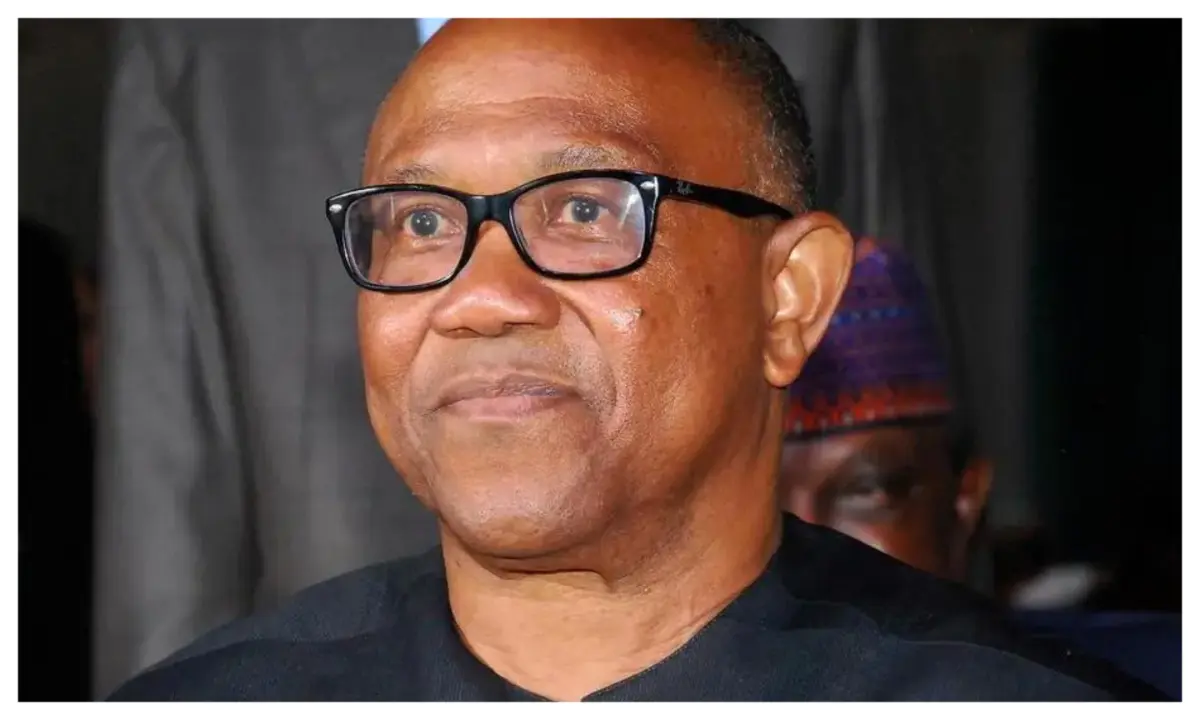
Special Assistant to the African Democratic Congress, ADC, presidential candidate, Atiku Abubakar on Public Communication, Phrank Shaibu, says the exit of former Anambra state governor, Peter Obi, from the ADC was never a loss to the party.
Speaking during an interview on Trust TV on Sunday, Shaibu said Obi was having fun in the Nigeria Democratic Congress, NDC.
He was speaking on the exit of Obi from the ADC early last month.
Recall that Obi and former presidential candidate of the New Nigerian Peoples Party, NNPP, Rabi’u Kwankwaso, dumped the ADC for the NDC, citing internal divisions and court cases.
Airing his own opinion, Atiku’s aide said, “I don’t see Peter Obi’s exit as a loss to the ADC. Peter has found a haven in the NDC or wherever he is. He’s simply having fun there.
“Let me tell you something. In that place, they have what we call the office of the Supreme Leader.
“That’s the only party in Nigeria where I have not seen the party officials. I’ve never heard the party chairman. I’ve never heard of the party secretary. I only hear from their Supreme Leader.”
dailypost.ng
Exactly two months after the endorsement of Senator Solomon Olamilekan Adeola as the All Progressives Congress (APC) consensus candidate for the 2027 Ogun State governorship election, the party has announced Kudirat Adegunwa-Balogun as its deputy governorship candidate.
The announcement was made on Sunday by Governor Dapo Abiodun at an emergency APC Strategic Caucus meeting held at the party’s secretariat in Abeokuta.Governor Abiodun stated that the decision was reached after several consultations with party leaders and stakeholders in the state.
He noted that the party considered gender balance and religious tolerance in selecting her from Ososa town in Odogbolu Local Government Area of Ogun East Senatorial District.The governor said, “If the government is coming from the West, we felt that for equity and fairness, the deputy governor should come from the East. So, we sat and looked across the local governments in Ogun East and consulted widely within that constituency.“Yes, we’ve accepted. But until this august body ratifies that, we cannot consider it as something that has been formally accepted by the party and the state. So, we thought we must bring, in the same fashion that we brought the governorship candidate here…
“So today, it gives me great pleasure to announce to us who our deputy governor will be by the grace of God. today, we have among us Mrs Kudirat Abiodun Adegunwa-Balogun and, by the grace of God, Mrs Manobu will be our deputy governor.”In his remarks, the governorship candidate, Solomon Adeola, thanked the governor for the strategy deployed in the selection of various candidates for the 2027 election.Adeola disclosed that a total of 17 aspirants indicated interest in becoming the deputy governorship candidate and that all were qualified to represent the state, but one person had to emerge, hence the decision.He added that she is the daughter of the Asiwaju of Ijebuland and business mogul, Sulaiman Adegunwa.In her acceptance speech, Adegunwa-Balogun appreciated the state governor, party leaders and the governorship candidate for the trust and opportunity to serve.
Mrs Adegunwa-Balogun maintained that she does not take the support for granted but rather sees the nomination as a call to duty and a privilege to serve.Earlier in his welcome address, the Ogun APC Chairman, Yemi Sanusi, appreciated the state governor for his wisdom and congratulated all candidates who emerged victorious in the primary election.He noted that the primary election process was not yet completed, hence the purpose of the meeting.Our correspondent observed that while the state Deputy Governor, Noimot Salako-Oyedele, was absent, Iziaq Salako, the Minister of State for Health and Social Welfare; the Director-General of the National Sports Commission and former two-term commissioner in Ogun State, Bukola Olopade; the Speaker of the State House of Assembly, Oludaisi Elemide; the Secretary to the State Government (SSG); and members of the Governor’s Elders Advisory Council (GEAC), among others, were present at the meeting.
dailypost.ng


Petrol station razed as tanker bursts into flame in Umuahia

Judges’ Scorecards and Punch Stats For Ilia Topuria vs Justin Gaethje at UFC Freedom 250

Army arrests dismissed police Inspector over alleged arms supply to bandits

Simi Sanya and Femi Dapson Are Now Legally Married and It Is Beautiful to See

FCT Area Council Election: Live results from polling units

Premier League Set-Piece Goals (2025/2026)
-
 Sports22 hours ago
Thierry Henry Issues Statement After Nigeria Comment Backlash at World Cup
-
 Sports1 day ago
Strong Reaction to Brazil Star’s World Cup Performance vs Morocco
-
 Sports1 day ago
James McClean Slams ‘Worst’ Decision For Ireland vs Israel
-
 Sports21 hours ago
Gary Neville Calls Out FIFA ‘Dictatorship’ After World Cup Incident
-
 Sports2 days ago
Sir Alex Ferguson Named His 2026 World Cup Winners
-
 Sports9 hours ago
Uruguay Denied US Entry Day Before World Cup Opener
-
 Sports1 day ago
Jurgen Klopp Blasts 2026 World Cup Hydration Breaks
-
 Sports2 days ago
Clint Dempsey Slams Canada Boss Jesse Marsch on Live TV