
Business
Why agriculture must wear a new face — Xtralarge boss


By Cynthia Alo
The Group Managing Director of Xtralarge Farms and Resorts, has called for a radical transformation of Nigeria’s agricultural sector, urging stakeholders to “re-adorn” farming and reposition it as a profitable, modern enterprise capable of driving food security and economic growth.
Speaking at the 2026 Vanguard Economic Discourse in Lagos, the agribusiness leader warned that the current perception of agriculture as a labour-intensive, low-income venture continues to discourage youth participation, stressing that without a deliberate shift towards agribusiness and value addition, the country risks a worsening food crisis in the coming years.
She further highlighted the scale of post-harvest losses and the impact of unstable pricing on farmers’ profitability, noting that falling food prices amid rising input costs are pushing many producers out of business. She called for urgent reforms to make agriculture more attractive, sustainable and wealth-generating, particularly for young people and women. (Full Speech below) .
I am the Group Managing Director of Xtralarge Farms and Resorts in Nigeria, Xtralarge Global Agritourism Limited in the UK. I am the president of the Female Agri-preneurs Association, and we work in close relationship with the American Association for Female Agri-preneurs. And if there is any woman sitting in this meeting today and you are a farmer or someone that has something to do in the agri-business value chain, then I’m speaking your mind and I’m here for you. If I also have people who are here, young people, not only by age but by heart, then I’d like to let you know that something great is coming.
Xtralarge stands for re-adorning agriculture, not only in Nigeria, in Africa and globally. We believe that the apparel that agriculture is wearing presently is one that epitomises poverty, that epitomises hardship and labour. And that is why when you ask the youths, deep down, how many of them want to be real farmers after graduating out of university? Maybe one or two percent. Because they think that the picture of the farmer they have in their mind is what they see on African Magic. That Baba inside that thick forest wearing that tattered shirt with his cutlass and hoes, not anybody looking close to me, or to my wonderful NACCIMA president here, or to the AfAN president. We need to re-adorn agriculture. We need to wear a new apparel for it. And that is what we are doing at Xtralarge having been able to raise a community of over 200,000 people, who are earning every day. Living people not dead, that are earning every day from the agribusiness value chain. We have been able to raise a community of 1 million people, not only in Nigeria, but spread across 14 different nations of the world. We are passionate, not just about agriculture, but healthy foods. We have in our stable 21 different healthy food products. And we not only preach about agriculture, we also talk about eating your way into wellness, as I’m also a living witness. We also, to the glory of God, own the biggest luxury farm resorts in Nigeria, as a way of re-adorning agriculture. As a way of promoting and making agriculture more sustainable and profitable by including tourism infusion.So I stand here today also as the co-host and the president of the first ever World Agri-Tourism Festival, held anywhere on the planet Earth. For the first time here in Nigeria, we were greatly supported by the government. I want to close with this Number one, we are here to talk about the Vanguard of food security and socio-economic development in Nigeria. I want to ask this question, and I’m expecting everybody in this room to give me an answer. Do we have a problem of food insecurity? Yes or no? We do, right? Thank you very much.So, what you don’t want, you don’t watch. When we talk about it, what are we doing about it? It is not about attending summits and conferences all the time. It is about what we can start doing from today.
And as a leading example in the agribusiness sector, Xtralarge Farms, with our 14 different farm locations in Nigeria, employing and having thousands of people earning from the agribusiness value chain, we are saying, don’t sit and watch. Start doing now. I will be very happy if by next year we have the opportunity to have this kind of event again, and we have at least half of this room who are practical farmers. Not only by mouth, but by proof. Can I visit your farm? Are you affiliated to a farming organisation? Are you investing in farming? Are you promoting farming? What exactly are you doing to promote agriculture in Nigeria? I also want to close by appreciating our youth and women, and I want to give 100 tickets here today. We are holding an Agri-Wealth Revolution Summit on the 1st of May, commemorating the Labour Day.Telling people in the workforce that even as you are working in paid employment or even in your business, you can start doing something in agriculture gradually. That event is a paid event, but we are going to give the ticket for free to 100 youth and women. And also to every single person who is here from a tertiary institution, You just got a ticket to visit Xtralarge Farms and Resources for a one-day explorative vacation to see what agriculture means in the modern day, and how you can make it more profitable through the infusion of tourism.Davies used the opportunity of the panel session to further dissect the challenges and proffer solutions to Nigeria’s agric sector headaches, stating:“Even though I’m not a politician, I’ve never been a politician, but I believe that the moment our government begins to bring in youth and women, especially people who are on the field, to come in and lend a voice to the challenges that we’re facing in our country, there will definitely be a difference. If I were given an opportunity, like you said, what I’m going to do is to add a mindset shift from just raising farmers in Nigeria to grooming Agri-preneurs.“I stand as a living example to one of the challenges. I’m so happy with the topic you gave me to talk about, that’s post-harvest losses. I remember about 18 years ago when we came to Nigeria, my husband and I, to come into farming.“We just had the passion to feed people with 100% healthy foods, and we started with cassava farming. But lo and behold, we did the cassava, our factory beautiful, brought in state-of-the-art equipment and all to ensure that this is not just cassava, it should bring health to our people. But we had a challenge. “After cultivating and everything, and adding value, we couldn’t sell. So one thing I’m going to do, if I’m given the opportunity to make a change, even though we’re trying to make a change already, is to shift the attention of our farmers. Not completely away from farming, but to let them now know how to add value to farming as a business.“Where we don’t do farming for passion, we do farming as a business. Where we do it as a green business, not just agriculture. Then we can begin to address the issue of post-harvest losses.“So that you don’t just go to the farm without having in mind who you’re producing for, how you intend to sell, which are one of the major issues that farmers are having in Nigeria. I can stand here and boldly prophesy that there is going to be a bigger food challenge by the year 2028. My presidents who are here, for AFAN and IFAD and all, they will understand what I’m saying.“If you look at what is happening in our economy right now, food prices are dropping every day. But food inputs, farm inputs and agricultural inputs are on the rise. What you are buying at a cheaper rate is putting a farmer in debt.“What you are buying at a cheaper rate now is discouraging totally our farmer out there. So what happens is that if you check the graph, you see that it goes up, it comes down, it comes flat, it goes down, it goes up. It’s never stable. “Pricing is a challenge. Until our government begins to help us find a solution to pricing of food, farmers are already discouraged with security challenges. But when you don’t have the right value for what you are producing on your farm, you will be further discouraged.“This year now, look at the price of one of the very staple foods in Nigeria, Garri. The price is dropping every day. What will happen this year, as rain is about to start, is that many farmers will not go to farm for cassava.“So by next year, a few of them that did late farming last year, they are the ones we will have. And the prices will simply be like that. And by 2028, all of us will suffer for it.“Because the discouragement is too much. We have to learn how to add value to what we are doing, make it an agri-business that people can generate true wealth from. Why do you want to send me to the farm? Because I love to feed the people and I come back poor. And I lose my family. And I lose my investments.“There has to be protection of not just human lives, but also of the capital and investment that is being invested into the agri-businesses. That is one thing I’m going to do differently. Adding value, creating the right environment, and making it truly, truly profitable”

By Emeka Anaeto, Business Editor
Nigeria’s leading economists and financial experts have disagreed with some of the latest policy prescriptions by the International Monetary Fund, IMF, for Nigeria, even as they endorsed the Fund’s warning against the Federal Government’s proposed $5 billion loan from a bank in Abu Dhabi.
Highlights of the IMF positions contained in its 2026 Article IV Mission Concluding Statement include a warning against the plan of the Federal Government (FG) to borrow $5b from First Abu Dhabi Bank of United Arab Emirate (UAE) saying that it comes at a dangerous collateral amounting 133.3% of the loan.
Other high points of the IMF statement include that Nigeria should raise its VAT rate because it is still low compared to other countries within the region; CBN should continue monetary tightening since inflationary pressures have returned; CBN should guard against excessive reliance on portfolio investments; FG should step up funding cash transfers program as poverty rate is increasing; Inflation is going to moderate in the second half of this year; reforms have strengthened macroeconomic stability; FG’s budgetary spending should be more transparent; and FG’s 2026 deficit to be around 4.4% of 2025 GDP.
The Federal Government has described the IMF statement on Nigeria as a validation of its economic reform programme, with the Minister of Finance and Coordinating Minister of the Economy, Mr. Taiwo Oyedele, stating, “The report provides further independent validation that the bold and necessary reforms undertaken under the leadership of President Bola Ahmed Tinubu, are strengthening macroeconomic stability, restoring confidence, and laying the foundation for sustainable and inclusive growth.”
Concerns over borrowing justified – Muda Yusuf
The Chief Executive officer of the Centre for the Promotion of Private Enterprise (CPPE), Muda Yusuf, has backed IMF’s concerns over Nigeria’s proposed $5 billion borrowing from First Abu Dhabi Bank, stressing the need for greater caution in the country’s debt accumulation strategy.
Commenting on the IMF’s Article IV report Yusuf said he strongly agreed with the Fund’s emphasis on debt sustainability and prudent fiscal management, noting that the country’s growing debt-service burden remains a major source of concern.
According to him, while Nigeria’s debt-to-GDP ratio may appear relatively moderate, the more critical issue is the proportion of public revenue being committed to debt servicing.
“A substantial share of public revenue is now devoted to debt-service obligations, leaving less fiscal space for infrastructure, healthcare, education, security and other growth-enhancing investments,” he said.
Yusuf noted that fiscal sustainability should not be measured solely by the size of public debt but by the government’s capacity to service such obligations without undermining critical development priorities.
He therefore shared IMF’s reservations about the proposed $5 billion facility from First Abu Dhabi Bank, urging the government to carefully assess the cost, tenor, repayment terms, currency risks and developmental impact of the loan before proceeding.
According to the CPPE boss, Nigeria should prioritise affordable and concessional financing while ensuring that any new borrowing is channelled into productive investments capable of generating economic returns, boosting exports and strengthening future revenue streams.
“Borrowing should support growth, not merely increase future debt-service pressures,” he stated.
Yusuf also called for a more balanced policy mix, arguing that while tight monetary policy has contributed to exchange-rate stability and inflation moderation, elevated interest rates are constraining investment, business expansion and job creation.
Also commenting on the IMF’s position, Head of Equity Research at Quest Merchant Bank, Mr. Tunde Abidoye, supported the Fund’s reservations on the proposed UAE loan, describing the transaction as risky.
According to him, the loan is structured as a total return swap, a derivative instrument that exposes the country to significant volatility.
“The IMF is right on this. Since the loan is essentially a derivative, it entails significant volatility which could crystallise through margin calls in the event of adverse shocks such as a sharp drop in oil prices. While it provides immediate liquidity, the risks are substantial,” he said.
Also commenting, Chief Economist at United Capital Plc, Mr. Ayodele Akinwunmi, took a different position on external borrowing, saying foreign loans could be beneficial if deployed to productive infrastructure projects.
“Nigeria’s current macroeconomic environment presents a compelling case for external borrowing, provided such funds are channelled into infrastructure development. Expectations of a stable naira, relatively lower international interest rates and concessionary loan terms make external financing attractive at this time,” he said.
Commenting on the counsel by the IMF against borrowing, David Adonri, Analyst and Executive Vice Chairman at High Cap Securities Limited, said: “IMF’s counsel to FGN against borrowing whether from Abu Dhabi or any other foreign country is reasonable. However, I doubt if FGN will heed the advice because being in debt trap, FGN requires new foreign debt to service existing obligations. Otherwise, a sovereign default with dire consequences may become imminent.”
VAT increase
On the IMF’s recommendation for a VAT increase, Abidoye disagreed, arguing that Nigerians have already borne the burden of recent reforms.
“VAT provides an easy avenue for governments, particularly sub-national governments, to increase revenue. However, Nigerians have absorbed significant reform-induced pressures over the past three years. I do not think the timing is right for a VAT increase,” he stated.
However, Akinwunmi joined Abidoye in rejecting the IMF’s call for a VAT increase.
“What Nigeria needs is not higher tax rates but broader tax compliance. Expanding the number of individuals and institutions paying taxes will strengthen government revenue without stifling growth,” he stated.
On the recommendation given by the IMF to raise VAT, Adonri said: “IMF’s advice to FGN to raise VAT in order to equalize with neighboring countries is unacceptable. The reason is too pedestrian. Taxation is a serious fiscal tool aimed at specific strategic imperatives of the economy. VAT is a consumption levy that can worsen the poverty level of consumers. This is the time for relief and not extra burden.
Monetary tightening, inflation
On monetary policy stance Abidoye argued that although inflationary pressures may eventually compel the Central Bank of Nigeria, CBN, to tighten monetary policy further, an immediate rate hike may not be necessary.
“The current inflationary pressure is largely driven by supply-side energy shocks. Monetary policy can do little to address first-round effects. Central banks usually respond after a few months to contain second-round effects,” he explained.
On monetary policy, Akinwunmi said the current stance of the CBN remains appropriate, warning that additional rate hikes could undermine economic growth.
According to him, inflation is likely to remain in double digits in the second half of the year due to elevated oil prices, election-related spending and persistent security challenges.
He said: “The Central Bank is unlikely to lower rates hastily because inflationary pressures remain significant. However, raising rates further may be counterproductive under present conditions.”
On monetary policy tightening, Adonri said: “The IMF recommendation is justifiable. CBN loosened monetary policy prematurely because the policy objective of forcing inflation rate to single digit had not been achieved when money supply was increased.”
Speaking on inflation Adonri said: “Official figures indicate that inflation is moderating and will continue into the future but the reality on ground shows otherwise. Macroeconomic reforms have stabilized the demand side of the economy as they were majorly demand management policies but the structural reforms necessary to propel the supply side are yet to be forcefully embarked upon. The most critical element which is restoration of national security is callously treated with levity. Instead of focusing on foundational production infrastructure, fiscal policy is centered on secondary infrastructure. As a result, the economy remains heavily import dependent and unable to generate productive employment.”
Dependence on FPIs
Both Abioye and Akinwunmi agreed with the IMF’s position that Nigeria should reduce excessive dependence on Foreign Portfolio Investment (FPI) and attract more productive Foreign Direct Investment (FDIs) capable of supporting long-term economic growth.
While supporting social intervention programmes, they stressed the need for effective targeting and complementary investments in skills acquisition to create sustainable livelihoods for vulnerable Nigerians.
Their views came as the IMF maintained that Nigeria’s economic reforms have strengthened macroeconomic stability and projected that inflation would moderate in the second half of the year despite persisting pressures.
Commenting on FPI, Adonri said: “Portfolio Investment is hot money which is very volatile. What the economy needs now is patient capital (FDI) to boost the supply side of the economy.”
Babajide Komolafe, Peter Egwuatu and Yinka Kolawole contributed to this report
The post IMF, economists disagree over Nigeria’s economic prescriptions appeared first on Vanguard News.

By Godwin Oritse
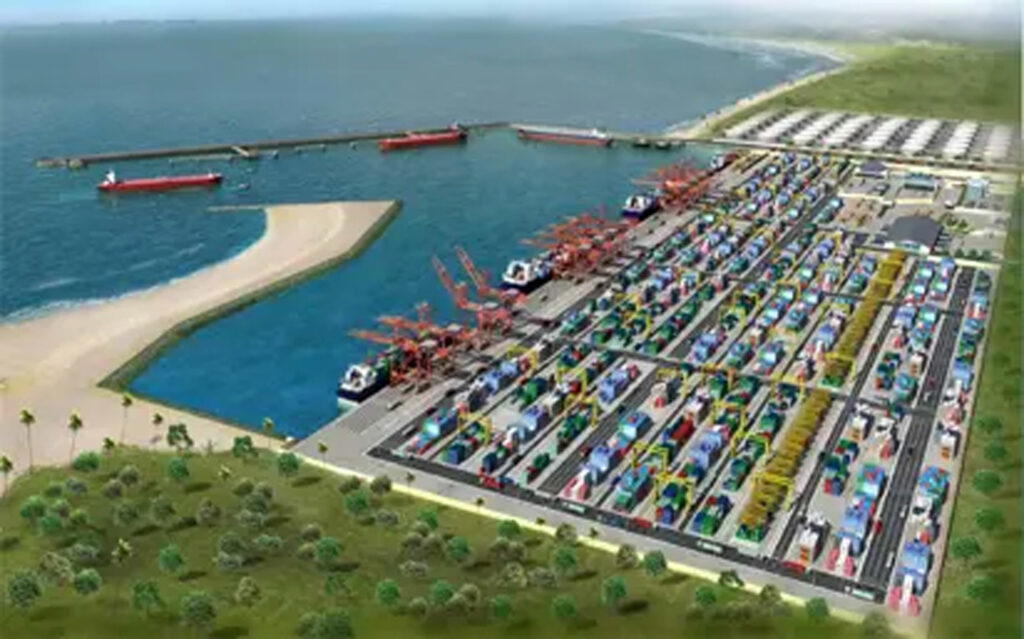
Lagos State Governor, Babajide Sanwo-Olu, has announced that work on Phase 2 of the Lekki Port project will commence soon, a move aimed at strengthening the state’s position as West Africa’s leading maritime and logistics hub.
Speaking at the Invest Lagos Summit 3.0 held in Lagos earlier in this week, Sanwo-Olu highlighted the State’s commitment to expanding critical infrastructure and attracting investment.
He explained that the expansion of the Port will significantly enhance cargo handling capacity, strengthen maritime trade, and deepen Lagos’ role as a gateway to the African Continental Free Trade Area (AfCFTA) market of over 1.4 billion people.
He stated: “With AfCFTA creating a market of over 1.4 billion people and a combined GDP exceeding $3 trillion, Lagos occupies a uniquely strategic position.
“The Lekki Deep Sea Port, within five years, is moving to phase two because it is almost reaching the full potential of its installed capacity. And just within five years, it is moving to phase two. These are not just aspirations but projects that have been implemented and are under implementation. They have been funded, progressing, and transforming the investment landscape of our State”.
In his remark, the Managing Director, Lekki Port, Wang Qiang, commended the Lagos State Government for maintaining a stable and investment-friendly environment.
He noted that the next phase of development will play a key role in expanding the port’s operational and cargo-handling capacity, improving logistics efficiency along the Lekki corridor, and attracting additional global shipping and logistics investments.
Qiang noted that the expansion aligns with Nigeria’s broader trade facilitation agenda and the increasing demands of regional and international shipping networks.
He stated: “We are deeply encouraged by the continued support of the Lagos State Government, whose infrastructure-led policies have created a stable and forward-looking environment for long-term maritime investment.
“The commencement of the next phase of development represents a significant milestone in our journey to expand capacity, enhance operational efficiency, and strengthen Lekki Port’s position as a premier gateway for West African trade under the AfCFTA framework.”
The post Lekki Port Phase 2 construction set for kick-off, says Lagos govt appeared first on Vanguard News.

By Udeme Akpan & Obas Esiedesa
The Nigerian National Petroleum Company Limited (NNPC Ltd.) and security agencies have intensified efforts to combat pipeline vandalism following the discovery of a damaged section of the Nigerian Pipelines and Storage Company (NPSC) crude oil pipeline at Pai Community, Kwali Area Council of the Federal Capital Territory (FCT), Abuja.
The joint inspection involved NNPC’s Industry-wide Security Architecture (IWSA), NPSC, the Office of the National Security Adviser (ONSA) Special Prosecution Team (SPT), the FCT Police Command, the Nigerian Army and other security stakeholders.
The exercise was aimed at assessing the extent of damage, advancing investigations and strengthening coordinated measures to protect critical national energy infrastructure from economic sabotage.
The visit followed the arrest of three suspected pipeline vandals in Piri and Pai communities through a joint operation involving ONSA’s Special Prosecution Team, the FCT Police Command and NNPC Ltd.’s IWSA.
NPSC, a subsidiary of NNPC Ltd., operates more than 5,000 kilometres of crude oil and petroleum products pipelines across Nigeria. However, pipeline attacks have increased in recent years, with criminal groups targeting infrastructure for illegal removal and theft.
Industry records show that 19 pipeline vandalism cases were recorded in 2025, leading to the theft of about nine kilometres of pipeline sections along the Enugu-Makurdi-Yola route and the Piri-Izom section of the Warri-Kaduna pipeline corridor.
So far in 2026, five cases have been reported, including incidents around Piri-Kwali and Gwagwalada along the Warri-Kaduna crude oil pipeline route, as well as Badanga on the Jos-Gombe pipeline corridor.
Speaking during the inspection, Group Chief Executive Officer of NNPC Ltd., Engr. Bashir Bayo Ojulari, represented by Chief Interface Officer, Dahiru Sani-Gwarzo, said the arrests represented an important step towards dismantling criminal networks behind attacks on energy infrastructure.
He said the security architecture was focused not only on apprehending those directly involved but also identifying sponsors and receivers of stolen pipeline materials.
The post NNPCL, security agencies intensify crackdown on pipeline vandals appeared first on Vanguard News.


Brentford Set to Make Approach to Beat Arsenal to Jeremy Monga

Ipswich Eyeing Derek McInnes Hijack Amid Rangers Pursuit

Donald Trump Reacts to New York Knicks’ Historic NBA Championship Win

Simi Sanya and Femi Dapson Are Now Legally Married and It Is Beautiful to See

FCT Area Council Election: Live results from polling units

Premier League Set-Piece Goals (2025/2026)
-
 Sports2 days ago
12 Hardest Football Competitions to Win [Ranked]
-
 Sports2 days ago
Referee Michael Oliver Out of 2026 World Cup Match Due to Injury
-
 Sports2 days ago
England Fan Denied World Cup Access After Breaking Trump Rule
-
 Sports8 hours ago
Strong Reaction to Brazil Star’s World Cup Performance vs Morocco
-
 Sports21 hours ago
Sir Alex Ferguson Named His 2026 World Cup Winners
-
 Sports1 day ago
Clint Dempsey Slams Canada Boss Jesse Marsch on Live TV
-
 Sports15 hours ago
Jurgen Klopp Blasts 2026 World Cup Hydration Breaks
-
 Sports2 days ago
FIFA Statement as Canada Deny Thomas Partey’s 2026 World Cup Visa