
Business
FirstHoldCo Profit Rockets 72.2% in Q1


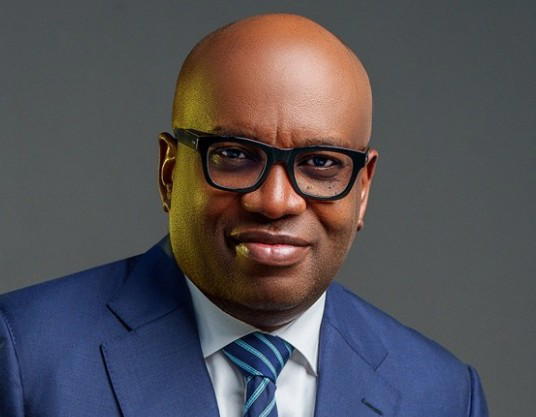
FirstHoldCo Plc delivered a masterclass performance in its first-quarter 2026 financials, recording a 100 year-on-year profit before tax (PBT) growth. Profit before tax (PBT) jumped to -321.12 billion from -186.48 billion in the corresponding period of 2025, supported by steady interest-earning capacity and robust fee income generation.
The first quarter of 2026 marked a definitive pivot for First HoldCo Plc, as the parent entity of Nigeria’s oldest commercial bank re-established itself as a financial powerhouse.
Emerging from a period of aggressive balance sheet restructuring characterized by massive legacy debt write-offs in late 2025, the group’s Q1 2026 performance represents a ‘phoenix-like’ strategic reset.
Post its 2025 balance-sheet cleanup.
First HoldCo’s Q1 2026 results also established the Group as the second-largest Nigerian lender by absolute profit before tax, trailing only Zenith Bank.
In Q1 2026, Zenith Bank reported PBT of N360.91 billion, FirstHoldCo N321.12 billion, GTCO N302.89 billion, Access Holdings N272.2 billion and UBA N160.65 billion.
This renaissance is not merely a product of the high-interest-rate environment currently prevailing in Nigeria, where the Central Bank of Nigeria (CBN) has maintained its hawkish stance with a 26.5% Monetary Policy Rate (MPR) to anchor inflation.
Rather, it is the result of a deliberate “kitchen-sinking” of bad assets in the 2025 financial year, which saw the Group take a historic N826.3 billion impairment charge to resolve historical asset quality concerns once and for all.
This strategic “cleansing” has liberated the balance sheet to capture the full upside of the current lending cycle, allowing FirstHoldCo to lead the market in the most critical measures of shareholder value creation.
The Profitability Outperformer: Return on Equity Leadership
FirstHoldCo’s standout metric for the first quarter of 2026 is its Return on Equity (ROE). This parameter servesas the ultimate barometer for management’s ability to generate earnings from the capital entrusted to them by shareholders.
For Q1 2026, FirstHoldCo delivered a post-tax ROE of 31.6%, effectively eclipsing the entire FUGAZ group. This represents a staggering turnaround from the 4.6% recorded in December 2025, which was heavily weighed down by the balance sheet reset.
The leadership in ROE is particularly noteworthy given the simultaneous recapitalization efforts across the industry, which naturally exerts downward pressure on ROE and indicates that FirstHoldCo’s earnings power is scaling faster than its capital dilution.
*The Revenue Engine: Optimized Asset Mix*
FirstHoldCo’s outperformance is structurally rooted in its superior asset yield, particularly within its loan book. Unlike some peers who have historically relied on the “carry trade” of government securities, FirstHoldCo has aggressively pivoted toward private sector credit. In Q1 2026, the group generated ¦ 465.6 billion in interest income from loans and advances to customers, representing a 27.8% increase from the prior year.
This growth in customer loan income is significantly higher than that of its closest rivals. FirstHoldCo is finding higher-quality lending opportunities in a tight liquidity environment.
*Operational Resilience*
FirstHoldCo’s Cost-to-Income Ratio (CIR) improved remarkably from 53.8% in late 2025 to 45.2% in Q1 2026. While it still trails GTCO (the industry efficiency benchmark at 30.9%) and Zenith (43.5%), it has significantly outperformed Access Corp (55.8%) and UBA (61.2%). The improvement in FirstHoldCo’s ratio is even more impressive when considering that its total operating expenses rose 21.3% year-on-year to ¦ 297.6 billion. The key to this outperformance is “positive operating leverage”—the group’s net earnings grew by 40.2%, effectively “outrunning” its expense growth.
*Recovery and Credit Quality*
The most profound turnaround in FirstHoldCo’s financial profile is found in its “Other Non-Interest Income,” specifically the “Recoveries” line item. In Q1 2025, the group reported a modest ¦ 1 billion in loan recoveries; by Q1 2026, this figure surged by 1570% to ¦ 19 billion. This outperformance in debt recovery is a direct consequence of the 2025 balance sheet reset. Having aggressively written off legacy non-performing loans (NPLs), the bank’s specialized recovery units are now clawing back value from these assets, which flows directly to the bottom line as non-interest income.
*Balance Sheet Dynamics: Liquidity and Funding*
FirstHoldCo’s balance sheet reflects a bank that is both liquid and well-positioned for the “normalization” phase of the economy. Total assets stood at ¦ 26.8 trillion in March 2026, a slight 1.4% decline from December 2025, primarily due to the strategic balance sheet management .
*FirstHoldCo Resets and Positions for Growth in 2026 and Beyond*
By taking the painful but necessary steps to reset its balance sheet in 2025, FirstHoldCo Plc has entered 2026 as a leaner, more profitable, and more efficient competitor.
Its leadership in ROE and PBT growth is not an accident of the market but a direct result of management’s focus on high-yield customer lending and aggressive asset recovery, making it the industry’s most efficient engine for creating shareholder value.
As the benefits of the group recapitalization takes hold and the market digests its Q1 results, the current valuation gap between FirstHoldCo and other tier-one rivals like Zenith and GTCO is expected to narrow.
The post FirstHoldCo Profit Rockets 72.2% in Q1 appeared first on Vanguard News.

The World Bank has said Nigeria’s biggest fiscal challenge is weak revenue mobilisation rather than excessive borrowing, urging the government to prioritise efforts to boost revenue generation to support sustainable economic growth.
Speaking during an interview on Channels Television on Friday, the World Bank Country Director for Nigeria, Mathew Verghis, said Nigeria’s debt profile remains moderate by international standards and is significantly different from countries experiencing debt distress.
“From our assessment, Nigeria doesn’t have a high indebtedness problem; it has a low revenue problem,” Verghis said.
He explained that Nigeria’s debt-to-GDP ratio is lower than that of many comparable countries, stressing that concerns should focus on improving government revenue rather than limiting borrowing.
“When we looked at the numbers, Nigeria is a moderately indebted country, meaning it has less debt relative to its economy than most of its neighbours and many other countries,” he said.
“Nigeria is in a very different situation than Ghana, for example, which is going through a debt restructuring.”
Verghis defended government borrowing as a necessary tool for financing long-term investments that stimulate economic growth and improve living standards.
“Nigeria borrows for the same reasons that all countries borrow. If you want to deliver results to people, the money available on an annual basis is not enough. So you borrow, deliver results, and that improves your ability to repay,” he said.
He cited the expansion of electricity access as an example, noting that providing power to about 32 million Nigerians requires substantial upfront investment.
“To be able to connect and provide energy to 32 million Nigerians, Nigeria needs to borrow money now. But with increased access to energy, the country will become wealthier and better positioned to repay the loans,” he added.
The World Bank official, however, warned that low government revenue poses a greater threat to Nigeria’s fiscal sustainability than its current debt level.
“Nigeria’s debt is not particularly high, and in fact, it’s quite moderate by international standards. Its revenues are very low by international standards, and unless those revenues are raised, it will not be able to pay back debt,” Verghis said.
According to him, strengthening revenue mobilisation would enable the government to increase investments in infrastructure, healthcare, education and other sectors that drive job creation, improve human capital and reduce poverty over the long term.
The remarks come as the World Bank recently unveiled a new six-year Country Partnership Framework for Nigeria, which places job creation at the centre of its support for the country through investments in infrastructure, healthcare, agriculture and digital connectivity.

By Elizabeth Adegbesan
As part of the Federal Government (FG) borrowing plan for the 2026 budget, the Central Bank of Nigeria, CBN, has issued Treasury Bills, TBs, to raise N5.8 trillion in the third quarter of 2026 (Q3’26).
This represents a 241 percent year-on-year (YoY) increase when compared to N1.76 trillion sold in Q3’25.
CBN disclosed this in its Nigeria Treasury Bills Issue programme for Q3’26.
Treasury Bills are short term (less than one year) debt instruments used by the apex bank to borrow money from the Nigerian public on behalf of the federal government. CBN also uses TBs to control money supply in the economy.
The TB issue programme commenced on July 1st, and ends on September 23rd, 2026. The settlement date began yesterday and ends on September 24th, 2026.
During the period, the apex bank will issue TBs worth N900 billion on 91 days tenor, N900 billion on 182 days and N4 trillion on 364 days.
A breakdown of the programme revealed that in July, the apex bank plans to issue N2 trillion worth of TBs, comprising N300 billion worth of 91 days bills, N300 billion worth of 182 days bills and N1.4 trillion worth of 364 bills.
In August, the apex bank issued N2.1 trillion worth of TBs, comprising N300 billion worth of 91 days bills, N300 billion worth of 182 days bills, and N1.5 trillion worth of 364 days bills.
In September, CBN plans to sell N1.7 trillion worth of TBs comprising N300 billion worth of 91 days bills, N300 billion worth of 182 days bills and N1.1 trillion worth of 384 days bills.

By Emma Ujah
President and Chairman of the Board of the African Export-Import Bank (Afreximbank), Dr. George Elombi, has tasked African nations to stop the export of Lithium, the main raw material used in the production of electric vehicle (EV) batteries. Nigeria is a major exporter of Lithium in Africa, though most of the quantity is illegally exported.
Speaking at the bank’s Mid-Year Media Roundtable in Abuja on Wednesday, he said that rather than exporting raw lithium, African countries should use it to manufacture EV batteries on the continent.
He also said Afreximbank has sufficient funds to finance the production of EV batteries and is ready to provide the necessary funding to any individual or organisation willing to venture into the industry.
In his words, “African mineral resources must work for Africa’s development. EVs are the future of transportation, and the use of lithium to produce EV batteries is taking centre stage in the EV industry.
“Africa must take its position in the EV industry. We have lithium. We should produce EV batteries at home. We simply have to produce them here. There is enough money in Africa to manufacture batteries in Africa.
“If you know anyone who is interested in EV battery production, bring them to me. But if you see someone looking for funding to export lithium, don’t bring them to me.”
Dr. Elombi also said African leaders and institutions must work together to ensure that African funds held outside the continent are repatriated to support the region’s development.
Some rating agencies biased against Africa
Speaking on the bank’s credit ratings, Dr. Elombi, who advocated for African rating agencies, said some global rating agencies initially dismissed Afreximbank as too small and insignificant to drive Africa’s development, while questioning the bank’s trade finance mandate.
According to him, one agency’s 2014 assessment suggested that trade finance could not serve as a foundation for development and implied that the bank’s core mandate lacked relevance.


Belgian FA React to FIFA Suspending Folarin Balogun World Cup Ban

Zlatan Ibrahimovic Causes Big Stir With Reaction to FIFA Suspending Folarin Balogun’s One-Game Ban

Police recover stolen vehicle in Bauchi, arrest three suspects

Simi Sanya and Femi Dapson Are Now Legally Married and It Is Beautiful to See

Premier League Set-Piece Goals (2025/2026)

FCT Area Council Election: Live results from polling units
-
 Sports23 hours ago
Joe Hart Slams ‘Disgrace’ France vs Paraguay Referee
-
 Sports1 day ago
Vozinha Reveals What Lionel Messi Told Him After Argentina 3-2 Cape Verde
-
 Sports13 hours ago
Mexico vs England Referee Already Made World Cup Blunder
-
 Sports2 days ago
20 Players in England’s 2026 World Cup Squad Could’ve Represented Other Nations
-
 Sports2 days ago
Footage Shows What Happened After Lionel Messi’s Post-Match Interview v Cape Verde
-
 Sports2 days ago
Explanation Emerges as Ref Accused of Breaking FIFA Rule to Favour Argentina v Cape Verde
-
 Sports1 day ago
Paraguay Legend Chilavert Sparks Uproar With ‘Disgraceful’ Comments About France
-
 Sports2 days ago
Why Mexico vs England Kick Off Time Will Remain Unchanged Despite Talks