
Business
Breweries defy economic hardship, record sharp rise in revenue



…As profit rises 117% to N317.2 bn
•Our performance was led by Heineken beer – Nigerian Breweries •We take beer to ease frustration, stress – Consumers •It’s habit driven – Analysts •Helped by product re-pricing – Egbomeade
By Peter Egwuatu
Against the backdrop of rising costs of living and declining purchasing power, brewing companies have recorded sharp rise in revenues.
Filings by the companies to Nigeria Exchange Limited, NGX, indicate that leading brewers, Nigerian Breweries Plc, Guinness Nigeria Plc, International Breweries Plc, and Champion Breweries Plc recorded combined revenue of over N2.8 trillion from the sale of mainly beer and spirits, in addition to their non-alcoholic beverages in the year ended December 31, 2025, up from N1.89 trillion recorded in the corresponding period of 2024, representing an increase of 48.1%.
Analysts noted that the figure underscores the scale of beer and other alcoholic beverage consumption in Nigeria despite prevailing economic pressures.
According to the financial statements of the four major brewers profit was even more impressive with Profit Before Tax (PBT) rising 117.2 percent to N317.213 billion, up from N146.050 billion in 2024.
Meanwhile, the growth rate in revenue and profit were far higher than their cost of doing business despite the inflationary pressures in the economy.
The companies’ cost of sales rose 36.5% to N1.8 trillion from N1.3trillion, while administrative expenses rose by 17.6%, to N639.8billion from N544.04 billion.
The post Breweries defy economic hardship, record sharp rise in revenue appeared first on Vanguard News.


By Rosemary Nwunze
Mutual Benefits Assurance Plc has announced its audited financial results for the year ended 31 December 2025, reporting a strong performance marked by significant growth in profitability, improved insurance revenue and continued expansion of its balance sheet. The results underscore the company’s resilience, disciplined execution and strategic positioning within Nigeria’s insurance industry.
The audited results, drawn from Mutual Benefits’ consolidated and separate financial statements, reflect sustained momentum across underwriting, investment income and operational efficiency.
Highlights include a rise in insurance revenue to ₦80.05 billion, up from ₦66.92 billion in 2024, driven by growth across key business segments. Profit for the year increased to ₦16.42 billion, compared to ₦11.32 billion in 2024, reflecting strong bottom-line expansion, while profit before tax stood at ₦17.41 billion, up from ₦11.80 billion in the prior year.
Furthermore, total assets expanded to ₦176.25 billion, compared to ₦147.13 billion in 2024, reinforcing balance sheet strength. In addition, total equity grew to ₦69.73 billion, from ₦54.79 billion in 2024, supported by retained earnings and improved profitability, while earnings per share rose to 81 kobo, compared to 54 kobo in the previous year. The leading insurer also recorded improved net investment income of ₦19.87 billion, supported by higher interest income, fair value gains, and disciplined portfolio management.
Equally important, Mutual Benefits reported strong operational performance, with its insurance service result improving significantly to ₦8.77 billion, compared to 1.07 billion in 2024. The result reflected stronger underwriting discipline, improved claims management and enhanced reinsurance structuring.
Growth in net insurance and investment performance was supported by diversified income streams, including ₦10.88 billion in interest income and improved returns from financial assets measured at amortised cost and fair value.
Meanwhile, the company’s total assets growth to ₦176.25 billion was driven by expansion in financial assets at amortised cost, which rose to ₦86.99 billion, alongside broader investment portfolio diversification. Shareholders’ funds attributable to owners of the parent company strengthened to ₦65.00 billion, reflecting continued value creation and prudent capital management.
Speaking on the results, the Managing Director of Mutual Benefits Assurance Plc, Olufemi Asenuga, said the performance reflects the success of the company’s long-term strategic priorities.
“The 2025 results demonstrate the strength of our underwriting discipline, the resilience of our investment strategy and the effectiveness of our ongoing transformation agenda. We remain committed to delivering sustainable value to our policyholders, shareholders and all stakeholders while strengthening our leadership position in Nigeria’s insurance industry,” he stated.
Asenuga further reaffirmed the company’s focus on digital transformation, operational efficiency and enhanced customer experience as key enablers of future growth.
Looking ahead, Mutual Benefits Assurance Plc remains committed to expanding its market presence, deepening digital distribution channels and strengthening claims efficiency. The company will also continue to pursue growth opportunities across retail and corporate insurance segments in Nigeria and selected African markets.
The post Mutual Benefits delivers strong 2025 financial performance appeared first on Vanguard News.


By Rosemary Iwunze
Premium Pension Limited has recorded total assets of N21.07 billion for the fiscal year ended December 31, 2025. This is against N15.84 billion recorded in 2024.
This was disclosed to shareholders by the Chairman of the company, Maj. Gen. Bitrus Kwaji (Rtd) at its Annual General Meeting (AGM) in Abuja.
He stated that total equity increased significantly to ₦14.65 billion from ₦12.69 billion in the prior year.
Fee Income also remained resilient, closing the year at ₦17.771 billion, compared to ₦13.93 billion in the previous year, reflecting improved operational efficiency and service delivery.
Assets Under Management (AUM) grew by over ₦328.5 billion, representing a 24.2% year-on-year increase, closing at ₦1.67 trillion in December 2025.
Retirement Savings Account (RSA) count increased by 32,698 new members, bringing total RSA holders to 850,797 as at December 2025.
The company maintained its long-standing dividend tradition, declaring a final dividend of ₦2.96 per share, in addition to an interim dividend of ₦3.23, marking 18 consecutive years of payouts.
The company noted plans to accelerate growth through enhanced customer engagement and digital platforms.
Premium Pension also advanced its digital transformation initiatives to improve service delivery and customer experience, while strengthening governance, risk management, and regulatory compliance.
Looking ahead, the company will focus on cybersecurity, digital infrastructure, talent development, and sustainable investments to drive long-term growth and shareholder value.
The post Premium Pension posts 24% AUM growth, sustains dividend run appeared first on Vanguard News.

By Udeme Akpan
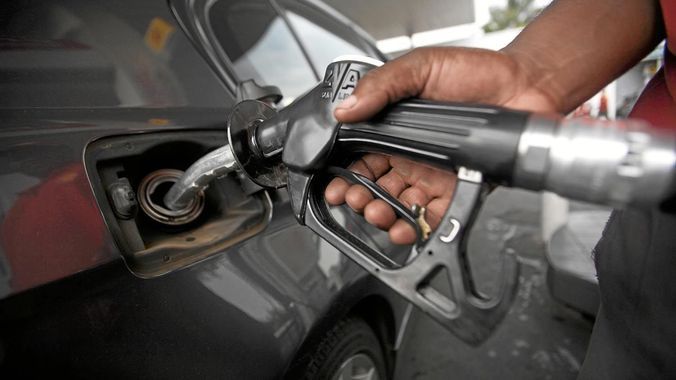
The Dangote Petroleum Refinery has reduced the gantry price of Premium Motor Spirit, PMS, also known as petrol, to N1,250 per litre from N1,275 per litre, representing a two per cent decrease.
Market checks by Vanguard confirmed the development as competition intensifies in Nigeria’s deregulated downstream petroleum market amid declining crude oil prices in the international market.
An official of the refinery confirmed the price adjustment, attributing it to the sustained drop in global crude oil prices, the refinery’s major feedstock.
“It is true that we have adjusted the gantry price of petrol due to the reduction in crude oil prices, which is our major feedstock. In a deregulated market, such adjustments should be expected,” the official said.
He added: “We are still monitoring developments and will continue to adjust prices in line with market realities.”
However, findings showed that many filling stations across the country are yet to reflect the new pricing, with petrol still selling above N1,350 per litre depending on location and marketer.
Meanwhile, the refinery recently stated that it has become a major driver of Nigeria’s improving economic outlook following the country’s sovereign credit rating upgrade by S&P Global Ratings.
According to the company, S&P upgraded Nigeria’s long-term foreign and local currency sovereign credit ratings to “B” from “B-”, citing stronger economic growth, improved external balances, rising oil production and increased domestic refining capacity as key factors supporting the nation’s economic recovery.
The refinery noted that the global ratings agency specifically identified the operational ramp-up of the 650,000 barrels-per-day Dangote Petroleum Refinery & Petrochemicals as a significant contributor to Nigeria’s improving balance of payments position and broader economic resilience.
“Significant refining capacity is now also online; Dangote Industries Ltd.’s large-scale refinery and petrochemical complex has ramped up to near its maximum capacity of 650,000 barrels per day,” the company stated.
The post Dangote Refinery reduces petrol price to N1,250/litre appeared first on Vanguard News.


Lagos APC picks Sonayon-James as Hamzat’s running mate

2027 Presidency: Peter Obi picks Kwankwaso as running mate

Why does BCG vaccine leave a scar?

Simi Sanya and Femi Dapson Are Now Legally Married and It Is Beautiful to See

FCT Area Council Election: Live results from polling units

Premier League Set-Piece Goals (2025/2026)
-
 Sports8 hours ago
Benjamin Mendy Now Lives Very Different Life
-
 Sports13 hours ago
‘I’m the Helicopter Pilot Who Saved Michael Schumacher
-
 Sports1 day ago
What Anthony Gordon Said in Spanish During Barcelona Unveiling
-
 Sports1 day ago
Where to Watch Toluca vs Tigres 2026 CONCACAF Champions Cup Final
-
 Metro7 hours ago
Police arrest two for attempted theft of two-week-old baby in Abia
-

 Metro2 days ago
Troops arrest two soldiers over alleged assault in Plateau
-
 Sports2 days ago
Tottenham Plotting Move to Sign Davide Frattesi
-
 Sports14 hours ago
Rafael Jodar Speaks Out After Clip Goes Viral of Him ‘Shoving’ Ball Girl