
Politics
2027: Powerful forces behind Tinubu, Atiku, Obi, Makinde


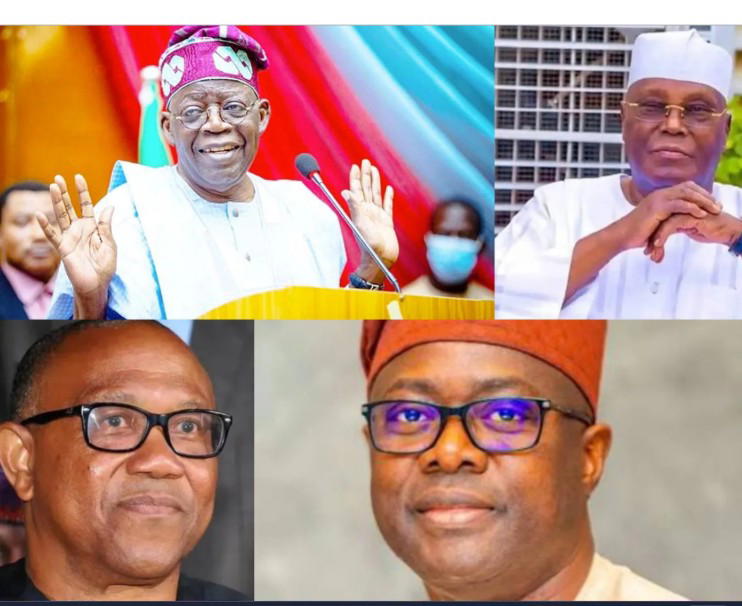
•Amaechi, Adebayo too
•Their strengths and weaknesses
By Luminous Jannamike
With barely eight months before Nigerians return to the polls, the battle for Aso Rock is increasingly becoming less about the candidates themselves and more about the powerful forces assembling behind them.
Across Abuja, governors now move between private meetings and public endorsements with growing urgency. Former ministers are quietly rebuilding old alliances. Political financiers are reopening dormant networks. Regional blocs are recalculating their interests. Civil society groups and youth movements are reactivating online structures. Even within elite circles, conversations have shifted from merely asking who is contesting to a deeper question: who truly has the machinery to win?
The emerging contest is gradually taking the shape of a larger political struggle between structure and emotion, incumbency and coalition politics, elite power and grassroots anger.
President Bola Ahmed Tinubu remains surrounded by perhaps the most formidable political structure in the country. Facing him is an opposition field driven by public frustration over economic hardship but weakened by competing ambitions, overlapping coalitions and uncertain alliances. That tension may ultimately define the election.
Because in modern Nigerian politics, popularity can create noise. Structure converts noise into votes. And the defining question of 2027 may no longer simply be who is running, but who, and what, is standing behind them.
Tinubu: The Incumbent Surrounded by Power
President Bola Tinubu enters the race backed by the single most powerful political coalition currently operating in Nigeria.
Around him sits an extensive political structure stretching from 31 governors and a vast network of federal appointees to hundreds of lawmakers, thousands of party loyalists, influential business interests and deeply entrenched Southwest political networks built over decades.
Within the APC, opposition to his re-election bid remains minimal. A large majority of governors are either directly aligned with him politically or are widely perceived to be operating within the broader orbit of the ruling party’s influence. That matters enormously.
Governors remain among the most decisive forces in Nigerian elections because they control state structures, local mobilisation networks, party agents, grassroots patronage systems and enormous political influence within their states.
Beyond governors, Tinubu also benefits from the enormous advantages attached to incumbency itself. The APC controls federal power.
Ministers, special advisers, board appointees and senior political office holders remain politically invested in the survival of the administration. Within the National Assembly, the president also retains enormous influence through party dominance and elite alliances cultivated over decades.
The president’s longstanding relationship with sections of the business elite also strengthens his position financially and strategically.
Even many opposition politicians privately acknowledge that Tinubu’s greatest strength is not popularity, but structure.
There are also persistent perceptions that incumbency naturally creates institutional advantages in areas ranging from security coordination to regulatory confidence. Critics sometimes argue that ruling parties often enjoy indirect systemic advantages because state institutions tend to operate more comfortably around established power.
There is no public evidence that institutions such as INEC, the judiciary or security agencies are acting improperly. Still, perceptions of institutional sympathy toward incumbents remain common within Nigerian opposition politics.
Tinubu also benefits from another strategic reality: zoning sentiment. Despite growing frustration over the economy, many Southern political actors still believe power should remain in the South beyond one term. That sentiment may quietly weaken the chances of Northern aspirants seeking to unseat him.
For the APC, the calculation is simple: if the opposition remains dispersed across multiple rival camps, Tinubu may not need overwhelming public enthusiasm to secure victory. He may only need the opposition to remain divided long enough.
Atiku: The Northern Establishment’s Familiar Bridge
Former Vice President Atiku Abubakar remains perhaps the opposition figure most deeply connected to Nigeria’s traditional political establishment.
For decades, he cultivated relationships across Northern political networks, old PDP structures, business circles and elite negotiating blocs that still carry considerable influence.
Even after leaving the PDP, Atiku continues to attract powerful political figures who view him as a familiar bridge between competing interests.
Around him are experienced negotiators, former governors, defectors and long-serving political administrators and operatives who understand the mechanics of national coalition-building.
Figures such as Senators David Mark, Aminu Tambuwal, and Dino Melaye, former Osun governor Rauf Aregbesola, former Imo governor Emeka Ihedioha, former Cross River governor Liyel Imoke, and Chief Dele Momodu have all, at different moments, been linked to broader opposition calculations involving Atiku’s political camp or coalition discussions around the ADC space.
His supporters argue that no opposition politician currently possesses a wider elite contact base across regions.
In parts of the North, especially among older political networks, Atiku still commands respect as a tested negotiator capable of balancing competing interests within a fragile federation.
But the forces behind him also expose his greatest vulnerability. The same establishment connections strengthening his elite relevance increasingly weaken his appeal among younger voters searching for generational change.
Even among some opposition sympathisers, there are quiet questions about whether Atiku still represents the future of opposition politics or merely its most familiar face.
Within sections of the South, resistance to another Northern presidency also complicates his pathway. Even some politicians sympathetic to Atiku privately acknowledge that the strongest anti-Tinubu coalition may eventually require a Southern candidate to neutralise zoning politics.
That calculation is already shaping quiet conversations within elite Northern circles. Across parts of the Northern establishment, discussions have reportedly intensified around whether 2027 may ultimately require strategic consolidation behind one viable challenger rather than several competing Northern figures.
If that happens, Atiku could remain central. If it does not, the anti-Tinubu vote may scatter too widely to threaten the APC seriously.
Obi: The Candidate Powered by Emotion and Southern Sentiment
If Tinubu represents structure and establishment power, Peter Obi represents emotional political energy. Few politicians in recent Nigerian history have inspired the kind of organic enthusiasm Obi generated during the 2023 election cycle.
Even after leaving the Labour Party, briefly entering the ADC and later aligning with the NDC, Obi’s support base remains emotionally intense, digitally active and deeply distrustful of traditional political structures.
Behind him stands the Obidient movement, a loose but powerful coalition of youths, urban professionals, reform-minded middle-class voters, diaspora supporters and anti-establishment Nigerians frustrated with the old political order.
In many urban centres, Obi’s appeal is driven less by party loyalty than by emotional identification. To supporters, he represents restraint, prudence and competence in contrast to what they view as elite excess within mainstream politics.
Economic hardship has strengthened that emotional energy. Rising living costs, unemployment pressures and public frustration with governance have expanded the audience for anti-establishment politics, particularly among younger voters.
Southern presidency sentiment also quietly strengthens Obi’s position. In parts of the South-East and South-South, many voters view his candidacy not simply as political competition, but as symbolic regional inclusion.
But emotional popularity and electoral machinery are not the same thing. That remains Obi’s greatest challenge.
Unlike Tinubu, he lacks a deep network of governors, entrenched party structures and longstanding state-level patronage systems capable of sustaining nationwide electoral operations.
Some APC strategists privately believe Obi’s greatest strength is his ability to energise frustration. But they also calculate that emotional momentum alone may struggle against institutional machinery on election day.
The central question surrounding Obi is no longer whether he can inspire voters. It is whether inspiration can be converted into nationwide electoral protection, polling-unit organisation and cross-regional political penetration strong enough to withstand a far more established ruling structure.
That is partly why Obi’s alliance calculations now matter enormously. Without meaningful Northern reinforcement, his support risks remaining passionate but geographically uneven. Which is where Rabiu Kwankwaso enters the equation.
Kwankwaso: The Northern Mobiliser Everyone Wants
Rabiu Musa Kwankwaso remains one of the most strategically important politicians in the opposition landscape because he controls something many others lack: an organised political movement with real grassroots mobilisation strength.
The Kwankwasiyya movement remains deeply influential across Kano and parts of the Northwest, giving Kwankwaso continuing relevance far beyond his party’s national size.
No opposition pathway becomes nationally viable without meaningful Northwest penetration, and few politicians currently possess Kwankwaso’s capacity to influence political mobilisation across that region.
Virtually every major opposition coalition has sought his partnership because Northern arithmetic remains essential to any realistic presidential pathway.
His importance lies not merely in votes, but in structure. Kwankwaso commands loyal grassroots mobilisation networks capable of influencing turnout, local coordination and political momentum across strategic Northern states.
That explains why both Obi’s camp and wider opposition negotiators continue to view him as politically indispensable. Yet his alliances also carry risks.
Some Northern political elites remain cautious about Obi’s outsider political identity and the uncertainty surrounding his proposed one-term arrangement, while sections of his Southern reform-minded supporters fear that traditional elite bargaining could dilute the Obidient movement’s anti-establishment image.
Still, many opposition strategists privately believe no serious anti-APC coalition can ignore Kwankwaso’s Northern value.
Makinde: The Quiet Southwest Alternative
Oyo State Governor Seyi Makinde occupies a politically delicate but increasingly interesting position within the emerging opposition map.
Unlike some rivals driven by large emotional movements or old establishment networks, Makinde’s appeal is rooted more in governance perception, technocratic branding and quiet elite calculations.
Within sections of the Southwest political class, there are subtle signs of curiosity around whether another Southern figure could eventually emerge outside Tinubu’s dominant regional structure.
Makinde’s relatively calmer political image, business background and governance record in Oyo State have helped him cultivate appeal among professionals, moderate reformists and sections of the business community looking for a less confrontational alternative.
Some younger political actors also view him as representing generational transition without the unpredictability associated with outsider populism.
But the forces behind Makinde remain comparatively limited nationally. He lacks the extensive governor network surrounding Tinubu, the emotional movement powering Obi or the longstanding Northern establishment relationships sustaining Atiku. His challenge is not visibility alone. It is scale.
And like several Southern aspirants, his candidacy raises another difficult strategic question for the opposition: whether multiple Southern contenders ultimately strengthen Tinubu by dispersing anti-APC votes across overlapping constituencies. That concern increasingly shadows opposition calculations.
Amaechi: The Southern Fighter Searching for Space
Former Rivers governor and ex-Minister of Transportation Rotimi Amaechi remains one of the opposition’s most experienced political actors.
Behind him are remnants of old APC relationships, technocratic governance advocates and sections of the South-South political class seeking an alternative Southern power bloc outside Tinubu’s influence.
Amaechi continues to market himself as a competence-driven leader with administrative experience and national exposure. His supporters frequently point to infrastructure projects during his years in office and his reputation for political aggressiveness.
But the political space around him is narrowing. Obi dominates much of the emotional Southern opposition energy. Tinubu controls the strongest Southwest political machinery. Atiku retains wider Northern establishment reach.
That leaves Amaechi searching for strategic space within an increasingly crowded field. Still, his experience, elite relationships and combative political style ensure he cannot be dismissed entirely.
Adebayo: The Outsider Without a Machine
Within the SDP, Adewole Adebayo continues to occupy a distinct political lane. His appeal lies largely in ideological consistency and outsider credibility rather than institutional power.
Among educated urban voters and politically frustrated Nigerians, Adebayo’s criticism of both the APC and mainstream opposition politics still resonates.
But modern Nigerian presidential elections are rarely won without governors, financiers, entrenched party structures and nationwide mobilisation systems. And those remain the very things Adebayo lacks.
ADC and NDC: Coalition Dreams, Competing Ambitions
The collapse of early ADC coalition momentum exposed one of the oldest problems in Nigerian opposition politics: everybody wants unity until the conversation turns to leadership.
The ADC initially appeared capable of becoming the broad anti-Tinubu platform bringing together establishment politicians, reformists and younger opposition voters.
But overlapping ambitions, zoning disagreements and internal power struggles quickly weakened that project.
The NDC is now attempting to occupy that coalition space through the Obi-Kwankwaso alignment. Whether it succeeds where the ADC stumbled may depend on one crucial factor: discipline.
Because Nigerian opposition coalitions often struggle not from lack of shared grievances, but from competing calculations about who should ultimately inherit power.
PDP: A Former Giant Watching from the Sidelines
Perhaps no development better captures the changing political landscape than the PDP’s gradual decline from dominant national force to fragmented onlooker.
Internal wars, rival factions and leadership disputes have weakened what was once Nigeria’s most formidable political organisation. Figures like Senator Sandy Onor remain active as a presidential contender within sections aligned to Nyesom Wike, but the party increasingly resembles overlapping camps struggling to retain relevance rather than a unified presidential machine. Its weakening has partly fuelled the migration of opposition politicians into newer coalition platforms. But even outside the PDP, the same problem persists: too many competing blocs chasing the same anti-APC energy.
And that may ultimately define the election. Because the defining battle of 2027 may not simply be Tinubu versus the opposition.
It may instead become a larger struggle between entrenched political structure and whether a divided opposition can convert public frustration, economic anger and emotional momentum into one coherent national coalition before election day arrives.
For now, the ruling party controls the deepest machinery of power, while the opposition controls much of the public frustration.
Whether frustration can defeat structure remains the question quietly hanging over Nigeria’s next presidential election.
The post 2027: Powerful forces behind Tinubu, Atiku, Obi, Makinde appeared first on Vanguard News.
www.vanguardngr.com

A director of research at the Nigerian Institute of International Affairs, Femi Otubanjo, has suggested that Rivers State Governor Siminalayi Fubara may defect to the Nigeria Democratic Congress, NDC, ahead of the 2027 elections.
Speaking during an appearance on Arise Television’s Morning Show on Thursday, Otubanjo said Fubara could emerge as a strong contender in the NDC if he joins the party.
According to him, the Rivers governor may, however, face political challenges if he defects while the 28 lawmakers opposed to him remain in office.
Otubanjo described Fubara’s political crisis as unfortunate, adding that the governor was partly responsible for his current predicament.
He added that Fubara’s emergence as governor was tied to the political structure of the Minister of the Federal Capital Territory, Nyesom Wike.
He said: “Fubara will go to NDC and he will try. He might even win, but the danger for Fubara is that when he goes to NDC, and he still has the legislators, 28 of them around him, he might even be impeached before the election and that will make him less powerful and less formidable candidate.
“Overall I know that Fubara’s case has been a very bad one, but he, of course, he’s the one who got himself into it. You cannot, like they say, you cannot immediately go into a river and complain of being wet. He was part of that arrangement of allowing to be selected by one man, and now he has been deselected by the same man.”
dailypost.ng

Former Speaker of the Plateau State House of Assembly and member representing Pankshin North, Rt. Hon. Dewan Gabriel, has announced his decision to step down from contesting for the Senate seat of the Pankshin, Kanam, and Kanke, PKK, federal constituency on the platform of the Young Peoples Party, YPP, to seek re-election into the State House of Assembly in the 2027 general elections.
Hon. Gabriel had been widely tipped to contest for the senate seat after he reportedly purchased the nomination form for the contest but in an announcement on Wednesday, the ex-Speaker said he is stepping down from the senate bid to focus on the re-election into the State House of Assembly.
In the statement titled “Positive Impact to Humanity Phase 2, Pankshin North 2027,” the lawmaker said his decision came following extensive consultations with family members, political stakeholders, supporters, youths, elders, and associates across the constituency.
He stated that his decision was informed by the ongoing political discussions surrounding the senate seat in the PKK zone, the position of his party as an opposition platform, and the need to protect the unity and collective interest of the people.
Hon. Gabriel stressed that his decision is a “sacrifice made in the interest of peace and inclusiveness”, noting that he did not want to be seen as an obstacle to the widely expressed desire of the Ngas people in Pankshin North concerning the Senate position.
He further reaffirmed his opposition to any third-term agenda in the zone, maintaining that he remains committed to the anti-third-term movement and ready to support any credible candidate willing to resist attempts at tenure extension in PKK politics.
dailypost.ng
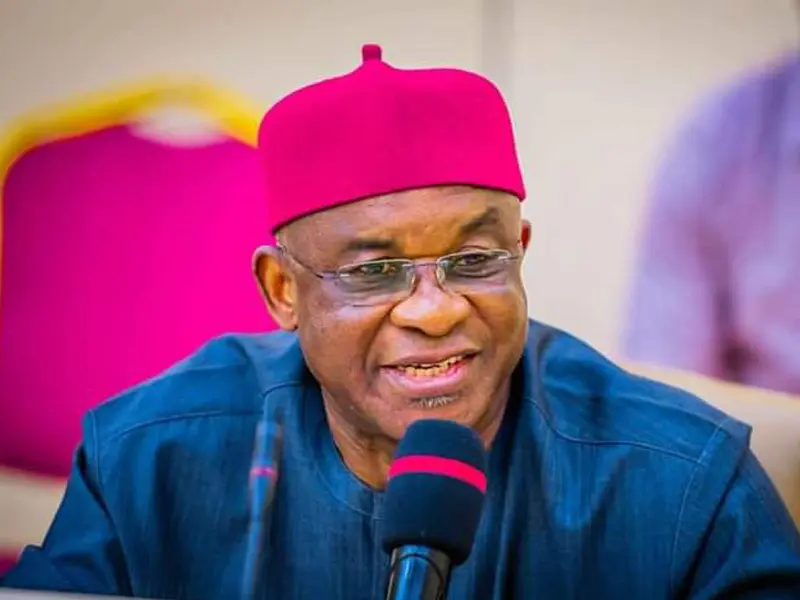
National Chairman of the African Democratic Congress, ADC, David Mark, has reacted to the emergence of former Vice President Atiku Abubakar as the party’s 2027 presidential candidate.
Mark said Atiku’s emergence as ADC’s presidential candidate is an indication that democracy can still work.
Atiku defeated former Minister of Transportation, Rotimi Amaechi and Mohammed Hayatu-Deen at the ADC’s presidential primary by a wide margin.
Speaking at the official collation and declaration of the results in Abuja, Mark said: “Today is not just about announcing a presidential candidate.
“Today is also about proving a point to Nigeria and to Nigerians.
“It is about proving that democracy can still work. Proving that political competition does not have to become political warfare. That a party can organize itself around principles instead of personalities. And that in a season of deep national anxiety, a bright future is still possible.
‘That is why this gathering matters. And that is why history will remember what we have done here Today.
“Let me begin by thanking every member of the African Democratic Congress for your steadfastness, your patience, your sacrifices, your understanding, and your faith in this party, especially in the face of daunting challenges. Many people doubted us. Some dismissed us. Others predicted confusion, division, and even outright collapse.”
Mark also commended Amaechi and the former Chairman of the Nigeria Economic Summit Group and former Chairman of NNDC, Hayatu-Deen.
He noted that the ADC is the only party that had three aspirants contesting for the presidential ticket.
“It is important to mention that we are the only political party to have 3 strong aspirants contest for the presidential ticket.
“This alone makes the ADC unique in its deep commitment to democracy and democratic practices,” he added.
dailypost.ng


Why Crystal Palace’s Conference League Win is Bad News For 4 English Clubs
Fubara caused his own problem, may defect to NDC – Otubanjo

Robbers invade Adamawa Poly female hostel, cart away phones

Simi Sanya and Femi Dapson Are Now Legally Married and It Is Beautiful to See

FCT Area Council Election: Live results from polling units

Premier League Set-Piece Goals (2025/2026)
-
 Sports2 days ago
Alan Shearer Names England’s Starting 11 vs Croatia at 2026 World Cup
-
 Sports2 days ago
Why Arsenal Will Not Lift Premier League Trophy During Bus Parade
-
 Sports2 days ago
Southampton’s Head of UK Scouting Ben Chorley Leaves Amid Spygate Scandal
-

 Politics2 days ago
2027: Crisis hits Accord as Busari, Hamzat lay claim to guber ticket in Oyo
-
 Politics2 days ago
2027: Aisha Yesufu loses NDC senatorial primary in FCT
-
 Sports2 days ago
Venezuela Fury’s New Husband Asks Followers For Money During £30,000 Honeymoon
-
 Entertainment2 days ago
Nancy Isime Is Serving Gold Royalty, Dark Romance and Main Character Energy in Her Latest Breathtaking Outfit
-
 Entertainment2 days ago
Own Your Next Big Entrance in a Showstopping Red Sculptural Fashion Outfit Made to Steal the Show