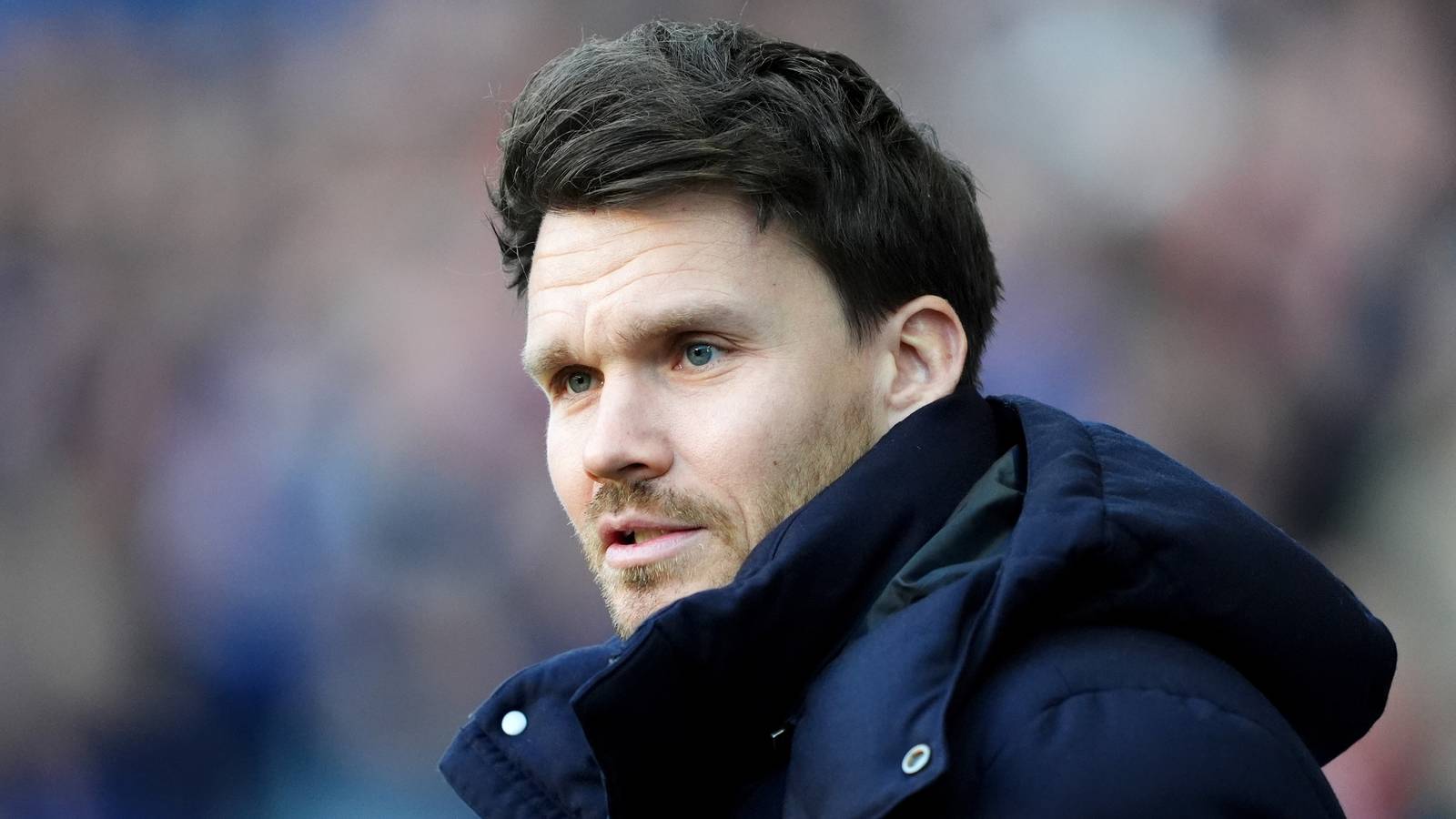
Rangers are preparing for a busy summer transfer window, and they’ve now made an approach to sign one player from Wrexham, GIVEMESPORT correspondent Ben Jacobs has confirmed.
The Glasgow giants are likely to be busy in the upcoming summer transfer window after a disappointing season in the Scottish Premiership.
Rangers missed out on the title to Celtic, with the deciding factor being losing three crucial games in a row towards the end of the campaign.
Rangers Eye Wrexham Star
Rangers have opened talks with Wrexham star Josh Windass ahead of a potential move to bring him back to Ibrox, GIVEMESPORT correspondent Jacobs has confirmed.
The Glasgow club made an attempt to sign him in the January transfer window, which Wrexham rejected, but a fresh move is now being driven by manager Danny Rohl.
Rangers are yet to enter club-to-club negotiations with Wrexham, but the Championship club did previously indicate in January that they didn’t want to lose him.
Fabrizio Romano joins Market Madness with major updates on Rodri to Barcelona, Bradley Barcola to Liverpool and Marcus Rashford’s Manchester United future. Prime Minister Andy Burnham also delivers a blunt verdict on Gianni Infantino as FIFA’s leadership crisis deepens.
Manchester United are looking at signing a left-back in the remaining weeks of the transfer window, Fabrizio Romano has told GIVEMESPORT’s Market Madness podcast.
The Red Devils have prioritised a midfield rebuild all summer and completed deals for Andrey Santos and Youri Tielemans for a combined £83m, from Chelsea and Aston Villa respectively. The club has also brought in Karl Darlow for their goalkeeper department, which has allowed Altay Bayindir to join Celta Vigo on loan, while young winger Tynan Thompson has also joined from Tottenham.
Reports have suggested the club are still keen to bring in at least one more midfielder during this window, having seen Casemiro join Inter Miami at the end of his contract and Manuel Ugarte suffer a serious knee injury at the World Cup, but it is not the only position the club are looking at.
Fees correct prior to summer 2026
All 10 found — excellent!
Romano: Movement in Next Weeks for Man Utd Signing
via Reuters
Question marks remain over the future of Marcus Rashford and Joshua Zirkzee in attack, with both players linked with moves away before the September 1st deadline. That has seen the club linked with a move to bring in a new forward to ensure they aren’t short on numbers, having qualified for the Champions League.
While appearing on the Market Madness podcast (Aug 6), Romano was asked about the business United could do in the final weeks of the window, and revealed that left-back is something they are looking at doing, although it may not end up being Hall.
“They are looking at left backs, so I think also in that position there could be some movement in the next weeks,” he said.
“It’s not easy for Lewis Hall because Newcastle now want to keep the player after making profit with Bruno Guimarães, but for sure Man United are looking at that position.”
Lewis Hall Premier League Defensive Stats (per 90)
Appearances
24(6)
Minutes
2181
Tackles
1.8
Interceptions
0.9
Clearances
2.6
Blocks
0.5
Lewis Hall Top Man Utd Target
Lewis Hall
Hall is a very highly-rated defender, and he earned the praise of Man Utd legend Wayne Rooney after Newcastle claimed a draw with Barcelona in the Champions League last season.
“First of all, I thought you were terrific tonight,” he said. “We were talking about it before the game, the challenge you had ahead of you against Yamal, and I thought you were brilliant.”
It’s been reported that Hall is the top target at Man Utd for the left-back position, but after bringing in around £240m for Anthony Gordon, Sandro Tonali and Bruno Guimaraes, it’s no surprise that Newcastle are not interested in selling.
Arsenal and Liverpool are both keen on Aston Villa star Ezri Konsa this summer, with the Gunners holding a stronger interest, Fabrizio Romano has told GIVEMESPORT’s Market Madness podcast.
That has seen the Premier League champions look at options in the market to strengthen their defence, and England international Konsa is someone who has been heavily linked with a switch to the Emirates Stadium.
That reportedly opened the door to Liverpool, who are looking for a senior replacement for Ibrahima Konate after he left on a free transfer to Real Madrid this summer, and they are considering the former Watford star as an option too.
While appearing on the GIVEMESPORT Market Madness podcast, reliable transfer guru Fabrizio Romano was asked about the situation involving the 28-year-old defender, and admitted that it’s Arsenal who are pushing the hardest currently.
“They [Arsenal] will be busy for sure,” he said. “I’m sure.
“On some of the names you ask me: on Konsa, I’m told there is more interest from Arsenal than Liverpool at this stage, but let’s see.
“Still [a] long [time to go]. I think both clubs will be keen on defenders, so there will be movements from now [until] the end of the window.”
Fees correct prior to summer 2026
All 10 found — excellent!
Rogers: Konsa ‘One of the Best’ Defenders
England’s Ezri Konsa and John Stones via Reuters/Maria Lysaker
Konsa has seen his reputation within the game grow over the last two seasons in particular, establishing himself as a regular under Unai Emery and Thomas Tuchel at the heart of their defences.
His performances for Aston Villa last season saw him make 48 appearances in all competitions, as the team finished fourth in the Premier League and ended a 30-year trophy drought by lifting the Europa League. He has also earned the respect of his teammates, with Morgan Rogers singing his praises recently.
Ezri Konsa Defensive Stats at World Cup 2026 (per 90)
Appearances
7(1)
Minutes
647
Tackles
0.6
Interceptions
1
Clearances
2.4
Blocks
0.5
“I think he’s one of the best centre-backs in football, if I’m honest.”
“I think at this World Cup, the ability that he’s got and everything that he can do as a centre-back. He never gets beaten, strong in the air, strong in the tackle, unbelievable on the ball. I honestly don’t know a flaw in his game.
“I think that [him not getting enough credit] has helped Villa in terms of nobody from a bigger club taking him in the last few years. I think that’s helped us because I honestly don’t know a problem in his game.”
Statistics courtesy of WhoScored – correct as of 06/08/2026