
Politics
2027: APC declares Ebonyi no-go area for PDP, promises to deliver Tinubu, Nwifuru


The National Chairman of the All Progressives Congress (APC), Professor Nentawe Yilwatda, and Governor Francis Nwifuru of Ebonyi State on Monday declared that the opposition Peoples Democratic Party (PDP) would have no place in the state in the 2027 general election.
The APC leaders made the declaration during a rally held at Abakaliki Township Stadium, where stakeholders of the party formally endorsed President Bola Ahmed Tinubu for a second term.
The endorsement rally, organised by Governor Nwifuru and the Minister of Works, Senator David Umahi, attracted political leaders from across the South-East, including Governor Charles Soludo of Anambra State, Governor Hope Uzodinma of Imo State, and the Deputy Governor of Enugu State, who represented Governor Peter Mbah.
Addressing party supporters, Yilwatda dismissed speculations that Ebonyi State had been conceded to the PDP ahead of the next general election.
He said the APC would retain all elective positions in the state and secure victory for President Tinubu.
“We will return President Bola Ahmed Tinubu and Governor Francis Nwifuru in 2027. We want to return all APC senators, members of the House of Representatives, and House of Assembly candidates.
“Nobody has conceded Ebonyi to the PDP. Therefore, there is no vacancy in Ebonyi State. Ebonyi PDP has no place, and there is no vacancy at all in the Government House come 2027,” he said.
The APC national chairman commended residents of the state for their support for the President and urged them to re-elect Tinubu in recognition of what he described as the administration’s infrastructural development and human capital investments in the South-East.
Speaking at the event, Governor Nwifuru declared that President Tinubu remained the only presidential candidate for the people of Ebonyi State in the 2027 election.
He described Ebonyi as a stronghold of the APC and vowed that the party would deliver the state for the President.
“Ebonyi has no other presidential candidate other than President Bola Ahmed Tinubu, and we will return him in the presidential election,” Nwifuru said.
The governor also dismissed claims that some political actors had secured presidential backing to reclaim the state for the PDP.
“We are standing here today to tell the whole world, especially those who have used the President’s name to orchestrate division and confusion in this state, that we have only one party, and that is the APC,” he said.
Nwifuru further commended President Tinubu for appointing Senator Umahi as Minister of Works, describing him as a performing minister.
He said the President had demonstrated commitment to the development of Ebonyi State and the South-East through key infrastructure projects.
Also speaking, Umahi said the Tinubu administration had initiated unprecedented projects in Ebonyi State and across the South-East region.
“President Bola Ahmed Tinubu has done a lot not just for Ebonyi State but for the entire South-East and other geopolitical zones,” he said.
The minister described Ebonyi as a one-party state under Governor Nwifuru and expressed confidence that the APC would record another electoral victory in 2027.
The rally caused significant disruption to human and vehicular movement across Abakaliki, with major roads and adjoining streets experiencing heavy traffic gridlock as thousands of party supporters converged on the state capital for the event.
dailypost.ng

Enugu State chapter of the Nigeria Democratic Congress (NDC), led by Dr Johnpaul Anih, has announced the successful screening of all its candidates by the Enugu State Independent Electoral Commission (ENSIEC) ahead of the September 26 Local Government Elections.
Speaking with journalists in Enugu on Monday, Dr. Anih disclosed that the party has fielded over 14 chairmanship candidates and more than 210 councillorship candidates across the state.
He stated that the party’s electioneering strategies are already in full swing, describing the forthcoming local government elections as a significant test of the political mood in Enugu State ahead of the 2027 general elections.
Anih commended ENSIEC for its commitment to fairness, transparency and inclusiveness throughout the screening exercise, while warning that any attempt to compromise the integrity of the electoral process would be resisted through legitimate and democratic means.
“We are encouraged by the professionalism and transparency demonstrated by ENSIEC throughout the screening process. The commission has so far provided a level playing field for all participating political parties, and we urge it to sustain this approach until the conclusion of the elections.
“However, we wish to make it clear that any attempt by individuals or groups to manipulate the process will be strongly resisted through lawful means. The credibility of the September 26 election will serve as a major indicator of the state’s preparedness for the 2027 general elections,” he said.
The NDC Chairman further noted that the party conducted one of the most credible and transparent primary elections in the state, duly monitored by ENSIEC and relevant security agencies, resulting in the emergence of competent candidates with the capacity to provide effective leadership at the grassroots.
“Our candidates emerged through a transparent and credible process that reflected the wishes of party members. We are confident that they possess the competence, integrity, and grassroots support needed to provide quality leadership across the local government areas.
“Given a free, fair and credible election, we are confident that our candidates will perform exceptionally well and earn the mandate of the people,” he added.
Also speaking, the State Secretary of the party, Dr Sebastine Chukwuebuka Okafor, expressed confidence that the NDC would record a strong performance in the September elections if the process remains free from manipulation and electoral malpractice.
According to him, the party’s candidates are individuals with proven records of service and community engagement in their respective local government areas and wards.
“All the candidates presented by our party have demonstrated commitment to grassroots development and community service. Their emergence has already generated excitement among the electorate and reinforced the belief that credible alternatives exist,” he stated.
Dr. Okafor maintained that many residents of Enugu State are eager for a new political direction anchored on accountability, effective representation, and people-centred governance.
He also commended ENSIEC for providing a fair environment for all political parties to participate in the electoral process, noting that such conduct, if sustained, would strengthen public confidence in the state’s electoral system.
The NDC Secretary further called on the people of Enugu State to continue supporting the party’s vision for grassroots transformation.
“The NDC remains committed to ending poor representation, unfulfilled promises, and ineffective grassroots governance. We are offering a platform built on accountability, development, and people-oriented leadership.
“We urge Ndi Enugu to support our candidates and join us in building local governments that truly serve the interests of the people,” he concluded.
dailypost.ng
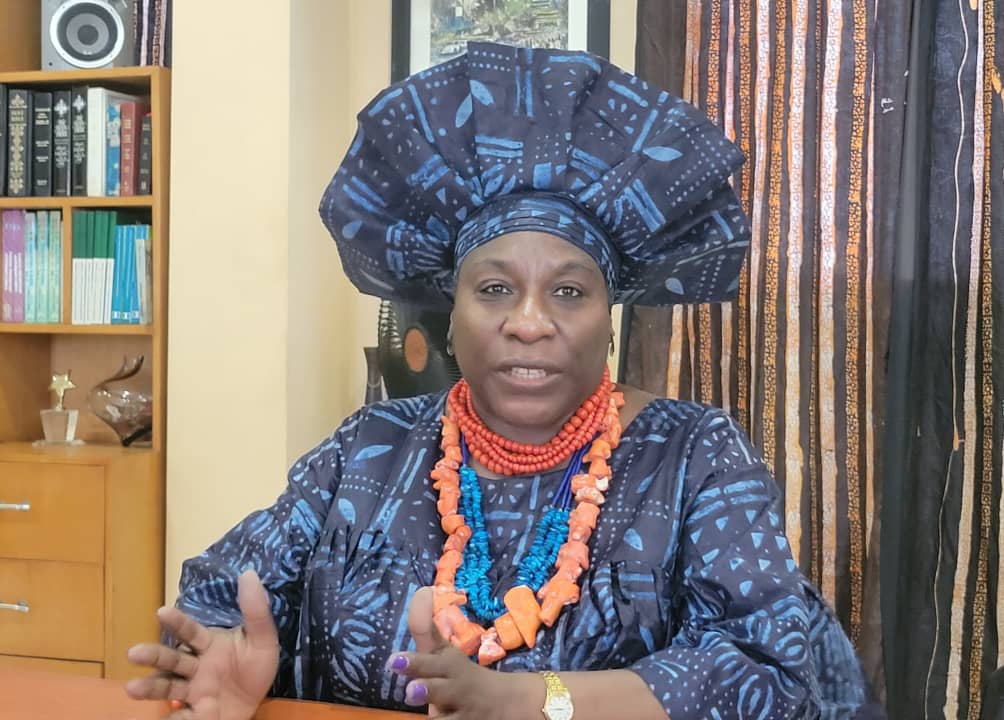
Daughter of former Nigerian President, Senator Iyabo Obasanjo, has rejoined the Peoples Democratic Party (PDP), barely one week after dumping the ruling All Progressives Congress (APC).
Recall that Iyabo left the PDP for the APC in January and declared her intention to contest the Ogun State governorship election.
According to her, the PDP betrayed her and only reached out when they needed her to mobilise support during elections.
She said, “I think they’re idiots, if you can put it that way. And I think they’re idiots because if elections are about people and if you don’t reach out to the people that are prominent in your party, how do you win elections? You can’t,” she stressed.
Her defection marked a return to active politics after a 15-year absence.
However, the former Ogun State Commissioner for Health and renowned epidemiologist last Monday announced her resignation from the APC after losing the party’s governorship ticket.
Iyabo stated that she was disrespected, rejected, and maltreated by the party’s leadership in Ogun State.
DAILY POST reports that on Monday, the former commissioner made a surprise appearance at the official unveiling of the PDP deputy governorship candidate, Lateefah Yemi Sowunmi-Kolapo, at the party’s secretariat in Abeokuta.
Upon her arrival, the party secretariat erupted in excitement as party leaders and members accorded her a rousing welcome.
Supporters at the venue gathered around Senator Obasanjo, chanting solidarity songs and hailing her amid visible excitement, while several attendees struggled to catch a glimpse of the former APC stalwart as she acknowledged the crowd.
Speaking briefly at the event, she assured the electorate in the state that the era of stealing the mandate of the Peoples Democratic Party (PDP) governorship candidate, Oladipupo Adebutu, was over.
She told her supporters to expect her official defection to the party in the coming days.
Meanwhile, the party announced Iyabo Obasanjo as its candidate for the Ogun Central Senatorial District in the coming elections.
dailypost.ng

— Says NADECO lobbied for extension; military not ready to cede power to civilians
By Johnbosco Agbakwuru
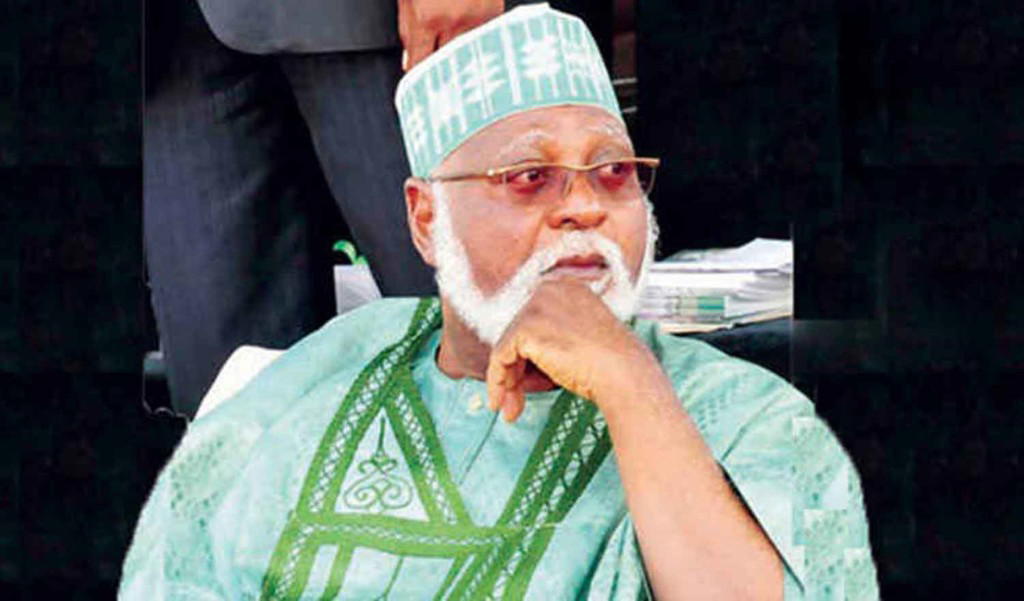
ABUJA — Former Military Head of State, General Abdulsalami Abubakar, has said that he abandoned the late General Sani Abacha’s transition programme because it lacked credibility.
Abubakar, who took over government after the death of the then head of state, Abacha, also said that he resisted lobbying from the National Democratic Coalition (NADECO) to extend the transition programme.
The former Head of State, in his autobiography presented to the public on Saturday on the occasion of his 84th birthday at the Presidential Villa, Abuja, said some military officers were against ceding power to civilians.
According to him: “Before the death of General Sani Abacha, he had announced that Nigeria was going to transition from military rule to democracy by 1 October 1998. Legislative elections had been held and winners announced. There were no governorship elections yet. Nobody was clear about the presidential elections.
“All five political parties had adopted Abacha as their joint presidential candidate, even though he was not a member of any of them and had not openly declared his intentions. It was generally believed that he was going to transmute from Head of State to civilian President.
Abacha transition programme lacked credibility
“This was the situation when he died on 8 June 1998 and I assumed power as his successor. I had no interest whatsoever in politics. The Abacha transition programme obviously lacked credibility. There was no way we were going to continue with it.
“We needed to reset the system and the 1 October 1998 handover date was no longer feasible if we were to do a decent job. Looking at the situation on the ground, we found it necessary to make the transition programme as short as possible. This conclusion was reached after we had consulted widely with civilians and within the military.
“My first suggestion was that we should draw up a six-month transition plan. That would have seen us hand over to a democratically elected president by March 1999.
“However, when I called for a meeting with the military echelon and the judiciary, Justice Muhammadu Uwais, then Chief Justice of Nigeria, said he would need at least sixty days after the elections to ensure that all the judicial matters brought to the courts were dispensed with before inauguration.
“That was how we arrived at May 1999. It was a function of a judicial request and my desire to make the transition process as short as possible. Six months was the fastest we could do to organise elections and give the political parties time to set up and prepare.”
General Abubakar said there was immense pressure from different quarters, including some heads of state from the West African sub-region and some in the international community, to extend the transition programme.
He said: “Initially there was intense pressure from some of my colleagues, some heads of state in the West African sub-region and some in the international community that it was too soon to transition to democracy.
“Surprisingly, there were pressures from some NADECO members too. They had at first been wary because the fingers of a lot of politicians were burnt by my predecessor, who promised that they were going to hand over power to civilians but reneged. Several politicians were barred from contesting elections in the process. So, some were very cautious about our programme.
“Two to three months into my administration, some NADECO members realised that I was sincere about the handover date, and they saw themselves as short-changed because they were not politicking as they should have done.
“They felt they had missed the train and wanted to come on board, which made them request more time to get their act together. They came to me as a group, and I reminded them that I had made a covenant with Nigerians and the international community about the commitment to ensure a smooth transition to democracy.
“I asked that if they wanted me to extend the transition programme, I needed them to accede to some requests. One, I demanded that they should write a letter to me requesting an extension of the transition programme. Two, I suggested that they should call a press conference indicating that they had asked the government to extend the transition programme. I promised that if they did that, I would grant an extension. But they never did. I knew they wouldn’t; we went ahead with our programme.”
He said that some sections of the international community believed in his administration.
“Some sections of the international community believed in my administration and saw that we had brought stability and peace to the country. There had been frequent demonstrations before General Abacha died, and some were violent. But within a month or two into the life of our administration, the protests eased, and there was peace.
“Also, some of the sanctions imposed on Nigeria by the international community were relaxed. Some foreign leaders felt that if we had continued in office, there would be reasonable peace in the country. These were reasons why they wanted me to stay longer in power.
Military hostility to ceding power to civilians
“Some of my military colleagues were hostile to the idea of ceding power to civilians, but we were determined to honour our promise. For me, I was not in any way tempted to stay longer in office. I had made up my mind. By the time I took over the reins of power the country was on the edge. There was extreme pressure from NADECO, G-34, and other political players for the military to go. Nigeria was at a breaking point.
“The military needed to relinquish power. Many people did not realise the military was the greatest loser in the whole enterprise because most of our best brains were deployed to administer the country while the profession was neglected. We needed to go back to where we belong and reprofessionalise the armed forces.
“Also, discipline had been eroded in the military. It was common to see a junior officer appointed as the military administrator of a state lording it over his seniors.
“For example, the brigade commander or General Officer Commanding (GOC) is the most senior military officer in a state and was always senior to a military administrator in military hierarchy. But when a national event that was political in nature was being held in a state, the senior officer had to wait for the military administrator to arrive at the ceremony venue before doing anything. These contradictions affected the military tradition of seniority and discipline.
“Worse still, because of the political situation in the country, you found that even in the military some officers were polarised along their states of origin, ethnic groups, and religions. This was not only damaging to what the military stands for, it was also very dangerous. The entire country is the constituency of military personnel.
“Divisions and differences along ethnic and religious lines would always lead to trouble. We all agreed that we needed to nip this trend in the bud to avoid catastrophic consequences for the country. The military truly lost out by getting involved in politics.”
General Abubakar said the transition programme encountered some challenges, but his sincerity and determination to do the right thing played a major role in delivering a successful programme.
“One of the challenges was the decision of the biggest political bloc in the South-Western part of the country to form a party of its own. We were hoping they would join hands with other parts of Nigeria to form national parties, but NADECO and Afenifere, the cultural organisation, formed the Alliance for Democracy (AD) instead and were clearly set to take control of the South West where the late MKO Abiola came from.”
The post Why I dumped Abacha’s transition programme – Gen. Abdulsalami appeared first on Vanguard News.
www.vanguardngr.com


Rafael van der Vaart Accused of Making Racist Japan Comments
Enugu LG Polls: NDC candidates best prepared for leadership – State Chairman, Anih

Tottenham Risk Missing Out On Joao Palhinha As Transfer Dominoes Fall

Simi Sanya and Femi Dapson Are Now Legally Married and It Is Beautiful to See

FCT Area Council Election: Live results from polling units

Premier League Set-Piece Goals (2025/2026)
-
 Sports2 days ago
Thierry Henry Issues Statement After Nigeria Comment Backlash at World Cup
-
 Sports2 days ago
James McClean Slams ‘Worst’ Decision For Ireland vs Israel
-
 Sports2 days ago
Strong Reaction to Brazil Star’s World Cup Performance vs Morocco
-
 Sports23 hours ago
Uruguay Denied US Entry Day Before World Cup Opener
-
 Sports1 day ago
Gary Neville Calls Out FIFA ‘Dictatorship’ After World Cup Incident
-
 Sports15 hours ago
Judges’ Scorecards and Punch Stats For Ilia Topuria vs Justin Gaethje at UFC Freedom 250
-
 Sports2 days ago
Jurgen Klopp Blasts 2026 World Cup Hydration Breaks
-
 Sports2 days ago
John Terry Names England’s 4 ‘World-Class’ Players at the World Cup