
Politics
SSDC Devt mandate: Nwuche tasks board members on accountability, teamwork



The Chairman of the Governing Board of the South-South Development Commission, SSDC, Rt. Hon. Chibudom Nwuche has urged members of the Board and Management of the Commission to uphold the highest standards of accountability, prudence, transparency, integrity, and professionalism in managing the newly established regional development agency.
Speaking at the Fourth Regular Meeting of the Governing Board of the Commission in Abuja, last week, Nwuche, a former Deputy Speaker of the House of Representatives, emphasised the importance of teamwork, collective responsibility, institutional loyalty, adherence to due process, and strict compliance with the Commission’s Establishing Act and with extant government regulations and guidelines.
He advised members of the Board and Management to remain focused on the Commission’s mandate and to avoid actions that could undermine its credibility or erode public confidence.
“We must not do anything that would bring ridicule to this Commission, embarrassment to our region, or disappointment to those who entrusted us with this important national responsibility. We must distinguish ourselves by the quality of our conduct and the standards we uphold in managing the affairs of this Commission. We must also ensure that personal interests and egos do not hinder us from fulfilling the mandate entrusted to us by Mr. President and the people of the South-South region,” he said.
The SSDC Chairman stressed that no single individual possesses all the knowledge, experience, or expertise required to achieve the Commission’s ambitious development objectives.
“None of us, not myself as Chairman, the Managing Director, the Executive Directors, nor any member of the Board, possesses all that is required to achieve the lofty goals for which this Commission was created.
“The mandate entrusted to us under the Establishing Act is broad, strategic, and significant. It seeks to accelerate the socio-economic development of the South-South region through investments in critical sectors such as infrastructure, transportation, energy, waterways, agriculture, industry, environmental remediation, and other key areas provided for in the Act.
“To achieve these objectives, we must remain open-minded, collaborative, and receptive to constructive ideas and contributions from every member of the Board and Management,” he stressed.
The former lawmaker commended members of the Board, the Managing Director, and the Management Team for their efforts in laying the foundation for the Commission’s operations despite the challenges encountered since their inauguration.
While acknowledging receipt of overhead funds and noting that capital allocations are still undergoing the necessary budgetary processes, he urged Management to be proactive and expedite the development of quick-win, medium-term, and long-term project blueprints to ensure immediate implementation once the required funds are released.
Nwuche further reminded members that although President Bola Tinubu announced their appointments on May 8 2025 and subsequently transmitted their names to the Senate for confirmation, which was granted on June 26 2025, the Commission legally came into existence on March 25 2025 when the President assented to the South-South Development Commission Bill.
He noted that this means the Commission has technically been in existence for over a year, with less than three years remaining in the current Board’s statutory tenure.
He continued: “This reality underscores the urgency of our mission and the importance of pursuing our mandate with focus, discipline, diligence, and a strong sense of responsibility. The people of the South-South region expect tangible results, and rightly so.
“We owe our people and the nation a Commission that is focused, disciplined, transparent, innovative, accountable, and results-oriented.”
In attendance at the meeting were the following board members and executive management team: Ms Usoro Akpabio – Managing Director/CEO; Barrister Femi Oise Agge -member/acting secretary; Dr Nkereuwem Enong – member; Alhaji Yusuf Rassq Amao – member; and Engr. Chika Chinda – member.
Others are Charles Zuofa – member; Joseph Mmamel – member; Tabitha IIiya Sallah – member; Hon.Bukonla Braimoh – member; Rt. Hon. Larry Odey – member; Dr. Charles Sylvester Emukowhate – member; Amb. Sony Abang – ED Finance; Hon. Marcus Nle Eji – ED Projects; Dr. Timi Alari Ayibatonye – ED Corporate Services; Hon. Joseph Ugheoke – ED Commercial & Environmental Department; and Engr. Aganaba Preye Steven – ED Social & Human Capital Development.
The post SSDC Devt mandate: Nwuche tasks board members on accountability, teamwork appeared first on Vanguard News.
www.vanguardngr.com

A former House of Representatives aspirant under the platform of the All Progressives Congress, APC, in Ife Federal Constituency, Hon. Kunle Ayoola, has resigned from the party and defected to the Accord Party.
Ayoola, who was considered one of the prominent contenders for the APC ticket ahead of the party’s primary election, had contested for the Ife Federal Constituency seat before the ticket was eventually won by Hon. Taofeek Ajilesoro.
His resignation was conveyed in a letter dated June 12, 2026, and addressed to the APC chairman of Ilode Ward 1 in Ife East Local Government Area.
In the letter, Ayoola explained that he decided to end his membership of the APC due to what he described as ongoing concerns over the party’s leadership style, internal democracy, transparency and treatment of members.
According to him, he had become increasingly dissatisfied with the direction of the party over the years.
“Over the years, I have become increasingly disappointed by what I perceive as lack of good leadership, the prevalence of dictatorial tendencies, inadequate consultation, and absence of proper dialogue on important party matters.
“Decisions are often taken without meaningful engagement with members, creating an environment that discourages participation and constructive contributions,” the letter partly read.
The politician also raised concerns over alleged corruption, favouritism and lack of accountability within the party, stating that such practices had diminished his confidence in the APC’s commitment to fairness and democratic values.
“I am also deeply concerned about issues of corruption, favouritism, and lack of accountability within the party. These practices have weakened my confidence in the party’s commitment to fairness, justice, and democratic principles,” he stated.
Ayoola further expressed displeasure over his experience during the APC primary election for the Ife Federal House of Representatives seat, alleging that he was treated unfairly despite his loyalty and contributions to the party.
“On a personal level, I feel particularly aggrieved by the disrespect and unfair treatment I received during the party’s primary election when I contested for the Ife Federal House of Representatives seat.
“Despite my commitment, loyalty, and contributions to the party, I was subjected to actions and decisions that I believe were unjust, disrespectful, and inconsistent with the principles of fairness and internal democracy that a political party should uphold. The manner in which the process was conducted left me feeling marginalised and undervalued,” Ayoola added.
dailypost.ng

The Osun State chapter of the All Progressives Congress, APC, and the governorship candidate of the African Democratic Congress, ADC, Najeem Salaam, have separately rejected recent Federal High Court judgments affecting their political interests.
Both described the rulings as miscarriages of justice and vowed to pursue appeals.
The APC faulted a judgment delivered by the Federal High Court sitting in Osogbo in a suit filed by reinstated local government chairmen and councillors elected in October 2022, while Salaam criticised a separate ruling by a Federal High Court in Abuja ordering the deregistration of the ADC alongside some other political parties.
In a statement signed by the party’s Director of Media and Information, Kola Olabisi, the APC said the Osogbo court erred in dismissing the suit filed by the reinstated local government officials and ruling that the tenure of the elected officers ended in October 2025.
The party maintained that the judgment would be challenged at the Court of Appeal, saying: “The Federal High Court verdict is a miscarriage of justice, and we shall put the judgment to the test at the appropriate venue. The reinstated chairmen and councillors have already filed a notice of appeal alongside a motion for stay of execution.”
The party argued that no enforcement process should be commenced against the officials until the appeal has been finally determined and urged its members and supporters to remain calm and law-abiding while awaiting the outcome of the judicial process.
The APC also cautioned against actions capable of causing unrest and called on security agencies to remain vigilant. It alleged that some political actors were attempting to create tension over the court ruling and urged the public to exercise restraint pending the determination of the appeal.
Meanwhile, Salaam described the Abuja Federal High Court ruling ordering the deregistration of the ADC as neither the end of the legal process nor the end of the party’s political journey.
He expressed confidence that the judgment would be overturned through constitutional means.
“I have received the news of the Federal High Court judgment purportedly ordering the deregistration of our great party, the ADC, alongside some other political parties. Democracy is governed by the rule of law, and our Constitution provides clear avenues for appeal and judicial review.”
He added: “We are confident that the appropriate legal processes will correct any miscarriage of justice and protect the democratic rights of millions of Nigerians who have chosen the ADC as their political platform.”
Salaam urged party members and supporters across Osun State not to panic, insisting that the ADC remained committed to participating in the August 15 governorship election.
He described the party as a movement driven by aspirations for transparent governance, economic growth, quality education, and improved healthcare.
The ADC candidate said the party’s campaign would continue uninterrupted, noting that support from workers, farmers, artisans, students, youths, women, and professionals across the state reflected confidence in its vision for Osun.
dailypost.ng

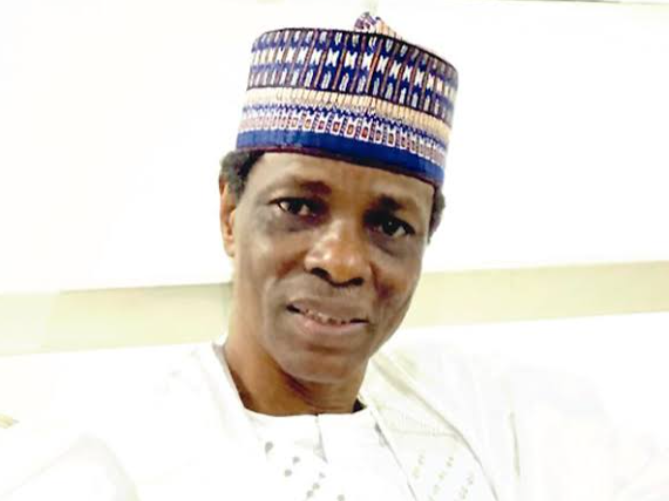
By Musa Ubandawaki
Former Deputy Governor of Sokoto State and former Minister of Water Resources, Alhaji Muktari Shagari, in this interview argues that Nigeria can no longer delay the creation of state police.
He speaks on why the country urgently needs decentralized policing, how funding should be structured, the safeguards required to prevent abuse, and the role state police could play in tackling banditry, kidnapping and other violent crimes across the federation among others.
There appears to be growing momentum in the National Assembly towards establishing state police. Beyond granting states policing powers, what critical safeguards must be included in the legislation to ensure success?
There has never been a more appropriate time in Nigeria’s history to establish state police than now. Across the country, insecurity has become a major concern despite the efforts of the Federal Government and the security agencies.
The reality is that our existing security institutions are overstretched. Banditry, kidnapping and other criminal activities have spread beyond the North-West and North-East to other regions of the country.
I strongly believe state police has become imperative. Members of the National Assembly must recognise their responsibility to enact laws that protect Nigerians. The proposed legislation must ensure professionalism, accountability and effective collaboration with federal security agencies. Above all, it must allow states to recruit personnel from local communities who understand the terrain, culture and security dynamics of their areas.
One of the major concerns is that governors could misuse state police for political purposes. How do you respond to such fears?
The bigger question is whether we should continue allowing Nigerians to be kidnapped, killed and terrorised while we focus on fears about what might happen in the future. Any governor who uses state police to intimidate political opponents would be acting outside constitutional provisions and democratic norms. Nigerians are politically conscious and would resist such abuse.
We cannot allow hypothetical concerns to delay a critical security reform. The priority now should be protecting lives and property. Safeguards can be built into the law to prevent misuse, but the establishment of state police should not be delayed.
Critics argue that many states already struggle to meet financial obligations. Can governors realistically fund state police?
Funding challenges are real, but they are not insurmountable. Security must be treated as the highest priority of government.
States already receive security votes and allocate resources for security-related activities. We must rethink how those resources are utilised. If governments can fund other programmes, they can certainly prioritize security.
The protection of citizens should come before every other consideration.
Should state police funding come solely from state governments or should there be federal support?
There must be a funding arrangement that guarantees sustainability and transparency.
While security votes can contribute, they may not be sufficient to cover all operational costs. Therefore, there should be synergy between the Federal Government and state governments.
My position is that funding mechanisms should include allocations directly linked to the Federation Account, ensuring that personnel salaries and operational requirements are adequately covered.
Many criminal groups possess sophisticated military grade weapons. How can state police effectively confront such threats?
Several state governments are already supporting security operations by procuring equipment for the military and conventional police formations.
At the same time, authorities must intensify efforts to identify and dismantle the networks supplying weapons to criminal groups. The Federal Government must take decisive action against those responsible for arms trafficking.
Another important advantage of state police is their ability to identify informants within local communities. Because officers will be recruited from the areas they serve, they are more likely to understand local dynamics and expose collaborators aiding criminal elements.
Public trust in law enforcement remains a challenge. Why would state police be different from existing policing structures?
The answer lies in recruitment, training and accountability. State police must recruit qualified and educated personnel. Officers should be properly trained to understand that their duty is to protect citizens, not harass them.
The law should contain clear disciplinary provisions for misconduct. There must also be public sensitisation programmes to foster mutual understanding between communities and security personnel.
If citizens and law enforcement officers work together, trust can be built. Community based policing has worked in the past because officers knew the people they served and communities saw them as partners rather than outsiders.
What measures should be taken to prevent the politicisation of state police?
Governors and political leaders must recognize that public institutions outlive individual administrations.
The legal framework must guarantee operational independence, professionalism and accountability. State police should be equipped and supported to perform their constitutional responsibilities, not serve as political instruments. Any attempt to politicise the institution would undermine its effectiveness and create unnecessary tensions.
Some analysts argue that state police alone cannot solve Nigeria’s security crisis. Do you agree?
Absolutely. State police should not be viewed as a replacement for the military, the police, intelligence agencies or other security institutions.
Rather, it should serve as a complementary structure. Effective security depends on cooperation, intelligence sharing and coordination among all agencies.
The military, police, intelligence services, vigilantes and community based security groups must work together. State police will strengthen this network by providing local knowledge and rapid response capabilities.
The key is synergy. When all security stakeholders collaborate effectively, Nigeria will be in a much stronger position to confront insecurity.
What message would you like to send to lawmakers currently considering the state police bill?
My message is simple: Nigerians are looking to the National Assembly for action.
The security situation demands urgent and bold reforms. Lawmakers should rise above partisan interests and pass legislation that strengthens security and protects citizens.
State police is not a luxury; it is becoming a necessity. The time for debate is gradually giving way to the time for action. Nigeria cannot afford further delays.
The post State police: We need constitutional safeguards against abuse —Shagari appeared first on Vanguard News.
www.vanguardngr.com


APC Reps aspirant Kunle Ayoola defects to Accord Party

Man Utd Open Talks to Sign West Ham Winger Crysencio Summerville

Osun: APC, ADC fault court rulings, vow appeals

Simi Sanya and Femi Dapson Are Now Legally Married and It Is Beautiful to See

FCT Area Council Election: Live results from polling units

Premier League Set-Piece Goals (2025/2026)
-
 Sports18 hours ago
FIFA Forced Into U-Turn on Spanish Press Conference Rule After Backlash
-
 Sports1 day ago
Uruguay Denied US Entry Day Before World Cup Opener
-
 Sports2 days ago
Gary Neville Calls Out FIFA ‘Dictatorship’ After World Cup Incident
-
 Sports1 day ago
Judges’ Scorecards and Punch Stats For Ilia Topuria vs Justin Gaethje at UFC Freedom 250
-
 Sports12 hours ago
FIFA Ban Pre-Revolutionary Iran Flags From World Cup Stadiums
-
 Sports10 hours ago
US Denied World Cup Visa For Mum of Cape Verde Goalkeeper Vozinha
-
 Sports10 hours ago
Emma Hayes Praised For Using Drinks Break For Tactical Analysis
-
 Sports20 hours ago
Manuel Neuer Breaks World Cup Kit Rules in Germany vs Curacao