
Politics
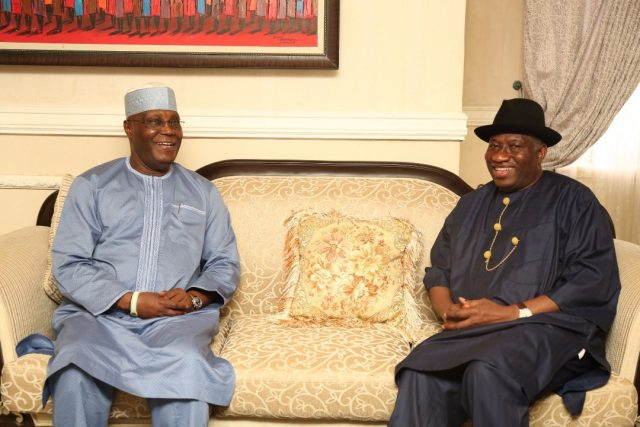
‘Jonathan, Atiku, Obi doing Tinubu’s campaign work for him’


By Omeiza Ajayi
ABUJA — President Bola Ahmed Tinubu is entering the 2027 presidential race as the clear frontrunner, not necessarily because of widespread popularity, but because his opponents remain divided, according to a new forecast by political consulting and data analysis firm CellHub.
The firm projects the president as the favourite to secure a second term, arguing that its assessment is based less on his approval ratings — currently estimated in the low 30 per cent range — and more on the fractured state of the opposition and Nigeria’s winner-takes-all electoral system.
According to CellHub, Nigeria’s electoral framework, which awards victory to the candidate with the highest number of valid votes rather than an outright majority, gives a significant advantage to a united ruling party facing a fragmented opposition.
The firm pointed to the 2023 presidential election as an example. Tinubu won with 36.61 per cent of valid votes, while Atiku Abubakar secured 29.07 per cent, Peter Obi garnered 25.40 per cent, and Rabiu Musa Kwankwaso received 6.23 per cent.
Although more than 60 per cent of valid votes were cast for candidates other than the winner, the opposition’s division enabled Tinubu to emerge victorious with a comfortable lead.
CellHub noted that a similar pattern has emerged ahead of the 2027 election. Atiku is running on the African Democratic Congress (ADC) ticket alongside Rotimi Amaechi, while Obi and Kwankwaso were ratified as candidates of the Nigeria Democratic Congress (NDC) on May 30. A faction of the Peoples Democratic Party (PDP) has also advanced Goodluck Jonathan, though the nomination remains contested within the party.
With three opposition candidates targeting the anti-incumbent vote, CellHub believes the political landscape strongly favours the president.
Tinubu’s position, the report added, has been strengthened by a wave of defections that has left the All Progressives Congress (APC) in control of 31 of Nigeria’s 36 states and holding a two-thirds majority in the National Assembly. The party formally confirmed him as its presidential candidate on May 23.
The firm also highlighted historical trends, noting that among Nigeria’s elected presidents, only Jonathan failed to win re-election. His 2015 defeat came against a united opposition coalition, a strategy the current opposition has yet to adopt.
“Our modelling is not a statement about who deserves to win, or about how people feel, both of which point in a hard direction for the incumbent,” said Mohammed Aliyu, Managing Partner and Lead Data Scientist at CellHub.
“It is a statement about distribution. A unified bloc beats a divided one almost regardless of mood. Right now the opposition is divided and the governing party is not.”
CellHub acknowledged that many Nigerians report being worse off economically than they were in 2023. However, it argued that such sentiment would pose a more serious threat to the president only in a direct one-on-one contest.
The firm also challenged perceptions of Obi’s electoral strength, arguing that his substantial online following does not necessarily translate into votes. According to the report, social media audiences are disproportionately young, urban and connected, while rural northern voters — who historically account for higher turnout levels — remain underrepresented online.
CellHub said its projections are based on voting intentions and turnout probabilities across geopolitical zones rather than digital engagement metrics.
The report further suggested that the administration’s defence of key economic reforms, including fuel subsidy removal and the floating of the naira, is beginning to resonate with a growing segment of voters.
While macroeconomic indicators such as growth, foreign reserves and inflation have shown some improvement, CellHub acknowledged that household incomes and poverty levels have worsened. Nevertheless, it believes more voters are accepting the government’s argument that the reforms helped avert a deeper economic crisis.
Geographically, the firm identified the North-Central region and the broader Middle Belt as the likely battleground for the 2027 election.
“The South-West is largely decided, and the South-East in the other direction,” said Efemena Peter, Senior Political Risk Analyst at CellHub.
“The result is set in the North Central and the FCT. Those states moved against the President in 2023, and they are the states we watch most closely for 2027. Whoever carries the Middle Belt carries the election.”
However, CellHub said a merger between the Atiku and Obi camps could dramatically alter the political equation by creating a direct two-way contest between the opposition and the incumbent.
Such a development, it noted, would shift the election from a contest shaped by vote distribution to one focused squarely on the president’s record in office, making the outcome far less predictable.
Until then, the firm maintains that the arithmetic of a divided opposition continues to favour the incumbent.
CellHub said it would update its projections should any opposition consolidation occur and plans to release revised electoral scenarios quarterly ahead of the polls scheduled for January 16, 2027.
The post ‘Jonathan, Atiku, Obi doing Tinubu’s campaign work for him’ appeared first on Vanguard News.
www.vanguardngr.com
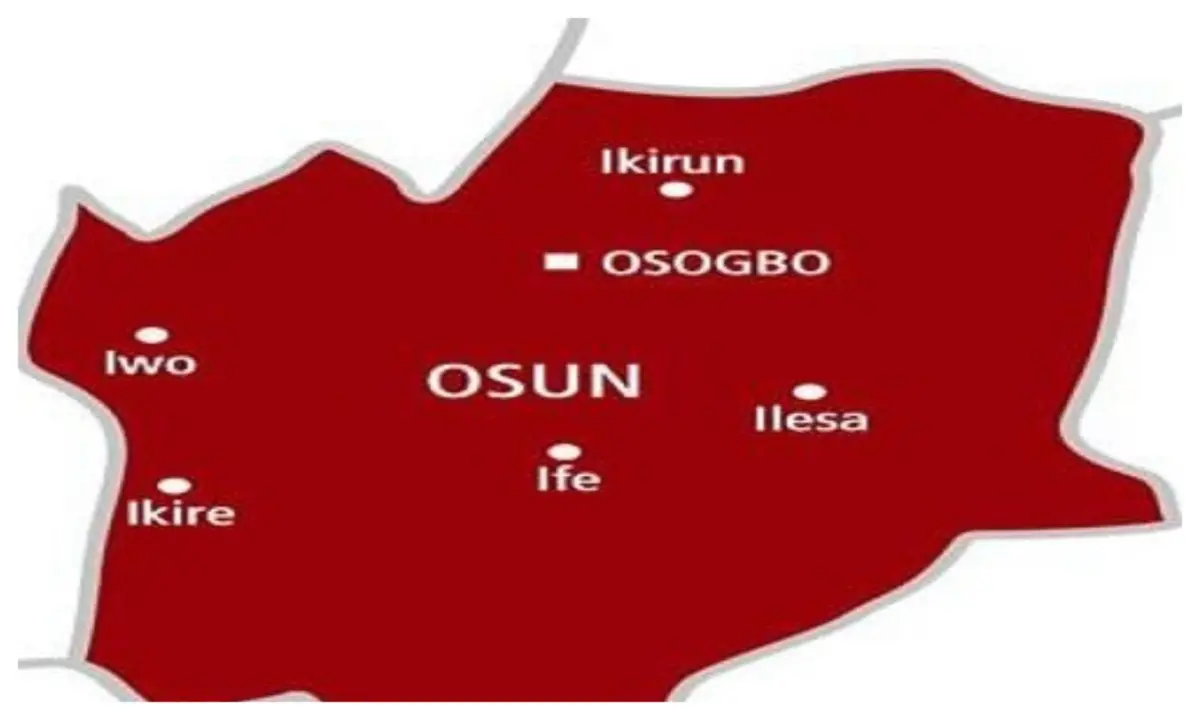
Political stakeholders, community leaders and residents of Iwoye-Ijesa, Oriade Local Government Area of Osun State have resolved to intensify sensitisation against political violence ahead of forthcoming elections in the state.
The stakeholders also called for greater vigilance against external elements seeking to destabilise the community and urged political party leaders and candidates to demonstrate responsible leadership during the electoral process.
The resolutions were contained in a communiqué issued at the end of an inter-party peace meeting convened to promote harmony, tolerance and peaceful political engagement before, during and after the elections.
The communiqué was signed by the convener of the meeting, Dideolu Falobi.
A copy of the communiqué, obtained in Osogbo on Tuesday, indicated that participants, including representatives of the All Progressives Congress, Accord, African Democratic Congress and Peoples Democratic Party, pledged to serve as ambassadors of peace and work collectively to ensure elections were conducted in an atmosphere free of violence, intimidation and hatred.
Addressing the gathering, Falobi said the initiative became necessary in view of reported incidents in Ilesa, Ede, Ikire and Iwo, as well as the need to preserve the peace and stability for which Iwoye-Ijesa is known.
He said, “We consider it imperative to begin early sensitisation and mobilisation for peaceful elections so that our community remains united and insulated from violence and divisive politics.”
Reflecting on the community’s history, Falobi described Iwoye-Ijesa as the only town in Ijesaland that neither recorded killings nor witnessed the burning of houses during the turbulent “Operation Wetie” political crisis of the 1960s.
According to him, “The development recorded in the town over the years has been made possible through unity, cooperation and the collective efforts of its sons, daughters and supportive in-laws.”
Falobi urged members and supporters of all political parties to conduct themselves peacefully throughout the election period and avoid violence, intimidation, hate speech and destruction of property.
In separate remarks, Kehinde Falore, Taiwo Falobi, Oladele Opeyemi and Foyeke Fasugba emphasised the need for the active involvement of women in promoting peaceful elections and advocated politics rooted in love, tolerance and mutual respect.
The speakers also called for continuous sensitisation against political violence, greater vigilance against external elements seeking to destabilise the community and responsible leadership by political parties and their candidates.
The Oniwoye of Iwoye-Ijesa, Oba Adewumi Ogidiolu, commended the initiative and expressed support for efforts aimed at preserving peace in the community.
Oba Adewumi also appealed to residents and political actors to embrace fairness, tolerance and mutual understanding throughout the electioneering process.
dailypost.ng
The Federal High Court in Birnin Kebbi has commenced hearing in a suit challenging the African Democratic Congress, ADC, primary election process for the Jega, Gwandu and Aliero Federal Constituency seat.
The suit was filed by an aspirant, Alhaji Faruku Sarkin Kabin Jega, against the ADC and Alhaji Abubakar Gwandu over the party’s handling of the primary election.
Counsel to the plaintiff, Bashar Umar, told the court that the case seeks an order directing the ADC to conduct a democratic and transparent primary election in line with the party’s constitution and electoral guidelines.
Faruku alleged that he fulfilled all requirements for the contest and was successfully screened by the party’s screening committee before his name was later removed from the list of cleared aspirants.
He further claimed that despite being screened, Alhaji Abubakar Gwandu was subsequently declared the party’s candidate for the constituency.
The plaintiff is asking the court to nullify the process and order the conduct of a fresh primary election.
After hearing submissions from the parties, Justice E. Gakko adjourned the matter until June 26 for continuation of hearing.
dailypost.ng
Politics
2027: I’ll stop campaigning if anyone can prove I took Labour Party’s donations — Peter Obi

The Nigeria Democratic Congress, NDC, presidential candidate, Peter Obi, has said that he would stop campaigning if anyone can prove be took 1% of Labour Party donation.
Obi made the vow on Tuesday during an exclusive interview on Nevon Media hosted by Oseni Rufai.
He was reacting to an allegation that he and human rights activist, Aisha Yesufu, siphoned Labour Party’s donations for the 2023 general elections.
“I don’t go by people talking nonsensical and listen to them. He said that we took from Labor Party’s account 10 billion naira or $30 million. Where is the account?
“I’m going to include every accuser very soon in the list of the people I want to come out and prove that I took money from the Labour Party’s account or any financial mismanagement allegation.
“Look, if anyone can prove that I took 1% of Labour Party’s donations, I will stop campaigning,” Obi said.
dailypost.ng


Election Violence: Osun community intensifies peace campaign efforts

Rangers Could Lose Nicolas Raskin As European Giants Eye Transfer

IMF warns as Nigeria captures 60% of SSA stablecoin inflows

Simi Sanya and Femi Dapson Are Now Legally Married and It Is Beautiful to See

FCT Area Council Election: Live results from polling units

Premier League Set-Piece Goals (2025/2026)
-
 Sports2 days ago
FIFA Forced Into U-Turn on Spanish Press Conference Rule After Backlash
-
 Sports1 day ago
US Denied World Cup Visa For Mum of Cape Verde Goalkeeper Vozinha
-
 Sports20 hours ago
Saudi Arabia the Only 2026 World Cup Flag That Cannot Touch Ground
-
 Sports1 day ago
Rafael van der Vaart Accused of Making Racist Japan Comments
-
 Sports1 day ago
FIFA Ban Pre-Revolutionary Iran Flags From World Cup Stadiums
-
 Sports2 days ago
Manuel Neuer Breaks World Cup Kit Rules in Germany vs Curacao
-
 Sports1 day ago
Emma Hayes Praised For Using Drinks Break For Tactical Analysis
-
 Sports22 hours ago
Rodri Labelled ‘Salty’ For Cape Verde Comments After Spain Draw