
Politics
Etiki 2026: Violence, vote buying, intimidation mar governorship election

Violence, vote buying and other irregularities tainted the Saturday’s governorship election in Ekiti State conducted by the Independent National Electoral Commission, INEC.
DAILY POST reports that electorates in about 2,445 polling units in the 16 local government areas of the state turned out on Saturday to elect their new governor.
Ekiti has 1,059,360 registered voters, but only 1,028,929 of them who collected Permanent Voter Cards, PVCs, were eligible to participate in the poll held in the polling units spread across the 177 wards of the 16 local government areas in the South-west state.
While the turnout for the election in which candidates of 14 parties jostled for the state’s top job was impressive in some areas, it was very low in several other places.
Although 14 political parties participated in the exercise, there are three major contenders in the governorship race.
While Governor Biodun Oyebanji of the All Progressives Congress, APC was seeking his re-election for a second term, Dr Wole Oluyede of the Peoples Democratic Party, PDP and Ambassador Dare Bejide of the African Democratic Congress, ADC, sought to sack the incumbent governor.
INEC on Sunday morning declared Governor Biodun Oyebanji winner of the election after the APC garnered 319,224 votes to defeat the closest opponent, Wole Oluyede of PDP who also scored 40,543 votes.
According to the returning officer of the election, Prof Adenike Oladiji, who is the Vice Chancellor of Federal University of Technology, Akure, Ambassador Dare Bejide’s ADC came third in the race with 12,872.
Election turns violent in polling units
DAILY POST reports that there was mild drama at Ilawe polling unit in Ward 2 in Ekiti South Local Government Area of the state when some security operatives allegedly attached to a presidential aide stormed a polling unit where a fracas ensued with the governorship candidate of the African Democratic Congress, ADC, Ambassador Oluwadare Bejide.
It was gathered that some political thugs allegedly working for the ruling All Progressives Congress, APC violently attacked some voters in the area.
According to Ambassador Bejide, the armed personnel dragged his driver from his vehicle packed nearby and assaulted him, leaving the aide with severe injuries as he was rushed to the hospital for medical treatment.
The State Commissioner of Police arrived at the troubled spot after the fracas had ended and interacted with the personnel on ground and Ambassador Bejide to find lasting solutions to the situation.
DAILY POST further gathered that pockets of violence were reported in some other polling units with some electorates reportedly disenfranchised.
A report by the EU-SDGN Election Observation Hub said 24 incidents of violence were reported across 10 local government areas.
Vote buying
Some party stakeholders were captured on camera inducing voters with cash ranging from N5,000 to N20,000 – a situation condemned by relatively all participating opposition parties.
According to election observers, there were organised vote-buying operations across all the polling units despite the presence of security operatives, including the Economic and Financial Crimes Commission, EFCC.
DAILY POST gathered that vote-buying incidents were recorded across multiple polling units in Emure-Ekiti and Ose-Ekiti Local Government Areas of the state.
Party agents, especially those of the ruling party, were seen asking voters to display their marked ballot papers as proof of voting for their candidate.
Rather than distributing cash directly at the polling units, some of the agents issued numbers to voters after they cast their ballots for onward payments.
Alleged pre-thumb-printed ballot papers were also discovered at a polling unit, raising concerns over electoral integrity in the country.
A video clip that circulated on social media during the election also captured the moment a party stakeholder was disbursing cash to electorates.
APC caught distributing alleged uncollected PVCs
There were videos and testimonies of alleged distribution of uncollected Permanent Voters Cards, PVCs, to individuals suspected to have been brought from outside Ekiti to influence the outcome of the election.
A Civil Society Organization, CSO, under the aegis of Movement for Credible Elections, MCE, raised the alarm in a statement on Saturday, calling on relevant authorities to investigate the claims.
According to the group, if such allegations were established, they would amount to a grave violation of Nigeria’s electoral laws and a dangerous threat to the credibility of the democratic process.
“The circulation of these videos has generated widespread public concern and threatens to undermine confidence in the integrity of the electoral process.
“Silence or inaction by relevant authorities, particularly the Independent National Electoral Commission, could further erode public trust in Nigeria’s democracy,” Convener of the group, Wale Okunniyi said.
There was no election in Ekiti – Isaac Fayose
Ekiti-born businessman, Isaac Fayose in his reaction to the conduct of the election, declared that no election was held in the state.
Fayose alleged that the ruling party only came to the state to intimidate and oppress the poor, describing the election as a coup.
He said, “Don’t deceive yourself, there was no kidnapping in Ekiti State today, they only came to intimidate and kidnap people. So many people are now in their detention center.
“They came to intimidate, oppress and perpetually enslave the poor. Even a blind man can see that there was no election today. APC refused to hold the election.
“It was a coup of the people without military uniform. It will be in the record that I didn’t follow the evil men”.
dailypost.ng

Ekiti State Governor, Biodun Oyebanji, has assured residents that his second term in office will bring greater development and improved welfare to households across the state.
Oyebanji made the pledge shortly after the Independent National Electoral Commission, INEC, declared him winner of Saturday’s governorship election.
The governor, who contested on the platform of the All Progressives Congress, APC, described the outcome of the poll as a profound expression of confidence and trust from the people of Ekiti State.
According to him, the election result reflected the desire of residents for continuity, peace, stability and sustained development.
He stated that the overwhelming support he received at the poll has placed a greater responsibility on his administration to intensify efforts toward delivering the dividends of democracy to more communities and citizens.
Oyebanji said the renewed mandate goes beyond political success, stressing that it represents a call to deepen governance and development at the grassroots level.
“This mandate means that our work must touch every household even deeper,” the governor said.
He added that the election should not be seen in terms of winners and losers, urging all residents of the state to unite in the collective pursuit of progress and development.
The governor noted that Ekiti people had spoken with one voice across both urban and rural communities, saying the result emphasize their commitment to growth, peace and economic opportunities.
Oyebanji also pledged to continue leading the state with humility, fairness and dedication to service.
INEC Returning Officer for the election, Professor Adenike Oladiji, officially declared Oyebanji winner at about 3:13 a.m. on Sunday.
Oladiji, who is the Vice-Chancellor of the Federal University of Technology, Akure, announced that the APC candidate secured 319,224 votes.
His closest rival, Dr Oluwole Oluyede of the Peoples Democratic Party, PDP, polled 40,543 votes, while Mr Dare Bejide of the African Democratic Congress, ADC, came third with 12,872 votes.
INEC further disclosed that 384,940 voters were accredited for the election.
According to the commission, a total of 375,777 valid votes were recorded, while 6,332 ballots were rejected, bringing the total number of votes cast to 382,109.
dailypost.ng
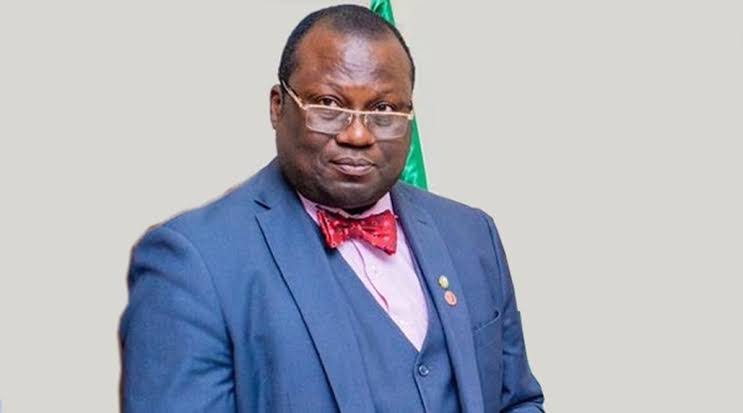
The Independent National Electoral Commission, INEC, has declared Professor Dayo Faduyile of the All Progressives Congress, APC, as the winner of the Ondo South Senatorial District by-election held on Saturday.
The result was announced on Sunday at the collation centre in Okitipupa Local Government Area by the Returning Officer, Professor Gbenga Solomon-Ibileye, Vice-Chancellor of the Federal University, Lokoja.
Solomon-Ibileye stated that Faduyile emerged victorious after securing the highest number of votes cast in the election with a total of 68,474 votes.
According to the results announced, Adeolu Akinwunmi of the Allied People’s Movement, APM, came second with 1,411 votes.
Adesanya Olaoluwa of the Action People’s Party, APP, polled 213 votes, while Clement Funso-Nejo of the Boot Party, BP, secured 70 votes.
The Returning Officer disclosed that a total of 70,770 votes were cast during the election, while 602 ballots were declared invalid.
Speaking after the announcement, the Resident Electoral Commissioner, REC, of INEC in Ondo State, Mr Mutiu Agboke, described the by-election as an important preparatory exercise ahead of the 2027 general elections.
Agboke noted that the commission would review the few challenges encountered during the process in order to strengthen future electoral operations.
“The results of the election reflected the people’s voice and thank God that all INEC staff who went to the riverine came back safely and no negative report anywhere,” he said.
The by-election was conducted across six local government areas in the senatorial district, namely Okitipupa, Ilaje, Ese-Odo, Irele, Odigbo and Ile-Oluji/Oke-Igbo.
The Ondo South Senatorial seat became vacant following the appointment of Senator Jimoh Ibrahim as Nigeria’s Permanent Representative to the United Nations.
dailypost.ng

• ‘How to regain it, avoid repeat of June 12 tragedy’
• Makes case for strong institutions
• Says he was a victim for standing for N/Assembly independence
By Olayinka Latona
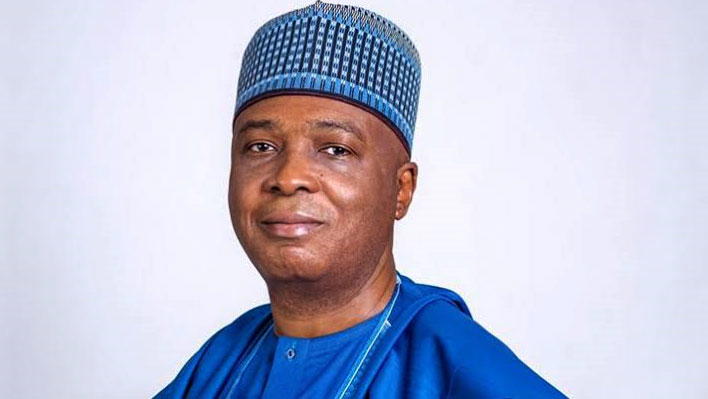
Former Senate President Bukola Saraki has issued a stirring defence of the National Assembly’s role as the “load-bearing wall” of Nigeria’s democracy, arguing that the legislature must be strengthened and protected if the nation is to avoid a repeat of the June 12, 1993 tragedy. Speaking at The Platform Nigeria, organized to celebrate Democracy Day, Saraki opened his address by invoking the significance of June 12 — a date, he said, “the Nigerian state preferred to forget.”
“For a long time, this date was deliberately left out of the calendar of national memory. But yet, the people would not let it die. Year after year, citizens kept faith with its meaning,” the former Senate President said. He recalled the day in 1993 when Nigerians “of every tongue, faith and every region walked out to the polls and spoke with one astonishing voice.”
That mandate was annulled, he noted. “Lives were lost defending it. A man went to prison for it and never came home. But the idea survived,” Saraki declared.
“And today we stand on Democracy Day, which exists only because ordinary Nigerians refused to surrender their belief in the ballot.” Saraki opened his address deliberately with the June 12 analogy because, he said, “Everything I will say in this hour flows from a single truth: democracy in Nigeria was never handed to us. It was fought for. “And what is fought for must be cherished, protected, built upon. Otherwise, it will be lost.” The former Senate President, who led the National Assembly’s upper chamber from 2015 to 2019, then made his case for the legislature under three headings: How it secures democratic stability, how it strengthens governance, and how it drives national development.
‘Friction Is Not Dysfunction’
Saraki acknowledged that Nigerians often misunderstand the relationship between the executive and legislative arms of government.
His words: “When Nigerians think of power, they think of one office — the president. This is the reality.
“The presidency dominates our imaginations so completely that we sometimes speak as though government is the president, as though the National Assembly is just a nuisance of an institution to be managed, and the courts an obstacle to be circumvented.”
But the framers of the Constitution, he argued, understood something profound.
“The greatest danger to a free people is not a weak government, but an unchecked government. Power that answers to no one. Authority that cannot be questioned.”
Saraki stressed that the separation of powers was deliberate: “They built friction into the system. It was on purpose. It was not a mistake. That friction is not dysfunction. That friction guarantees your freedom.”
He offered a stark warning: “A legislature that cannot say ‘no’ is not a legislature at all.
“A legislature which simply receives executive proposals, approves them without scrutiny, and goes home has not fulfilled its constitutional mandate. “It has performed a ceremonial function. It is an echo. A democracy made only of echoes is only one election away from becoming something else entirely.”
‘Independence Not Rebellion’
Saraki, who often faced criticism during his tenure for asserting the Senate’s independence from the executive branch, addressed the issue directly.
“The independence of the National Assembly is not rebellion against the government of the day. I say that loudly, having been a victim where when you stand for the independence of the National Assembly, they say, ‘Ah, Saraki is a bad boy. He’s against the government.’ No. We are talking about how institutions can do what they are meant to do.”
He argued that an independent legislature actually strengthens the government’s legitimacy.
“Because a mandate that is never tested is a mandate no one can trust. How do you trust your government if it is not a government that is subjected to questions?” he asked.
‘We Did Not Lose Democracy in 1993 Because the People Failed’
Saraki drew a direct line from the annulled June 12 election to his central thesis about institutional weakness.
“The lesson is plain: we did not lose democracy in 1993 because the people failed.
“We lost it because the institutions that should have defended the people’s verdict were too weak to do so.
“The remedy is not less politics. It is stronger institutions. At the centre of these institutions stands the legislature.”
The legislature, he said, serves as the Republic’s “pressure valve.”
“When citizens are angry, they have representatives to petition. When a community feels abandoned, a senator can raise their name on the floor. When a policy threatens to ignite a region, there is a chamber where it can be debated, amended, softened. Block that valve, and the pressure does not disappear. It finds far more dangerous ways out.”
On Budget ‘Padding’ and Executive Overreach
Saraki took aim at the narrative that the National Assembly “pads” the budget when it makes amendments to executive proposals.
“How can the legitimate maker of a document be accused of fraud? The legislature is only doing what, by the Constitution, it has the power to do”, the former Senate President said.
“It is like accusing the organizers of The Platform of forging their own program today because a preferred speaker’s name did not make the final list.”
He accused the executive branch of often seeking comfort in violating constitutional provisions.
“There are many times the executive will go ahead and incur expenditure without legislative approval. Nobody raises alarm. It is seen as just something that has happened. But it is wrong. Even if it is for a good purpose.”
He recalled the 2018 purchase of Tucano aircraft from the United States government.
“Good purpose” — he said – “to fight insecurity. But money was spent before approval.”
On borrowing, he was equally firm: “When a country borrows, it is not government money. It is the obligation of Nigerians alive today, their children, and their children’s children.”
Saraki recalled that in September 2016, his Senate rejected a $29.96 billion borrowing request from the administration because it was not accompanied by proper documentation.
“What will it be used for? How will it be repaid? They said, ‘Just pass it and let us move on.’ We said no. And people said, ‘Ah, you are being anti-government.’ No. We were trying to do what is right.”
Case of EFCC Chairman
In a striking personal disclosure, Saraki revealed that he and others paid a “personal cost” for the Senate’s exercise of its confirmation powers.
His words: “We had the acting chairman of EFCC come before us. “After reviewing his qualifications and security report, we said no. But he stayed in office. Defiant. Totally disregarded our rejection.
“And some of us paid a personal cost for that. We were hunted, just because of that.”
Constituency Casework: The Corporal Williams’ Story
Saraki illustrated the legislature’s role in citizens’ daily lives with the story of Corporal Williams, a policeman dismissed in 1996 without any form of trial.
He narrated: “The Senate committee on ethics reviewed his petition and held that such punishment, confined by Police Decree 17, was inconsistent with democratic rule.
“His dismissal was reversed. He was reabsorbed into the police.”
Saraki also cited cases of pensioners and a widow who could not access her late husband’s pension for years. “Those are roles the National Assembly should be playing for you”, he said.
On the Petroleum Bill and Outdated Laws
Saraki noted that many of Nigeria’s laws are outdated, some written in the 1970s and no longer applicable to modern business.
Said he: “The Petroleum Industry Bill was not passed for 25 years. In the 8th National Assembly, we sat down and took the lead.
“Eventually, it was signed by the 9th Senate. That is an example of where the legislature comes in. Those of you who are businessmen, that is where the relationship comes from.”
‘Our Parliament Is Too Often Seen as Distant’
Despite his defence of the legislature, Saraki did not shy away from its shortcomings.
“Our parliament is too often seen as distant from the people it serves. Its proceedings feel opaque”, he noted. “Members appear more attentive to the executive, who controls resources, than to the constituents who control votes.”
The former Senate President recalled one of the speaker’s earlier remarks at the event questioning why legislators conform.
“You have to ask yourself: Those who did not conform, where did they find themselves politically? Very few people are strong enough to stand and fight against the strong arm of the executive”, Saraki said. “That is why most conform.”
‘Legislators Who Never Raise Their Hand’
“The singular greatest reform that could make the National Assembly better will cost the government nothing”, he said.
“It is citizens who watch, ask, and vote on legislative records — not just presidential personalities.
“You see legislators who keep winning elections, and for four years they have not even raised their hand to speak. But they will win anyway. “While those who are active, because they cannot do what you want when they return to their constituencies, do not win.”
He called for electoral reform as the foundation.
“Until we have a process that ensures the right people are elected, the foundation remains weak”, he said.
“If there is one single thing we take away from here, it is that we must go back and ensure we have a process where the right people are elected.”
‘Strong Legislatures Are Not Enemies of the State’
“To fellow public servants, let us retire the lie that strong legislatures and strong nations are enemies of the state.
“They are the same thing. There has never been a stable, prosperous, free country anywhere in the world built on a weak parliament. Not one. Name me one. There is not one.
“The difference between military rule and democratic rule is the legislative arm of government. We are here today as free citizens of a democratic republic because a generation before us decided that the voice expressed through a vote must be held.
“They did not have strong institutions. But they protested. They demanded. Do we think it is possible for a repeat of June 12? For as long as our institutions are not strong enough, unfortunately, it might happen again.
“Our task for this new generation is to ensure that institutions are strong enough to outlast strong men. By insisting that the legislature is independent, transparent, capable, and close to the people. Democracy is not a single election or a single office. It is a daily act of tending to it and ensuring it survives.”
He ended with a simple formula: “A strong legislature promotes transparency. Transparency inspires public trust. Public trust strengthens democratic legitimacy. And democratic legitimacy produces stability. That, ladies and gentlemen, is how we will have a better and stronger democracy.”
The post We may have missed our way again on democracy – Saraki appeared first on Vanguard News.
www.vanguardngr.com


Newcastle Want to Sign £52m Winger After Victor Munoz Hijack

Police apprehend man captured on video punching wife in Aba

Ekiti 2026: ‘People’s voice echoed again’ – Oyebanji

Simi Sanya and Femi Dapson Are Now Legally Married and It Is Beautiful to See

FCT Area Council Election: Live results from polling units

Premier League Set-Piece Goals (2025/2026)
-
 Sports2 days ago
Joao Neves Causes Stir With Cristiano Ronaldo Comments After Portugal 1-1 DR Congo
-
 Sports2 days ago
ITV Blasted After ‘Outrageous’ Emma Hayes Clip During England v Croatia
-
 Sports2 days ago
Julen Lopetegui and Jesse Marsch 2026 World Cup Clash Explained
-

 Sports2 days ago
Dana White Brutally Cuts 3 Fighters From the UFC Roster
-
 Politics1 day ago
Ekiti Decides: Live Updates, Results from governorship election
-
 Sports23 hours ago
FIFA to Pay Compensation After Ismael Kone’s Horrific Injury For Canada
-
 Sports1 day ago
Algeria Lodge Official Complaint to FIFA Over Lionel Messi
-
 Sports2 days ago
Lyrics to All Scotland Songs and Chants (Complete Guide)