
Politics
INEC’s Suppressed Constituencies Restoration: Delta’s seat that never came back


By Egufe Yafugborhi
Ughelli South Local Government Area, Delta State, should have been basking in euphoria as the Independent National Electoral Commission (INEC) restored suppressed state constituencies.
Of the 22 restored seats announced on 10 June by the Commission, alongside Benue, Jigawa and Kogi, Delta got six seats back: Aniocha North II, Ika North East II, Sapele II, Ethiope West II, Warri South West II, and Warri North II. “Democracy is expanding,” INEC said.
Painfully, in Ughelli South LGA, no drums were rolled out. Constituents were left with one bitter question: “If INEC can obey 2026 court orders in days, why has it ignored a 2015 Court of Appeal judgment bearing our name for 11 years?”
Ughelli South II was not on the list for restoration. Yet a decade earlier, the locality had won the same legal battle on the same grounds that compelled INEC to restore other seats. That is the wound. The intrigue.
The Original Sin
Before 1996, like Isoko North, Ughelli South LGA had two voices in the Delta State House of Assembly (DTHA): Ughelli South I and II. Each brought projects and oversight closer to communities.
In 1999, INEC merged them. “Constituency I” was suppressed in a national “delimitation exercise.” Bureaucratic language. Brutal effect: Ughelli South went from two representations to one.
When Both Constituencies Functioned
Ughelli South had been structured and recognised as two distinct state constituencies. Social justice advocate, Zik Gbemre, captured the timelines from post-independence democracy through the Third Republic.
First Republic: At the creation of the Midwest Region, modern-day Ughelli South maintained two constituencies.
Chief Patrick K. Tabiowo (from Otokutu, Ughievwen Bloc) represented Ughelli South I, emerging as the first Speaker of the Midwestern House of Assembly, while a second lawmaker represented the joint Ewu, Okparabe, Arhavwarien, Effurun-Otor and Olomu bloc.
Second Republic (1979–1983):
Under President Shehu Shagari, the dual-constituency structure was preserved. Sir Harrison Jefia (from Ughevwughe, Ughievwen Bloc) was elected to represent Ughelli South I. Chief Sylvanus Omaruaye (from Ewu clan) was elected into the Ughelli South II seat, serving until the military coup in late 1983.
Third Republic (1991–1993):
Following the creation of Delta State, under Olorogun Felix Ibru as governor, the 1st Delta Assembly was inaugurated on 30 January 1992. Ughelli South maintained its two seats.
Hon. Wilson Jighwu (from Usiefrun, Ughievwen Bloc) represented Ughelli South I. Hon. George Dogood Mokpo (from Gbaragolor, Ewu clan) represented Ughelli South II.
Vexed Suppression
At the activation of the Fourth Republic on 29 May 1999, INEC froze Ughelli South Constituency I. For 15 years, the LGA had one representative for its population of over 150,000 – estimated at 315,284 today.
The area is home to oil-bearing towns and dozens of communities. The merger was convenient for INEC. It was never legal.
The Victory That Failed
Patience broke for the people on 12 May 2014. Chief Godwin Sito and five others sued INEC at the Federal High Court, Warri, in suit FHC/WR/CS/59/2014. Their prayer: “Restore what INEC illegally took away.”
On 31 October 2014, Justice Mohammed Shitu Abubakar delivered judgment. His language cut through bureaucracy: “The Defendant does not have any power and/or discretion whatsoever to suppress the existing Ughelli South Constituency I with constituency code No. SC/33/DT in the Delta State House of Assembly lawfully created and approved by the National Assembly.”
The court didn’t suggest. It ordered: “Restore forthwith” Ughelli South I. Conduct a by-election. Stop denying citizens their constitutional right.
Appellate Confirmation
On 28 May 2015, the Court of Appeal, Benin Division, ruled on the Commission’s appeal. Justice H. Barka led the panel’s verdict: INEC’s appeal was dismissed “for lack of merit in its entirety.” Barka reminded INEC of history: “The constituency had existed separately before 1996.”
Reaction was swift from Olorogun Taleb Tebite (late), then member-elect for the merged constituency. He said the judgment was “emphatic and clear. It reaffirmed our strong belief in God and the nation’s judiciary.” Eleven years later, he remains the sole representative for the entire LGA.
When INEC still stalled, plaintiffs served Form 48 and Form 49 — notice of consequence of disobedience. Contempt proceedings followed against then INEC Chairman Prof. Attahiru Jega. Court papers warned: “Unless you obey… you will be guilty of contempt of court and will be liable to be committed to prison.”
INEC climbed to the Supreme Court. In 2017, the apex court in _INEC v. Chief Godwin Enasito_ affirmed the earlier judgments of the Federal High Court in Warri and the Court of Appeal, Benin. Three courts, one conclusion: INEC acted illegally in 1999. Restore the seat. Yet today, Ughelli South II is still missing from INEC’s register.
Most Hurting Exclusion
On 10 June 2026, INEC National Commissioner Mohammed Kudu Haruna stated, “The Commission has restored State Constituencies… following judgments of the courts directing that certain constituencies be brought back into the electoral map.”
For Delta, six seats “previously suppressed” were restored by “recent court judgments.” Party primaries were fixed for 16–25 June 2026. Fresh delineation. New voters.
The crux is Ughelli South’s absence from the list. INEC obeyed 2026 court orders within days. But it has not obeyed 2015 orders after 11 years. Both orders concerned suppressed constituencies. What changed?
Critical Questions
Why the selective obedience by INEC? Is there an expiry date on justice? The Commission’s statement cited “powers conferred by the 1999 Constitution and Electoral Act 2026.” The same powers existed in 2015. Section 287(1) says “all authorities… shall obey” court decisions. No time limit.
So why did INEC obey the Warri South West II judgment from 2024 but not Ughelli South I from 2015? “When INEC obeys a 2024 judgment and ignores a 2015 one, it sends a message: justice is only justice if it’s fresh,” a senior lawyer observed.
Warri got attention, Ughelli got silence. INEC’s 2026 restoration coincided with the final “Warri delineation report.” There is a thinking that INEC prioritized Warri in response to years of ethnic conflicts, protests, and media pressure.
Ughelli South had no protests. Just a quiet court judgment. A Delta Assembly source said: “Crisis gets you a seat. Court judgment alone does not. That’s the lesson Ughelli South has learned.”
Impunity By Administrative Convenience
In the numbers game, restoring Ughelli South II plus Isoko North II would take the Delta Assembly from 29 to 31 members.
The 2026 restoration kept the Assembly at 29 because the six seats were swaps, not additions. Adding Ughelli South II meant real expansion: more salaries, more offices, more budget.
The 2014 FHC judgment declared the 29-member Assembly “not properly constituted.” INEC ignored that too.
Apparently for administrative convenience, an 11-year-old judgment, for INEC, is “stale.”
Restoring Ughelli South II meant new ward delineation, new polling units, fresh primaries. INEC must redo 1999 work.
An INEC official, speaking off record, admitted, “Old judgments are messy. You have to trace old boundaries, deal with new settlements. Easier to work with recent cases where records are digital.”
“Lame excuse. Administrative difficulty is not a defence in law. Contempt of court doesn’t accept that. Besides, the boundaries were there before suppression. It’s simply to pronounce the same restored,” responded Gbemre
The 2014 court relied on Sections 6, 36, 91 and 112. INEC’s own lawyers conceded the seat was “lawfully created” in 1991. The suppression had no constitutional backing.
Human Cost
It’s one representative, but many voices in Ughelli South LGA speak of constituency development projects that never came. Of wards that feel “too far” from Asaba.
The burden feels heavy on incumbent Hon. Festus Otuama, a single voice speaking for two supposed constituencies today.
“When one man speaks for 30 communities, 15 voices are silent. That was the plan in 1999. The court said stop. INEC refused. Now INEC restores other people’s seats and leaves ours. What do we call that?” a constituent lamented.
Core Takeaway
Ughelli South could not have lost out in 2026 when it won in 2014. What it lost was implementation. The June 2026 restoration didn’t create new inequality. It exposed impunity.
Extraneous to the law, it proved INEC’s willingness to obey courts depends on timing, politics, and convenience.
Until the Commission gazettes the 2015 Court of Appeal judgment and delineates Ughelli South II, the LGA remains Nigeria’s most latent constituency — existing only in statutes but never captured on election ballots.
A stakeholder summed it up: “INEC will restore seats when courts force it now. When forced much earlier, INEC went to sleep.
“For Ughelli South people, the wait for their second voice sustains. The seat won in court, yet lost on the ground. And the people are still waiting.”
Gbemre added, “Ughelli South is a major hub churning oil and gas wealth that sustains the nation. To marginalise such a critical economic and cultural engine is unacceptable.”
A different set of litigants are said to be pursuing a separate pending legal battle with INEC over the same Ughelli South I suppression.
www.vanguardngr.com
Politics
NDC Deregistration: Mixed reactions trail court judgement as Obi’s ambition suffers setback
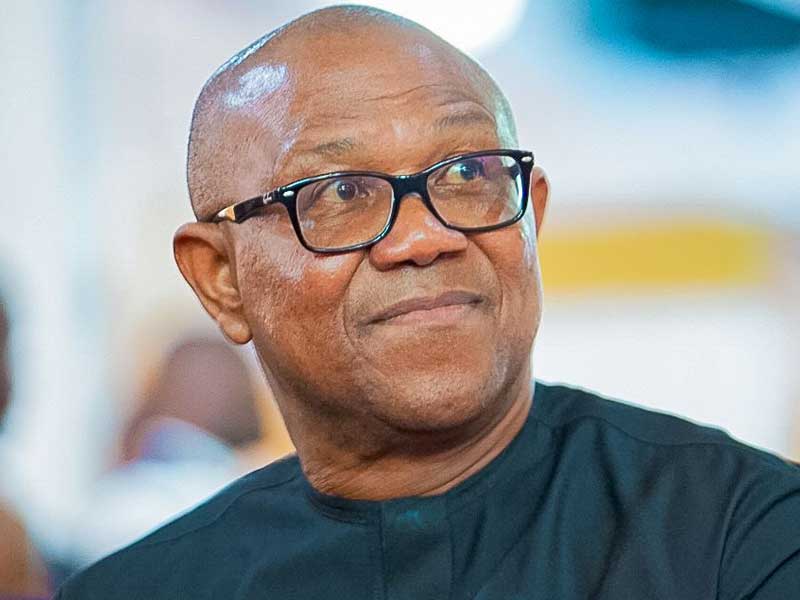
The 2027 presidential ambition of Peter Obi and Rabiu Musa Kwankwaso suffered a fresh setback on Friday after a Federal High Court in Lokoja set aside its earlier judgment directing the Independent National Electoral Commission, INEC, to register the Nigeria Democratic Congress, NDC, as a political party.
DAILY POST reported that Justice Isah Dashen, who delivered the ruling, held that the court’s earlier judgment affected the rights of the Peace Movement Party, PMP, which claimed ownership of the logo adopted by the NDC.
The judge ruled that the PMP was not joined as a party in the original suit despite its claim over the disputed logo.
Recall that the NDC was registered by INEC following the same court’s order issued on December 15, 2025.
According to counsel to the PMP, C.S. Ekeocha, the association approached the court after discovering that the NDC registration was based on a logo it had earlier submitted to INEC before the litigation commenced.
The ruling means the dispute over the registration of the NDC will return to the Federal High Court for a fresh hearing with all relevant parties participating.
The decision has since triggered widespread reactions from the NDC, opposition figures, legal experts and political commentators.
Opposition parties are warning that the development could have far-reaching implications for Nigeria’s multi-party democracy ahead of the 2027 general election.
NDC rejects judgment, heads to Appeal Court
The NDC leadership has swiftly rejected the judgement, insisting it has not been deregistered.
In a statement issued after the ruling, the party said it was surprised by the court’s decision to set aside its December 2025 judgment following an application by the PMP, an association it described as unregistered and unknown.
The party maintained that after the December 2025 judgment, INEC registered the NDC, enabling it to commence political activities, register members, conduct ward, state and national congresses, hold conventions and conclude primaries for elective offices in line with the electoral timetable.
The NDC argued that the Federal High Court had become “functus officio” after delivering its final judgment in the case against INEC and had already addressed issues relating to the party’s logo and colours.
It contended that the Peace Movement Party, which claims ownership of the victory sign adopted by the NDC, is neither a registered political party nor a participant in the registration process.
The party said it has instructed its legal team to immediately challenge the ruling at the Court of Appeal, questioning both the jurisdiction of the court and the propriety of the decision.
“We assure the general public, and particularly our candidates at all levels, that our party is on course.
“The NDC has not been deregistered, and we are challenging today’s order at the Court of Appeal as soon as possible,” part of the statement read.
NDC deregistration won’t stand — Seriake Dickson
The national leader of the NDC, Seriake Dickson, also rejected the Federal High Court order, describing the ruling as illegal and vowing to challenge it through legal means.
Dickson said the court order lacked legal merit and was designed to undermine the credibility and progress of the NDC.
According to him, the ruling is a threat to Nigeria’s multi-party democracy and an attempt to shrink the country’s democratic space.
“All I can say is that the order lacks legal merit and is intended to affect the foundational credibility and efforts of our party. The order is illegal and will not stand.
“It is against multi-party democracy, anti-democratic in nature, and aimed at narrowing and stifling the democratic space. It will be resisted by all of us and by all lovers of democracy,” he said.
He disclosed that the party had assembled a team of lawyers to immediately challenge the ruling, urging members, supporters and candidates to remain calm and continue their political activities.
Dickson expressed confidence that the party would overcome the legal challenge, insisting that the ruling would not derail its preparations for future elections.
Forces working to stop my presidential ambition will fail — Peter Obi
Reacting to the development, the NDC presidential candidate, Peter Obi, alleged that forces within the Federal Government were working to prevent him from appearing on the ballot in 2027.
Obi, who spoke at a leadership programme organised by the NextGen Mentorship and Leadership Initiative at Madonna University, Okija, Anambra State, also challenged President Bola Tinubu and other presidential hopefuls to a public debate, insisting he remained the most qualified among them.
Speaking specifically on Friday’s court ruling, Obi maintained that it would not stop his presidential ambition and urged his supporters to remain peaceful despite the legal setback.
He said: “They cannot stop me. They will fail. Let me assure you it is not the end of the road. We are committed to this democracy and those who want to kill this democracy are trying to hurt the society.
“The reactionary elements in Nigeria, those who are bent on holding Nigeria down do not want it to work but I can assure you it would work. I have confidence that I will pull through because the will of the people must prevail.
“No where is safe in Nigeria today, yet the people who should help salvage the country are bent on hurting our democracy. My message to all those who mean well for Nigeria and not just my supporters is for us to remain peaceful and continue to resist this tragedy being imposed on Nigeria.”
We’ll resist Tinubu’s one-party state — Obidient Movement
The Obidient Movement also condemned the court decision, vowing to resist what it described as attempts to turn Nigeria into a one-party state.
The Media and Communication Directorate of the movement said it had taken note of the contradictory judicial pronouncements concerning the NDC.
In a statement, the group argued that the latest development reinforced public concerns that the judiciary was increasingly being deployed as an instrument of partisan politics rather than an impartial arbiter.
“These developments only reinforce the growing public concern that the judiciary is being deployed as an instrument of partisan politics rather than an impartial guardian of justice.
“Having acted on a valid and subsisting court order to its detriment by incurring substantial expenditure in preparation for elections, the NDC acquired legitimate legal expectations that cannot be arbitrarily defeated by the very court whose judgment it obeyed,” it stated.
Politics can’t be ruled out — Lawyer
Offering a legal perspective, human rights lawyer, Barr Maximus Ugwuoke said the implication of Friday’s ruling is that the legal status of the NDC had become uncertain.
Speaking with DAILY POST, Ugwuoke explained that although a court generally becomes functus officio after delivering judgment, there are recognised exceptions under which it can revisit and set aside its own decision.
He added that the development could weaken public confidence in the judiciary because many Nigerians may begin to question the certainty and finality of court judgments.
He said: “The implication now is that the legal registration of NDC as a party is now in question.
“Legally speaking, we’re leaving politics out of this, the position of the law is that generally once a judge or a court has given judgement in a case that court becomes what we call ‘functus officio’.
“That’s to say that the judgement cannot be revisited by that same court except an appellate court. That’s the general rule of law, but you know there is an exception to every rule.
“There are circumstances that the law permits that a judge can reverse his own judgement or set it aside. It is permissible in law.
“This is not the first time that judges exercise such powers. And one begins to ask, what are the circumstances?
“Some of these circumstances are, for instance, assuming a judgement is obtained by fraud. You deliberately did not present the fact as it is, and that led to you obtaining judgement by fraud, of course, one can go back to the same court and say, if you had known that this is the real state of affairs, you shouldn’t have given this judgement.
“A judge, in the interest of justice, should be able to look at the circumstances, and if it is true, the judge sets that particular judgement aside, and then begins to deal with the issue afresh again.
“It’s also the case if there is a constitutional breach, which is what I feel, or in this case was what transpired. Fair hearing is fundamental. Yes, it is one of the principles of natural justice that you must hear all parties.
“This is a situation where there is a pending case in a court, and then a party that is necessary to that case was not joined so that they will hear the side of that party’s case and judgement is now entered.
“The question was this: this particular body that went back now to allege that the NDC logo affected them, were they not aware of that former judgement on the registration?
“If they are not aware, if the facts are that they were never aware of such judgement or tendency of such a case, of course, the judge will be in order.
“But if they were aware and they stood by, they cannot come back and complain because they stood by and watched until judgement came into play.
“In this situation, you know that this thing was political. You can’t rule out politics out of it. You also know that the law is a double-edged sword. It depends on what the arbiter wants to make out of it, and then the fact that is before the judge.
“It’s not as if this has never happened. It happens at times in court when the court will give judgement and one thing or the other happens. You go back to that same court, the court can look at the circumstances. So it’s legally possible, it is legally permissible.
“Now coming to what it portends. Ideally, most times we look at legal principles as it is, not exactly how it affects the politics.
“A judge that is delivering judgement in a case doesn’t bother himself with what the public opinion will be. He’s concerned with principles of law.
“Are there principles or decided cases that allow me to do this? It is entirely at the discretion of the judge. He has the power to review that application or to have countered it.
“So, actually, on one side, it reduces the confidence people have in court, because sometimes people will begin to think that judgments are not certain.
“Whether it’s the same judge that sets it aside or even the appellate court, a judgement of the court is not certain until it is tested at the highest level of court, which is the supreme court.
“Well, on this, NDC has two options at this stage, they have two options available to them.
“The first option is that NDC has the option in law to convince the court that despite the fact that they have joined this particular movement, now as a necessary party in the case, they should proceed with registration.
“Another option open for them is to appeal this particular ruling – the order of the court setting aside its own decision – to the appeal court to contest it.”
No 2027 without Peter Obi on ballot — Obioha
Also reacting, the leader of Njiko Igbo Forum, Rev. Dr. Okechukwu Christopher Obioha, warned that Nigeria may not successfully conduct the 2027 general election if Peter Obi is prevented from appearing on the presidential ballot.
Speaking with DAILY POST, Obioha alleged that public confidence in the judiciary had declined due to what he described as inconsistent decisions and accused the current administration of weakening the institution.
He said: “The citizens of this country, the genuine citizens of this country, who are looking up to a democracy that will have aimed to be sustained and maintained are not looking at the courts at all.
“Now we have no regard for the judiciary in Nigeria. The judiciary in Nigeria is full of inconsistencies, adding to the leadership of this country, the APC government of this country, that influenced what they have done since they came into power, particularly since Tinubu came into power.
“He has weakened the judiciary, has messed them up.
“As far as political arrangements are concerned, or pronouncement by the courts, we don’t trust them any longer, because they are one of the arms of government that are weak, that should be strengthened.
“If Peter Obi is frustrated and is not on the ballot, there will be no election in 2027. That’s not a threat. It is going to work out that way. I’m trying to… If you like, you can call it prophecy. I’m a reverend. Call it anything, but I’m just warning Nigerians.
“If Peter Obi, with all the struggles and on the level he’s now, is frustrated not to be on the ballot, there will be no election in 2027.
“And on 29th May next year, Tinubu will not be the president because we are tired of the system. We are tired.
“We are strangulated, and the rest will be story about this country called Nigeria.”
Court becoming tool to destabilise democracy — Analyst
Similarly, political analyst and communication expert at Peaceland University, Enugu, Nduka Odo, expressed concern over recent court decisions affecting opposition political parties, alleging that the judiciary is being used to undermine Nigeria’s democracy.
Speaking with DAILY POST, Odo said recent rulings involving the African Democratic Congress, ADC, and the NDC had raised questions about the judiciary’s commitment to protecting Nigeria’s democratic system.
“At this point, it’s safe to say that the court has become a tool to destabilise democracy in the country.
“From ADC to NDC, the judiciary has a lot to prove that they are not working against a republican system,” he said.
He argued that democracy cannot thrive without a strong opposition and warned that weakening opposition parties could pave the way for a one-party state.
“There’s no democracy without opposition. Once the opposition parties are scattered, the nation would have successfully entrenched a one-party system,” he stated.
Odo also questioned the legal basis for setting aside the registration of a political party over its logo, describing the development as disturbing.
He further alleged that the ruling party had succeeded in capturing key state institutions, recalling a past statement by Chief of Staff Femi Gbajabiamila about infiltrating opposition parties.
While acknowledging that politicians often seek political advantage, Odo maintained that the judiciary should remain the last hope of the common man and protect democratic values.
“Do you remember when the Chief of Staff, Gbajabiamila, gleefully boasted about the ruling party sending agents to opposition parties to destabilise them?
“I count what happened to ADC and NDC as part of that destabilisation. Every hardened politician wishes to possess such powers,” he said.
While acknowledging that politicians often seek political advantage, Odo stressed that such developments should concern citizens who value democratic governance.
“That, however, should worry anyone who desires functional democracy. The court was supposed to be the last hope of the common man. It ought to act like it,” he added.
It’s not too late – Atiku’s aide advises Peter Obi, Kwankwaso
Meanwhile, Paul Ibe, an aide to former Vice President Atiku Abubakar has alleged that Friday’s Federal High Court ruling setting aside its earlier judgment directing the registration of the Nigeria Democratic Congress, NDC, is part of a broader attempt by President Bola Tinubu to weaken the opposition ahead of the 2027 general election.
Reacting in a post on X, the aide described the Lokoja court’s decision as a “wake-up call,” alleging that the President was working towards creating a de facto one-party state.
He claimed the ruling showed there was “no hiding place for the opposition” and accused Tinubu of seeking to “obliterate the opposition and destroy” Nigeria’s democracy if he does not achieve his political objectives ahead of the 2027 election.
The aide also urged opposition parties to unite ahead of the next general election, arguing that a coordinated front would be necessary to challenge the ruling party.
“His message is loud and clear: that he will obliterate the opposition and destroy our hard-won democracy if he does not have his way in the 2027 election.
“It is not too late for the opposition to harmonize their strengths ahead of 2027 if the Yar’Adua 2.0 President Tinubu is to be retired to either Bourdillon or Iragbiji!”
dailypost.ng

Leader of the Nigeria Democratic Congress, NDC, Seriake Dickson, has rejected the Federal High Court order directing the deregistration of the party, describing the ruling as illegal and vowing to challenge it through legal means.
Reacting to the judgment delivered on Friday by Justice Isah Dashen of the Federal High Court in Lokoja, Dickson said the court order lacked legal merit and was designed to undermine the credibility and progress of the NDC.
According to him, the ruling is a threat to Nigeria’s multi-party democracy and an attempt to shrink the country’s democratic space.
“All I can say is that the order lacks legal merit and is intended to affect the foundational credibility and efforts of our party. The order is illegal and will not stand.
“It is against multi-party democracy, anti-democratic in nature, and aimed at narrowing and stifling the democratic space. It will be resisted by all of us and by all lovers of democracy in Nigeria,” Dickson said.
He disclosed that the party had assembled a team of lawyers to take immediate steps to set aside the court order, urging members, supporters and candidates to remain calm and continue their political activities.
Dickson expressed confidence that the party would overcome the legal challenge, insisting that the ruling would not derail its preparations for future elections.
He also questioned the legal standing of the applicant, an association identified as the Peace Movement Party, arguing that it was neither a registered political party nor one of the associations that applied for registration with the Independent National Electoral Commission (INEC) in 2025.
According to him, the association had no interest in the subject matter of the suit and was not a necessary party in the case.
Dickson further alleged that unnamed individuals threatened by the rapid growth of the NDC were behind the court action, claiming the party’s progress within five months had unsettled its opponents.
He maintained that the party would pursue all available judicial remedies to overturn what he described as a judicial error and reaffirmed the NDC’s commitment to deepening multi-party democracy in Nigeria.
dailypost.ng
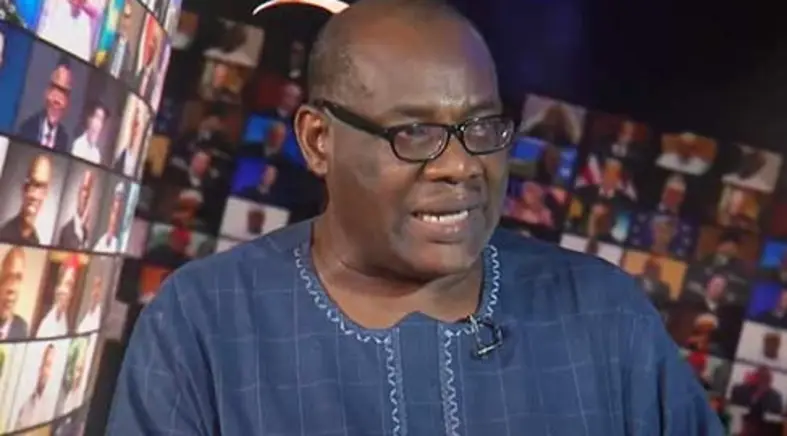
A frontline political analyst, Mahmud Jega, has advised President Bola Tinubu to come out openly to condemn the attitude of some judges towards opposition political parties and against Nigeria’s democracy.
Jega warned that Nigeria’s democracy is at risk if opposition parties are prevented from contesting the 2027 general elections.
He stated that the growing perception that there is a coordinated effort to weaken opposition parties ahead of next year’s election is becoming undeniable, adding that If this is allowed to happen, it could mark the beginning of the end of democracy in Nigeria.
He said It was important for the President, as the head of the country’s most powerful institution, the Presidency, to distance himself from it and discourage anything that undermines democracy.
Speaking on Arise Television, Jega said, “After what happened in PDP, politically it [judgement against NDC] is very significant, because unfortunately it adds to the widespread and growing perception that there is a concerted effort orchestrated by someone to stop all the opposition parties from contesting next year’s election.
“After what happened in PDP, after what is happening in ADC now, it has come to NDC, not to mention Labour Party, NNPP, SDPC and a small party like PRP, once it produced a presidential candidate, some people went to court, and the whole matter.
“So the perception is growing that there is a concerted effort to stop all the opposition parties from contesting next year’s election. Now, actually, that will be like the end of democracy in Nigeria if we don’t have an opposition party.
“I don’t know who is orchestrating this but it is very important for the presidency, because it is the most powerful institution in the country, to distance itself and discourage what is happening.
“In 2001 when PDP was ruling, and the opposition ANPP at that time was going to hold a convention here in Abuja, and the convention was on Saturday, and already thousands of people were there, they had been campaigning all over the place for party offices, and then on Friday afternoon, a judge of the Abuja High Court, issued an order stopping the convention, and they all had to scatter.
“A few days later, President Obasanjo had his monthly media chat, was asked about that, he said ‘it is wicked, it is wicked,’ he said it three times, that was very important.
“It sent a message, very important. And because of that, possibly the National Judicial Council took steps, and the judge was actually, either retired or sacked. It is very important for the presidency right now to do a similar thing.”
dailypost.ng


France’s Request to Pay Tribute to Didier Deschamps’ Mother Denied By FIFA

Premier League Rivals Want To Hijack Arsenal Deal For Wonderkid

NDC Deregistration: Mixed reactions trail court judgement as Obi’s ambition suffers setback

Simi Sanya and Femi Dapson Are Now Legally Married and It Is Beautiful to See

FCT Area Council Election: Live results from polling units

Premier League Set-Piece Goals (2025/2026)
-
 Sports21 hours ago
FIFA Allow Rainbow Flags at World Cup ‘Pride Match’ Featuring Iran vs Egypt
-
 Sports2 days ago
Thomas Partey Could Be Blocked From Knockout Tie
-
 Sports14 hours ago
Raphinha’s Wife Debunks ‘Financial Problems’ Claim From World Cup Winner
-
 Sports1 day ago
Rory McIlroy Risks Breaking PGA Tour Rule That Led to One-Year Ban
-
 Sports22 hours ago
Uruguay Players ‘Revolt Against Marcelo Bielsa’ Ahead of Spain Game
-
 Sports2 days ago
Jon Jones Names UFC Opponent Who Hit Him the Hardest
-
Sports2 days ago
Jon Jones Names UFC Opponent Who Hit Him the Hardest
-
 Sports1 day ago
Trent Alexander-Arnold Could Have Played For the USMNT Instead of England