
Politics
TINUBU, ATIKU, OBI: Battle for North’s votes intensifies


By Luminous Jannamike, Abuja
Abuja has a way of transforming seemingly routine political exchanges into conversations that echo far beyond the Federal Capital Territory.
On any given day, the city’s hotels, private residences and political party offices double as informal negotiating tables where governors, former ministers, lawmakers and party strategists quietly take the measure of one another.
Alliances are tested over breakfast meetings, political futures are debated in hushed conversations, and a single public statement can alter the calculations of men already looking beyond tomorrow’s headlines to the presidential contest of 2027.
It was against that backdrop that an exchange between former Kano State governor, Rabiu Musa Kwankwaso, and former Borno State governor, Ali Modu Sheriff, reverberated across Nigeria’s political establishment.
Sheriff, speaking on the unfolding realignments ahead of the next presidential election during an interview on Channels TV’s Politics Today, argued that Northern voters would never support Peter Obi. Kwankwaso dismissed the claim, insisting that no individual possessed the authority to speak on behalf of the entire North.
The disagreement quickly became the subject of television debates, newspaper commentaries and endless discussions across political circles.
Yet seasoned observers recognised that the exchange was never really about Peter Obi or any single presidential hopeful. It was about something much deeper. Who, after Muhammadu Buhari, can credibly claim to understand, or command, the political heartbeat of Northern Nigeria? It is a question that now sits at the centre of every serious electoral calculation.
For decades, politicians have spoken of the North as though it were a single electoral fortress capable of delivering victory to whoever secured its loyalty.
Since Buhari left office, that assumption has hardened into political folklore. Across party lines, aspirants continue to invoke what has become one of the most enduring expressions in Nigeria’s electoral vocabulary: ‘Buhari’s 12 million votes.’
To some, it represents an enormous political inheritance waiting to be claimed. To others, it is an exaggeration that has outlived the political circumstances that created it. As the race towards 2027 gathers momentum, that distinction may prove decisive.
The Legend That Refuses to Die
Long before it became shorthand for Northern political influence, Buhari’s electoral appeal was built patiently through years of opposition politics.
Following his return to democratic politics after military rule, the retired general fashioned an image that resonated deeply with millions of ordinary Northerners. To supporters, he embodied discipline, personal integrity and an uncommon willingness to challenge an entrenched political establishment they believed had become distant from everyday struggles.
Across Katsina, Kano, Jigawa, Kebbi, Zamfara, Yobe and parts of Bauchi, Buhari’s campaigns developed an emotional intensity rarely seen in contemporary Nigerian politics. His supporters did not merely attend rallies; they identified with a movement that portrayed him as a leader who understood their frustrations with poverty, corruption and insecurity.
His repeated defeats appeared only to deepen that loyalty. After losing presidential elections in 2003, 2007 and 2011, Buhari’s supporters remained convinced that their candidate represented an alternative to a political order that had failed them. The perception transformed him from an ordinary opposition politician into a symbol of resistance for many across the core North.
Somewhere along the way, that loyalty acquired a number: ‘Twelve million votes.’
The phrase gradually evolved from political shorthand into accepted wisdom. It was repeated at campaign rallies, party meetings and television studios until it acquired an authority rarely subjected to scrutiny. Yet the electoral record tells a more complicated story.
Counting Buhari’s Millions
Official results released by the Independent National Electoral Commission (INEC) reveal that Buhari’s popularity was both remarkable and highly dependent on political context.
In the 2003 presidential election, he secured more than 12 million votes nationwide against incumbent President Olusegun Obasanjo. The result established him as the undisputed face of opposition politics, drawing overwhelming support from much of the North-West and North-East.
But the assumption that those votes constituted a permanent Northern voting bloc begins to unravel four years later.
In 2007, contesting against the late Umaru Musa Yar’Adua, a fellow Northerner and candidate of the Peoples Democratic Party, Buhari’s vote collapsed to just over six million. Although that election was widely criticised by domestic and international observers, the dramatic decline nevertheless demonstrated that political support was shaped by circumstances rather than inherited sentiment alone.
By 2011, Buhari’s support rebounded to more than 12 million votes, reaffirming his extraordinary personal appeal. His eventual victory in 2015, however, owed as much to political engineering as personal popularity.
The merger that brought together the Congress for Progressive Change (CPC), the Action Congress of Nigeria (ACN), the All Nigeria Peoples Party (ANPP) and factions of the All Progressives Grand Alliance (APGA) produced one of the most consequential coalitions in Nigeria’s democratic history. Buhari supplied enormous credibility and grassroots support across much of the North. Asiwaju Bola Tinubu and other alliance partners expanded the coalition into regions where Buhari had previously struggled. The alliance changed the mathematics of Nigerian presidential elections.
Buhari’s re-election in 2019 reinforced his dominance, particularly across the North-West and North-East. Yet even those victories reflected the strength of an organised national coalition rather than a solitary political phenomenon.
The numbers, properly understood, challenge one of Nigeria’s most persistent electoral myths. Buhari possessed immense political capital. But no election demonstrates that millions of votes belonged to him permanently, or that they could automatically pass to another politician.
North: A Region That Has Never Been One
The temptation to speak of ‘the North’ as though it were a single political entity is almost as old as Nigeria itself.
During the First Republic, the Northern People’s Congress, NPC, projected formidable influence under the leadership of the Sardauna of Sokoto, Sir Ahmadu Bello. Yet beneath that dominance existed competing political traditions.
In Kano, Mallam Aminu Kano’s Northern Elements Progressive Union, NEPU, championed a populist movement that challenged the conservative establishment. The contest between the NPC and NEPU revealed that Northern politics had never been entirely uniform; it contained competing visions of leadership, governance and social justice.
The pattern survived successive political transitions. The National Party of Nigeria, NPN, inherited much of the establishment tradition during the Second Republic, while the People’s Redemption Party, PRP, carried forward Aminu Kano’s populist philosophy.
Military rule interrupted partisan competition but not political identity. When democracy returned in 1999, familiar fault lines re-emerged beneath new party platforms. The All People’s Party, APP, became the All Nigeria Peoples Party, ANPP.
Buhari later established the CPC after disagreements within the opposition. The CPC ultimately joined forces with the ACN, ANPP and others to form the APC ahead of the watershed 2015 election.
The names changed. The underlying diversity did not. Northern Nigeria has never voted as one homogeneous bloc.
Kano’s politics have long differed from those of Kaduna. Borno’s priorities cannot simply be mapped onto Plateau’s realities. The electoral concerns of Benue, Kogi and Kwara often diverge sharply from those of Katsina, Sokoto or Jigawa.
Religion, ethnicity, economic opportunity, education, urbanisation and security all shape voting behaviour in different ways. That complexity has only deepened over the past decade.
The rise of Kwankwasiyya in Kano demonstrated the continuing power of state-based political movements. In parts of the North-East, insecurity increasingly became the defining electoral issue.
Across the North-Central, identity, land disputes and religious coexistence continued to influence political choices in ways that differed markedly from the Muslim-majority North-West.
Meanwhile, expanding urban centres such as Abuja, Kaduna and Ilorin have produced a generation of younger voters whose political priorities are increasingly shaped by economic opportunity, technology and governance rather than inherited partisan loyalties.
If Buhari represented the last great unifying political figure across much of the region, the North he left behind appears considerably more fragmented than the one he first mobilised two decades earlier.
Can Political Loyalty Be Inherited?
History offers little evidence that charisma can be transferred like family property.
Chief Obafemi Awolowo’s ideological influence survived his lifetime, but his electoral coalition evolved in different directions. Dr. Nnamdi Azikiwe remained one of Nigeria’s most revered nationalist figures without producing an undisputed political heir. Even the symbolic legacy of Chief M.K.O. Abiola ultimately became larger than any individual politician who sought to invoke it. Buhari’s case is no different.
His appeal rested on a unique combination of personality, timing and political circumstance that proved exceptionally difficult to replicate.
The 2023 presidential election highlighted that reality. Rather than consolidating behind one dominant Northern candidate, voters dispersed across multiple political platforms. Tinubu won significant support and ultimately secured the presidency. Atiku Abubakar retained influence across large parts of the North-East and North-West. Kwankwaso transformed Kano into an NNPP fortress. Peter Obi expanded his appeal among younger and urban voters, particularly in parts of the North-Central.
local leaders now circulate through smartphones, often beyond the reach of traditional gatekeepers.
That transformation has made Northern politics simultaneously more open and less predictable.
Beyond the Myth
The enduring fascination with Buhari’s so-called ’12 million votes’ says as much about Nigeria’s political imagination as it does about Buhari himself.
Political myths survive because they simplify complicated realities. It is easier to believe that one man commands an entire region than to confront the diversity that has always existed beneath the surface.
The historical record tells a different story. Northern Nigeria has consistently produced competing political traditions, from the rivalry between the Northern People’s Congress and the Northern Elements Progressive Union during the First Republic to the ideological contest between the National Party of Nigeria and the People’s Redemption Party in the Second Republic, and later the emergence of the APP, ANPP, CPC and APC.
Each generation has produced influential leaders. None has spoken permanently for every Northern voter.
Buhari came closer than most because his appeal transcended conventional party politics. His personal reputation, military background, anti-corruption message and repeated electoral defeats combined to create an emotional bond with millions of supporters that few politicians have managed to replicate.
But even that support was never absolute. Election results fluctuated according to opponents, alliances and prevailing national conditions.
The evidence suggests that Buhari’s greatest political asset was not ownership of Northern votes but an unusual ability to persuade diverse constituencies to rally behind him at particular moments in Nigeria’s political history.
The Election That Could Rewrite the North
As 2027 approaches, every major political platform appears convinced that Northern Nigeria remains the decisive battleground.
The APC believes incumbency, governance and an extensive network of elected officials provide its strongest advantages.
The opposition coalition argues that economic hardship and public dissatisfaction have created the conditions for political change.
The ADC seeks to consolidate its influence where its grassroots structures remain strongest.
The NDC hopes to expand its appeal among younger, urban and issue-driven voters.
Each strategy rests on a different reading of the same electorate. Yet they all confront a common reality. Northern Nigeria is no longer responding to a single political rhythm.
The exchange between Kwankwaso and Ali Modu Sheriff captured that changing landscape more clearly than either participant may have intended.
One insisted that no individual could presume to speak for the region. The other argued from long-held assumptions about Northern political behaviour. Between those positions lies the uncertainty that will define the next presidential election.
Back in Abuja, where political conversations often begin long before campaign posters appear on the streets, the debate over who commands the North continues in hotel lobbies, private meetings and party headquarters.
Outside those rooms, however, a different calculation is unfolding.
In the markets, where traders worry about the rising cost of goods; in the farming communities of Benue struggling with insecurity; in the lecture theatres of Abuja and Nasarawa filled with students anxious about employment; and in the rebuilding communities of the North-East seeking lasting peace, political influence is being measured less by inherited loyalty than by the promise of competent governance.
That may prove to be the defining lesson of the post-Buhari era. Perhaps the enduring question before Nigeria is no longer who inherits Muhammadu Buhari’s mythical ’12 million votes.’
It is whether Northern Nigeria has entered a new political age; one in which no single politician can plausibly claim ownership of its electoral imagination, and where victory belongs instead to the leader most capable of earning, rather than assuming, the confidence of a region that has learned to speak in many voices.
www.vanguardngr.com

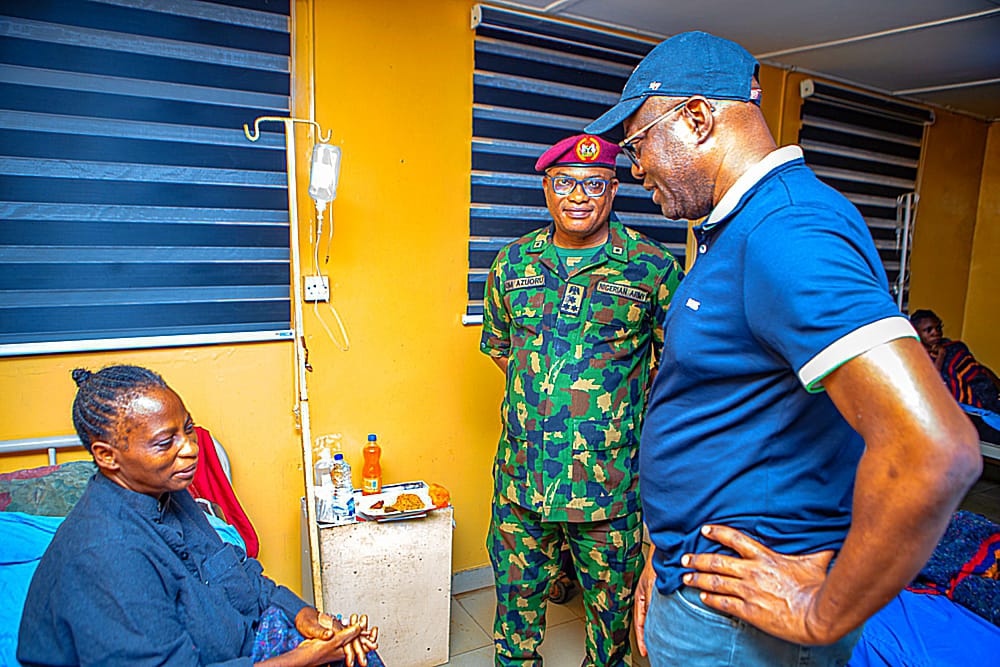
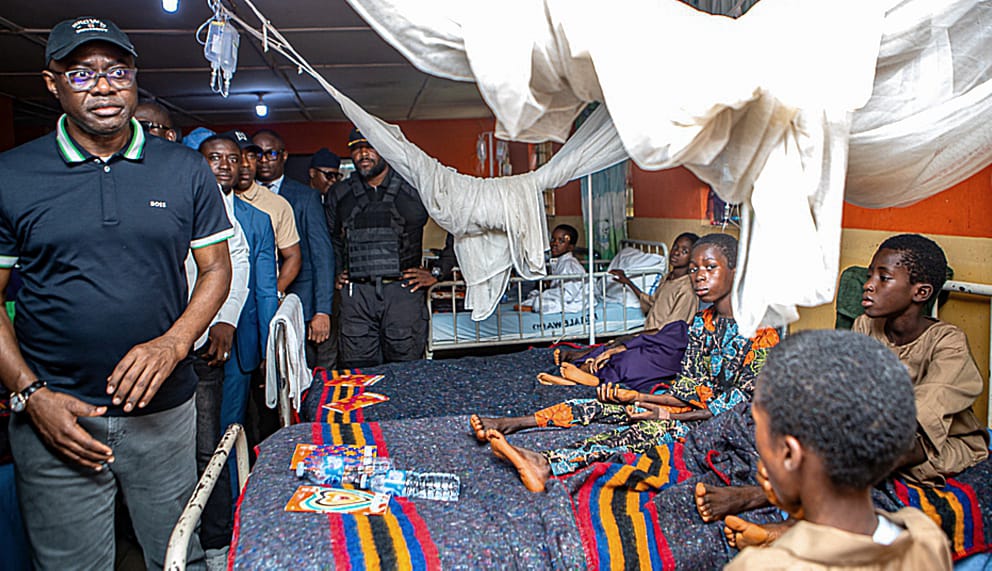
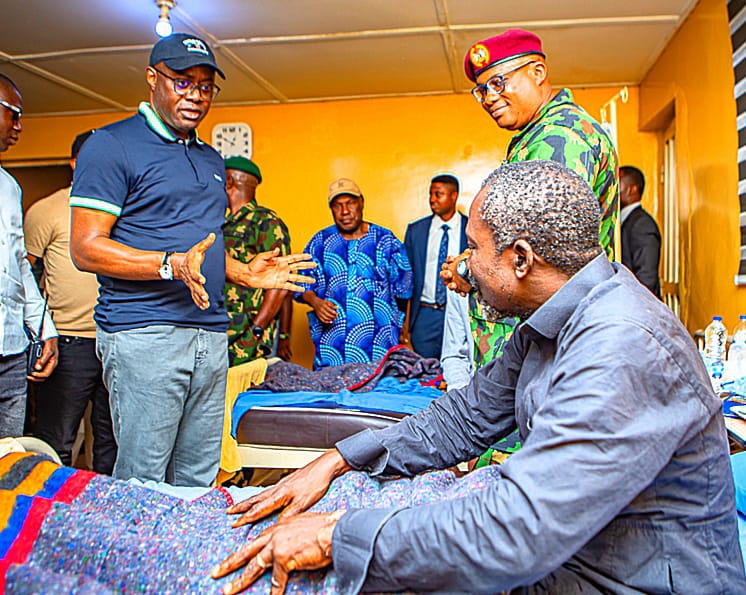
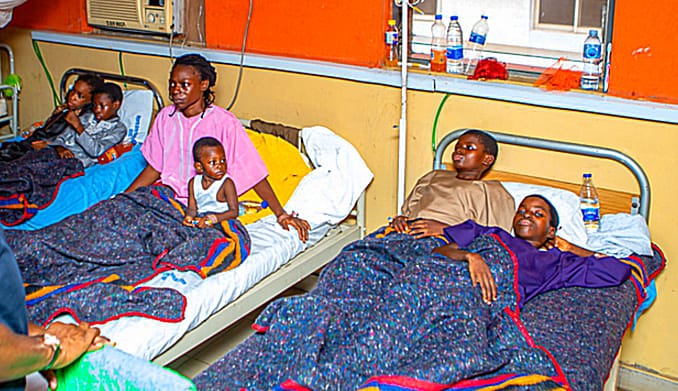
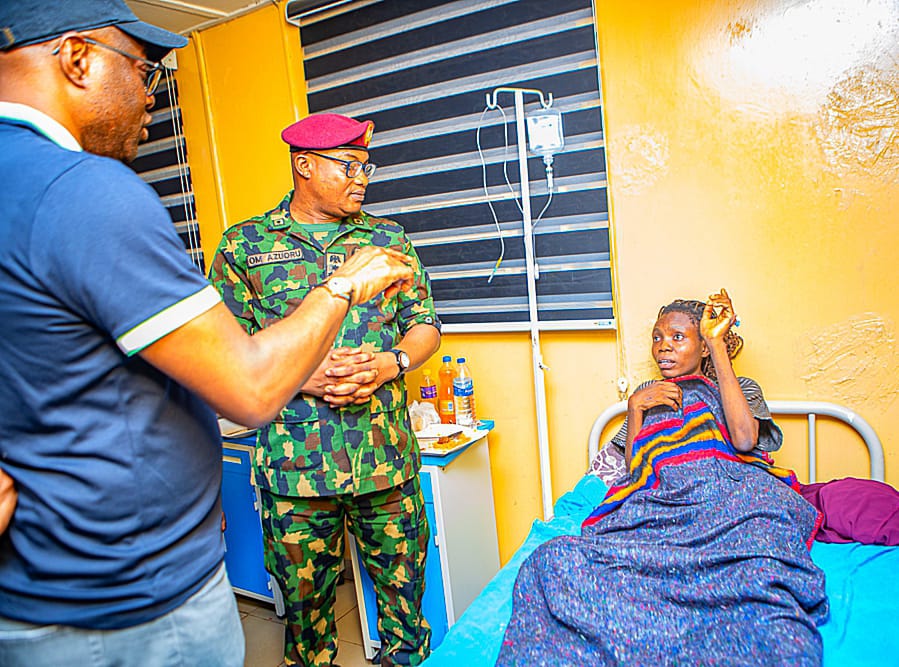
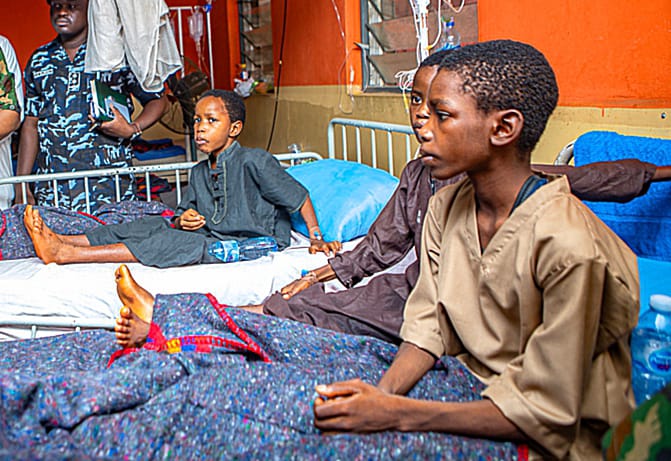
Governor Seyi Makinde of Oyo State, in the company of a senior medical officer in the Nigerian Army, Brigadier General Moses Azuoru, on Saturday visited the rescued Oriire kidnap victims at the 2nd Division medical centre where they have been receiving treatment after their release.
www.vanguardngr.com

By Anayo Okoli
The Igbo Leaders of Thought (ILT), an elite assembly of Southeastern Nigerian intellectuals, traditional rulers and stakeholders, has condemned what it calls the systematic suppression of the opposition parties ahead of the 2027 general elections, warning that no democracy develops without a vibrant opposition.
ILT cautioned that if the clampdown on the opposition is not urgently checked, it could seriously diminish the integrity of the 2027 general elections.
The group’s position came amid the recent alarm raised by the presidential candidate of Nigeria Democratic Congress, NDC, Mr. Peter Obi, over his safety and systematic frustration of his businesses, as well as the several judicial pronouncements against the key opposition parties aimed at destabilizing their preparations for the 2027 polls.
ILT also recalled that Governor Monday Okpebholo of Edo State, had in the past warned Mr. Peter Obi, threatening that his security was not guaranteed in his state, and noted that actually when he visited Edo State early this year for political activities, gunshots were fired at him and others in his entourage.
According to the group, the emasculation of the opposition could wreck Nigeria’s hard fought democracy and cause serious political instability in the country.
ILT, in a statement signed by Prof. Elochukwu Amucheazi, the President and Prof. Jerry Chukwuokolo, the Secretary, also frowned at the use of state institutions, including the judiciary, security agencies and the Independent National Electoral Commission (INEC), to incapacitate the opposition parties, to make them unable to compete with the ruling party for the 2027 general elections.
“The democracy we are enjoying in Nigeria did not come on a platter. It is a product of a long-drawn political struggle against military rule. Ironically, those in power in Nigeria today, who do not want the opposition to breathe, pride themselves as key players in the struggle for the restoration of democracy in Nigeria. The same people who claim to be champions of democracy are emasculating the opposition”, the group noted.
“The Igbo Leaders of Thought strongly condemns the ongoing suppression of opposition in Nigeria. If not curbed, it could derail plans for the 2027 general election, cause serious political instability, and derail our hard won democracy. Nigeria cannot afford another major political crisis arising from election. The country suffered dearly because of the mistakes of past elections.
“Those who cannot remember the past are condemned to repeat the mistakes” ILT warned, and remained Nigerians of the violent political protest (Operation Wetie) that took place in 1962 in Western Nigeria which triggered a chain of events, including bloodletting and burning of properties, which eventually led to the first military coup in Nigeria on January 15, 1966.
“In the Second Republic, a disputed governorship election triggered a devastating political upheaval in Ondo State, resulting in widespread burning of properties and loss of severally lives, ultimately paving the way for another military intervention in 1983.
“If we cannot remember what happened in the First and Second Republics, we should be able to remember the political violence that trailed the 2011 presidential election, which according to Human Rights Watch, claimed over 800 lives in Northern Nigeria, including innocent youth corps members. We are not in any way trying to engage in scare mongering, but just appealing to those in authority in Nigeria to do what is right.”
www.vanguardngr.com
Politics
2027 presidency: Why I chose Hajja Konto as running mate – LP presidential candidate, Okereke

Labour Party presidential candidate, Chibuzo Okereke, has said that the choice of Hajja Bintu Konto as his running mate for the 2027 election was motivated exclusively by her competence and the national interest.
In a statement released in Abuja on Saturday, Okereke described Konto’s nomination, which was approved by the party’s leadership, as “another defining moment” in the party’s endeavor to establish a “Nigerians First” government.
He said, “Today signifies another pivotal moment in our shared journey towards creating a Nigeria that serves its citizens. It is with gratitude to God and a sense of responsibility that I extend my congratulations to Hajja Bintu Konto as my Vice Presidential Candidate.”
The LP Presidential candidate emphasized that the decision was driven by a singular consideration—“the best interests of Nigeria and Nigerians.” He further noted that this aligns with the Labour Party’s dedication to competence, integrity, inclusion, and transformational leadership.
He portrayed Konto as a nurse, public health specialist, humanitarian, and development expert whose career has been dedicated to enhancing lives and fortifying communities.
He stated that the exclusion of women diminishes national capacity. “Nations that harness the abilities of both men and women create more robust institutions and foster inclusive democracies. Women are essential allies in constructing the Nigeria we aspire to achieve. Neglecting them is akin to trying to clap with one hand.”
Okereke also remarked that Konto has exhibited bravery, resilience, compassion, and professional excellence in her service. “She embodies the principles of integrity, service, inclusion, and transformational leadership that we seek in our government.”
The LP candidate expressed his appreciation to Labour Party leaders, including Dr. Alex Otti, National Chairman, Senator Nenadi Usman, and National Secretary, Rt. Hon. Iheanacho Obioma, for their support of the ticket.
He further encouraged party members and Nigerians to rally behind the initiative to create a just, secure, and prosperous nation.
dailypost.ng


Islam Makhachev’s Tweet After Conor McGregor Lost to Max Holloway

Excruciating Moment Conor McGregor Blew His Leg Out vs Max Holloway
Photos: Makinde meets rescued Oriire victims at military hospital

Meaning Behind Egypt Manager’s ‘X’ Gesture vs Argentina

Simi Sanya and Femi Dapson Are Now Legally Married and It Is Beautiful to See

Premier League Set-Piece Goals (2025/2026)
-
 Sports2 days ago
Mbappe’s Brutal Comments About Hakimi After Morocco 0-2 France Go Viral
-
 Sports2 days ago
Spain’s Luis de la Fuente Issues Strong Verdict on Argentina vs Egypt Referee
-
 Sports21 hours ago
Thibaut Courtois Drops Senne Lammens Verdict After World Cup Mistake
-
 Sports2 days ago
Michael Olise Stopped From Celebrating France Goal Due to Little-Known Rule
-
 Sports2 days ago
Norway Make Complaint to FIFA Before England World Cup Clash
-
 Sports1 day ago
Lineker Brings Up Falklands Ahead of Potential England vs Argentina Tie
-

 Metro2 days ago
Police restrict movement ahead of Edo local government elections
-
 Politics1 day ago
BREAKING: 2027: APC presents Shettima as Tinubu’s running mate