
Business
Stock market experts optimistic on H2’26 but warn investors


…Strong performance does not eliminate investment risk – CIS boss
…Strong market performance should not lead to policy complacency – Uwaleke
…Investors have made more money from the market than any other – Kurfi
…Market will continue to rally upwards but… – Amolegbe
…Uncertainties over 2027 election remain a possible headwind – Adonri
By Peter Egwuatu, Asst. Business Editor
Nigeria’s stock market is sustaining its bull steroid in the second half of 2026 competing amongst the best performing markets globally.
This came after the Nigerian market was rated by Bloomberg as number one globally in terms of capital gains.
The Nigerian Exchange (NGX) All Share Index, ASI, Year-to-Date, YtD, as at June 2026, grew by 47.4% to close at 229,419.18 points from 155,613.03 points recorded at the end of the last trading day in December 2025.
Similarly, the investors gained N47.841 trillion YtD (June 2026), as the NGX market capitalisation which represents the total value of stocks listed on the Exchange rose to N147.217 trillion in the first half, H1’26 from N99.376 trillion at the close of the last trading day in December 2025.
Despite the massive pull-back in the last week of June to first week in July 2026 which cost the market about N8 trillion, the market has since returned to bullish run in the second half (H1’26) recovering the lost ground.
The investors have gained about N9.022 trillion from the second half of the year to date as the NGX market capitalisation closed yesterday at N156.239 trillion from N148.217 trillion.
Also, the NGX ASI surged by 5.6% to close yesterday at 242,366.75 points from 229,419.18 points at the last closing trading day of June 2026.
However, investors are anxiously betting on the outlook in the short to medium term.
But analysts appear optimistic though with strong caution to the investors.
Strong performance does not eliminate investment risk – CIS boss
Commenting on the market performance, Dr. Fiona Ahimie, President, Chartered Institute of Stockbrokers, said the market rally has delivered significant capital appreciation and reaffirmed the role of equities as an effective long-term investment vehicle.

She stated: ‘‘Investors who remained focused on fundamentally strong companies have benefited from both capital gains and dividend income’’.
However, she sounded a note of warning saying, ‘‘the strong performance does not eliminate investment risk. As valuations rise, investment decisions should increasingly be guided by company fundamentals, earnings quality, and long-term growth prospects rather than short-term market momentum’’.
In her assessment of what has happened in the market so far this year, Ahimie stated: ‘‘The strong performance of the equities market sends a positive signal about investor confidence in Nigeria’s economy and ongoing reforms. A vibrant stock market improves the ability of companies to raise long-term capital for expansion, supports business growth, and encourages investment across key sectors of the economy.
‘‘The rally also strengthens Nigeria’s profile as an investment destination, which could attract additional foreign portfolio inflows and support liquidity in the foreign exchange market.
‘‘However, the broader economic benefits will depend on sustained improvements in productivity, infrastructure, employment, and overall economic growth’’.
Strong market performance should not lead to policy complacency – Uwaleke
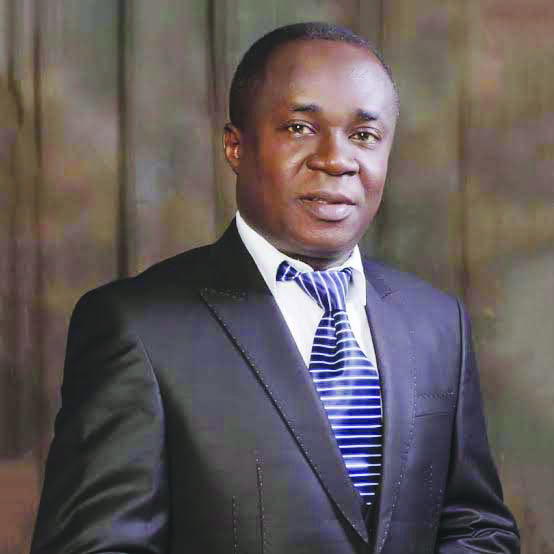
Prof. Uche Uwaleke, President of the Capital Market Academics of Nigeria, also gave insight into the performance of the market and what to expect in the days ahead.
He stated: ‘‘Nigeria’s emergence as the best-performing stock market in dollar terms, ahead of South Korea, is a strong vote of confidence in the country’s ongoing economic reforms.
‘‘It suggests that investors are increasingly optimistic about the direction of policy and the prospects for corporate earnings.
‘‘If this momentum is sustained, it should help attract additional foreign and institutional capital, further bolster external reserves, which are already above US$50 billion, and support the naira.
‘‘Greater exchange-rate stability would, in turn, help ease inflationary pressures and create a more favourable environment for economic growth.
“For investors, the message is clear: periods of reform often create opportunities.
‘‘That said, strong market performance should not lead to complacency.
The emphasis should remain on quality companies with solid fundamentals, sound management, and the ability to grow earnings over time.
‘‘Nigeria’s recent reclassification by S&P from a standalone market to frontier market status is another positive development that could broaden the country’s appeal to global investors and encourage fresh inflows’’.
Investors have made more money from stock market – Kurfi

In his assessment of the performance of Nigeria’s stock market in the last six months Garba Kurfi, Managing Director/CEO, APT Securities Limited,
said: “ It shows the good economic policy of the Government because from October last year to date Naira is gaining against US Dollar and that is why our returns are much better than before. That is to say, the Dollar speculators have no business in Nigeria; most of them decided to invest in the capital market.
‘‘Secondly, the policy adopted by the NGX to extend trading time from 10.00 am/ 2.30pm to 9.30am/ 4.00pm accommodated more foreign investors to play on our market especially, the Latin America, USA and Canada.
‘‘The settlement system of T+1 days put our NGX ahead of African Exchanges and Europe who are still on T+2 settlement.
‘‘In addition to that, for the seventh consecutive year, our NGX All Share Index has been closing positive from 2020 to date’’.
Kurfi indicated that investors in Nigeria’s stock market have enjoyed the best of time under the current trend in the market. He stated: ‘‘The implication of today’s trend to the investors is that they make more money from the market ahead of inflation and any other financial instruments, eg WAPCO was trading about N35 two years back but today is trading at N335, gained 1000% in just two years and so to many other stocks’’.
Market will continue to rally upwards but … – Amolegbe

Managing Director/CEO, Olatunde Amolegbe, Arthur Stevens Asset Management Limited, speaking to Vanguard on the performance of the Nigerian stock market so far this year, said, ‘‘The stock market being the barometer of the economy typically reacts to reforms faster than what you can refer to as the Main Street market.
‘‘So what we are seeing is the stock market continuing to signal that the gains from the painful economic and financial reforms the government had embarked on is yet to be fully factored into the prices of stocks which is why we are seeing this bull run.
‘‘There is relative economic stability at the moment but the market is signaling that the economy growth stage is yet to come and that is being priced into stocks at the moment’’.
Uncertainty over 2027 election remains a possible headwind – Adonri

Assessing the performance of the Nigerian stock market, Mr David Adonri, Chief Executive Officer, Highcap Securities Limited, said: ‘‘The rating by Bloomberg, placing Nigeria’s Stock Market as global best performer is a positive development for the economy. It is a testament to the profitability, liquidity and safety of the Market.
‘‘The rating is capable of boosting the contribution of the market to the country’s economy through Foreign Portfolio Investment (FPI) which has multiplier effect on foreign exchange.
‘‘The outstanding performance of the stock market will attract global interest by investors who seek higher returns amidst exchange rate stability and safe market conditions’’.
Outlook, investor advice
The analysts were on the same page on the need for the investors to trade cautiously in view of some inherent risks.
Though Ahimie expressed optimism over the future of investments in the market she sounded a strong note of caution for investors. She stated: ‘‘The outlook for the Nigerian equities market remains positive, supported by resilient corporate earnings, improving macroeconomic indicators, relative exchange rate stability, and sustained investor participation.
‘‘Going forward, market performance is expected to become more selective, with greater emphasis on companies demonstrating strong earnings growth, sound balance sheets, and sustainable dividend policies. Monetary policy decisions, inflation trends, exchange rate movements, oil prices, and the pace of economic reforms will continue to influence market direction in the coming months.
‘‘The market already experienced a healthy correction in June after recording gains for five consecutive months. The pullback was largely driven by profit-taking, portfolio reallocation/ rebalancing and represented a normal phase of the market cycle rather than a deterioration in market fundamentals.
‘‘Encouragingly, the market has regained momentum in July, posting another round of impressive gains. This suggests that investor confidence remains intact and that the underlying fundamentals continue to support the market.
‘‘Periodic profit-taking should still be expected, particularly in stocks that have recorded substantial price appreciation. Such corrections are healthy because they help moderate valuations and create fresh entry opportunities for long-term investors.
‘‘At this stage, there are no strong indications of a broad-based or prolonged market downturn, provided macroeconomic conditions remain supportive’’.
At the backdrop of the scenario she advised investors on the right choices to make.
She stated: ‘‘Investors should avoid chasing stocks solely because they have recorded significant price gains.
‘‘Greater emphasis should be placed on companies with strong fundamentals, resilient earnings, healthy cash flows, and sustainable dividend-paying capacity.
‘‘Maintaining a diversified portfolio and adopting a medium-to long-term investment horizon remain prudent strategies in the current environment. ‘‘Short-term market pullbacks should be viewed as opportunities to accumulate quality stocks at attractive valuations rather than reasons for panic selling’’.
Uwaleke also expressed optimism over the short-to-medium term fortune of the market.
He stated: “Looking ahead, the outlook for the second half of 2026 remains constructive.
‘‘While the overall trend appears bullish, some bouts of volatility are inevitable, particularly given ongoing geopolitical uncertainties, including tensions in the Middle East.
‘‘A temporary pullback would therefore come as no surprise. After such a strong run, some profit-taking is both natural and healthy, and any near-term correction is likely to be viewed as a pause within a broader upward trend, provided the underlying economic fundamentals continue to improve’’.
Advising the investors, Uwaleke said, ‘‘My advice to investors is to follow what I call the ‘DHL’ approach: diversification with a keen eye on company fundamentals, sensible hedging against identifiable risks, and a long-term perspective.
‘‘In uncertain times, such as the one we are in, discipline and patience remain the investor’s greatest allies’’.
Kurfi also believe the stock market has impressive outlook from the current positions.
He said, ‘‘The outlook of the market is still positive because most of the stocks trade below the average Price Earnings Ratio of 15 times which is also below the Frontier market.
‘‘Yes there was correlation as we witnessed toward the end of June. The All Share Index (ASI) rose as high as 62% in May but closed June end at 47% which further went down to 45% early July but now it has bounced back. This is likely to repeat itself when the Dangote Refinery IPO is out.
‘‘The market will definitely close better by the end of the year. It will not be surprising if the ASI closes with 100% by December end’’.
Advising investors on right positioning, Kurfi stated: ‘‘The investors are advised to invest in blue chips companies with strong fundamentals and track record of good dividend’’.
Advising investors, Amolegbe said, ‘‘The implications for investors is that those of them with patient capital should probably extend their investment horizon since the rally apparently still appears to have wings.
‘‘For those that are not yet in the market they might want to reconsider their aversion to risk assets such as equities because that appears to be the best investment bet at the moment’’.
On the market outlook, Amolegbe stated: ‘‘The likely trend is that the market will continue to rally upwards particularly as the reforms continue to bear fruit and as market regulation continues to strengthen
‘‘The potential reclassification of the market by indices such as FTSE,S&P and MSCI should also help boost investors’ confidence and attract new entrants particularly from abroad into the market.”
Adonri also expressed positive sentiment towards the fortunes of investors in the market in the short to medium term.
He stated: ‘‘Outlook for the Nigerian stock market is very bright. Corporate fundamentals are getting better, facilitated by macroeconomic stability. ‘‘The listing of behemoths like Dangote Refinery and several other game changing enterprises in due course will definitely sustain the growth of the stock market.
‘‘Market correction started on 1st June when ASI declined from about 254,000 to about 225,000 but it has currently clawed back to 244,000.
‘‘Market is expected to be stable in H2 2026 driven by strong corporate fundamentals and improving macroeconomic conditions.
‘‘However, political uncertainty arising from 2027 general election remains a possible headwind.
‘‘Equities Market continues to provide good opportunities but diversification of portfolio remains a necessity risk minimization strategy’’.

By Yinka Kolawole
The Minister of Finance and Coordinating Minister of the Economy, Taiwo Oyedele, has disclosed plans by the Federal Government to publish indicators tracking poverty, incomes and inequality to assess the impact of the government’s economic reforms on the living standards of Nigerians.
He said the move is aimed at addressing criticism of the reform programme suggesting that gains in revenue, foreign exchange liquidity and investor confidence have yet to translate into meaningful relief for households facing high food, transport and living costs.
Speaking at a ‘ conference organised by BusinessDay newspaper, in Lagos, yesterday, Oyedele said the government would assess “shared prosperity” using three measures – reductions in multidimensional poverty, increases in real income per capita, and lower inequality.
The government is seeking to demonstrate that reforms introduced in 2023, including scrapping a fuel subsidy and liberalising the naira, applauded by lenders and investors, are translating into broader gains for Nigerians after driving up inflation and living costs.
Recall that the International Monetary Fund (IMF) said in June that ‘ the reforms were improving investor confidence and economic stability, 63% of the Nigerian populace remained in poverty and millions faced food insecurity.
The measures have also been accompanied by criticism over persistent corruption and allegations of unbudgeted government spending, raising questions about ‘ whether the sacrifices demanded of citizens are being matched by fiscal discipline.
Oyedele said inflation was easing, the foreign exchange market was functioning more efficiently and investor interest was returning, ‘ but acknowledged that macroeconomic stability alone would not be enough.
“A stable economy can still be a stagnant one if we become complacent,” he said.
Oyedele said ‘ the ministry of finance would be responsible for producing the scorecard but did not provide a timeline for publishing the indicators or say how frequently they would be updated.

•May confiscate unutilised balance
By Elizabeth Adegbesan
The Central Bank of Nigeria, CBN, has directed Bureau De Changes, BDCs, to sell unutilised foreign exchange (FX) balances to the Nigerian Foreign Exchange, NFEM, market within twenty-four (24) hours of the expiry of the utilisation period.
The apex bank disclosed this in its regulatory guidance on purchase of FX by BDCs through authorized dealer banks in NFEM.
According to the apex bank, “BDCs are not permitted to retain in their possession any foreign exchange purchased from the NFEM that remains unutilised. All unutilised balances shall be sold back to the NFEM market within twenty-four (24) hours of the expiry of the utilisation period.
“Failure to comply shall attract regulatory sanctions including but not limited to forfeiture of the unutilised balance and suspension of the BDC’s NFEM access.
‘‘BDCs shall disclose any unutilised balance from the prior week in each new purchase request submission.
“Authorised Dealer Banks shall factor disclosed unutilised balances into their weekly cap calculations.”
CBN said further that this guidance aims at facilitating seamless implementation of the framework and support sustained liquidity in the retail segment of the foreign exchange market.
The apex bank also prohibited third party transactions saying, “Foreign exchange purchased by a BDC shall be credited only to the BDC’s registered settlement account.
“Disbursement to any account other than the BDC’s own registered account shall constitute a regulatory violation and shall be reported immediately to the CBN.”
CBN noted that only BDCs in possession of a valid and subsisting CBN licence shall be entitled to access foreign exchange under this framework.
The apex bank, however, excluded BDCs under regulatory sanction, whose licences are suspended, or whose operating conditions have been restricted by the CBN, from participation until such restrictions are lifted.
The apex bank also mentioned that it shall maintain a centralised portal, the FX BDC Purchase Tracker (FXBT), to which all BDCs shall be registered and submit real-time or same-day data on BDC purchases, enabling systemic compliance and oversight.
It also warned that no Authorised Dealer Bank should impose exclusivity arrangements, referral fees, or any condition that restricts a BDC’s freedom to select its preferred counterparty bank.
The apex bank warned that violations of the provisions of the Circular and the attached Guidance shall attract appropriate regulatory sanctions.

By Rosemary Iwunze
The outgoing President of the Chartered Insurance Institute of Nigeria, CIIN, Mrs. Yetunde Ilori, has said that her flagship initiative, tagged ‘EPIC’, succeeded in bridging the critical knowledge gap between insurance practitioners and consumers.
Ilori stated that EPIC, which stands for Education, Professionalism, Institutional Recognition and Capacity Building, contributed in driving financial literacy and deeper market penetration.
Ilori disclosed this yesterday, during her valedictory victual press conference held in Lagos, where she reviewed her two-year tenure and highlighted the major milestones recorded under her administration.
She pledged her unwavering commitment to the continuous growth and development of the Nigerian insurance industry even as she prepares to step down from the institute’s leadership.
Reflecting on the progress made during her presidency, Ilori stated that the strategic direction of her administration was fully guided by her E.P.I.C framework, which laid the foundation for the highly successful maiden Insurance Industry Week Celebration, an event designed to celebrate outstanding professional excellence, foster innovation, and enhance public confidence in the sector.
A major highlight of her tenure was the strategic repositioning of the College of Insurance and Financial Management (CIFM), as under her watch, the college has evolved into a dependable hub for human resource development and technical capacity building within the financial services sector.
She also emphasized that the achievements recorded during her presidency were made possible through deliberate and collaborative partnerships with other arms of the insurance industry, notably the National Insurance Commission (NAICOM), the Nigerian Insurers Association (NIA), and various broker associations.
She said: “I feel deeply fulfilled as I hand over the mantle. My commitment to the insurance sector does not end with my presidency, I will continue to serve the industry in every capacity possible to ensure its long-term stability and success.”


Leeds Confident of Completing Deal For Shea Charles

Liverpool Sources ‘Confirm’ Interest in ‘One of the Best Wingers in the World’
Liverpool Sources ‘Confirm’ Interest in ‘One of the Best Wingers in the World’

Meaning Behind Egypt Manager’s ‘X’ Gesture vs Argentina

Simi Sanya and Femi Dapson Are Now Legally Married and It Is Beautiful to See

Premier League Set-Piece Goals (2025/2026)
-
 Sports1 day ago
‘Las Malvinas Son Argentinas’ – Argentina Flag Meaning Explained
-
 Sports1 day ago
4 Players Should Never Play For England Again After 2026 World Cup
-
 Entertainment1 day ago
Rihanna Makes a Stunning Stage Comeback in Saint Laurent at Jay Z’s Yankee Stadium Show
-
 Sports2 days ago
Argentina Face Punishment Before World Cup Final as Players Break Rules
-

 Metro2 days ago
Kano Hisbah bans mobile movie downloading business over alleged abuse of Islamic teachings
-
 Sports2 days ago
Jude Bellingham Explains Clash With Lionel Messi During Argentina 2-1 England
-
 Sports5 hours ago
Tottenham ‘Will Sign’ Savinho in £65m Deal From Man City
-

 Politics2 days ago
Why North aligned with Peter Obi despite opposition – Buba Galadima