
Sports
Every Best Player Award Winner Listed


The World Cup Golden Ball is awarded to the best player of each World Cup tournament, as voted for by a panel of football journalists and technical staff.
It’s one of the most prestigious individual honours in football, recognising the player who has had the greatest impact on the World Cup as a whole, not necessarily the player who scores the most, or whose team wins it, though that does help at times.
Since its introduction in 1978, the award has gone to some of the greatest players ever to grace the game. Here is every winner listed, along with what made their tournament so special.
|
All World Cup Golden Ball Winners |
|||
|---|---|---|---|
|
Year |
Host |
Winner |
Country |
|
1978 |
Argentina |
Mario Kempes |
Argentina |
|
1982 |
Spain |
Paolo Rossi |
Italy |
|
1986 |
Mexico |
Diego Maradona |
Argentina |
|
1990 |
Italy |
Salvatore Schillaci |
Italy |
|
1994 |
United States |
Romario |
Brazil |
|
1998 |
France |
Ronaldo |
Brazil |
|
2002 |
South Korea/Japan |
Oliver Kahn |
Germany |
|
2006 |
Germany |
Zinedine Zidane |
France |
|
2010 |
South Africa |
Diego Forlan |
Uruguay |
|
2014 |
Brazil |
Lionel Messi |
Argentina |
|
2018 |
Russia |
Luka Modric |
Croatia |
|
2022 |
Qatar |
Lionel Messi |
Argentina |
|
2026 |
USA, Canada, Mexico |
Rodri |
Spain |
13
1978 – Mario Kempes (Argentina)
Playing on home soil, Mario Kempes was the undisputed star of the 1978 World Cup. The Valencia striker finished as the tournament’s top scorer with six goals, including two in the final against the Netherlands, which Argentina won 3-1 after extra time.
Kempes was direct, powerful, and virtually unstoppable as he ran at defenders. His performances helped deliver Argentina their first-ever World Cup title, making him a national icon in the process. It was a golden summer for Kempes and for Argentine football, and few would have argued with his selection as the tournament’s standout player.
12
1982 – Paolo Rossi (Italy)

Few World Cup stories are as remarkable as Paolo Rossi‘s in 1982. Having returned from a two-year ban for alleged match-fixing, Rossi was goalless in Italy’s opening matches before exploding into life in the knockout rounds. He scored a hat-trick against Brazil, both goals against Poland in the semi-final, and the opener in the final against West Germany.
Six goals in three games transformed him from a bit-part player to a tournament icon. Italy lifted the trophy, and Rossi also won the World Cup Golden Boot and the Ballon d’Or that year, completing a rare treble of individual honours.
11
1986 – Diego Maradona (Argentina)

The 1986 World Cup belonged to Diego Maradona in a way no tournament has belonged to any single player before or since. He was imperious throughout, dragging Argentina to the title almost single-handedly.
Against England in the quarter-final, he scored arguably the two most famous goals in football history within four minutes. The infamous Hand of God and the sublime solo run from inside his own half. He then tore Belgium apart in the semi-final before setting up the winning goal in the final against West Germany. The Golden Ball was a formality. This was Maradona at the absolute peak of his powers.
10
1990 — Salvatore Schillaci (Italy)

Nobody could have predicted that Salvatore Schillaci would be the breakout star of Italia ’90. The Juventus striker had only made his Italy debut three months before the tournament, but he burst onto the World Cup stage with infectious energy and a serious eye for goal.
He finished as the tournament’s top scorer, netting six goals in as many matches before they were eliminated by Argentina on penalties in the semi-final. Though Italy fell short, Schillaci’s Golden Ball and Golden Boot were thoroughly deserved.
9
1994 – Romario (Brazil)

Romario arrived at USA ’94 as one of the most feared strikers in world football, and he more than lived up to the billing. The Brazilian forward scored five goals as Brazil won their fourth World Cup title.
He was a constant menace to defenders, combining beautifully with Bebeto in a partnership that’s one of the most celebrated in World Cup history. Romario scored in each of his group stage matches, got an assist for Bebeto in the round of 16, and then scored once in both the quarter-finals and semi-finals. The Golden Ball recognised not just his goals, but his overall brilliance throughout the tournament.
8
1998 – Ronaldo (Brazil)

The circumstances surrounding Ronaldo‘s 1998 World Cup final appearance remain shrouded in mystery to this day, with Brazil’s talisman suffering a convulsive fit in the hours before the game and performing well below his best in a 3-0 defeat to France.
Yet his performances throughout the rest of the tournament had been sensational. O Fenomeno scored four goals and provided three assists. His Golden Ball was awarded on the strength of the tournament as a whole, rather than the final alone, and on that basis, few could argue that Ronaldo had been the most exciting attacker in the competition.
7
2002 – Oliver Kahn (Germany)

It could have easily been Ronaldo’s award for the second time in a row, but Oliver Kahn became the first and, to date, only goalkeeper to win the World Cup Golden Ball when Germany reached the final in South Korea and Japan.
The Bayern Munich shot-stopper was virtually unbeatable throughout the tournament, making a series of stunning saves that single-handedly kept Germany in matches they had little right to win. His performances against Paraguay and the United States in the knockout rounds were particularly outstanding, and he conceded only one goal en route to the final. It was there, whilst playing with torn ligaments in his finger, that a rare error gifted Ronaldo the opening goal in Brazil’s 2-0 victory, but his contribution to Germany’s run to the final meant the award’s direction didn’t change course.
⚽
World Cup History Quiz
You scored
out of 20
6
2006 – Zinedine Zidane (France)

Zinedine Zidane came out of international retirement for the 2006 World Cup and reminded the world exactly why he was considered the finest player of his generation. He was majestic throughout, pulling the strings in midfield with elegance and authority as France reached the final.
It was there, where a cheeky Panenka against Gianluigi Buffon summed up his supreme confidence. However, the tournament ended in heartbreak and controversy when he was sent off in extra time for headbutting Marco Materazzi, and France subsequently lost on penalties. Zidane’s Golden Ball, awarded despite the red card, acknowledged a career-defining performance up to that shattering final moment, which closed the curtain on his days playing football.
5
2010 – Diego Forlan (Uruguay)

Diego Forlan‘s performances at the 2010 World Cup in South Africa were a joy to behold. The Atletico Madrid striker carried Uruguay to the semi-finals, scoring five goals, three of which were sublime efforts.
Forlan’s mastery of the Adidas Jabulani, the heavily swerving and unpredictable ball that was used for the tournament, played a huge part. Forlan practiced for months with the ball that everyone was criticising ahead of the World Cup, and he turned it into a weapon he used to deadly effect. It was Forlan’s work ethic as much as his already existing ability, that allowed him to tame the notoriously unpredictable ball, with his hours of dedication on the training pitch translating directly into the stunning goals that earned him the Golden Ball.
4
2014 – Lionel Messi (Argentina)

Lionel Messi carried Argentina to the 2014 World Cup final on his shoulders, scoring four goals, providing one assist and a tournament-high, 23 key passes.
His performances in the group stage, particularly his winning goal against Iran, showcased his ability to conjure magic from nothing, something that BBC Sport commentator Jonathan Pierce foreshadowed as he said, “give it to him and pray,” a mere second before he whipped the ball into the top corner.
Unfortunately for Messi, Argentina were defeated in the final, leading to the bittersweet scenes of the dejected maestro reluctantly carrying his accolade rather than lofting the World Cup trophy.

UEFA president Aleksander Ceferin was a notable absentee at MetLife Stadium as Spain were crowned World Cup champions for the second time, beating Argentina 1-0 in extra time.
His absence raised eyebrows given his standing in the game, with a European nation in the final and Ceferin also serving as FIFA’s own vice-president.
Reports have since emerged suggesting a deeper rift lies behind the decision, one that stretches back through several flashpoints of the tournament and points to a fractured relationship at the very top of the game’s governing bodies.
Ceferin’s Relationship with Infantino Reportedly in Tatters

According to The Times, the relationship between Ceferin and FIFA president Gianni Infantino has broken down significantly, with the handling of Folarin Balogun’s red card suspension cited as the final straw.
Balogun was sent off during USA’s Round of 32 win over Bosnia, a decision that appeared harsh at the time, but given FIFA had no appeal system in place for the tournament, the Monaco forward looked destined for a one-match ban. However, it later emerged that Donald Trump had personally contacted Infantino over the matter, with White House official Emily Goodin confirming:
“The President and Infantino did speak, and the President wanted to better understand the reason why a red card was given and why there was a suspension.”
The suspension was ultimately paused for a year, a move UEFA blasted as having “crossed a red line” in a scathing statement.
Ceferin Also Frustrated by Referee Treatment and Expansion Plans

Ceferin is also said to be unhappy with how Somali referee Omar Artan was treated after being denied entry to the United States, as well as the handling of Iran throughout the competition.
Artan has since been handed the UEFA Super Cup between Aston Villa and Paris Saint-Germain as something of a consolation. Beyond individual incidents, Ceferin remains firmly opposed to further World Cup expansion, with this year’s 48-team format already the largest in history and Infantino pushing for a future 64-team tournament that could take over six weeks from start to finish.
You scored
out of 20
He’s also been critical of ticket pricing at this World Cup, with UEFA notably declining to adopt several rule changes trialled at the tournament, including red cards for players covering their mouths during confrontations.

Mikel Arteta has been keen to bolster his attacking options and that means several members of his Arsenal squad could be headed for the exit door.
That was the case for Leandro Trossard, who left for Turkish giants Besiktas earlier this month. The 31-year-old’s sale raised £15.3 million, and Arteta has already landed a replacement.
Christos Tzolis is on the verge of completing a £34m switch to the Gunners, and he had been expected to be followed by Morgan Rogers. The defending Premier League champions were eager to sign the Aston Villa man, but Chelsea swooped in and paid the £117m asking price.
Arsenal Ready to Sell Martinelli

While Arsenal explore alternatives to the Englishman, they are making decisions over some players’ futures. And despite missing out on Rogers, the Gunners seem intent on selling Gabriel Martinelli.
There has long been speculation over Martinelli’s future, and club insider HandofArsenal claims he is ‘for sale.’ That might suggest that the club are certain of landing a new left-winger as they prepare to defend their title.
Martinelli, described as ‘frightening’, has been a prominent member of Arteta’s first team over the years and has delivered important moments. But his consistency, or lack of it, has always been a concern, often blowing hot and cold throughout a 38-game league season.
Last time out, the Brazilian, who earns £180,000 per week, managed just one goal and four assists in 30 league games. That return is not what you expect from a starting left-winger in a title-defending team.
Fees correct prior to summer 2026
All 10 found — excellent!
Barcola is the Obvious Replacement

Arsenal have been linked with several wingers since Rogers headed to Stamford Bridge. That includes Paris Saint-Germain’s Bradley Barcola, whose future is uncertain amid the Ligue 1 giants’ interest in Yan Diomande.
Barcola is fresh off the back of an impressive World Cup campaign with France, rotating with Desire Doue in Didier Deschamps’ frontline. At club level, he has yet to cement a permanent starting place in Luis Enrique’s attack amid the pool of attacking talent at the Parc des Princes.
The Gunners have been tipped to make a ‘proper move’ for Barcola after missing out on Rogers. It could be an expensive deal, with some suggesting around £112m, but one that is undoubtedly needed to ensure Arteta has a team that can battle on all fronts next season.
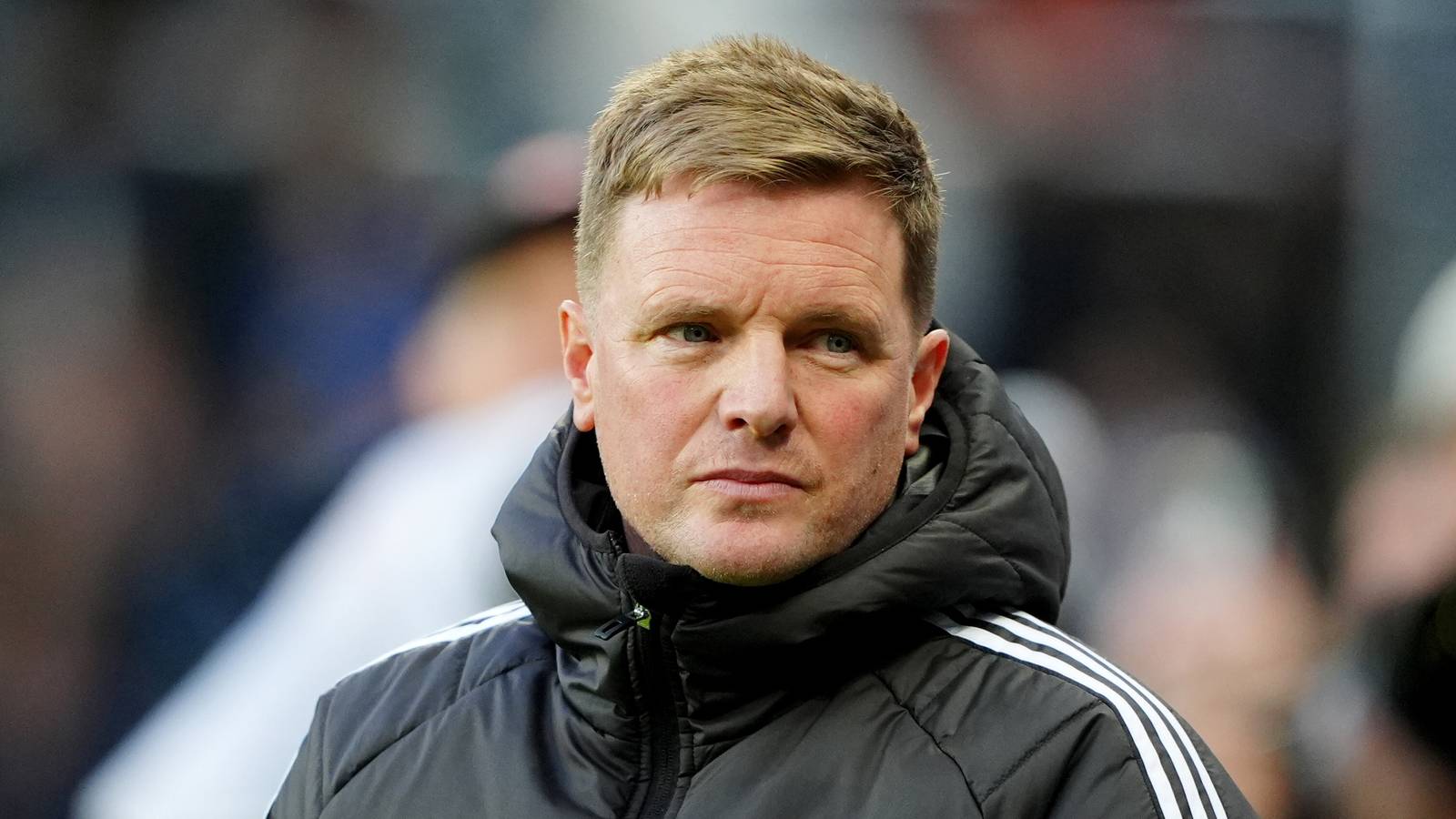
Newcastle have opened talks to sign a new defender in the summer transfer window as they look to improve Eddie Howe’s squad.
It’s been an interesting window for Newcastle so far, who are yet to complete a signing of a player over the age of 20.
The Magpies are in the market for reinforcements after Sandro Tonali and Anthony Gordon both left the club earlier in the window.
Newcastle have somewhat replaced the duo, bringing in Bazoumana Toure and Sean Steur, but both players are vastly inexperienced compared to Tonali and Gordon.
Whether Newcastle look to sign more experienced and ready-made replacements for the duo remains to be seen, but there’s no doubt they need to add some more experience to the squad.
Howe’s side also lost Kieran Trippier following the expiration of his contract, so experienced signings could be crucial.
Newcastle open defender talks

According to reports in Italy, Newcastle have opened talks to sign AC Milan defender Fikayo Tomori in the summer transfer window.
The Magpies will face competition from recently promoted side Coventry City, while Tomori is yet to make a decision on his future.
Tomori, described as ‘tremendous’, sees a move to England as a suitable option for him, and AC Milan could sell this summer due to his contract expiring next year.
Centre back certainly doesn’t feel like a major priority for Newcastle in the summer transfer window, but there’s no doubt they could do with strengthening in multiple areas of the pitch.
The Magpies finished in the bottom half of the Premier League and failed to qualify for European football, so it wouldn’t be a surprise to see them strengthen all over.
Fees correct prior to summer 2026
All 10 found — excellent!
Newcastle need a midfielder as soon as possible

The major priority for Newcastle in the remaining weeks of the summer transfer window has to be to bring in a new midfielder.
The North East club have already lost Tonali to Tottenham, while Bruno Guimaraes is being heavily linked with a move to Arsenal.
The signing of Steur could be beneficial for them in the long term, but he’s unlikely to make a significant impact immediately.
Newcastle risk going even further backwards if they don’t invest significantly this summer.
Their ownership certainly won’t be satisfied with not playing in Europe and finishing in the bottom half of the Premier League, so they need to get a move on when it comes to reinforcements.

Why UEFA President Refused to Attend 2026 World Cup Final

Kwankwaso opposes Tinubu’s Muslim-Muslim ticket
Arsenal Put £180,000-a-Week Star up for Sale amid Barcola Pursuit

Meaning Behind Egypt Manager’s ‘X’ Gesture vs Argentina

Simi Sanya and Femi Dapson Are Now Legally Married and It Is Beautiful to See

Premier League Set-Piece Goals (2025/2026)
-
 Sports2 days ago
Why Thomas Tuchel Gave Bukayo Saka Zero Minutes in England vs Argentina
-
 Sports2 days ago
Michael Olise ‘Broke Down in Tears’ After France vs England
-
 Sports20 hours ago
Nicolas Otamendi and Rodri’s Post-World Cup Final Chat Revealed
-
 Sports2 days ago
Adrien Rabiot Slams France Teammates in Stunning Interview After England Defeat
-
 Metro2 days ago
Army dismantles illegal bunkering site, arrests six suspects in Lagos
-
 Sports1 day ago
World Cup Fans Blame Argentina Loss vs Spain on Giuliano Simeone
-

 Metro2 days ago
Lagos court arraigns tenant over alleged illegal apartment alteration
-

 Politics1 day ago
APC chairman holds closed door meeting with Barau, NDC senator