
Business
FCCPC seeks uniform consumer protection as states open electricity markets


By Progress Godfrey
The Federal Competition and Consumer Protection Commission (FCCPC) has called for stronger collaboration among electricity sector regulators to ensure uniform consumer protection and regulatory certainty.
The call comes at the backdrop of decentralization of electricity and establishment of electricity markets at sub-national levels along with creation of regulatory systems by state governments.
Executive Vice Chairman and Chief Executive Officer of the FCCPC, Mr. Tunji Bello, said the implementation of the Electricity Act, 2023, had fundamentally restructured Nigeria’s electricity sector by empowering states to establish electricity regulatory commissions and oversee intrastate electricity markets.
Speaking at a Stakeholder Engagement on Consumer Protection and Regulatory Cooperation in Nigeria’s Electricity Sector in Abuja, Bello said the evolving regulatory landscape required greater coordination among the Federal Competition and Consumer Protection Commission, the Nigerian Electricity Regulatory Commission (NERC), the Nigerian Electricity Management Services Agency (NEMSA) and State Electricity Regulatory Commissions (SERCs).
According to him, while each regulator has distinct statutory responsibilities, their mandates are complementary and should be harmonised to deliver effective consumer protection.
“Sector regulators bring deep technical expertise, while the FCCPC provides economy-wide experience in consumer protection and competition.
‘‘Our objective is to consult, exchange information, support one another’s lawful actions and ensure consumers receive timely and effective protection. That is the hallmark of mature regulatory governance.
He stressed that consumer protection should extend beyond resolving complaints to preventing harm, identifying risks early and sustaining public confidence in the electricity market.
Bello cited the FCCPC’s 2024 intervention over the planned replacement of obsolete Unistar prepaid meters as an example of effective regulatory collaboration. Concerns that consumers could be compelled to pay for replacement meters or face estimated billing and supply disruptions prompted the Commission to convene NERC, NEMSA and electricity distribution companies.
He said the intervention respected NERC’s statutory mandate while reinforcing the existing regulatory framework rather than duplicating it.
Also speaking, Assistant Director and Head of Consumer Protection at NERC, Anthony Essien, said regulatory convergence had become critical following the emergence of federal, state and regional electricity markets under the Electricity Act.
He noted that while decentralised regulation would bring oversight closer to consumers, divergent regulatory standards across states could create uncertainty for investors and market operators.
Essien said harmonised regulatory approaches would strengthen consumer protection, promote coordinated oversight across jurisdictions and provide a more predictable operating environment for Nigeria’s evolving electricity market.
Commenting, Executive Commissioner, Anambra State Electricity Regulatory Commission (ASERC), DrNnaemekaEwelukwa, said the presence of state regulators would bring regulation closer to consumers, while also creating a more direct interface between investors and state authorities.
•As crude oil prices drop
By Udeme Akpan, Energy Editor
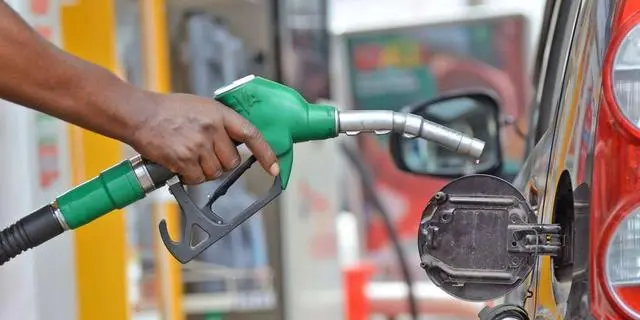
Competition among petroleum marketers and depot operators intensified on Tuesday as the prices of Premium Motor Spirit (PMS), also known as petrol, and Automotive Gas Oil (AGO), also called diesel, recorded downward adjustments across major depots in Lagos, Port Harcourt, Warri and Calabar.
This came on the heels of significant reduction in crude oil prices with international benchmark Brent crude falling below the critical $80 per barrel mark.
The development, however, raises fresh concerns over oil-exporting countries’ revenues, including Nigeria’s, if the downward trend persists.
Market data showed that Brent crude dropped by $4.68, or 5.59 per cent, to $79.09 per barrel, while West Texas Intermediate (WTI) declined by $4.79, or 5.96 per cent, to $75.55 per barrel.
The OPEC Basket suffered the biggest decline among the major benchmarks, plunging 10.04 per cent to $79.50 per barrel after shedding $8.87. Similarly, the Indian Basket slipped 5.78 per cent to $88.12 per barrel.
In Nigeria’s refined product market the latest Mid-Day Price Report showed that while leading suppliers, including Dangote Petroleum Refinery, retained their petrol prices, several independent depot operators reduced both petrol and diesel prices in a move that could further support lower pump prices if sustained.
In Lagos, Dangote Petroleum Refinery retained its ex-depot petrol price at N1,215 per litre, keeping it among the most competitive suppliers in the market.
Similarly, Pinnacle and Nipco maintained their PMS prices at N1,215 and N1,216 per litre respectively, while Ardova trimmed its price by N1 to N1,216 per litre.
African Terminal and Integrated Depot, however, raised prices marginally by N1 each to N1,217 per litre, while MRS held its price at N1,218 per litre.
The report indicates that the narrow pricing band of N1,215-N1,218 per litre among major Lagos depots reflects heightened competition for marketers’ patronage.
On the diesel market, prices were largely stable in Lagos, although Emadeb reduced its AGO price by N10 to N1,620 per litre from N1,630, providing modest relief to industrial consumers and transport operators.
Dangote, however, increased its diesel price slightly by N1 to N1,651 per litre, while most other depots maintained prices between N1,620 and N1,625 per litre.
In Port Harcourt, Matrix lowered its petrol price by N 2 to N1,220 per litre, while Liquid Bulk maintained N1,220 per litre.
On the diesel side, Bulk Strategic cut its AGO price by N10 to N1,665 per litre, while Matrix reduced its price by N5 to N1,670 per litre.
Warri witnessed some of the sharpest reductions during the trading session.
Matrix reduced its PMS price by N7 to N1,221 per litre, while A.Y.M. Shafa lowered its price by N4 to N1,223 per litre.
Optima and Rain Oil also cut petrol prices by N2 each to N1,225 per litre.
Diesel prices in the oil hub also declined, with Matrix and A.Y.M. Shafa reducing prices by N10 each to N1,670 and N1,665 per litre respectively.
Nipco posted the biggest diesel adjustment in Warri, cutting its AGO price by N15 to N1,650 per litre, while Rain Oil and Zamson maintained N1,650 per litre.
Checks by Vanguard showed that MRS that takes supplies directly from Dangote Petroleum Refinery reduced its fuel price to N1,245 per litre from N1,280 per litre, yesterday.
The checks also showed that other oil marketers reduced their petrol prices from more than N1,280 per litre to between N1, 245 per litre to N1, 250 per litre in Lagos and its environs.

By Elizabeth Adegbesan
The withdrawal of the Central Bank of Nigeria’s (CBN) COVID-19 regulatory forbearance given to banks has pushed banks’ Non-Performing Loans (NPLs) ratio to 9.94 per cent in the first quarter of 2026 (Q1’26), significantly above the apex bank’s prudential benchmark of 5.0 per cent.
The development was disclosed in the CBN’s first quarter 2026 (Q1’26) Economic Report, which attributed the increase to the end of the long-standing pandemic-era relief measures introduced to support borrowers and strengthen financial system stability during the COVID-19 crisis.
According to the report, the NPL ratio rose by 2.43 percentage points from 7.51 per cent in the fourth quarter of 2025.
The CBN stated: “With the withdrawal of the Bank’s long-standing COVID-19-related forbearance measures to promote transparency and accountability in the banking system, the non-performing loans (NPLs) ratio stood at 9.94 per cent, above the 5.00 per cent threshold.” Despite the rise in bad loans, the apex bank maintained that the Nigerian banking industry remained resilient, with key financial soundness indicators largely above regulatory requirements.
The banking sector’s Liquidity Ratio (LR) increased to 67.32 per cent in Q1’26 from 57.22 per cent in the previous quarter, remaining well above the statutory minimum of 30 per cent.
Similarly, the Capital Adequacy Ratio (CAR) improved by 0.84 percentage point to 13.19 per cent, exceeding the regulatory minimum of 10 per cent.
According to the CBN, the stronger liquidity position reflects banks’ capacity to meet short-term obligations while continuing to extend credit to the economy, and the improved capital position underscores the industry’s ability to absorb potential credit and market shocks.
The report stated: “The Nigerian banking sector remained resilient and stable, as reflected in the performance of key financial soundness indicators, most of which were within regulatory thresholds.”
Meanwhile, credit extended by Other Depository Corporations (ODCs) to the economy rose by 5.95 per cent to N60.73 trillion in Q1’26 from N57.32 trillion in Q4’25, indicating continued support for productive sectors despite the tight monetary environment.
The services sector accounted for the largest share of total credit at 59.54 per cent, followed by industry with 34.10 per cent, while agriculture accounted for 6.36 per cent. However, consumer lending weakened during the period.
The report suggests that while the banking sector remains adequately capitalised and liquid, the withdrawal of COVID-19 forbearance has exposed previously restructured or distressed loans, leading to a marked deterioration in asset quality even as banks continue to expand lending to critical sectors of the economy.

Oando Plc has recorded a 20 per cent increase in revenue to N2.1 trillion for the half-year ended June 30, driven by higher crude oil production, improved operational efficiency and cost optimisation.
The company disclosed this in its unaudited financial results released on Tuesday in Lagos.
It also reported an eight per cent increase in profit after tax to N68.6 billion, while gross profit surged by 331 per cent to N101 billion during the review period.
The company’s average daily production rose by 16 per cent to 42,789 barrels of oil equivalent per day (boepd), from 36,836 boepd recorded in the corresponding period of 2025.
Production growth comprised a 19 per cent increase in crude oil output to 12,358 barrels per day, a 14 per cent rise in gas production to 28,497 boepd and a 16 per cent increase in natural gas liquids production to 1,935 boepd.
Oando attributed the improved performance to the successful drilling of new wells, restoration of 12 previously shut-in wells and improved facility uptime across Oil Mining Leases (OMLs) 60 to 63.
The company said facility uptime improved to 92 per cent in the first half of 2026 from 85 per cent in the corresponding period of 2025.
It added that production operating costs declined by 18 per cent to 16.83 dollars per barrel of oil equivalent during the review period.
The company’s trading business also recorded a 2.1 per cent increase in trading volumes to 13.15 million barrels, supported by expanded crude oil marketing and offtake programmes, as well as increased sourcing from marginal field producers.
The Group Chief Executive Officer of Oando Plc, Mr Wale Tinubu, said the company’s performance reflected the successful integration of its expanded upstream portfolio.
“The first half of 2026 marks an important inflection point in Oando’s journey.
“Over the past two years, our priority has been to successfully integrate one of the most significant upstream acquisitions in Africa and unlock the full value of our expanded portfolio.
“The progress achieved during the period demonstrates that we are now delivering the operational and financial outcomes expected from that transformation.
“Operational efficiency underpinned our performance as we strengthened asset integrity, improved facility reliability and reinforced security across our operating areas, resulting in average facility uptime of 92 per cent while reducing production operating costs by 18 per cent to 16.83 dollars per boe.
“Our development programme also gathered significant momentum as we successfully drilled and completed two land development wells, with another land well currently being drilled, while mobilising a second drilling rig to accelerate activity across our operated portfolio.
“In parallel, we continued an extensive programme of rig-less well interventions designed to restore production, sustain plateau output and mitigate natural field decline.
“Together, these activities increased average production to 42,789 boepd, representing 16 per cent year-on-year growth.
“This translated into stronger financial performance, with revenue rising 20 per cent to N2.1 trillion, while the business generated N179.5 billion in operating cash, improving liquidity.
“Profit after tax also increased by eight per cent to N68.6 billion, reflecting the overall improvement in operating performance during the period.”
Tinubu said Oando remained on track to complete its seven-well drilling programme across OMLs 60 to 63 and achieve average production of about 50,000 boepd in 2026.
He said the company had identified 62 development wells and 55 planned well interventions to support its medium-term production target of about 100,000 boepd.
Tinubu also disclosed plans to implement a fundraising and balance sheet restructuring programme to strengthen the company’s financial position, improve liquidity and accelerate growth.
He reaffirmed Oando’s full-year production guidance of between 40,000 and 50,000 boepd.
Tinubu said the company would continue to advance its Rights Issue, a 1.5-billion-dollar multi-instrument capital-raising programme, alongside the expansion of its clean energy initiatives. (NAN)


Juventus Ready to Strike Deal With Man Utd for Joshua Zirkzee

The Adelajas in Aso Oke! Peller and Jarvis Celebrate Yoruba Heritage in Their Most Regal Wedding Look Yet

The Mkambala Make a Grand Entrance in Rich Burgundy Looks at Peller and Jarvis’ Traditional Wedding

Meaning Behind Egypt Manager’s ‘X’ Gesture vs Argentina

Premier League Set-Piece Goals (2025/2026)

Simi Sanya and Femi Dapson Are Now Legally Married and It Is Beautiful to See
-
 Sports24 hours ago
All Completed Chelsea Transfers in 2026/27
-

 Politics1 day ago
I pity Tinubu but more concerned for Nigeria — OLAWEPO-Hashim
-
 Business2 days ago
Avuru outlines roadmap to build competitive Delta economy
-
 Metro24 hours ago
Police arrest man over alleged murder of friend in Jigawa
-
 Metro2 days ago
Osun police arrest three suspects for alleged criminal activities
-
 Sports1 day ago
4 Countries That Never Backed Gianni Infantino’s Re-Election as FIFA President
-

 Sports2 days ago
West Ham in Talks to Sign Sunderland’s Simon Adingra on Loan
-
 Sports2 days ago
Donald Trump Slammed For ‘Vile’ Post After Winning Golf Tournament at His Own Course