
Tech
India, the market BlaBlaCar once walked away from, is now its biggest

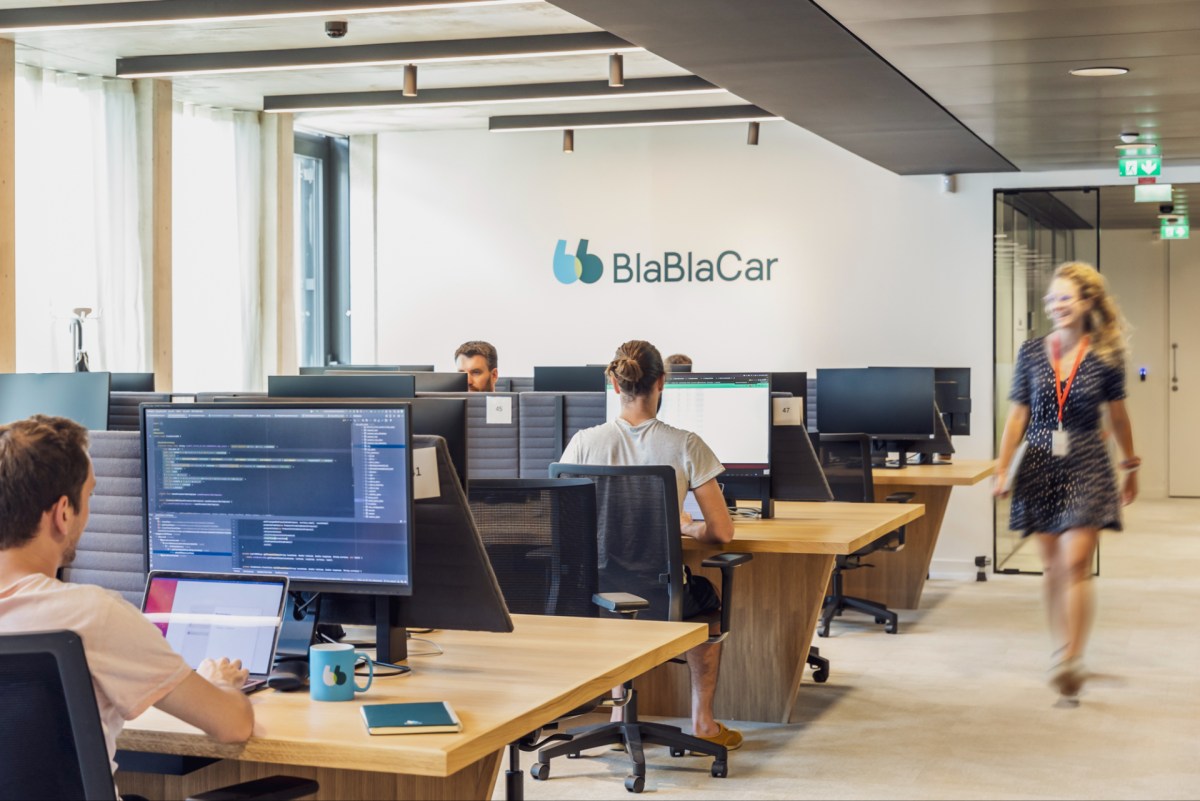
Every few weekends, 21-year-old student Lavanya Jain opens the BlaBlaCar app to find a lift from Noida on the outskirts of New Delhi to his home in Kandhla, a small town in northern India’s Uttar Pradesh state. The 120-kilometer journey costs him about ₹500, the equivalent of about $6. That’s a fraction of the ₹1,500–₹2,000, or $17–$23, he would pay for a private cab.
“If you’re looking for a fast, efficient, affordable, and comfortable way to travel — and you like to chat — you should basically check out BlaBlaCar,” Jain told TechCrunch, adding that he has used the app some 40 to 50 times over the past two years.
Jain is one of millions of Indians turning to long-distance carpooling as a cheaper, more social way to travel between cities. That surge has made India the company’s largest market worldwide, with an estimated 20 million passengers this year — up almost 50% from a year earlier. Based on that forecast, BlaBlaCar’s India market would surpass the 18 million passengers projected in Brazil and its home market of France.
For a company that shut its India office in 2017 after poor traction, the turnaround is striking.
Growth has come largely without marketing or a local team, driven instead by word of mouth, expanding mobile internet access, and the rise of digital payments and car ownership among India’s middle class.

India is home to more than 700 million smartphone users and has seen a sharp rise in digital payments, which now account for over 99% of all transactions in the country.
At the center of that shift is the Indian government-backed Unified Payments Interface (UPI) system, which processed about 19.6 billion transfers worth around ₹24.9 trillion (roughly $284 billion) in September alone. Car sales have climbed in tandem, reaching 4.73 million vehicles in 2024, up from 3.87 million a year earlier — a 5.2% year-on-year increase and an all-time high.
Techcrunch event
San Francisco
|
October 27-29, 2025
Other factors behind BlaBlaCar’s rapid growth in India include the country’s limited public transport capacity relative to its over 1.4 billion population, and the steady expansion of road infrastructure that is improving connectivity between smaller towns, rural areas, and major cities.
“We have lots of examples from users who say, ‘Before, I was flying to a destination or taking the train or not going at all — and now I can actually drive. It takes three hours, and it’s a pleasant ride,’” said Nicolas Brusson, co-founder and chief executive of BlaBlaCar, in an interview.
BlaBlaCar first entered India in early 2015, setting up a local office in New Delhi. The company soon faced stiff competition from Uber and local rival Ola, both of which were experimenting with carpooling services and marketing them heavily. (The companies would ended up suspending those carpooling services during the COVID-19 lockdowns.)
Struggling to gain traction, BlaBlaCar withdrew its local team in 2017. Still, the app remained live — and in 2022, usage began to surge again. Since then, it has skyrocketed from 4.3 million users in 2022 to a projected 20 million this year.
BlaBlaCar has averaged about 1.1 million monthly active users in India this year, peaking at around 1.5 million in August. Roughly three-quarters are passengers, while the remaining 25% are drivers. India now accounts for about 33% of BlaBlaCar’s global carpool passengers, the company said.

Trip-wise, BlaBlaCar recorded its strongest growth in India, with 13.5 million trips completed as of September 30, up from 9.1 million during the same period last year. Brazil remained slightly ahead, with 14 million trips this year compared with 11.7 million in 2023, while France ranked third with 5.6 million trips, broadly flat from a year earlier.
“For us, the center of gravity has shifted away from our initial markets in Western Europe toward places like Japan, Turkey — and increasingly, India,” Brusson told TechCrunch.
Although BlaBlaCar does not yet generate revenue from India, drivers on its platform earned around ₹713 million (about $8 million) in August alone, the company said. On average, drivers earn about ₹390 (roughly $4) per seat in India, with an average trip distance of 180 kilometers (about 112 miles).
By comparison, average driver earnings are about €15 (around $17) in France and roughly €6.5 (roughly $7) in Brazil, even though trip distances are broadly similar in India and Brazil and shorter than France’s average of about 250 kilometers (roughly 155 miles). The difference, BlaBlaCar said, reflects lower local purchasing power and cost-sharing expectations in India.
Nearly 70% of BlaBlaCar’s Indian users are between the ages of 18 and 34, and about 95% of activity takes place through its mobile app. Roughly half of all rides in India occur along the country’s 15 busiest intercity routes, while the other half comes from outside the top 150 corridors — evidence of growing adoption beyond major metros and into smaller cities. Among the busiest routes are Pune–Thane and Pune–Nashik in Maharashtra, Bengaluru–Chittoor in Andhra Pradesh, and several others linking mid-sized urban centers.
“No hurry” to start monetization

Despite all this growth, BlaBlaCar is not looking to enable monetization in India anytime soon.
“We are in no hurry to start introducing a fee or generating revenue in India. We are focused on generating usage, and we have the playback because we’ve done that in several markets,” Brusson told TechCrunch.
Nonetheless, BlaBlaCar plans to set up its local office in India and have the first hire by the end of this year or early next year, Brusson said.
BlaBlaCar does not view ride-hailing platforms such as Uber and Ola as its competitors in India. Brusson described them as “demand-led” products, while BlaBlaCar, he said, is “supply-led.” Instead, the company sees people driving their own cars — or opting for readily available trains and buses — as its main substitutes.
Challenges on its way to success
BlaBlaCar still faces some challenges in India.
State regulations around carpooling are ambiguous, which has brought the service under scrutiny in some cities. Some users, including Jain, have complained that it can be difficult to reach BlaBlaCar’s customer support, which often replies with automated messages. The company told TechCrunch it operates a “blended model,” with an outsourced local team handling most day-to-day queries and a smaller group at its Paris headquarters managing complex issues and quality checks.
BlaBlaCar introduced an ID Check feature in India to verify users’ identities through government-issued documents — a tool it later rolled out globally. However, TechCrunch found that users can still book or publish a ride even if their ID check is incomplete.
“This is a deliberate design choice to make it easier for new members to engage with the platform,” the company said in response. “ID verification is just one part of our broader trust and safety framework; we don’t rely on a single feature, but on multiple, layered mechanisms that work together to build confidence within our community.”

The company added that more than 70% of trips in India are made with drivers who have completed government ID verification. BlaBlaCar also displays user reviews and ratings and verifies accounts through phone numbers and email addresses.
“We actively encourage members to complete all verification steps, as fully verified profiles — with photo and ID — significantly increase the chances of finding carpoolers. Profiles lacking these elements tend to receive fewer bookings,” the company said.
Some BlaBlaCar users in India also report frustration when drivers or passengers cancel trips at the last minute, sometimes even after reaching the meeting point. Additionally, the app lacks a live location–sharing feature, which Jain noted limits BlaBlaCar’s use for those trying to book rides on behalf of family members or friends.
BlaBlaCar has adapted its product to better suit Indian users, introducing features such as “meeting-point logic” to make coordination easier. Unlike in countries such as France, where designated carpooling zones exist, India lacks fixed pickup areas. Drivers and passengers typically agree to meet at convenient spots along the route — a petrol station, for instance, or near a highway exit. The app now suggests and displays these locations using a mix of machine-learning algorithms and user input, helping reduce detours and align with India’s on-the-ground infrastructure, the company said.
Globally, BlaBlaCar expects to reach about 150 million passengers this year, including users of its bus services, which operate in markets such as France but are not yet available in India. As BlaBlaCar broadens its global footprint, India’s unexpected rise has positioned it at the heart of the company’s next phase of growth.

Waymo is adding another four cities to its growing list of robotaxi rollouts. The company announced Wednesday it has begun testing its autonomous vehicles (with a safety monitor) in Philadelphia, and that it will start manual driving to collect data in Baltimore, St. Louis, and Pittsburgh.
Waymo did not offer a timeline for when it plans to launch commercial services in those locations, nor do we know whether the Alphabet-owned company will partner with other companies to operate robotaxis in each one. That has been the move in cities like Atlanta and Austin, for example, where Waymo has partnered with Uber to advance its robotaxi rollout.
But the new locations join a list of over 20 cities where the company is either offering rides, prepping a commercial launch, or testing. Waymo is also now offering rides on freeways in Los Angeles, Phoenix, and the San Francisco Bay Area. The company plans to be doing one million rides per week by the end of 2026.
Waymo has done all this while claiming to be operating at a level five times safer than humans, according to data the company recently released.
But the expansion has not come without its issues. The National Highway Traffic Safety Administration is investigating how the company’s vehicles operate near school buses, after a Waymo was filmed driving around a stopped bus in Atlanta in September.
This week, Austin news outlet KXAN published a report showing Waymo’s vehicles have driven past school buses that were in the process of unloading or loading children multiple times — including after Waymo claims to have shipped software updates to address the problem.
Techcrunch event
San Francisco
|
October 13-15, 2026

Spotify Wrapped is back. After last year’s widely criticized flop that included an AI podcast as its highlight, the streamer’s highly anticipated annual review feature has returned to its roots. This year, Spotify is doubling down on what it knows works best: deep dives into your streaming data, creative experiences, messages from favorite artists, and other social features.
The company claims that Wrapped 2025 is its biggest, as it’s introducing nearly a dozen new features in addition to its old standbys, like top songs and artists. Plus, it’s offering more visibility into users’ data than in years past. For the first time, Spotify Wrapped is adding a live multiplayer feature to compare your listening data with friends.
Wrapped Party, Wrapped’s first live interactive experience, allows you to invite up to nine friends to compare listening stats.

Also new this year, your Top Songs Playlist will include the play counts for each of the top songs, so you can actually see how much time you spent with your favorite tracks.
Other standout features this year include an interactive Top Song Quiz, a Listening Age feature, and Wrapped Clubs, which match you to one of six unique listening styles.
The company believes these additions will not only bring back the personalized, engaging experience that users have long expected from Wrapped, but will take it a step further by making it more interactive than before.
In the Top Song Quiz, for instance, you can try to guess which top song soundtracked your year before seeing the results.
Techcrunch event
San Francisco
|
October 13-15, 2026

The new interactive Wrapped Party feature isn’t just about comparing the personal streaming data you’ve already received to your friends’ data, as that’s something people already do on social media. Instead, the feature presents unique data stories for your group, like who’s the “most obsessed fan,” the “early bird,” the most “picky listener,” or even something as nice as the “dinner table explainer,” meaning the person who listens to the most news podcasts.

Spotify says these awards update dynamically every time you join a Wrapped Party, so no two sessions are ever the same — even if you run through them again with the same group of friends.
The new Wrapped Clubs, meanwhile, will group you into one of half a dozen listening styles, like the “Soft Hearts Club,” the “Club Serotonin,” the “Full Charge Crew,” the “Cosmic Stereo Club,” and others. You’ll also receive a role in the club based on your listening data. You might be a club leader if your listening choices strongly matches the club’s values, a scout if you’re always seeking out new releases, or an archivist if you listen to music from past eras.

Another feature, Listening Age, compares your 2025 music listening to others in your age group. To calculate your age, the feature considers the release years of the tracks you listen to most. From there, it identifies the five-year span of music that you engaged with more than other listeners your age.

As in prior years, you’ll see your top songs, top artists, top genres, and, for the first time, top albums. If you engaged with audiobooks and podcasts, you’ll see metrics for those as well. Artists, writers, and podcasters will have their own version of Wrapped as before. And top fans will again receive video messages from their favorite artists, podcasters, and, now, authors.
You’ll also receive a playlist of your top songs of the year, as before.

What you won’t find in this year’s Wrapped is any feature that advertises it was made with AI.
In a press briefing on Tuesday, Spotify’s Senior Director of Global Marketing, Matt Luhks, admitted the company received a “lot of feedback” about its 2024 AI-focused Wrapped experience, saying it was a “mix of positive and ‘more constructive feedback,’” despite the feature driving more engagement than prior years.
“We take all of that in. We use that as information, insights, [and] inspiration for how we approached Wrapped this year,” he said in a press event ahead of today’s launch.
“What our users tell us about Wrapped means a lot to us, so it was really informative in how we approached Wrapped this year. And what we tried to build was the most creative, most innovative, most engaging Wrapped ever,” he added, setting a high bar for the 2025 edition of the now 11-year-old annual year-in-review feature.
“We’re the original and, we believe, still the best,” Luhks said.

Still, AI was a part of the Wrapped experience. Though the company claims the overall experience was not made with AI, it does leverage a LLM (large language model) to add a storytelling layer to Wrapped’s facts and figures, and natural language summaries in other parts of its experience, looking back on your data.
Spotify’s attempt to fix Wrapped after a notable stumble comes as the streamer faces increased competition from Apple, Amazon, YouTube, and others, which have all launched their own annual review features, inspired by Wrapped.
“Everyone seems to have their own version of Wrapped. Now, there’s a lot of reviews and replays and rewinds out there, but we believe that Wrapped still sets the bar for these year-end recaps,” Luhks said.
Along with the consumer experience, Spotify shared its top artists, songs, albums, podcasts, and audiobooks for the year, with top winners that included, respectively, Bad Bunny (top song and album), Joe Rogan (“The Joe Rogan Experience” podcast), and Rebeca Yarros (author of “Fourth Wing”).

Hardware maker Nothing is letting its user base buy its stock as part of a new community investment round of $5 million. The new round, which opens on December 10, will enable consumers to buy the company’s shares at its Series C valuation of $1.3 billion.
The company said it has so far raised $8 million in total from over 8,000 people across two previous community investment rounds. It held its first community funding event in 2021, aiming to raise $1.5 million.
“This isn’t about raising capital, it’s about giving our community/fans a chance to invest while we’re private and join us on the journey,” a spokesperson for Nothing told TechCrunch.
Community investors have a rotating seat on the company’s board, but it is unclear what else they get for investing in the company through such rounds.
Nothing raised $200 million in its Series C back in September from investors including Tiger Global, GV, Highland Europe, EQT, Latitude, I2BF and Tapestry. The company has raised $450 million to date.
The community round comes as Nothing makes changes to its corporate structure as it tries to increase its share of a smartphone market dominated by giants like Samsung and Apple. The company is spinning off its budget CMF brand, and plans to explore AI-centric devices while it keeps building smartphones and audio products. And Nothing claims it crossed $1 billion in cumulative revenue this year, up 150% from 2024.
The startup is working to be “IPO-ready” in three years, CEO Carl Pei told TechCrunch in an email. “The timing will depend on market conditions and what makes sense for the business at that point in time,” he said.
Techcrunch event
San Francisco
|
October 13-15, 2026
“What’s important is that we’re already operating with that discipline now. We’re building the systems, the governance, the financial discipline that a public company needs. It forces us to think longer-term and make smarter decisions that prioritise sustainable growth,” Pei added.
It’s not clear if Nothing aims to raise another round before an IPO. When asked about its fundraising plans, a Nothing spokesperson said the company is not thinking about raising capital immediately, but it wouldn’t be averse to those conversations.
Those interested in investing in the community round can use platforms like Wefunder and Crowdcube to participate.


Police arrest four suspects over criminal activities in Ibadan

Police arrest man over alleged false alarm of bandits’ invasion in Ebonyi community

NDC: Dickson, Obi hold closed door meeting amid internal crises

Simi Sanya and Femi Dapson Are Now Legally Married and It Is Beautiful to See

FCT Area Council Election: Live results from polling units

Premier League Set-Piece Goals (2025/2026)
-
 Sports12 hours ago
Fox Break FIFA Broadcasting Rule During Mexico v South Africa
-
 Sports12 hours ago
Lewis Hamilton’s Awkward Response to Kimi Antonelli Trolling Kim Kardashian
-
 Sports1 day ago
‘I’m a 10-Handicap Golfer – Here’s What I Scored Around Shinnecock Ahead of the 2026 US Open’
-
 Sports2 days ago
Thierry Henry Names Two ‘Surprise’ Teams That Can Win the 2026 World Cup
-
 Sports1 day ago
Gary Neville and Roy Keane Slam the US For Banning World Cup Referee
-
 Sports7 hours ago
England Fan Denied World Cup Access After Breaking Trump Rule
-
 Sports2 days ago
England Fans Claim Noni Madueke ‘Cannot Start’ at World Cup
-
 Sports15 hours ago
England Thrash Opponents in Behind-Closed-Doors Friendly Before World Cup