
Politics
Lagos PDP governorship aspirant faults Sanwo-Olu’s N4.237tn 2026 budget proposal

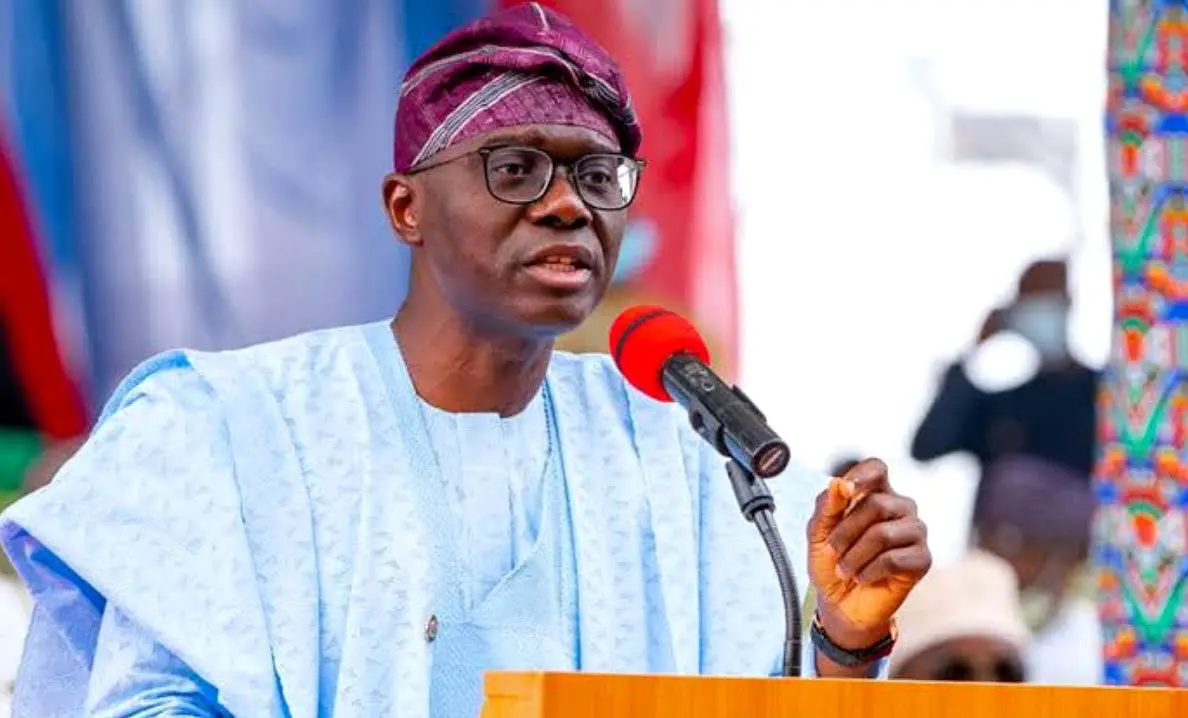
A governorship aspirant of the Peoples Democratic Party, PDP, in Lagos State, Funso Doherty, has criticised the N4.237 trillion 2026 budget proposal presented by Governor Babajide Sanwo-Olu, alleging inaccuracies in the figures, weak fiscal transparency, and questionable spending priorities.
In an open letter dated Thursday, December 11, 2025, and addressed to the Speaker of the Lagos State House of Assembly, Doherty described the budget estimates submitted to lawmakers on November 25, 2025, as flawed and in need of urgent clarification before legislative approval.
The Lagos State House of Assembly has since passed the appropriation bill through second reading and referred it to the House Committee on Economic Planning and Budget for detailed scrutiny, with a mandate to report back within five weeks.
In his letter, Doherty argued that the headline figures in the budget were incorrectly presented.
He noted that the proposal outlined a total expenditure of N4.237 trillion, made up of N2.052 trillion in recurrent spending and N2.185 trillion in capital expenditure.
However, he pointed out that the recurrent component reportedly includes about N383 billion earmarked for debt servicing, which he argued should be classified as capital expenditure.
According to him, this misclassification distorts the true size of both the recurrent and capital budgets, potentially rendering the overall figures inaccurate.
Doherty also questioned the internal coherence of the proposal, stating that when sectoral allocations were added together, they amounted to roughly N3.4 trillion, significantly below the total budget figure presented.
“One or both sets of figures cannot be correct,” he said.
Beyond numerical discrepancies, the PDP aspirant criticised what he described as the Lagos State Government’s lack of transparency in the budgeting process.
He argued that the public is routinely denied access to detailed budget proposals until after the Appropriation Act has been passed, limiting opportunities for independent review and public input.
He raised concerns over the scale of spending on consultancy and professional services, noting that such costs allegedly account for nearly 15 per cent of the state’s total recurrent expenditure.
“At that scale, it is unclear what services justify these recurring costs and why such a large proportion of public funds is being devoted to them,” he said.
Doherty also accused the state government of backsliding on transparency despite increased revenues following the removal of fuel subsidies and currency devaluation.
He claimed that information on contract awards was no longer being routinely published by the Lagos State Public Procurement Agency, as required by law.
On spending priorities, Doherty argued that Lagos State has consistently underfunded key social sectors essential for human development.
He said that over a five-year period, combined spending on education, health, housing, and water supply accounted for only 17 per cent of total government expenditure.
According to him, in a state with a youthful population such as Lagos, education and health should each receive allocations of close to 15 per cent.
He described it as disturbing that the 2025 capital allocation to the Lagos State House of Assembly alone reportedly exceeded the combined allocations for health and education.
Doherty said the consequences of what he termed prolonged underinvestment were visible in poor public school outcomes, persistent housing shortages, and under-five mortality rates.
He also criticised what he called a pattern of overly optimistic revenue forecasts in Lagos budgets.
He noted that while the 2026 budget projects total revenue of N4.237 trillion, actual revenues as of September 2025 stood at N2.07 trillion, against a full-year projection of N3.37 trillion.
“Persistent overestimation of revenue undermines effective planning, prioritisation, and execution of government programmes,” he said.
While acknowledging some marginal improvements in budget preparation, Doherty urged the House of Assembly to demand greater openness from the executive.
He called on lawmakers to ensure that detailed budget proposals for 2026 and subsequent fiscal years are made publicly available during the legislative process, before passage into law.
Efforts to obtain a response from the Lagos State Government were unsuccessful, as the Special Adviser to the Governor on Media and Publicity, Gboyega Akosile, could not be reached for comment as of the time of filing this report.
dailypost.ng

Former President of Nigeria, Olusegun Obasanjo, on Thursday paid a courtesy visit to the Vice-Presidential candidate of the Nigeria Democratic Congress (NDC), Senator Rabiu Musa Kwankwaso, at his residence in Kano State.
Obasanjo was received by Kwankwaso alongside the NDC governorship candidate in Kano State, Comrade Aminu Abdulsalam Gwarzo.
The visit was confirmed in a statement issued by Kwankwaso’s media aide, Saifullahi Hassan, who described the meeting as an occasion for cordial interactions and warm exchanges between the political leaders.
However, details of the discussions held during the closed-door meeting were not disclosed.
Kwankwaso, who served as Nigeria’s Minister of Defence during Obasanjo’s second term in office between 2003 and 2007, has maintained a longstanding political relationship with the former president.
The meeting has further fuelled speculations about possible political realignments ahead of the 2027 general elections, particularly in light of reports suggesting efforts to strengthen opposition collaboration.
NDC presidential candidate, Peter Obi, is widely regarded as a close ally of Obasanjo, who publicly supported him during the 2023 presidential election.

dailypost.ng
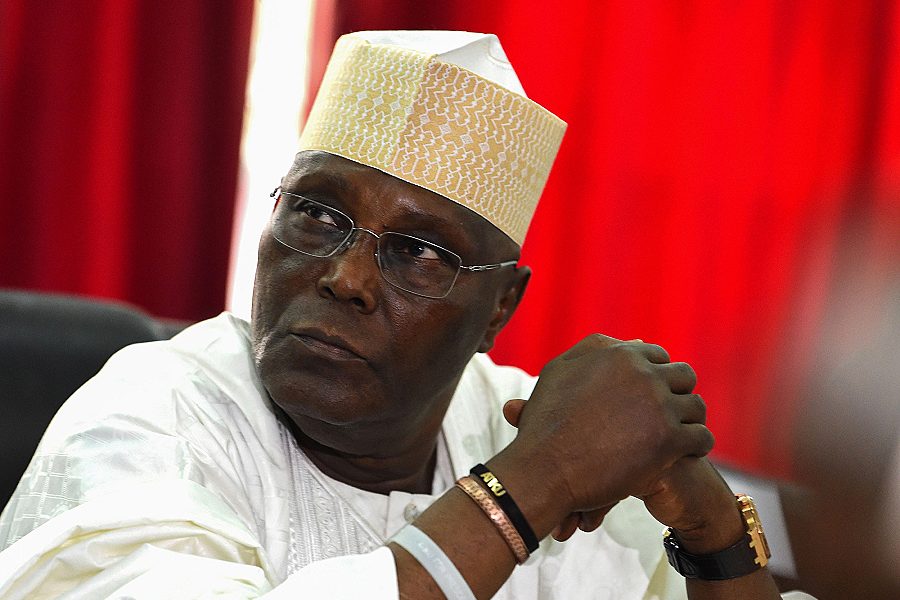
Political commentator, Imran Wakili has claimed that the African Democratic Congress, ADC, and former Vice President Atiku Abubakar may be unable to recover from the political setbacks allegedly caused by former Secretary to the Government of the Federation, Babachir Lawal.
In a post shared on X on Thursday, Wakili argued that Babachir’s actions had led to the exit of several prominent political figures from the ADC, leaving the party significantly weakened.
“The damage Babachir did to Atiku and ADC—there is no coming back from it! BINDOW is GONE, nobody is left in ADC except Atiku himself.
“Bindow gone, why? Babachir. Abbo gone, why? Babachir. Binani gone, why? Babachir. Nyako gone, why? Babachir. Nafiu Bala legal case, why? Babachir,” Wakili wrote.
DAILY POST recalls that Lawal resigned his membership of the African Democratic Congress, ADC, last month.
The former SGF said he could not remain in a party he accused of operating a “rigging machine” ahead of the 2027 general elections.
He also accused Atiku and his allies of pursuing ethnic and religious interests, arguing that the former vice president’s emergence as a presidential candidate would ultimately strengthen President Bola Tinubu’s chances of securing a second term.
dailypost.ng
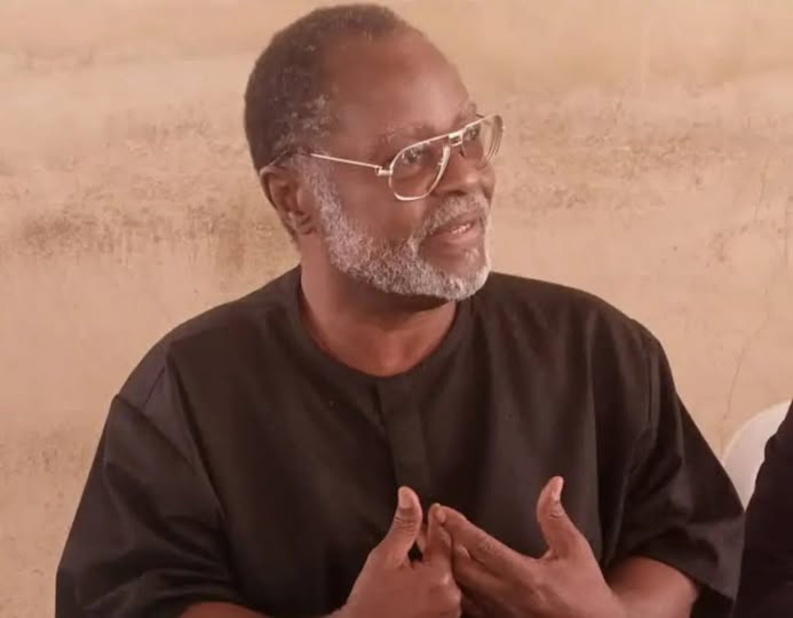
A political analyst and founding National Secretary of Alliance for Democracy, Professor Udenta Udenta, says the National Assembly was procured to amend the Electoral Act to get President Bola Tinubu reinstated into power.
Udenta made this statement on Thursday when he appeared as a guest in an interview on Arise Television’s ‘Prime Time’.
He also questioned how the Independent National Electoral Commission, INEC, under Tinubu’s administration stopped primaries in 30th May.
“The National Assembly was procured to amend the Electoral Act to get Tinubu reinstated into power.
“Since the inception of this government in 2023, we have discussed this matter. The dwindling or shrinking civic spaces, the brutal assault on labour centres, the weaponization via lawfare of the criminal justice system.
“The war declared on political parties, that is multi-party democracy, by a regime tiptoeing into totalitarianism, not just even what they call authoritative sort of construct of power, but a hybrid regime.
“How come the same INEC under Tinubu stopped primaries in 30th May? Because they didn’t even think opposition parties would succeed at their primaries,” he said.
dailypost.ng


11 Boko Haram family members surrender as troops tighten grip on terrorists in Borno
Obasanjo meets Kwankwaso in Kano ahead of 2027 elections

FIFA Allow Rainbow Flags at World Cup ‘Pride Match’ Featuring Iran vs Egypt

Simi Sanya and Femi Dapson Are Now Legally Married and It Is Beautiful to See

FCT Area Council Election: Live results from polling units

Premier League Set-Piece Goals (2025/2026)
-
 Sports2 days ago
Bastian Schweinsteiger Sparks Outrage With Comments Ahead of Germany v Ivory Coast
-
 Sports2 days ago
Why Austria and Algeria May Both Want to Lose Their Final Group Game
-
 Sports18 hours ago
Thomas Partey Could Be Blocked From Knockout Tie
-
 Sports1 day ago
Steve Clarke Slammed For Interview After Scotland 0-3 Brazil
-
 Sports12 hours ago
Rory McIlroy Risks Breaking PGA Tour Rule That Led to One-Year Ban
-
 Sports2 days ago
Jude Bellingham Avoids Red Card For Banned Gesture vs Ghana
-
 Sports2 days ago
What Scotland Need To Qualify For World Cup Knockout Stage
-
 Sports2 days ago
World Cup Nation Submit Complaint to FIFA After Controversy in England vs Ghana