
Politics
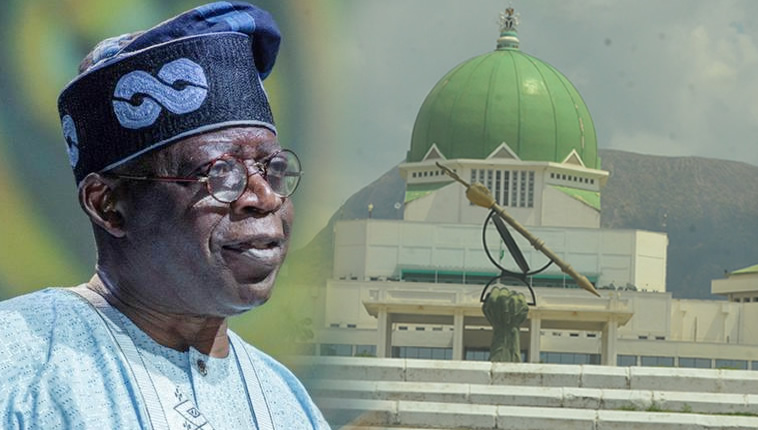
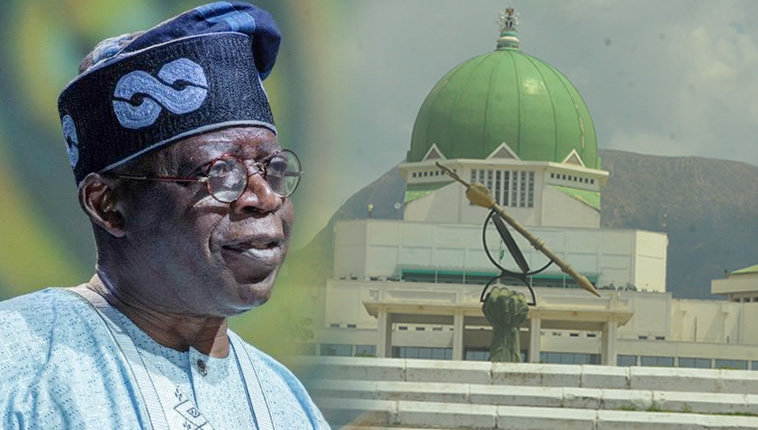
Unprecedented takeover: Dynamics, implications of APC’s dominance of NASS

By Clifford Ndujihe & Henry Umoru
ABUJA – When the 10th National Assembly was inaugurated on June 12, 2023, the numerical gap between the ruling All Progressives Congress, APC, and opposition parties in the Senate was marginal.
At the time, the APC did not command the strength required to exercise a decisive two-thirds majority on sensitive national issues.
As of June 2023, the Senate was composed of APC 59 senators, while opposition parties collectively held 50 seats. This balance meant that on crucial matters-constitutional amendments, veto overrides, or impeachment-the ruling party had to negotiate across party lines.
Two and a half years later, the landscape has undergone dramatic changes.
As of December 20, 2025, the APC has expanded its numbers to 78 senators, leaving the opposition significantly diminished: PDP 24, APGA 2, LP 1, NNPP 1, SDP 1, and ADC 1, totalling 108 with one seat vacant due to death.
How the numbers shifted
At inception, the 10th Senate comprised members from APC, PDP, LP, APGA, NNPP, YPP and SDP.
June 2023 Breakdown
APC – 59
PDP – 36
LP – 8
NNPP – 2
SDP – 2
YPP – 1
Court judgments triggered the early shifts.
In October 2023, the Court of Appeal nullified the election of Senator Abubakar Ohere (APC, Kogi Central). Natasha Akpoti-Uduaghan (PDP) was sworn in on November 2, 2023.
Similarly, Senator Darlington Nwokocha (LP, Abia Central) was sacked, and Austin Akobundu (PDP) was sworn in on November 15, 2023.
These rulings raised PDP’s tally to 38, while APC and LP recorded marginal losses.
Defections and collapse of opposition ranks
In October 2023, APC gained ground when the late Senator Ifeanyi Ubah (Anambra South) defected from YPP to APC, effectively wiping out YPP representation in the Senate.
The more decisive realignments came in 2025.
On October 16, 2025, Senators Benson Konbowei (Bayelsa Central) and Benson Agadaga(Bayelsa East) defected from PDP to APC, pushing APC’s strength to 76.
On November 11, 2025, Senator Jarigbe Jarigbe (Cross River North) also moved from PDP to APC, raising APC’s count to 77.
Death, vacancies, fresh realignments
The Senate suffered a loss on Tuesday November 18, 2025 with the death of Senator Okey Ezea (LP, Enugu North) in Lagos. Born on August 11, 1963, Ezea was elected on the Labour Party platform in 2023.
His death reduced LP’s presence and brought the Senate’s total membership to 108.
In early December 2025, Senator Sunday Katung (Kaduna North) defected from PDP to APC.
Also, Senator Ireti Kingibe left the LP for the African Democratic Congress, ADC last week.
Latest configuration now stands:
APC – 78
PDP – 24
APGA – 2
LP – 1
NNPP – 1
SDP – 1
ADC – 1
What a Two-Thirds Majority means in law
Under Chapter X (71) of the Senate Standing Orders 2022 (as amended), voting may be conducted by: Voice vote; Register signing; and Electronic voting
With 109 statutory seats, a two-thirds majority translates to 73 senators. Even with the current 108-member Senate, the APC comfortably surpasses this threshold with its 78 legislators.
Dominance in House of Representatives
A similar trend also played out in the House of Representatives where from a simple majority in 2023 the APC has a Two-Thirds majority.
How parties stand in the House of Reps
APC – 240
PDP – 74
LP – 25
NNPP – 15
SDP – 3
YPP – 1
A two-thirds majority is constitutionally required for amending the Constitution; Overriding a presidential veto; Impeachment of the President or Vice President; approving a state of emergency; and Creation of new states
Notably, President Bola Tinubu’s 2025 emergency rule declaration in Rivers State sparked controversy over the use of a voice vote rather than a recorded two-thirds majority.
Simple Majority vs Super Majority
While a two-thirds majority governs critical national decisions, the Senate operates largely on simple majority for routine matters.
These include: Passage of ordinary bills; Election of presiding officers; Committee reports adoption; Confirmation of appointments; and Procedural motions
Bills typically require a simple majority at second and third readings, but once vetoed by the President, a two-thirds vote becomes mandatory for override.
Committee of the Whole
A critical but often overlooked stage is the Committee of the Whole, where the entire Senate:
•Examines bills clause by clause
•Introduces amendments under flexible rules
•Considers conference committee reports
At this stage, the Senate President steps down from the main chair, symbolising a less formal, more deliberative process. Decisions taken here are later reported and adopted in plenary.
Majority Power: To Make or to Mar?
With the APC now firmly in control of more than two-thirds of the Senate, questions arise: Is Nigeria drifting towards a one-party dominance? Can the minority still provide effective oversight? Will numbers trump debate on sensitive national issues?
The two-thirds majority gives the APC enormous legislative leverage. Whether this power will be used to strengthen governance or weaken democratic pluralism now rests on the leadership of the Senator Godwill Akpabio-led Senate.
For many Nigerians, the hope remains that numerical strength will be deployed to make the polity, not to mar it.
The post Unprecedented takeover: Dynamics, implications of APC’s dominance of NASS appeared first on Vanguard News.
www.vanguardngr.com

The full fixtures and dates for the World Cup Round of 16 fixtures have been confirmed.
This follows the conclusion of the Round of 32 fixtures played today.
Recall that Argentina defeated Cape Verde 3-2 to progress to the Round of 32, while Colombia eliminated Ghana from the competition following a 1-0 win.
Argentina will now face Egypt in the last-16 on Tuesday, while Colombia will take on Switzerland.
Co-host nation Canada will tackle Morocco on Saturday.
2026 FIFA World Cup Round of 16 fixtures in full:
Saturday, July 4:
Canada vs Morocco
Paraguay vs France
Sunday, July 5:
Brazil vs Norway
Mexico vs England
Monday, July 6:
Portugal vs Spain
United States vs Belgium
Tuesday, July 7:
Argentina vs Egypt
Switzerland vs Colombia
dailypost.ng

By Luminous Jannamike, Abuja
As political alignments ahead of the 2027 general election continue to shift, renewed attention has turned to the Nigeria Democratic Congress (NDC) following a series of legal and political developments. In June, the Federal High Court in Lokoja, Kogi State, stunned sections of the opposition when it set aside its December 2025 judgment directing the Independent National Electoral Commission (INEC) to register the NDC as a political party, although that decision has since been overturned on appeal.
The legal twists have revived questions first raised months ago about the forces behind the emerging party. They have also rekindled interest in an earlier Saturday Vanguard report, which quoted insider sources expressing fears that the NDC could face internal sabotage after the emergence of its eventual presidential candidate and alleging that some individuals associated with the project maintained close relationships with influential figures in the ruling establishment.
Those claims have not been independently verified. Even so, the developments have continued to fuel public debate over the independence of emerging opposition platforms and whether ‘fifth columnists’ could undermine efforts to build a formidable coalition ahead of 2027.
Below is what Saturday Vanguard published on 9 May under the headline, ‘
2027: Who owns NDC? Fear of moles rocking party spreads.’
Fresh anxiety is quietly spreading within sections of the opposition coalition amid growing concerns that the National Democratic Congress (NDC) may already have individuals sympathetic to the ruling All Progressives Congress, APC, within its wider support network.
The unease emerged following the collapse of the ADC coalition arrangement involving former Vice President Atiku Abubakar and former Anambra State governor Peter Obi, with some insiders warning that the NDC may not eventually become the independent opposition platform many supporters expect.
Multiple sources familiar with ongoing coalition discussions told Saturday Vanguard that some political actors had become increasingly cautious about the emerging Obi-Atiku split and the rush into the NDC platform.
One source said there were fears that influential figures linked to the party maintained close relationships with elements within the ruling establishment.
“We have to be very, very careful about this Obi-Atiku split because there’s a game being played by the APC that many people are not aware,” the source said.
“Even the NDC that they are running to. Do you know who owns the NDC? The man pulling the strings behind this thing is a former lawmaker who is a key member of the APC and enjoys access to the State House, Aso Villa.
“The close supporters of the NDC are the PDP-APC people. So we will see what will happen. It’s only a matter of time.”
The source added that the situation could become clearer once the ongoing round of party primaries and internal alignments are concluded later this month.
The allegations could not be independently verified as of press time, and no evidence has publicly emerged linking the NDC leadership to the APC or the Presidency.
However, another source involved in the wider opposition talks said the unease within some camps was being driven by fears that “moles” could eventually weaken efforts to build the NDC into a united opposition front ahead of 2027.
According to the source, the concern was less about the formal founders of the party and more about some influential supporters and political associates believed to have longstanding ties within the APC power structure. “The concern is not necessarily about the founders,” the source said.
“It is about some major supporters and people around the project who are believed to have sympathies or strong relationships within the Presidency and the APC establishment.”
The development comes as opposition leaders intensify talks and political realignments following recent defections and coalition negotiations involving key figures across several parties ahead of the 2027 elections.
www.vanguardngr.com

Ahead of his historic address to the House of Lords in London on Friday, Imo State Governor, Senator Hope Uzodimma has received a special recognition from the United States House of Representatives for his transformative leadership.
Uzodimma, apart from the address at the House of Lords , would be receiving “African Inspirational Leadership and Good Governance Award” by the African Leadership Organization.
Even before the event scheduled for Westminster, the South Carolina House of Representatives moved a motion to recognise and commend Uzodimma for his transformative leadership guided by the strategic 3R agenda of rehabilitation, reconstruction and recovery.
The motion, moved by Representative Rosalyn D Henderson-Meyes, recognised the Imo State Governor for undertaking “ extensive investments in road infrastructure, urban renewal and digital transformation initiatives aimed at enhancing connectivity, improving public service delivery and creating an enabling environment for sustainable growth “
The South Carolina House of Representatives in the motion signed by the Speaker, G Murrel Smith Jr and the Clerk Charles F Reid ,also acknowledged Uzodimma as a widely respected leader known for his dedication to “ inclusive governance, infrastructure development, economic revitalization, and the long term prosperity of Imo State, reinforcing his standing as one of Nigeria’s leading sub-national reformers and development focused leaders “
It noted that the honour bestowed on only 40 Africans also took cognisance of the Governor’s focus on improving the ease of doing business through strategic reforms and investor friendly policies which has in turn enhanced the state’s attractiveness to both domestic and international investors. It specifically mentioned Uzodimma’s signature infrastructure projects to include the Assumpta Twin Flyover and the development of the Orashi Energy Free Trade Zone, which have made Imo State the key driver of regional national development.
Receiving the award in London on behalf of the Governor, the Imo State Commissioner for Information, Public Orientation and Strategy, Hon Declan Emelumba, described it as a global acknowledgement of Uzodimma’s hard work and commitment to the overall development of the state.
While commending the South Carolina House of Representatives for the honour, Emelumba said it would certainly spur the governor to do more not only for the state but Nigeria and the African continent.
The Commissioner noted that it was quite encouraging that notable global institutions have continued to acknowledge and appreciate Uzodimma as one of the very few sub-national leaders committed to transformative leadership in Africa.
www.vanguardngr.com


Police arrest 11 suspected cultists at LAUTECH, recover guns
World Cup 2026: Full fixtures, dates of Round of 16

Pele Named England Genius with ‘Skills of a Brazilian’ – He Started at Only 1 World Cup

Simi Sanya and Femi Dapson Are Now Legally Married and It Is Beautiful to See

FCT Area Council Election: Live results from polling units

Premier League Set-Piece Goals (2025/2026)
-
 Sports2 days ago
Real Reason Serena Williams Broke Strict Rule as $50,000 Fine Decision Made
-
 Sports1 day ago
FIFA Release Statement After VAR Call During Portugal 2-1 Croatia
-
 Sports23 hours ago
Piers Morgan Slams BBC Commentators For Cristiano Ronaldo Treatment
-
 Sports22 hours ago
Croatia’s Igor Matanovic Praised For Interview After Goal v Portugal is Ruled Out
-
 Sports2 days ago
VAR Expert Casts Clear Verdict on Folarin Balogun Red Card vs Bosnia
-
 Sports11 hours ago
FIFA Set to Change England vs Mexico World Cup Kick-Off Time
-
 Sports20 hours ago
What Cristiano Ronaldo Told Croatia Star After Controversy in World Cup Game
-
 Sports2 days ago
US Icon Brad Friedel Blasts Mexico Ahead of England Match