
Business
2026: FG to move away from macroeconomic figures to citizens welfare —Edun

By Emeka Anaeto & Babajide Komolafe
There are indications that the Federal Government is set for a major shift in its economic policy direction in 2026, focusing more on delivering tangible improvement in livelihood of citizens than in achieving positive macroeconomic figures.
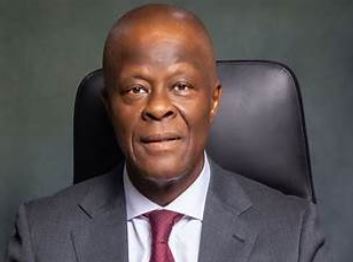
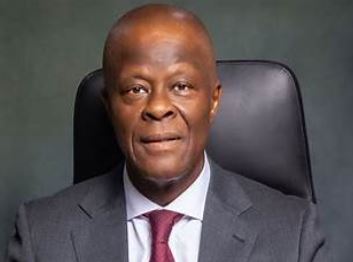
This formed the key content of the speech delivered by the Minister of Finance and Coordinating Minister of the Economy, Wale Edun, under the theme: “Consolidating Economic Stabilisation Gains: Pathway to Sustainable Growth in Nigeria”, in his keynote address at the launch of the Nigerian Economic Summit Group (NESG) 2026 Macroeconomic Outlook Report yesterday in Lagos.
He signaled a definitive shift from “economic stabilization” to “growth and expansion.”
Edun emphasized that the success of the 2026 budget titled the “Budget of Consolidation, Renewed Resilience and Shared Prosperity”, will be measured by food availability, electricity supply, and job creation, rather than just GDP and other macroeconomic percentages.
He also said poverty alleviation would be top on the agenda with the “Renewed Hope Ward Development Programme,” aiming to bring 10 million Nigerians into productive economic activity across all 8,809 wards in the country.
He stated: “It is no longer about the stabilization of the economy; we have achieved that, albeit fragilely. 2026 is about scaling output and ensuring the benefits reach the household level.”
According to him, housing and food security were central to the government’s agenda, adding, “We are also supporting farmers to boost productivity, reduce costs, and ensure that food is more affordable for all Nigerians.”
On the government’s reform priorities, Edun said, “Our focus now is on ensuring that ordinary Nigerians feel the benefits of reform — through more affordable food, access to housing, and productive jobs.”
He explained that these reforms were built on measures that eliminated distortions which had previously skewed the economy.
“For too long, access to foreign exchange and subsidised petroleum products created an uneven playing field,” he said, adding, “Those distortions are gone. Today, investors operate in a transparent environment where success is driven by productivity and innovation, not rent-seeking.”
Meanwhile, Edun also said that Nigeria’s exit from the European Union’s high-risk third-country list is a major boost for investor confidence.
He stated: “Exiting the EU high-risk list is a landmark achievement for Nigeria, “It sends a clear signal to investors that Nigeria is serious about maintaining a stable, credible, and transparent business environment.”
Highlighting fiscal and structural reforms, Edun said, “We have digitised revenue collection, deployed real-time treasury monitoring, and strengthened state-level financial positions. Many states now run budget surpluses exceeding three per cent, enabling expanded spending on health, education, and social services.”
He concluded, “2026 is a pivotal year. The challenge now is to consolidate our gains, maintain policy consistency, and ensure that stability translates into inclusive growth, jobs, and shared prosperity. Nigeria must not only stabilise, it must thrive.”
The post 2026: FG to move away from macroeconomic figures to citizens welfare —Edun appeared first on Vanguard News.

By Elizabeth Adegbesan
As part of the Federal Government (FG) borrowing plan for the 2026 budget, the Central Bank of Nigeria, CBN, has issued Treasury Bills, TBs, to raise N5.8 trillion in the third quarter of 2026 (Q3’26).
This represents a 241 percent year-on-year (YoY) increase when compared to N1.76 trillion sold in Q3’25.
CBN disclosed this in its Nigeria Treasury Bills Issue programme for Q3’26.
Treasury Bills are short term (less than one year) debt instruments used by the apex bank to borrow money from the Nigerian public on behalf of the federal government. CBN also uses TBs to control money supply in the economy.
The TB issue programme commenced on July 1st, and ends on September 23rd, 2026. The settlement date began yesterday and ends on September 24th, 2026.
During the period, the apex bank will issue TBs worth N900 billion on 91 days tenor, N900 billion on 182 days and N4 trillion on 364 days.
A breakdown of the programme revealed that in July, the apex bank plans to issue N2 trillion worth of TBs, comprising N300 billion worth of 91 days bills, N300 billion worth of 182 days bills and N1.4 trillion worth of 364 bills.
In August, the apex bank issued N2.1 trillion worth of TBs, comprising N300 billion worth of 91 days bills, N300 billion worth of 182 days bills, and N1.5 trillion worth of 364 days bills.
In September, CBN plans to sell N1.7 trillion worth of TBs comprising N300 billion worth of 91 days bills, N300 billion worth of 182 days bills and N1.1 trillion worth of 384 days bills.

By Emma Ujah
President and Chairman of the Board of the African Export-Import Bank (Afreximbank), Dr. George Elombi, has tasked African nations to stop the export of Lithium, the main raw material used in the production of electric vehicle (EV) batteries. Nigeria is a major exporter of Lithium in Africa, though most of the quantity is illegally exported.
Speaking at the bank’s Mid-Year Media Roundtable in Abuja on Wednesday, he said that rather than exporting raw lithium, African countries should use it to manufacture EV batteries on the continent.
He also said Afreximbank has sufficient funds to finance the production of EV batteries and is ready to provide the necessary funding to any individual or organisation willing to venture into the industry.
In his words, “African mineral resources must work for Africa’s development. EVs are the future of transportation, and the use of lithium to produce EV batteries is taking centre stage in the EV industry.
“Africa must take its position in the EV industry. We have lithium. We should produce EV batteries at home. We simply have to produce them here. There is enough money in Africa to manufacture batteries in Africa.
“If you know anyone who is interested in EV battery production, bring them to me. But if you see someone looking for funding to export lithium, don’t bring them to me.”
Dr. Elombi also said African leaders and institutions must work together to ensure that African funds held outside the continent are repatriated to support the region’s development.
Some rating agencies biased against Africa
Speaking on the bank’s credit ratings, Dr. Elombi, who advocated for African rating agencies, said some global rating agencies initially dismissed Afreximbank as too small and insignificant to drive Africa’s development, while questioning the bank’s trade finance mandate.
According to him, one agency’s 2014 assessment suggested that trade finance could not serve as a foundation for development and implied that the bank’s core mandate lacked relevance.


By Ebunoluwa Sessou, Cynthia Alo & Precious Enaike
In a bid to accelerate the commercialisation of homegrown engineering solutions capable of addressing Nigeria’s development challenges, Enactus Nigeria, has established a partnership with several organizations and stakeholders to nurture young engineering talents to transform innovative ideas into practical solutions for national development through the Nigerian Engineering Olympiad (NEO).
The organizations in the partnership include the Nigerian Content Development and Monitoring Board (NCDMB), the Nigerian Society of Engineers (NSE), Renaissance Africa Energy Company, First Exploration and Petroleum Development Company (First E&P).
The Olympiad was conceived to bridge the gap between engineering education and industry by transforming students’ innovations into commercially viable businesses.
Speaking at the maiden edition of the competition in Lagos recently, Country Director of Enactus Nigeria, Michael Ajayi, disclosed that 375 applications were received from 984 students across 80 tertiary institutions in Nigeria where only 30 teams qualified for the regional stage but only 12 institutions qualified for the grand finale.
At the end of the competition, students from Modibbo Adama University, Yola, Adamawa State, clinched the grand prize of N50 million and a fully furnished engineering building for their faculty with an innovation known as Ubuntu Sapphire, a community-powered rapid alert system that connects households through low-cost devices to instantly notify neighbours and emergency responders during crises.
The University of Ibadan emerged first runner-up, winning N30 million and engineering equipment worth N75 million for its faculty with Aurora Birth, a health-tech suite designed to reduce neonatal deaths resulting from birth asphyxia in low-resource settings.
The University of Jos secured third place with FarmAnchor, a solar-powered, AI-enabled device that helps smallholder farmers detect crop pests, diseases and soil deficiencies early through multispectral imaging and edge-based machine learning. The team received N20 million, alongside N50 million worth of engineering equipment for its faculty. Ajayi said Enactus Nigeria supports forward-thinking organisations in co-creating and implementing projects that respond to real community needs through data-driven solutions, sustainability principles and entrepreneurial thinking.
“We have remained steadfast in our mission to empower young people to use entrepreneurial action to solve the world’s greatest challenges, starting with those in their immediate communities,” he said.
Delivering a keynote address on behalf of the Executive Vice Chairman and Chief Executive Officer of the National Agency for Science and Engineering Infrastructure, NASENI, Mr. Khalil Suleiman Halilu, the Deputy Director of Engineering Infrastructure Department, Dr. Emmanuel Ajani, said countries that dominate the global economy are not necessarily those endowed with abundant natural resources, but those that continuously innovate, commercialise research and build technology-driven industries.
The post INNOVATIONS: Enactus, NSE, NCDMB, others partner appeared first on Vanguard News.


Bandit attacks spark protest in Sokoto as angry residents block major highway [VIDEO]

Estadio Azteca Altitude and How it Affects Players

No plans to leave APC – Ganduje insists amid defection claims

Simi Sanya and Femi Dapson Are Now Legally Married and It Is Beautiful to See

FCT Area Council Election: Live results from polling units

Premier League Set-Piece Goals (2025/2026)
-
 Sports2 days ago
Gary Neville Names Only Team That Can Stop France From Winning the 2026 World Cup
-
 Sports1 day ago
VAR Expert Casts Clear Verdict on Folarin Balogun Red Card vs Bosnia
-
 Sports1 day ago
Real Reason Serena Williams Broke Strict Rule as $50,000 Fine Decision Made
-
 Sports7 hours ago
FIFA Release Statement After VAR Call During Portugal 2-1 Croatia
-
 Sports22 hours ago
US Icon Brad Friedel Blasts Mexico Ahead of England Match
-
 Sports2 days ago
Roy Keane Names the Two Teams That Will Contest the 2026 World Cup Final
-
 Sports5 hours ago
Croatia’s Igor Matanovic Praised For Interview After Goal v Portugal is Ruled Out
-
 Sports5 hours ago
Piers Morgan Slams BBC Commentators For Cristiano Ronaldo Treatment