
Agriculture
Three years after launch, Nigeria’s N68.3m DPI tool yet to curb cattle rustling

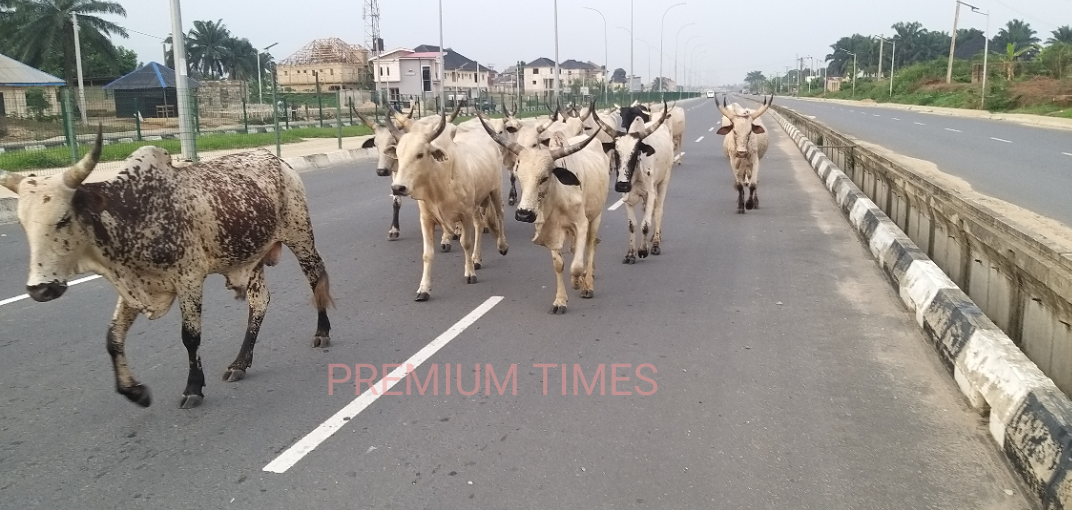
It has already been two years, and Hashimu Yahaya still counts his losses.
The young herder recalls the day when armed men invaded his home in Rudwang, a small Fulani settlement in Mangu Local Government Area of Plateau State, in 2023.
The attack, which he said nearly claimed his life, was a spillover of farmers-herders violence that erupted in Mangu a month earlier and lingered till the end of the year, spilling into neighbouring local government areas and resulting in what was reported as a Christmas Eve attack.
Even though he narrowly escaped, Mr Yahaya lost five relatives, including his younger brother, Ismail.
“They were killed, and their bodies were sliced into pieces before dumping them in a well,” he muttered, his voice cracking.
Apart from losing his loved ones, Mr Yahaya explained that the assailants went away with 80 cattle belonging to him and his family.

He said the theft was reported to the police and the military. “But we could not recover the cattle,” he told PREMIUM TIMES, estimating the loss at N40 million at the time.
Hundreds of people have been killed in such violence in Plateau State in recent years. For herder families, such as Mr Yahaya’s, not only do they lose their loved ones, but their cattle are also rustled, thus making economic recovery difficult for them.
A tech solution far from herder’s reach
Mr Yahaya’s ordeal with his cattle mirrors the gap between policy promise and reality in Nigeria’s livestock sector.
In 2022, the Nigerian government, through the Federal Ministry of Agriculture and Food Security, launched the National Animal Identification System (NAITS), presenting it as a technology-driven solution to curb cattle rustling and scale up the livestock industry.
NAITS was built around a digital livestock identification and tracing tool, Ranch.ID. The tool, as explained on NAITS’ website, uses two-dimensional “data matrix barcodes on ear tags.”
The ear tags contain “biometric identifiers such as facial recognition and extensive cattle passport information.”
In theory, the system reflects key principles of Digital Public Infrastructure (DPI). It aims to create a standardised national database, improving interoperability across agencies, and including pastoralists who have historically operated outside formal systems.
But several years after its launch, herders like Mr Yahaya say they haven’t seen it materialise.
“I only heard about something like that four years ago when some colleagues were discussing it in our village,” he said.

Investigations show that the federal government spent N68.3 million (N68,363,636.36) to design the initiative. Yet there is no publicly accessible dashboard showing how many animals have been registered nationwide, how many states are actively using the system, or whether [tagged] livestock have ever been successfully recovered after theft.
This opacity, experts say, is part of the problem.
The scale of cattle rustling
Cattle rustling has evolved from sporadic theft into a major driver of rural violence in Nigeria. According to security analysts and herders’ associations, armed groups now steal livestock at scale, selling them in poorly governed markets and using the proceeds to fund terrorism.
The Miyetti Allah Cattle Breeders Association (MACBAN) estimates that more than four million cattle have been rustled since 2014, the peak of the Boko Haram insurgency. MACBAN’s national president, Baba Ngelzarma, in an interview with this reporter, noted that there is no centralised data to substantiate this.
A 2024 study by the Global Initiative Against Transnational Organised Crime (GI-TOC) and the Armed Conflict Location & Event Data Project (ACLED) found that cattle rustling, as it is now known, began as sporadic theft in Nigeria in 2011, becoming a primary revenue stream for terrorists locally known as bandits.
The industry evolved into a mass criminal economy, but diminished in 2019 as attention shifted to kidnappings and mining. By late 2023, the researchers argued that the scale of theft had become so extensive that armed groups themselves were described as the largest cattle owners in parts of North-west, triggering infighting over the remaining herds.
Yet as herders continued to flee to safer places, terrorists followed suit, preying on their livestock.
An emerging DPI that has yet to mature
Digital governance experts describe NAITS as an emerging DPI, one with potential but weak institutional execution. While its design partially reflects inclusivity and reusability, it lags in other key DPI principles.
Even though livestock management in Nigeria is largely decentralised, NAITS appears to operate as a federated system. The federal government announced in 2022 that implementation had commenced in at least ten states – Bauchi, Edo, Enugu, Lagos, Katsina, Niger, Ogun, Oyo, and Ondo – and the FCT. Yet there is no verifiable public record showing operational status, adoption rates, or state-level integration.

Mr Ngelzarma, the MACBAN president, said the initiative, which was initially piloted by a private company, Megacorps Nigeria Limited, has not “taken off.”
He blamed the delay on “policy and bureaucratic issues that have not yet been completed for the programme to take off smoothly.”
Starting new initiatives like the NAITS, Mr Ngelzarma says, comes with challenges, one of which he said was the creation of the Ministry of Livestock Development. The new ministry will now take control of NAITS, the MACBAN president told PREMIUM TIMES. But there seems to be inter-ministerial rivalry as observed with the recent launch of the initiative in Kogi and Kwara states.
Ezeaja Ikemefuna, an assistant director at the information department of the Ministry of Agriculture, told our reporter that the initiative “is now under Livestock Development,” advising that all questions be directed to the ministry.
However, the livestock ministry has yet to respond to enquiries sent to them.
NAITS also falls short of another DPI principle—interoperability. It is not clear whether NAITS’ data is integrated with those of relevant entities, such as security agencies.
As part of Nigeria’s broader digital transformation strategy, the National Information Technology Development Agency (NITDA) has since 2018 been leading what it describes as ‘Nigerian e-Government Interoperability Framework (Ne-GIF).’ The framework, backed by the NITDA Act 2007, aims to standardise communication, data exchange, and service integration among Ministries, Departments, and Agencies (MDAs).
This year, it plans to put the framework into practice. The agency said it will begin deploying actual interoperable systems, such as the Nigerian Data Exchange (NGDX), that allow government platforms to share data securely.
“Sometimes you can trace the cattle, but you can’t easily find security operatives who will recover them,” Mr Yahaya, whose cattle were rustled in Plateau, said.
His point was similarly echoed by Mr Ngelzarma, who argued that the tool is “not enough” to curb cattle rustling. “But it will also be useful in improving standards of livestock production and consumption.”
A digital governance expert and the digital rights lead at the Centre for Information Technology and Development (CITAD), Ali Sabo, also shared a similar view.
“While tools can generate data, recovery and deterrence require security agencies,” he said.
The herders this reporter spoke to also raised concerns about ear tags, saying perpetrators could easily remove them. Allaying their fears, Mr Ngelzarma said the tags come in different models. Some are ear tags, while some can be chipped in an animal’s skin, he explained, noting that those handling the technical aspects will know which works best.
Findings show that Megacorps, the private company, still handles the technical parts of the initiative. This, Mr Sabo feared, could strip the government of data sovereignty and cause “long-term sustainability challenges.”
READ ALSO: Armed herders kill ex-House of Assembly candidate, four others in Benue
He also emphasised the importance of transparency, accountability, and public procurement oversight, highlighting the inability to assess value for money without public data on usage and outcomes.
The initiative, Mr Sabo said, shows potential as an emerging DPI. “But implementation is actually incomplete, especially in governance, transparency, and institutional integration.”
Uche Ononye, Megacorps’ Chief Operating Officer and Project Lead for NAITS, told this newspaper that his firm has developed the system. He said the initiative is inclusive, interoperable, and privacy-protected, and that it can be improved.
The “biggest challenge”, Mr Ononye said, is the implementation of the initiative. “The system has been developed; it is just the implementation.”
He noted that there is a need for proper sensitization and awareness about the initiative.
Herders like Mr Yahaya have the hope that cattle rustling will be mitigated if the initiative is implemented.
“I haven’t seen or officially been told about it,” he reiterated. “But I believe something like that technology will help reduce the problem.”
This report is produced under the DPI Africa Journalism Fellowship Programme of the Media Foundation for West Africa and Co-Develop.

Africa’s next food crisis may not begin on the farm, but in a distant shipping lane. With the Iran war, international attention has focused on oil flows through the Strait of Hormuz and related shortages or price spikes in energy and fuel. Less visible is another vulnerability moving through the same corridor: the fertilisers underpinning global food production.
Fertiliser supply disruptions feed directly into food prices and agricultural output, and most African countries have high import volumes and are ill-positioned to absorb the shock. Domestic production in Africa is insufficient to meet the growing demand.
Production capacity exists in parts of North and West Africa, driven by massive phosphate deposits and natural gas reserves. Morocco leads in phosphates, accounting for over 50 per cent of Africa’s supply and ranks among the top five global phosphate fertiliser exporters, while Nigeria, Egypt and Algeria dominate in nitrogenous (urea) fertiliser production.
A significant share of global fertiliser output is tied to energy-rich regions, particularly in the Gulf. The Middle East is a major hub for nitrogen-based fertilisers, reflecting the local availability of natural gas, which underpins ammonia and urea production.
The Strait of Hormuz connects these production hubs to global markets through a single, highly exposed shipping route. Almost 50 per cent of the globally traded sulphur used in phosphate fertilisers moves through it, making it a critical corridor for global agricultural inputs.
In parts of the Gulf, fertiliser plants have reduced output or paused operations. Even major producers like Morocco’s OCP Group are affected.
Fertiliser production relies on critical inputs like sulphur, much of which is sourced from the Persian Gulf, particularly the United Arab Emirates and Saudi Arabia, regions entangled in these disrupted trade routes. As sulphur supply tightens, production cannot be scaled up, even where phosphate reserves are abundant, and domestic logistics remain intact.
Constrained production will also erode export revenues for Africa’s major fertiliser exporters. Morocco and Egypt, together accounting for roughly 70 per cent of the continent’s fertiliser exports, could be disproportionately affected. At the same time, net importers, like Ethiopia, Côte d’Ivoire, Zambia, Kenya and the Democratic Republic of the Congo, face heightened risks of food inflation and declining crop yields.
The combined effect is a dual shock: export earnings weaken for producers, while import-dependent economies absorb rising costs and agricultural stress, amplifying macroeconomic and food security pressures.
Urea prices have surged from just under $500 per tonne before the conflict to above $700 per tonne in recent weeks. In South Africa, where roughly 80 per cent of crop production inputs are imported, and fertiliser constitutes a major share, grain farmers face input cost increases of up to 35 per cent. As Africa’s largest supplier of packaged foods, these pressures will likely transmit through the food system, worsening inflation.
Disruptions place disproportionate pressure on Africa’s low-industrialised farming systems. Fertiliser use remains far below global levels, averaging just 17 kg to 23 kg per hectare compared with a global average of 135 kg per hectare, reflecting persistent constraints on affordability and access. Reduced access to fertiliser is likely to lower application rates, with direct knock-on effects on crop yields and overall production across the growing season.
The stakes are particularly high given the central role of agriculture in African economies. The sector employs between 60 per cent and 70 per cent of the workforce, with rates exceeding 80 per cent in countries like Burundi, Malawi and Madagascar. However, it is dominated by smallholder farmers with limited capacity to absorb rising input costs or supply disruptions, making them acutely vulnerable to fertiliser shocks.
The lesson is not only about exposure tied to price volatility risks. It is also one of the structural vulnerabilities and untapped capacities. Africa holds many of the inputs required to reduce this dependency: natural gas reserves in Nigeria, Mozambique, Tanzania and Senegal; significant phosphate resources in Morocco and Tunisia; and rapidly growing demand driven by the need to boost agricultural productivity and contain food crises.
Converting this resource base into production and supply capacity is achievable, but requires focusing on three priorities.
First, production must be scaled strategically. Not every country needs to produce fertiliser, but a core group with comparative advantages could anchor regional supply. Second, markets must be integrated. Without efficient cross-border trade, lower transport costs and reliable distribution, increased production won’t translate into access. The African Continental Free Trade Area agreement provides a ready framework, but it must be operationalised.
Third, fertiliser policy must extend beyond production. Supply depends on functioning ecosystems: storage, blending, transport, finance and last-mile delivery. Without these, fertiliser will not reach farmers at scale. These segments create space for local entrepreneurship. The growth of agri-tech platforms such as Hello Tractor and Apollo Agriculture shows what’s possible, but these remain the exception, not the norm.
Self-sufficiency is neither feasible nor necessary. However, the current disruption exposes the cost of leaving a strategic input to external markets. Greater regional capacity would not eliminate global exposure, but would reduce the extent to which distant crises dictate African food systems.
The Hormuz shock is a warning about the fragility of supply chains. It exposes a persistent blind spot in agricultural policy debates. While financing gaps and farm-level productivity dominate the agenda, less attention is given to upstream supply chains that shape access to critical inputs such as fertiliser.
It’s a reminder that agricultural stability and food security depend not just on seeds, rainfall and land, but on whether Africa can build the industrial foundations that address the fertiliser system deficit and make food production less vulnerable to external dependencies.
A previous version of this article was published in Africa Tomorrow, the blog of the ISS African Futures and Innovation Programme.
Julia Baum, Website Consultant and Marvellous Ngundu, Research Consultant, Institute for Security Studies (ISS).
(This article was first published by ISS Today, a Premium Times syndication partner. We have their permission to republish).

The National Biosafety Management Agency (NBMA) says it has ordered the suspension of four new transgenic cotton hybrid varieties in Nigeria.
The varieties are MIC 561 BGII, MIC 563 BGII, BIOSEED-FIYAH CH1001, and BIOSEED-FIYAH CH1002. They were allegedly registered by the National Committee on Naming, Registration and Release of Crop Varieties, Livestock Breeds and Fisheries on 26 March 2026 without the requisite approval of NBMA.
In a statement issued Tuesday and signed by NBMA’s Head of Information and Public Relations, Gloria Ogbaki, the agency said its regulatory surveillance and compliance-monitoring mechanisms identified “serious compliance abnormalities” in the varieties.
“The National Biosafety Management Agency (NBMA) wishes to inform the public of recent developments concerning the registration of four new transgenic cotton hybrid varieties in Nigeria – MIC 561 BGII, MIC 563 BGII, BIOSEED-FIYAH CH1001, BIOSEED-FIYAH CH1002,” the statement said.
Background
Genetically modified (GM) crops are plants whose DNA has been altered using genetic engineering to introduce desirable traits such as resistance to pests, diseases, or environmental conditions, as well as improved nutritional value.
In Nigeria, the adoption of GM crops has remained contentious. While proponents argue that the technology can boost food production and enhance food security, critics have raised concerns about environmental and health risks, weak regulatory enforcement, and inadequate labelling.
According to the International Service for the Acquisition of Agri-biotech Applications (ISAAA), more than 30 major food crops have been genetically modified globally. Nigeria has approved four crops—maize, cowpea, cotton, and soybean—for commercialisation and is among six African countries leading in biotech crop adoption.
In 2024, the government approved four varieties of Tela maize, further intensifying debates over GM crop safety and transparency.
Concerns also persist over farmers’ limited knowledge of GM seed characteristics, potential dependence on seed companies, and the broader impact on traditional farming systems.
An investigation by PREMIUM TIMES and international partners in 2024 revealed how the U.S. government, through the now-defunct USAID, funded pesticide and GM-related advocacy campaigns in Nigeria, including efforts that profiled critics of GMOs.
As debates continue, the suspension of the new cotton varieties underscores ongoing challenges around biosafety compliance and regulatory oversight in Nigeria’s biotechnology sector.
Findings
The agency said its findings confirmed that confined field trials and related activities involving the varieties were conducted without prior authorisation, inspection, or regulatory oversight.
“At no time did the National Biosafety Management Agency grant any approval for the confined field trials, multi-locational trials, or commercial release of the new GM cotton varieties,” the statement said.
Under the NBMA Act, the agency said, no person or institution is permitted to conduct confined field trials, multi-locational trials, or the commercial release of genetically modified organisms without its explicit approval.
It added that any action outside this framework constitutes a violation of national biosafety regulations.
NBMA said it has directed the National Committee on Naming, Registration and Release of Crop Varieties, Livestock Breeds and Fisheries to suspend further action on the varieties pending the outcome of ongoing investigations.
READ ALSO: BUA Foods Posts N1.77 Trillion Revenue, announces N28 Dividend
“The Agency will apply all appropriate regulatory measures and sanctions as provided under the law,” the statement added.
The agency assured Nigerians that it is handling the matter with seriousness.
“There is no evidence at this time of any immediate risk to public health or the environment and all necessary steps are being taken to ensure continued safety and regulatory integrity,” the statement said.
NBMA reiterated its commitment to ensuring that biotechnology activities in Nigeria comply with national laws and international best practices, adding that the public will be kept informed as investigations progress.

The National Biosafety Management Agency (NBMA) says it has ordered the suspension of four new transgenic cotton hybrid varieties in Nigeria.
The varieties are MIC 561 BGII, MIC 563 BGII, BIOSEED-FIYAH CH1001, and BIOSEED-FIYAH CH1002. They were allegedly registered by the National Committee on Naming, Registration and Release of Crop Varieties, Livestock Breeds and Fisheries on 26 March 2026 without the requisite approval of NBMA.
In a statement issued Tuesday and signed by NBMA’s Head of Information and Public Relations, Gloria Ogbaki, the agency said its regulatory surveillance and compliance-monitoring mechanisms identified “serious compliance abnormalities” in the varieties.
“The National Biosafety Management Agency (NBMA) wishes to inform the public of recent developments concerning the registration of four new transgenic cotton hybrid varieties in Nigeria – MIC 561 BGII, MIC 563 BGII, BIOSEED-FIYAH CH1001, BIOSEED-FIYAH CH1002,” the statement said.
Background
Genetically modified (GM) crops are plants whose DNA has been altered using genetic engineering to introduce desirable traits such as resistance to pests, diseases, or environmental conditions, as well as improved nutritional value.
In Nigeria, the adoption of GM crops has remained contentious. While proponents argue that the technology can boost food production and enhance food security, critics have raised concerns about environmental and health risks, weak regulatory enforcement, and inadequate labelling.
According to the International Service for the Acquisition of Agri-biotech Applications (ISAAA), more than 30 major food crops have been genetically modified globally. Nigeria has approved four crops—maize, cowpea, cotton, and soybean—for commercialisation and is among six African countries leading in biotech crop adoption.
In 2024, the government approved four varieties of Tela maize, further intensifying debates over GM crop safety and transparency.
Concerns also persist over farmers’ limited knowledge of GM seed characteristics, potential dependence on seed companies, and the broader impact on traditional farming systems.
An investigation by PREMIUM TIMES and international partners in 2024 revealed how the U.S. government, through the now-defunct USAID, funded pesticide and GM-related advocacy campaigns in Nigeria, including efforts that profiled critics of GMOs.
As debates continue, the suspension of the new cotton varieties underscores ongoing challenges around biosafety compliance and regulatory oversight in Nigeria’s biotechnology sector.
Findings
The agency said its findings confirmed that confined field trials and related activities involving the varieties were conducted without prior authorisation, inspection, or regulatory oversight.
“At no time did the National Biosafety Management Agency grant any approval for the confined field trials, multi-locational trials, or commercial release of the new GM cotton varieties,” the statement said.
Under the NBMA Act, the agency said, no person or institution is permitted to conduct confined field trials, multi-locational trials, or the commercial release of genetically modified organisms without its explicit approval.
It added that any action outside this framework constitutes a violation of national biosafety regulations.
NBMA said it has directed the National Committee on Naming, Registration and Release of Crop Varieties, Livestock Breeds and Fisheries to suspend further action on the varieties pending the outcome of ongoing investigations.
READ ALSO: BUA Foods Posts N1.77 Trillion Revenue, announces N28 Dividend
“The Agency will apply all appropriate regulatory measures and sanctions as provided under the law,” the statement added.
The agency assured Nigerians that it is handling the matter with seriousness.
“There is no evidence at this time of any immediate risk to public health or the environment and all necessary steps are being taken to ensure continued safety and regulatory integrity,” the statement said.
NBMA reiterated its commitment to ensuring that biotechnology activities in Nigeria comply with national laws and international best practices, adding that the public will be kept informed as investigations progress.


Hisbah intercepts hidden alcohol shipment in Katsina

Iran Leave Lengthy Note in World Cup Dressing Room After ‘Pride Match’ Draw vs Egypt

Man Utd and Tottenham Battle for West Ham’s Mateus Fernandes

Simi Sanya and Femi Dapson Are Now Legally Married and It Is Beautiful to See

FCT Area Council Election: Live results from polling units

Premier League Set-Piece Goals (2025/2026)
-
 Sports23 hours ago
FIFA Allow Rainbow Flags at World Cup ‘Pride Match’ Featuring Iran vs Egypt
-
 Sports2 days ago
Thomas Partey Could Be Blocked From Knockout Tie
-
 Sports16 hours ago
Raphinha’s Wife Debunks ‘Financial Problems’ Claim From World Cup Winner
-
 Sports1 day ago
Rory McIlroy Risks Breaking PGA Tour Rule That Led to One-Year Ban
-
 Sports24 hours ago
Uruguay Players ‘Revolt Against Marcelo Bielsa’ Ahead of Spain Game
-
 Sports2 days ago
Supercomputer Predicts 2026-27 Championship Table
-
 Sports2 days ago
Trent Alexander-Arnold Could Have Played For the USMNT Instead of England
-
 Sports2 days ago
Cristiano Ronaldo’s Reaction to Lionel Messi’s Argentina Retirement in 2016