
Sports
Premier League Goalkeepers Ranked by Time Wasted in 2025/26


Fabian Hurzeler was not happy with David Raya’s antics during Brighton’s 1-0 defeat to Arsenal in the Premier League in midweek.
Hurzeler unleashed a massive rant after the match at the Amex Stadium where he took aim at Mikel Arteta and Arsenal’s tactics. He also claimed that Raya should have been given two yellow cards and sent off for time-wasting. He said, per talkSPORT:
“I think it’s difficult, but we just need clearer rules, and normally the goalkeeper should be sent off with two yellow cards for time-wasting, but you can’t do it and therefore if you don’t have clear rules, I think it’s difficult for the referee.
“But I made my point before it and like I just mentioned we have to find a solution. The Premier League has to find a solution because I don’t know how you see it but for me it doesn’t make it fun to see these kind of games.”
Hurzeler also said Arsenal’s tactics ‘are not football’ and vowed ‘I will never be that kind of manager who tries to win in that way.’
Following the German’s rant and his crticism of Raya, the Athletic have crunched the numbers and revealed how much time it takes every starting Premier League goalkeeper to release the ball following a pick up or claim this season.
20-11

Goalkeepers are given eight seconds to release the ball, or the opposition is awarded a corner-kick. It is therefore no surprise that no player has taken more than that to get rid of the ball on average this season.
The goalkeeper that takes the longest to release the ball following a pick-up or claim is Man Utd stopper, Senne Lammens. The Belgian takes 7.68 seconds on average, which is by far the longest of any starting Premier League goalkeeper.
Other players that take a long time – but not as long as Lammens – are Bart Verbruggen (6.52 seconds) and Jordan Pickford (6.5 seconds).
|
2025/26 Premier League goalkeepers – average time to release the ball (20-11) |
|||
|---|---|---|---|
|
Position |
Player |
Club |
Seconds |
|
20 |
Senne Lammens |
Manchester United |
7.68 |
|
19 |
Bart Verbruggen |
Brighton & Hove Albion |
6.52 |
|
18 |
Jordan Pickford |
Everton |
6.49 |
|
17 |
Dean Henderson |
Crystal Palace |
5.99 |
|
16 |
Robin Roefs |
Sunderland |
5.97 |
|
15 |
Emiliano Martinez |
Aston Villa |
5.85 |
|
14 |
Alphonse Areola |
West Ham United |
5.72 |
|
13 |
Mats Sels |
Nottingham Forest |
5.54 |
|
12 |
Gianluigi Donnarumma |
Manchester City |
5.36 |
|
11 |
Bernd Leno |
Fulham |
5.14 |
10-1

Hurzeler wasn’t impressed with Raya’s antics, but it turns out he is among the quickest goalkeepers to release the ball in the Premier League. He’s taken 3.96 seconds on average to let go of the ball after a pick-up or claim; only two goalkeepers have done so quicker. They are Bournemouth goalkeeper Djordje Petrovic (Bournemouth) and Nick Pope (Newcastle).
Among the other goalkeepers in England’s top flight that are quick to let the ball go and restart play quickly are Chelsea’s Robert Sanchez, Liverpool’s Alisson Becker, and Brentford’s Caoimhin Kelleher.
|
2025/26 Premier League goalkeepers – average time to release the ball (10-1) |
|||
|---|---|---|---|
|
Position |
Player |
Club |
Seconds |
|
10 |
Martin Dubravka |
Burnley |
4.87 |
|
9 |
Guglielmo Vicario |
Tottenham Hotspur |
4.78 |
|
=7 |
Caoimhin Kelleher |
Brentford |
4.56 |
|
=7 |
Karl Darlow |
Leeds United |
4.56 |
|
6 |
Alisson Becker |
Liverpool |
4.37 |
|
5 |
Robert Sanchez |
Chelsea |
4.15 |
|
4 |
Jose Sa |
Wolverhampton Wanderers |
4.12 |
|
3 |
David Raya |
Arsenal |
3.96 |
|
2 |
Djordje Petrovic |
Bournemouth |
3.42 |
|
1 |
Nick Pope |
Newcastle United |
3.33 |

The extended 2026 World Cup with 48 teams in total equates to more opportunities to progress to the knockout stages, which ensures that we can expect more drama than ever before.
Previously, from 1998-2002, only the top teams from each of the eight groups progressed into the Round of 16, but qualification via the third-place position has returned to the tournament for the first time since 1994.
Some teams confirmed their place in the knockouts by virtue of winning two matches — with six points being enough to assure automatic qualification. Yet, it may not ensure that a country will top their group and enjoy a potentially more favourable draw in the next stage.
Here’s the full breakdown of the current third-place situation.
World Cup 2026 Third-Place Table

Whilst the 12 groups will be the main viewpoint for fans during the World Cup, the third-place table also plays a significant part, as eight teams will qualify through this amplified pathway.
Very little will separate the final standings, but the general rule of thumb is that you have to win at least one game to put yourself in contention.
Reaching four points will guarantee you a place in the top eight — ensuring that a team likely beats the weakest in the group and produces another result against either of the top two sides.
Due to the bracket showing potential routes, it can lead to situations arising where it would be better for certain teams to avoid winning in their final game to ensure they have an easier route in the next round, which is certainly a difficult opportunity to navigate.
|
Third-Place Table |
||||||
|---|---|---|---|---|---|---|
|
Team |
P |
W |
D |
L |
GD |
Points |
|
1. Bosnia-Herzegovina |
3 |
1 |
1 |
1 |
-1 |
4 |
|
2. Sweden |
2 |
1 |
0 |
1 |
0 |
3 |
|
3. Croatia |
2 |
1 |
0 |
1 |
-1 |
3 |
|
4. South Korea |
3 |
1 |
0 |
2 |
-1 |
3 |
|
5. Algeria |
2 |
1 |
0 |
1 |
-2 |
3 |
|
6. Paraguay |
2 |
1 |
0 |
1 |
-2 |
3 |
|
7. Scotland |
3 |
1 |
0 |
2 |
-3 |
3 |
|
8. Cape Verde |
2 |
0 |
2 |
0 |
0 |
2 |
Table correct as of 12 noon BST (7am ET) June 25, 2026.
You scored
out of 20
Round of 32 Bracket For Third-Place Teams

With the final round of games still yet to be completed, this current list is subject to change. Even teams with three completed games will have to wait for results elsewhere as the complex tapestry of the new format unveils.
However, this is the bracket as it stands — top to bottom of the full draw.
*Group Stage completed.
World Cup on GIVEMESPORT
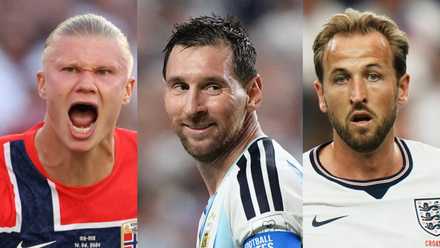
World Cup 2026 Top Scorers: Players with Most Goals in Race for Golden Boot
The battle for the World Cup Golden Boot is already heating up, with a number of familiar faces and a few surprise standouts in contention.

Fired WWE Superstar Braun Strowman has fired back at Cody Rhodes‘ glowing words when talking about the leadership of Paul ‘Triple H‘ Levesque as the company’s Chief Content Officer.
Levesque H has been in the role since 2022 and has seen plenty of highs and lows in that time. Fans were originally delighted with the direction in which he took the company. However, a growing percentage feel like the product now isn’t what it once was.
Reigning Cody Rhodes is certainly under the impression that Triple H is doing a great job, especially when considering the mammoth task of constantly improving the product. However, it seems like not everybody agrees.
Cody Rhodes Praises Triple H

Speaking on the Ariel Helwani Show, Rhodes praised Triple H’s work and spoke confidently about the future of the company’s creative process.
“If you want a job in the wrestling space, nobody has a harder job than Triple H right now. There’s never been a booker in the history of the business who has been beloved and revered the entire time. Nobody has a harder job, and no one can do that job better than he can do it,” he said.
In addition to this, he also commended Levesque’s ability to work with others, acting like a head coach to the company’s stacked talent roster.
Rhodes insisted: “He’s the head coach of this team… One thing he’s big on is, ‘What do you think? What’s your gut tell you?’ That’s one of the greatest gifts to be asked that when you have the experience.”
Braun Strowman’s Brutal Reply to Cody Rhodes

However, former WWE Universal Champion Braun Strowman took to social media to dispute Rhodes’ take. ‘The Monster Among Monsters’ was released by WWE back in May 2025, after spending more than a decade with the company across various stints
Strowman won such accolades as the Greatest Royal Rumble and Money in the Bank, before his career then peaked when he captured the Universal title at WrestleMania 36, beating Goldberg.
Ironically, he was also cut in 2021, but was brought back a year later by Triple H as part of the fresh creative regime. After a few more years, they once again parted ways as injuries started to curtail Strowman’s performances.
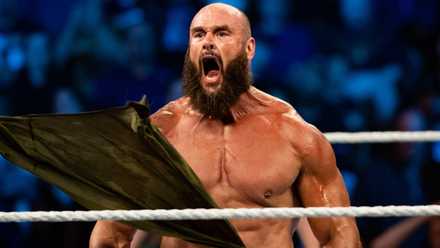
Why WWE Released Braun Strowman Revealed
The reason behind Braun Strowman’s shock release from WWE has now been revealed.
One of the major reasons given for his release last year was that creative didn’t have any plans for him in the main event scene.
The topic of WWE’s apparent decline has been a growing topic of conversation over the last year, with viewership, ticket sales and social numbers all reportedly declining.
After hearing Rhodes praise Triple H, Strowman took to Twitter/X to dispute his claims with a four-word response:
“Ratings say otherwise lol!”
Strowman hasn’t wrestled since his WWE release and, given the way he has taken shots at the company on social media, it would be a surprise to see him return to the promotion any time soon.

With the 2026 World Cup housing more teams than ever before, the inflated competition brings more games than ever and new situations to consider.
That is particularly evident in the group stages, where the complications surrounding the new format means an extra knockout round and the added ‘best third-placed teams’ section.
Plus, there’s also confusion when it comes to group ties. How does it work? What metric is used to separate teams? Don’t worry: we’ve got all the answers.
World Cup Group Stage Tie-Breakers

The most important question is: what happens if teams finish level on points? As we know, the end of the group stage is determined by points. However, where two or more teams are tied on points, tiebreakers come into effect and are applied until a winner is found. This takes on greater importance due to the extension of the format and the best third-placed team addition.
For the 2026 competition, the new addition is that the head-to-head record now comes before overall goal difference as the first tiebreaker. However, for the third-placed teams all competing against each other, goal difference is the key factor in progressing to the Last 32.
If teams were to tie both head-to-head and overall goal difference, they would then move down the list of tiebreakers — of which there are eight in total — to find the winner. Here’s the full list:
|
World Cup Tie-Breaker Rules |
|
|---|---|
|
Step 1 |
Head-to-head points |
|
Step 2 |
Head-to-head goal difference |
|
Step 3 |
Head-to-head goals scored |
|
Step 4 |
Overall goal difference |
|
Step 5 |
Overall goals scored |
|
Step 6 |
Team conduct score |
|
Step 7 |
FIFA ranking |
History of World Cup Tie-Breakers

Over the history of the World Cup, the tournament has evolved over time to include more teams and different formats. For example, the first two editions in 1934 and 1938 had no group stages.
In fact, the first time tie-breakers were used was in 1958. Playoff matches were used alongside goal average (an outdated concept) to decide which teams would advance from the group stages. Goal difference wasn’t introduced until 1970; the same tournament that utilised drawing lots.
Only once was drawing lots used. In 1990, the Netherlands and Ireland were inseparable on every conceivable metric — goals, goal difference and head-to-head — and drawing lots was needed to decide who finished second and third. FIFA’s Sepp Blatter oversaw a live, televised draw in which Ireland finished second but Oranje progressed as the best third-placed side.
You scored
out of 20
1994 saw the introduction of head-to-head as a deciding factor — and the most extraordinary group in World Cup history. Group E saw Mexico, Ireland, Italy and Norway all tied on four points as well as having identical goal difference across the board.
Mexico topped the group by virtue of scoring the most goals. Ireland and Italy each netted twice and were separated due to the Irish one-nil victory, but the Azzurri progressed as the best third-placed team. Norway were eliminated due to the fact that they netted just once.
After that, the next notable mention of tiebreakers was the usage of the ‘fair play’ ruling that was demonstrated for the first time in the 2018 World Cup in Russia. Japan advanced over Senegal on fair play after both teams were level on points, goal difference, goals and head-to-head. The Asian side progressed due to them recording lower cards, minus four versus the six that the African side managed. 2022 also saw the removal of drawing lots as the final tiebreaker.
Returning to the present, the addition of head-to-head as primary is important given the nature of the extended competition and perceived disparity between teams. Take Germany‘s 7-1 win over Curaçao as a prime example; rewarding teams for winning matches matters most, rather than totaling dominant victories against weaker opponents.
World Cup on GIVEMESPORT


Anambra police rescue woman accused of trying to steal infant from mob action
World Cup 2026 Third-Place Tracker: Who Goes Through?
Braun Strowman’s 4-Word Tweet to Cody Rhodes Over Triple H Praise

Simi Sanya and Femi Dapson Are Now Legally Married and It Is Beautiful to See

FCT Area Council Election: Live results from polling units

Premier League Set-Piece Goals (2025/2026)
-
 Sports2 days ago
FIFA Want to Change Rule For World Cup Penalty Shootouts
-
 Sports2 days ago
World Cup Commentator Banned by FIFA After Epic On-Air Meltdown During Game
-
 Sports2 days ago
Djed Spence Refuses Thomas Partey Handshake
-
 Sports15 hours ago
Bastian Schweinsteiger Sparks Outrage With Comments Ahead of Germany v Ivory Coast
-
 Sports16 hours ago
Why Austria and Algeria May Both Want to Lose Their Final Group Game
-
 Sports2 days ago
Why Senegal and Iraq Haven’t Been Eliminated Despite Being on 0 Points
-
 Sports2 days ago
‘Real Reason’ Behind Ibrahimovic and Lalas’ World Cup ‘Hatred’
-
 Sports1 day ago
Jude Bellingham Avoids Red Card For Banned Gesture vs Ghana