
Business
Nigeria risks losing cargo to port of neighbouring countries — SEREC warns


By Godwin Oritse
Nigeria Maritime risks losing cargo to ports in neighbouring countries due to persistent inefficiencies, the Sea Empowerment & Research Center (SEREC) has warned in a new policy advisory, highlighting mounting structural pressure in the maritime sector.
Titled “Maritime Reform at a Crossroads: Data Signals, Export Concerns, and the Urgent Need for Execution Discipline,” the advisory points to concerning trends recorded in the first quarter of 2026. Although customs revenue posted an estimated growth of between 12 and 18 percent, operational indicators such as cargo dwell time and vessel turnaround remain suboptimal.
According to the report, average cargo dwell time exceeded 15 days, while vessel turnaround time ranged between four and six days. Export throughput, particularly in the non-oil segment, declined by about 8 to 12 percent—an indication, SEREC noted, of a gradual erosion of Nigeria’s export competitiveness.
According to the report, Nigeria’s export ecosystem is increasingly underperforming due to delays in processing, poor prioritization at port terminals, and logistics inefficiencies.
These challenges are particularly affecting agro-exports, undermining broader economic diversification efforts.
“The system remains structurally tilted toward imports,” the report noted, warning that continued neglect of export facilitation could weaken Nigeria’s trade balance over time.
SEREC identified neighboring ports in Benin Republic and Togo as growing threats, citing their lower costs, faster clearance times, and more predictable regulatory environments.
Ports along the Cotonou–Lomé corridor are increasingly attracting Nigerian-bound cargo, aided by efficient transshipment systems and expanding cross-border trucking networks.
The report estimates that if current trends persist, between 15 and 25 percent of Nigeria-bound cargo could be diverted to neighboring ports within the next 12 to 24 months.
“This is not a theoretical risk—it is already happening,” the advisory stated. “Cargo flows to where systems work best, not necessarily where geography dictates.”
The potential consequences for Nigeria are significant. SEREC warned of revenue leakage from lost customs duties and port charges, distortion of national trade data, job losses within the logistics sector, and a broader erosion of the country’s strategic maritime position.
There is also concern that Nigeria could gradually shift from being a regional maritime hub to merely a destination market reliant on external port infrastructure.
The post Nigeria risks losing cargo to port of neighbouring countries — SEREC warns appeared first on Vanguard News.

By Godwin Oritse
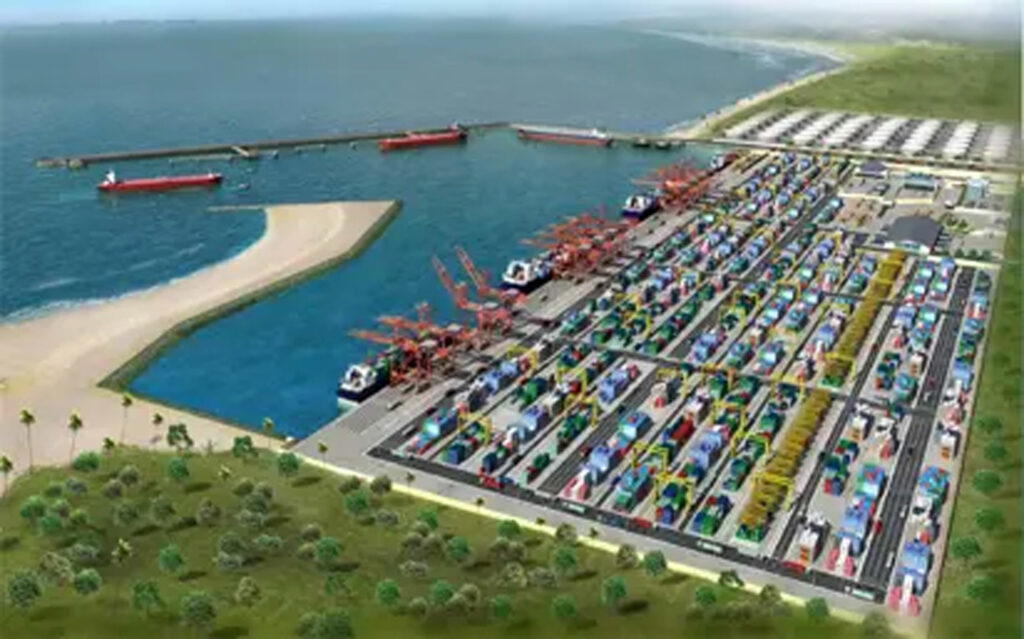
Lagos State Governor, Babajide Sanwo-Olu, has announced that work on Phase 2 of the Lekki Port project will commence soon, a move aimed at strengthening the state’s position as West Africa’s leading maritime and logistics hub.
Speaking at the Invest Lagos Summit 3.0 held in Lagos earlier in this week, Sanwo-Olu highlighted the State’s commitment to expanding critical infrastructure and attracting investment.
He explained that the expansion of the Port will significantly enhance cargo handling capacity, strengthen maritime trade, and deepen Lagos’ role as a gateway to the African Continental Free Trade Area (AfCFTA) market of over 1.4 billion people.
He stated: “With AfCFTA creating a market of over 1.4 billion people and a combined GDP exceeding $3 trillion, Lagos occupies a uniquely strategic position.
“The Lekki Deep Sea Port, within five years, is moving to phase two because it is almost reaching the full potential of its installed capacity. And just within five years, it is moving to phase two. These are not just aspirations but projects that have been implemented and are under implementation. They have been funded, progressing, and transforming the investment landscape of our State”.
In his remark, the Managing Director, Lekki Port, Wang Qiang, commended the Lagos State Government for maintaining a stable and investment-friendly environment.
He noted that the next phase of development will play a key role in expanding the port’s operational and cargo-handling capacity, improving logistics efficiency along the Lekki corridor, and attracting additional global shipping and logistics investments.
Qiang noted that the expansion aligns with Nigeria’s broader trade facilitation agenda and the increasing demands of regional and international shipping networks.
He stated: “We are deeply encouraged by the continued support of the Lagos State Government, whose infrastructure-led policies have created a stable and forward-looking environment for long-term maritime investment.
“The commencement of the next phase of development represents a significant milestone in our journey to expand capacity, enhance operational efficiency, and strengthen Lekki Port’s position as a premier gateway for West African trade under the AfCFTA framework.”
The post Lekki Port Phase 2 construction set for kick-off, says Lagos govt appeared first on Vanguard News.

By Udeme Akpan & Obas Esiedesa
The Nigerian National Petroleum Company Limited (NNPC Ltd.) and security agencies have intensified efforts to combat pipeline vandalism following the discovery of a damaged section of the Nigerian Pipelines and Storage Company (NPSC) crude oil pipeline at Pai Community, Kwali Area Council of the Federal Capital Territory (FCT), Abuja.
The joint inspection involved NNPC’s Industry-wide Security Architecture (IWSA), NPSC, the Office of the National Security Adviser (ONSA) Special Prosecution Team (SPT), the FCT Police Command, the Nigerian Army and other security stakeholders.
The exercise was aimed at assessing the extent of damage, advancing investigations and strengthening coordinated measures to protect critical national energy infrastructure from economic sabotage.
The visit followed the arrest of three suspected pipeline vandals in Piri and Pai communities through a joint operation involving ONSA’s Special Prosecution Team, the FCT Police Command and NNPC Ltd.’s IWSA.
NPSC, a subsidiary of NNPC Ltd., operates more than 5,000 kilometres of crude oil and petroleum products pipelines across Nigeria. However, pipeline attacks have increased in recent years, with criminal groups targeting infrastructure for illegal removal and theft.
Industry records show that 19 pipeline vandalism cases were recorded in 2025, leading to the theft of about nine kilometres of pipeline sections along the Enugu-Makurdi-Yola route and the Piri-Izom section of the Warri-Kaduna pipeline corridor.
So far in 2026, five cases have been reported, including incidents around Piri-Kwali and Gwagwalada along the Warri-Kaduna crude oil pipeline route, as well as Badanga on the Jos-Gombe pipeline corridor.
Speaking during the inspection, Group Chief Executive Officer of NNPC Ltd., Engr. Bashir Bayo Ojulari, represented by Chief Interface Officer, Dahiru Sani-Gwarzo, said the arrests represented an important step towards dismantling criminal networks behind attacks on energy infrastructure.
He said the security architecture was focused not only on apprehending those directly involved but also identifying sponsors and receivers of stolen pipeline materials.
The post NNPCL, security agencies intensify crackdown on pipeline vandals appeared first on Vanguard News.


By Peter Egwuatu
MTN Nigeria, MTNN Plc, has expressed its commitment to transparency and consumer education in its drive to strengthen trust, and promote greater digital literacy as data continues to play a central role in everyday life.
Dr Karl Toriola, Chief Executive Officer, MTNN, stated this at its public engagement platform code-named Data on Trial designed to address consumer concerns about mobile data usage, billing transparency, and digital consumption, stressing that the organisation is committed to transparency in both its financial performance and operations since it is a quoted company on Nigerian Exchange Limited, NGX.
He stated: “Data on Trial was created based on a simple belief. Trust, with our customer, grows when they are given access to the information and they are allowed to make up their mind about it. Today’s event is an opportunity for everyone to understand the facts, understand the technology behind what delivers technology in real time, and to ask the most difficult questions and hear different perspectives”.
Throughout the event, MTN’s technical experts responded to questions frequently raised by consumers, including concerns around data depletion, billing accuracy, background application activity, automatic updates, cloud synchronisation, video streaming, and multi-device connectivity.
The post MTN Nigeria committed to transparency, consumer education — CEO appeared first on Vanguard News.


Democracy Day: Imo PDP accuses Uzodinma of undermining rule of law, separation of power

Truck driver dies, motor boy injured in lone crash in Lagos

Presidential election: South East voting patterns will no longer go against APC – Zonal leader

Simi Sanya and Femi Dapson Are Now Legally Married and It Is Beautiful to See

FCT Area Council Election: Live results from polling units

Premier League Set-Piece Goals (2025/2026)
-
 Sports11 hours ago
Fox Break FIFA Broadcasting Rule During Mexico v South Africa
-
 Sports12 hours ago
Lewis Hamilton’s Awkward Response to Kimi Antonelli Trolling Kim Kardashian
-
 Sports1 day ago
‘I’m a 10-Handicap Golfer – Here’s What I Scored Around Shinnecock Ahead of the 2026 US Open’
-
 Sports1 day ago
Thierry Henry Names Two ‘Surprise’ Teams That Can Win the 2026 World Cup
-
 Sports1 day ago
Gary Neville and Roy Keane Slam the US For Banning World Cup Referee
-
 Sports7 hours ago
England Fan Denied World Cup Access After Breaking Trump Rule
-
 Sports2 days ago
England Fans Claim Noni Madueke ‘Cannot Start’ at World Cup
-
 Sports14 hours ago
England Thrash Opponents in Behind-Closed-Doors Friendly Before World Cup