
Politics
Exit of Wale Edun: Matters arising in an era where truth is inconvenient


By Olufemi Aduwo
The removal of Wale Edun as Nigeria’s Minister of Finance is not an isolated administrative adjustment.It is a revealing moment, one that lays bare a deeper and more troubling question about governance under President Tinubu is there still room for truth within the corridors of power.
The sequence of events leading to Edun’s exit is neither speculative nor abstract.It is grounded in verifiable public statements, institutional engagements and observable policy shifts.In September 2025, while addressing stakeholders of the Buhari Organisation at the Presidential Villa, President Tinubu made a bold and unequivocal declaration: “Today I can stand here before you to brag, Nigeria is not borrowing. We have met our revenue target for the year and we met it in August.
This was not a casual remark.It was a definitive statement of fiscal position projecting strength, sufficiency and a departure from dependency on borrowing. It conveyed to Nigerians and the international community alike that the government had attained a level of revenue performance sufficient to sustain its obligations.
Less than three months later, at the hallowed chamber of the House of Representatives, reality intervened.
Appearing before the Committees on Finance and National Planning in December 2025, during deliberations on the 2026-2028 Medium-Term Expenditure Framework, Wale Edun presented a starkly different account. He said the federal government was likely to miss its 2025 revenue target by approximately ? 30 trillion and had already borrowed about ?14.1 trillion to bridge fiscal gaps.This was not conjecture. It was data.
In one moment, the political narrative asserted fiscal sufficiency. In another, the chief economic manager of the federation laid bare a substantial revenue shortfall and significant borrowing. The contradiction was neither subtle nor reconcilable.It was, quite simply, a collision between political optimism and fiscal reality.
Within weeks of this disclosure, key components of Edun’s authority, particularly in revenue generation and fund management,were reassigned to the Minister of State. No formal explanation was offered to the Nigerian public.No policy justification was articulated.Yet, within informed circles, the conclusion was immediate and unmistakable, Edun had fallen out of favour.His days, as many quietly observed, were numbered.
His removal merely formalised what had already become evident.This sequence raises a question of grave national importance: what happens when a finance minister is effectively penalised for telling the truth.
Wale Edun’s record does not suggest incompetence. On the contrary, he was central to some of the most consequential and politically costly economic reforms undertaken by the administration. He played a key role in navigating the turbulent aftermath of fuel subsidy removal, in advancing foreign exchange unification, and in improving Nigeria’s debt service-to-revenue ratio from an alarming 97 per cent in 2023 to approximately 68 per cent by mid-2024. These were not cosmetic achievements. They required technical rigour, policy coherence, and above all, a willingness to confront economic realities rather than obscure them.
Indeed, Edun consistently emphasised the necessity of building a stable macroeconomic environment capable of attracting both domestic and foreign investment. We met several times at World Bank and IMF Boards of Governors meetings. His presentation was cautious, data-driven and anchored in fiscal discipline. He did not indulge in rhetorical flourish; he dealt in numbers. Therein, perhaps, lay the problem.
For when a government’s public narrative diverges from its fiscal reality, the presence of a minister committed to empirical accuracy becomes inconvenient. The system begins to favour those who affirm rather than those who question.
The political theorist Hannah Arendt warned that the erosion of the boundary between truth and falsehood is a defining feature of declining political systems. When facts become negotiable, governance itself becomes unmoored from reality. Similarly, George Orwell famously observed that in times of pervasive deception, the simple act of telling the truth assumes a subversive character.When applied to governance, this insight becomes profoundly unsettling, it suggests that honesty within official circles may be treated not as duty, but as defiance.
Robert Mugabe began his tenure with intellectual authority and national goodwill. Yet, over time, dissenting economic voices were marginalised, replaced by loyalists who echoed official positions irrespective of their validity.
The consequence was catastrophic economic decline, exacerbated by the absence of internal correction. Likewise, Nicolas Maduro presided over an administration in which economic realities were routinely subordinated to political messaging. As technocrats were sidelined and replaced by compliant actors, policy coherence deteriorated, culminating in hyperinflation and systemic collapse.
The lesson in both cases is unambiguous: when leaders prefer praise to truth, policy failure becomes inevitable.
““If a President publicly declares that the nation is not borrowing, while the Finance Minister confirms substantial borrowing and a massive revenue shortfall, the issue transcends mere miscommunication. It becomes a question of credibility, and credibility, once eroded, is exceedingly difficult to restore.““Equally troubling is the silence that followed. No presidential aide has offered a coherent reconciliation of these conflicting positions. No effort has been made to clarify whether the earlier statement was premature, inaccurate, or overtaken by subsequent developments. Instead, the contradiction has been allowed to linger unaddressed, unexplained, and unresolved. In governance, silence in the face of contradiction is rarely neutral.It signals either indifference or discomfort, neither of which inspires confidence.““The implications extend beyond one individual. When a finance minister is sidelined after presenting inconvenient data, a message is sent across the entire machinery of government: alignment is valued above accuracy. Civil servants become cautious.
Advisers become guarded. Technocrats learn, quickly, that survival depends not on being correct, but on being agreeable. Such a culture is not merely inefficient, it is dangerous.““Economic policy cannot be sustained on optimism alone. Markets respond to credibility. Investors rely on consistency. Citizens, ultimately, bear the cost of miscalculation. A government that projects fiscal strength while quietly accumulating debt risks not only economic instability but also a collapse of public trust.““It is in this context that the Lagos metaphor of a “one chance molue” acquires unsettling relevance. The vehicle appears functional, the journey seems routine. Yet beneath the surface lies deception, and by the time passengers recognise the danger, their options are limited. Nigeria must not become such a vehicle. The central question remains unavoidable: can a government that is intolerant of internal truth sustain effective economic management. “The evidence from history suggests otherwise. Leadership is not diminished by contradiction; it is strengthened by correction.
A President who permits and indeed encourages his ministers to present unvarnished realities demonstrates confidence, not weakness. Conversely, a system that penalizes candorz in favour of conformity risks governing in partial blindness. Wale Edun’s exit, therefore, is more than a change. It is a signal and a warning that the space for honest engagement within government may be narrowing.““ For a nation already grappling with debt pressures, revenue challenges and economic uncertainty, the margin for error is exceedingly thin.To navigate such terrain requires not applause, but accuracy; not flattery, but frankness. If those entrusted with managing the economy cannot speak freely, then policy itself becomes compromised. When policy is compromised, consequences are inevitable.“ “The path forward demands a recalibration, one in which truth is restored to its rightful place at the centre of governance. Without it, even the most well-intentioned reforms will falter, undermined by the very environment in which they are executed.“For when truth becomes unwelcome, error is not merely possible, it is assured, and when error persists unchecked, decline is no longer a risk. It is a certainty.
www.vanguardngr.com

The National Chairman of the Peoples Redemption Party, PRP, Hakeem Baba-Ahmed, has revealed how the Independent National Electoral Commission, INEC, can have free, fair and credible elections in Nigeria.
In a statement on Sunday, Baba-Ahmed, said that INEC must be strengthened and shielded from undue political interference to enhance public confidence in the electoral process.
The former Special Adviser to President Bola Tinubu on political matters noted that called for a review of the process for appointing the INEC Chairman, National Commissioners and Resident Electoral Commissioners, RECs.
According to him, the current system gives the executive excessive influence over the electoral body.
“The moment you hand over an electoral body to a partisan administration that wants to retain power, you create serious questions about its neutrality,” he said.
He also called for greater financial autonomy for the commission, insisting that INEC should be allowed to present and defend its budget directly before the National Assembly without executive interference.
The former Special Adviser to President Bola Tinubu on political affairs urged authorities to impose stiffer penalties on politicians and other individuals involved in electoral fraud and violence.
Baba-Ahmed pointed out that the persistence of electoral offences is largely due to the lack of accountability for offenders.
“Politicians who compromise the electoral process must face the consequences of their actions. The culture of impunity must end,” he added.
dailypost.ng
The Independent National Electoral Commission (INEC) has updated the final list of candidates for the forthcoming Nasarawa North Senatorial District bye-election, increasing the number of contestants from four to six.
The revised list, released by the electoral umpire ahead of the June 20, 2026 bye-election, now includes candidates of the African Democratic Congress (ADC) and the Nigeria Democratic Congress (NDC), who were absent from the earlier publication.
DAILY POST had earlier reported that INEC’s initial final list contained only four candidates representing the All Progressives Congress (APC), Labour Party (LP), Peoples Democratic Party (PDP), and National New Nigeria Peoples Party (NNPP).
However, the updated list sighted by our correspondent shows that Alaku Mohammed Steve Ahmadu of the ADC and Duba Shaya Dodo of the NDC have now been added to the race, bringing the total number of candidates to six.
The candidates cleared by INEC for the election are:
Alaku Mohammed Steve Ahmadu (ADC)
Hallu Danladi Envu-Uza (APC)
Maku Labaran (LP)
Duba Shaya Dodo (NDC)
John Paul Araneshi (NNPP)
Emmanuel David Ombugadu (PDP)
The Nasarawa North Senatorial bye-election is scheduled to hold on June 20, 2026, across the five local government areas that make up the senatorial district.

dailypost.ng
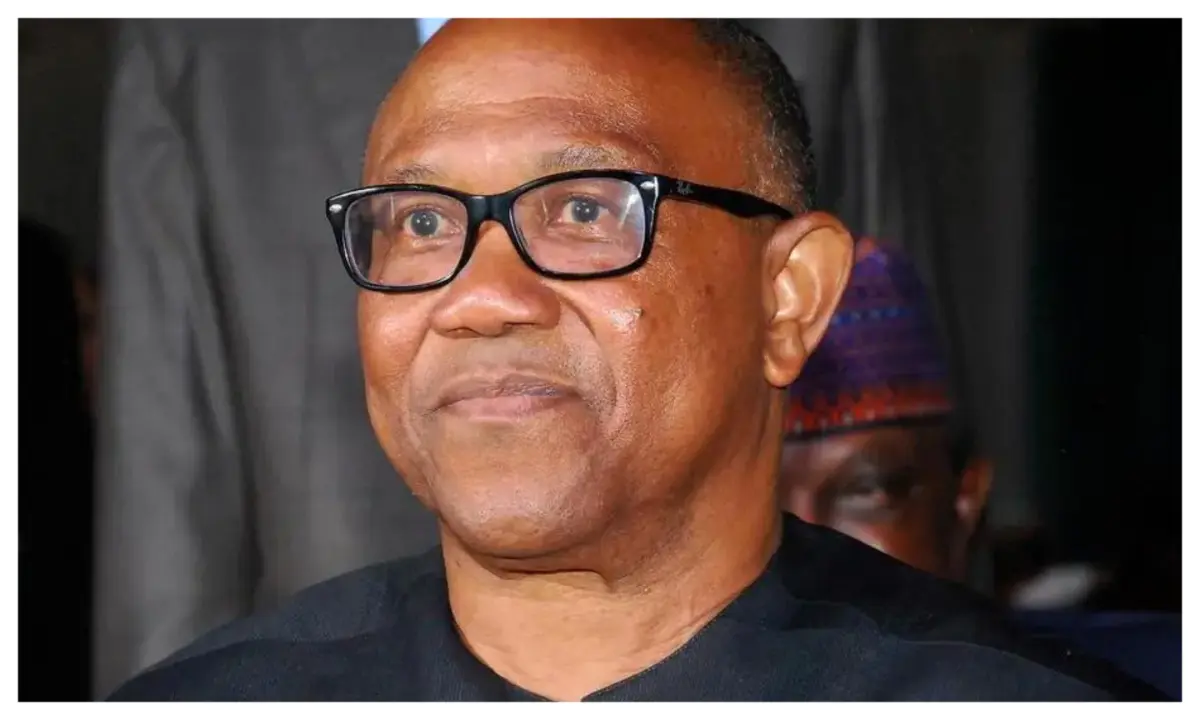
Special Assistant to the African Democratic Congress, ADC, presidential candidate, Atiku Abubakar on Public Communication, Phrank Shaibu, says the exit of former Anambra state governor, Peter Obi, from the ADC was never a loss to the party.
Speaking during an interview on Trust TV on Sunday, Shaibu said Obi was having fun in the Nigeria Democratic Congress, NDC.
He was speaking on the exit of Obi from the ADC early last month.
Recall that Obi and former presidential candidate of the New Nigerian Peoples Party, NNPP, Rabi’u Kwankwaso, dumped the ADC for the NDC, citing internal divisions and court cases.
Airing his own opinion, Atiku’s aide said, “I don’t see Peter Obi’s exit as a loss to the ADC. Peter has found a haven in the NDC or wherever he is. He’s simply having fun there.
“Let me tell you something. In that place, they have what we call the office of the Supreme Leader.
“That’s the only party in Nigeria where I have not seen the party officials. I’ve never heard the party chairman. I’ve never heard of the party secretary. I only hear from their Supreme Leader.”
dailypost.ng

2027: How INEC can achieve free, fair, credible election – Baba-Ahmed

Petrol station razed as tanker bursts into flame in Umuahia

Judges’ Scorecards and Punch Stats For Ilia Topuria vs Justin Gaethje at UFC Freedom 250

Simi Sanya and Femi Dapson Are Now Legally Married and It Is Beautiful to See

FCT Area Council Election: Live results from polling units

Premier League Set-Piece Goals (2025/2026)
-
 Sports22 hours ago
Thierry Henry Issues Statement After Nigeria Comment Backlash at World Cup
-
 Sports1 day ago
Strong Reaction to Brazil Star’s World Cup Performance vs Morocco
-
 Sports1 day ago
James McClean Slams ‘Worst’ Decision For Ireland vs Israel
-
 Sports21 hours ago
Gary Neville Calls Out FIFA ‘Dictatorship’ After World Cup Incident
-
 Sports2 days ago
Sir Alex Ferguson Named His 2026 World Cup Winners
-
 Sports9 hours ago
Uruguay Denied US Entry Day Before World Cup Opener
-
 Sports1 day ago
Jurgen Klopp Blasts 2026 World Cup Hydration Breaks
-
 Sports2 days ago
Clint Dempsey Slams Canada Boss Jesse Marsch on Live TV