The 10 worst defenders in Premier League history have been ranked.
Forgotten Arsenal duo Igors Stepanovs and Pascal Cygan feature.
Titus Bramble, Ozan Kabak, and Roque Junior all became infamous during their time at the top of the English football pyramid.
The Premier League has given us some of the greatest defenders to ever grace the game – but for every rock-solid centre-back, there’s a player who leaves fans covering their eyes in disbelief. From costly errors to comical own goals, some defenders carved out reputations for all the wrong reasons. Whether it was mistimed tackles, lapses in concentration, or simply being out of their depth, these players earned their spot in the hall of infamy.
Brace yourself for a trip down memory lane – a place where defenders turned goal-scoring opportunities into nightmares (for their own team). As we dive into the 10 worst defenders in Premier League history, these players took the classic mantra that “defences win titles” and gleefully turned it upside down. From shambolic clearances that belonged in blooper reels to blunders that left goalkeepers screaming into the void, these defenders showed that the quickest path to relegation isn’t always a striker who can’t hit a barn door – sometimes, it’s a centre-back who turns every cross into a panic attack.
Whether slipping at the worst possible moment or gifting opponents goals on a silver platter, these players were walking reminders that not all heroes wear capes – and not all defenders keep the ball out of their own net.
From Massimo Taibi to Danny Ward, the 10 worst goalkeepers since the Premier League’s inception have been ranked.
10 Ozan Kabak
Premier League clubs: Liverpool & Norwich City
Ozan Kabak’s short-lived Premier League career with Liverpool and Norwich City is often remembered for a series of struggles that have earned him a reputation as one of the most underwhelming defenders in recent memory. Arriving at Liverpool on loan in 2021 during a defensive crisis, Kabak was brought in as a potential saviour to help cover the club’s growing injury list.
What was initially seen as a possible stop-gap solution soon became a glaring weak link in a team struggling to maintain its defensive stability, as evidenced by the fact Fabinho and Jordan Henderson – two midfielders – were preferred at centre-back in the end. Sadly, his time at Norwich City wasn’t too softening for the blow, either, as his solo loan season ended with 11 appearances and a rock-bottom finish, with a goal difference of -63.
9 Igors Stepanovs
Premier League club: Arsenal
What could possibly go wrong with replacing one of the Premier League’s finest defenders, Tony Adams, with an untested Latvian first-division player, Igors Stepanovs? Arsene Wenger seemed to think it was a risk worth taking. The outcome, however, painted a far less flattering picture.
The phrase “like Bambi on ice” had never been more fitting than when watching the 6ft1in defender in action – making the art of defending look more like an accidental dance routine. Though Stepanovs’ Arsenal career began on a promising note, even scoring in an early League Cup tie, it didn’t take long for the Arsenal faithful to see through the illusion. He was front and centre during Arsenal’s infamous 6-1 thrashing at Old Trafford in 2001, a performance that effectively sealed his fate. Stepanovs featured just once more that season before ultimately departing for Grasshoppers in 2004.
8 Titus Bramble
Premier League clubs: Sunderland, Wigan Athletic, Newcastle United & Ipswich Town
Titus Bramble’s name still echoes in conversations about defensive calamities – a player as unpredictable as British weather. It’s easy to overlook that, on occasion, Bramble could be a defensive powerhouse, capable of putting in a Man of the Match performance that gave hope to desperate fans in a relegation scrap. But with Bramble, consistency was as elusive as a unicorn.
One week, he’d resemble a Premier League stalwart; the next, it felt like even a stray balloon could float past him and into the net. Strikers loved playing against him – not because he lacked talent, but because you never knew which version of Bramble would show up. Costly errors and lapses in concentration became his trademark. Whether misjudging headers or losing track of opposition strikers, Bramble’s moments of brilliance were always shadowed by moments of bewildering chaos. By the time Sunderland let him go in 2013, his reputation was so tattered that no club dared to gamble on him – not even for free.
7 Pascal Cygan
Premier League clubs: Arsenal
“What was he thinking?” the commentary team would often ask whenever Pascal Cygan was caught out of position or produced a wayward pass to invite unnecessary pressure on the Arsenal backline. But if the Frenchman was being completely honest with himself, even he didn’t know.
Another quote – or rather, a lyric – that perfectly captured the ex-Lyon man’s spell at Highbury was the chant his own fans gave him. “He’s bald, he’s bad, he plays when no one’s fit, Cygan!” the Arsenal crowd would sing, a nod to his frequent reliance on teammates to bail him out of trouble. Still, he likely won’t lose much sleep over it, as his time at the club earned him a Premier League winners’ medal during the iconic 2003/04 Invincibles campaign.
6 Leon Cort
Premier League clubs: Burnley, Stoke City & Crystal Palace
Burnley’s Leon Cort looks on
Leon Cort’s Premier League journey spanned three clubs, but his heart – and perhaps his skillset – seemed more at home in the trenches of fourth-tier football with Southend United. While Cort carved out a respectable lower-league career, his brief foray into the top flight was far less glamorous.
In a 2017 FourFourTwo fan poll, Burnley supporters didn’t mince their words – Cort was crowned the club’s worst-ever player. For a team with a turbulent history outside the Premier League, that’s no small dishonour. After a dismal spell at Turf Moor, Cort was swiftly shipped off to Championship side Stoke City, where life was less punishing. His single season in the Premier League turned out to be his swansong at the highest level. It wasn’t the fairytale rise many dream of – more a cautionary tale of football’s unforgiving nature.
5 Per Kroldrup
Premier League clubs: Everton
The name that repeatedly crops up in the ‘David Moyes’ worst signings’ polls is that of Danish international centre-back Per Kroldrup. The defender was signed by Everton for £5m in the summer of 2005 – but he left after just one appearance. This came in a 4-0 Boxing Day annhilation at the hands of Aston Villa, with John Carew tearing the poor lad to pieces.
In his autobiography, Leon Osman later recalled the moment he realised Kroldrup wasn’t ready for the step up to the English top flight. “On his very first day of training, the gaffer took him to one side and started doing heading practice with him, like you would with a seven-year-old,” he said, as per the Mirror. “It was a case of holding the ball, saying: ‘Are you ready? One, two, three – jump.’
“Honestly, it was incredible. I don’t know what happened, but he had obviously realised that heading wasn’t Per’s strong point. £5m for a centre-half who can’t head the ball..!”
4 Winston Bogarde
Premier League clubs: Chelsea
If ever there was a player who epitomised putting money over passion for the game, it was Winston Bogarde. The Dutch international joined Chelsea on a free transfer from Barcelona in 2000, but the Blues quickly realised they’d made a costly mistake. Bogarde’s performances on the pitch left much to be desired, and the club sought to offload him after just one season.
The problem? Bogarde’s lucrative £40,000-a-week contract was too good to walk away from. Despite Chelsea’s numerous attempts to force him out – short of changing the locks at Stamford Bridge – Bogarde stayed put, happily collecting his wages. With little concern for playing time, his fitness declined, and he faded into obscurity. By the time his contract expired in 2004, after making just 12 appearances in four years, his reputation was so damaged that no club wanted to take a chance on him.
3 Claude Davis
Premier League clubs: Derby County & Sheffield United
Never has a team been more overwhelmed by the jump from the Championship to the Premier League than Derby County in 2007. Managed by Billy Davies until he was replaced by Paul Jewell in November, they were immediately touted by many to go straight back down, with one bookmaker offering payouts for Derby to get relegated as early as September.
Claude Davis, eager to turn the tide of Derby’s misfortune, ultimately found himself outmatched and unable to rise as the saviour they desperately needed. In a season where the Rams shipped 89 goals and finished with a staggering -69 goal difference, the Jamaican defender was saddled with the unfortunate moniker of ‘Calamity Claude.’
There have been some truly terrible teams in the Premier League over the years.
2 Roque Junior
Premier League clubs: Leeds United
Roque Junior at Leeds United
In 2003, Roque Junior arrived at Leeds United on loan from AC Milan, and was greeted with a wave of excitement from fans. A World Cup winner with Brazil in 2002, the experienced defender was seen as a potential saviour, someone who could steady a fragile backline and inject much-needed class into a struggling side.
What followed, however, was the stuff of nightmares. Junior’s performances were borderline apocalyptic, offering less resistance than a paper wall. In just five appearances, he endured a torrid spell – sent off on his debut and standing helpless as Leeds leaked 24 goals with him on the pitch. By the time his loan expired, Leeds couldn’t part ways fast enough.
1 Frank Sinclair
Premier League clubs: Leicester City & Chelsea
When it comes to disastrous defending, few can hold a candle to Frank Sinclair – arguably the worst defender the Premier League has ever seen. While his career spanned several clubs, it was at Leicester City where his misadventures reached legendary status for all the wrong reasons.
In 1999, Sinclair embarked on a calamitous run of form that still echoes through Premier League folklore. On consecutive weekends, he scored two jaw-dropping own goals. First, in a tighTransfermarktt game against Arsenal, Sinclair soared majestically – only to thump a powerful header past his own goalkeeper, gifting Arsenal a 2-1 victory at the death. A week later, he shrugged off Chelsea’s forwards to confidently nod the ball into his own net, snatching a draw from the jaws of victory.
But Sinclair wasn’t finished. In 2002, during a clash with Middlesbrough, he casually launched a 40-yard back-pass into his own goal, sealing a 1-0 defeat. By then, his reputation as a defensive liability was set in stone. Sinclair wasn’t just an unlucky defender – he was a walking disaster for Leicester, single-handedly costing his side crucial points and leaving a trail of baffled teammates and frustrated fans in his wake.
Statistics in this article courtesy of Transfermarkt.
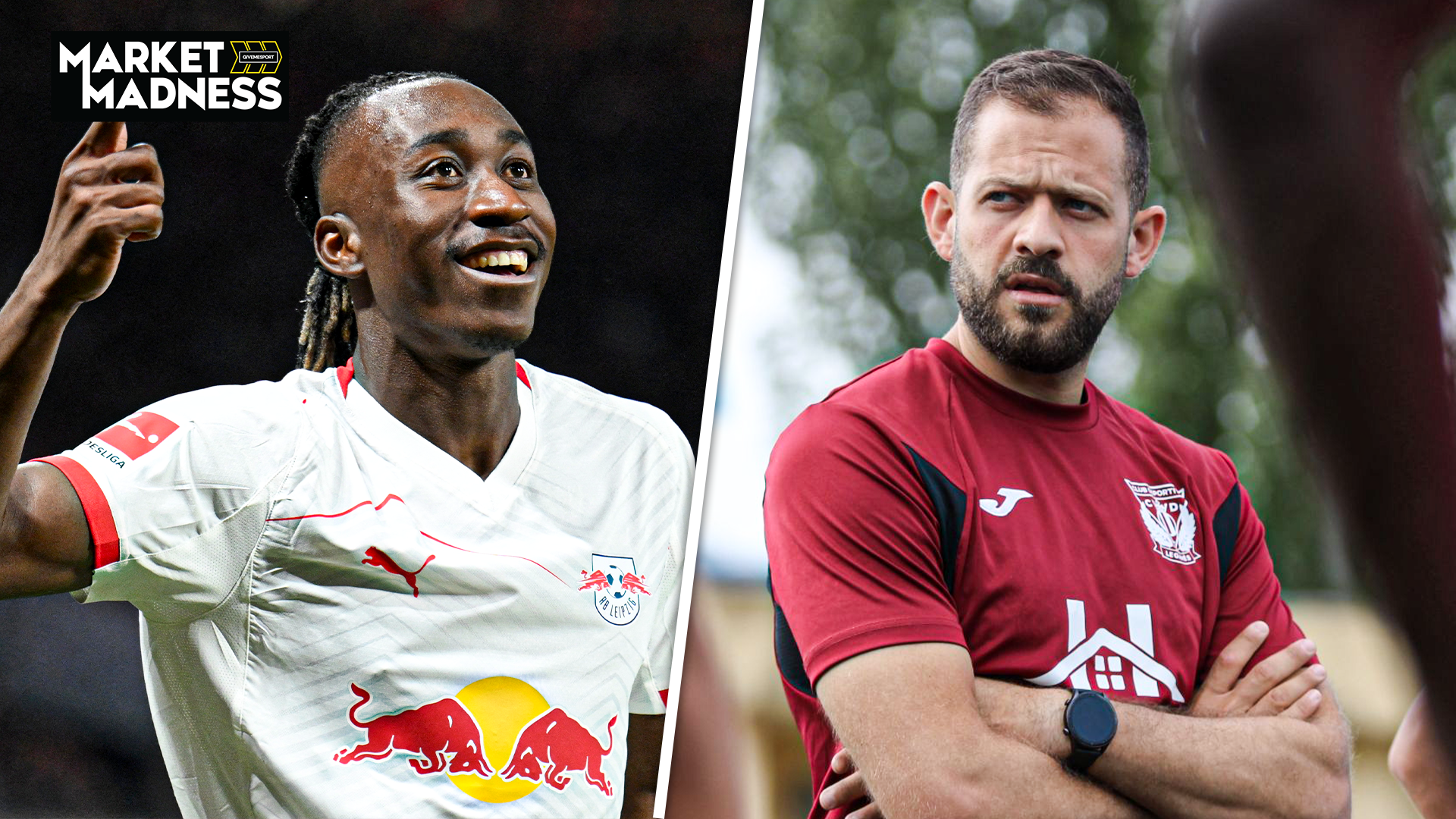
Yan Diomande’s early coach Faissal Chehade explains why Liverpool could be the perfect fit, and why his ceiling may be Ballon d’Or level.
Chehade, who worked with Diomande at Leganés, reveals on Market Madness what stood out from the very beginning: the confidence, the one-v-one ability, the training-ground moments that made coaches take notice, and the mentality behind his rise from rejection across Europe to becoming one of the most talked-about young players in world football.
He also breaks down why Leipzig was the right step, why Liverpool could give Diomande the platform to become “the main man,” and why he believes the winger has the potential to reach the very top of the game.
Chapters:
0:09 — Yan Diomande’s First Coach Reveals the Talent
2:07 — The Training Goal That Made Everyone Stop
3:36 — Why Yan Diomande Was Rejected Across Europe
4:21 — Why Leipzig Was the Perfect Move for Diomande
4:55 — Why Liverpool Could Be Yan Diomande’s Perfect Fit
8:02 — Yan Diomande’s Ballon d’Or Ceiling Explained
It looks as though a banned European nation is set for a return to FIFA competition, with reports suggesting they’ll be allowed to compete at an international tournament as soon as October.
The ban, which has run for more than four years, has kept senior, youth and women’s sides out of competitive matches, including the 2022 and 2026 World Cups, as well as the 2024 Euros.
FIFA president Gianni Infantino has previously hinted at softening his stance, and it now appears children’s football could provide the route back into the fold, starting with a new under-15 competition this autumn.
Gianni Infantino Pushes For Russia’s Reintroduction
Infantino has been vocal about wanting Russia back involved, arguing the suspension has done more harm than good. Speaking earlier this year, he said:
“We have to, because this ban has not achieved anything, it has just created more frustration and hatred. Having girls and boys from Russia being able to play football games in other parts of Europe would help.”
That stance appears to be translating into action, with reports indicating Russia and Belarus are among the nations set to feature at FIFA’s inaugural under-15 World Cup and Festival, running from October 22nd to the 31st, in Azerbaijan.
FIFA confirmed all 211 member associations have been invited, stating: “The first edition will be open to boys’ teams from all FIFA member associations; the second installment in 2027 will feature girls’ teams only. From 2028 onwards, all member associations will be invited to participate with both their boys’ and girls’ U-15 teams in two separate competitions.”
A Symbolic Tournament for Gianni Infantino
The event has taken on added significance for Infantino, who’s also pushed for Israel and Palestine to meet in a symbolic opening fixture. After an attempted handshake between officials from both nations fell flat in April, Infantino referenced the same tournament while appealing for unity:
“We have a beautiful under-15 tournament coming up, where we will invite all 211 countries to participate, all the children of the world, let’s do it for that. Let’s work together. You have my commitment, you have the support of the whole room.”
You scored
out of 20
Whether Russia’s inclusion goes further than football at junior level is something that hasn’t yet been addressed, but the door appears to be opening.
Pele was an extraordinary footballer. He made his senior debut for Brazil at just 16 years old and marked the occasion with a goal against Argentina. Only a year later, he netted twice in a World Cup final, helping Brazil secure World Cup success.
Pele spent the majority of his club career with Santos in Brazil before later joining American outfit New York Cosmos. As a result, he never featured for a European club. However, that did not stop him from following football on the continent.
Indeed, he once identified a Scottish football legend as the only British player he believed was good enough to represent the Brazil national team.
When he passed away at the age of 85 in January 2025, tributes poured in from across the football world. Among those leading the condolences was legendary Manchester United manager Sir Alex Ferguson.
“Trying to place Denis in the pantheon of all-time greats is a challenge.
“But it is made easier by Pele. He was asked if there was a British player who could get in the [great] Brazil team. He said Denis Law – which is a fantastic tribute.”
“He was a fantastic player and an incredible human being. The great thing is that he did not use his fame, he was so level-headed and down to earth, and we are talking about a guy who had all of these caps for Scotland and is called the ‘King of Old Trafford’.”
It was certainly a fitting tribute from two football icons to a truly exceptional player.
Pele Also Rated English Defender Bobby Moore
Bobby Moore 1966 World Cup
Law was not the only British football great admired by Pele. The Brazilian also had immense respect for England’s World Cup-winning captain Bobby Moore. He said:
“It’s hard to say. You see, whoever I played against, I had the best defender marking me, but the best were Bobby Moore and Franz Beckenbauer.”
He later added: “Bob was the best centre-back I’ve seen – so quick up here [points to his head].”
It’s unfortunate that British supporters did not get the opportunity to watch more of Pele in person. Nevertheless, when he arrived in England for the 1966 World Cup, he was already the most famous footballer on the planet, allowing local fans to witness his brilliance first-hand. Unfortunately, injuries limited his impact, and Brazil exited the competition in the first round after playing only three matches.