
Politics
Ekiti: Tasks before Oyebanji after breaking back-to-back re-election jinx

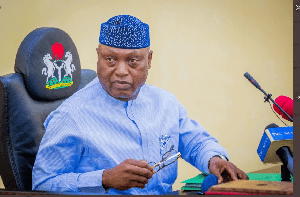
Gov Biodun Oyebanji of Ekiti State.
By Clifford Ndujihe & Rotimi Ojomoyela
THE journey to the June 20, 2026 Ekiti State governorship election did not begin with the blowing of the official campaign whistle. For Governor Biodun Abayomi Oyebanji, the battle was joined the very day he took his oath of office on October 16, 2022.
While political pundits across the country often view incumbent re-elections as slippery terrain characterised by high-wire intrigues and unpredictable voter backlash, Oyebanji’s resounding victory at the weekend appears like the outcome of a mathematically calculated political blueprint.
In a state historically notorious for its volatile, fast-shifting political loyalties and a deep-seated resistance to political continuity, the All Progressives Congress, APC, helmsman did something rare: he replaced structural friction with deliberate consensus building, which delivered massive votes for him across the state. He polled 319,224 votes to floor his closest marker, Dr Wole Oluyede of the Peoples Democratic Party, PDP, who got 40,543 votes. The African Democratic Congress, ADC, standard bearer, Oluwadare Bejide, secured 12,872 votes.
In his victory march, Oyebanji won in all the 16 local councils of Ekiti first achieved by Ayo Fayose but took the step higher by winning in all 177 wards of the state. It was the first time any person recorded the feat in Ekiti. He also became the first governor to win back-to-back re-election. His predecessors – Ayo Fayose and Kayode Fayemi lost their first re-election quests and succeeded later.
Now that the dust from the polling units has settled, the focus shifts to a more formidable obstacle—breaking Nigeria’s notorious “second-term syndrome” and setting the stage for the 2030 succession battle.
Neutralising opposition through elite consensus
When Oyebanji took the reins of power, Ekiti’s political ecosystem was deeply fractured along partisan fault lines. Rather than governing with the typical winner-takes-all disposition that defines Nigerian statecraft, he embarked on an ambitious, elite-level reconciliation strategy.
He systematically neutralised the ammunition of the opposition by pulling its generals into his orbit. By maintaining deep, respectful, and institutionalized relationships with former governors across ideological divides—including Otunba Niyi Adebayo, Engr. Segun Oni, Ayodele Fayose of the PDP, and his direct predecessor, Dr. Kayode Fayemi, Oyebanji denied the opposition a unified rallying point.
Oyebanji’s winning matrix
He sustained structures of Fayemi and Adebayo in APC; maintained cordial ties with Fayose and Oni in PDP/opposition; and deployed local unions via office of community communications in the grassroots.
This structural harmony prevented the internal hemorrhaging and high-profile defections that usually cripple ruling parties ahead of crucial polls.
Furthermore, his decision to complete inherited legacy projects, such as the Ekiti Cargo Airport initiated by Fayemi, projected an image of administrative maturity that resonated deeply with a cautious electorate.
Civil service advantage
Beyond elite handshake politics, Oyebanji understood that the heart of Ekiti’s economy beats within its civil service. In a state largely driven by public sector employment, workers’ welfare is not just an administrative duty; it is potent political capital.
By ensuring the prompt, uninterrupted payment of salaries and deliberately attacking the state’s historical backlog of gratuities and pensions, liquidating nearly ¦ 30 billion in outstanding liabilities, the administration effectively converted public servants into a massive, defensive voting bloc. When combined with visible urban interventions like the 1.2-kilometer President Bola Tinubu Flyover in Ado Ekiti, the administration entered the 2026 election cycle with a balance sheet that raw campaign rhetoric could not easily dismantle.
Can Oyebanji defy second-term slump?
The celebration in Ado-Ekiti may be loud, but history offers a sobering warning. Across Nigeria’s 36 states, the second term has frequently become the graveyard of governance.
The structural landmines that Oyebanji must bypass to avoid this political trap include:
Disappearance of electoral pressure
In a first term, governors are kept on their toes by the looming verdict of the ballot box. Once a second term is secured, the constitutional term limit often induces a dangerous laxity, shifting focus from public welfare to legacy or personal enrichment.
‘Last bus stop’ mentality, succession wars
With no re-election to plan for, the inner cabinet quickly splits into competing factions as ambitious loyalists begin positioning themselves for the next cycle, triggering policy stagnation and internal sabotage.
Personnel fatigue
High-performing technocrats often exit during the second term, leaving vacancies that are too frequently filled by political jobbers as rewards for electoral patronage rather than administrative competence.
Implications for the 2030 gov poll
Oyebanji’s performance over the next four years will directly dictate the longevity of the APC structure in Ekiti state heading into 2030.
If he succumbs to the second-term lethargy, he will inadvertently breathe life back into a currently fragmented opposition, setting the stage for a brutal, highly competitive open-seat race in 2030. Conversely, if he maintains his infrastructure momentum and sustains the elite consensus that delivered his re-election, he could effectively institutionalize the APC as the permanent ruling party of Ekiti State, giving him the ultimate leverage to handpick a successor without triggering a regional mutiny.
Beyond the electoral significance of his victory, Governor Oyebanji now faces perhaps the greatest challenge of his political career, which is overcoming what many political observers describe as Nigeria’s “second-term syndrome”
Across the country, numerous governors who performed impressively during their first term often struggle to maintain the same momentum after securing re-election.
The phenomenon has become so common that many voters and political analysts regard second terms with skepticism.
However, Oyebanji has repeatedly pledged that his second term would be built on the foundations laid during his first four years in office, vowing to sustain rather than abandon ongoing development initiatives.
Why do many governors fall victim to second-term syndrome?
Political analysts identify several factors responsible for this tendency often associated with second-term administrations, which include the following:
During a first term, governors operate under the pressure of seeking re-election. Roads, schools, hospitals and social welfare programmes often receive priority because political survival depends on public approval.
Once re-elected, that pressure disappears. Without the need to return to the electorate for another mandate, some governors gradually shift attention from public service delivery to political calculations, personal interests or plotting a succession plan at the detriment of serving the people.
Another reason is the ‘Last Bus Stop’ Mentality. For most governors, a second term represents the final constitutional opportunity to occupy the office.
As a result, some administrations begin to focus on succession politics, rewarding loyalists, positioning political allies for future elections and consolidating personal influence after leaving office.
In many cases, long-term developmental projects are abandoned because they may not yield immediate political benefits before the governor exits office.
Another factor is team fatigue and recycling of personnel. By the second term, many high-performing commissioners, advisers and technocrats may have left government service. Their replacements are sometimes selected based more on political considerations rather than competence.
This often results in policy stagnation, summersault, reduced innovation and slower implementation of government programmes.
Financial Constraints and Debt Burden also takes centre stage as second-term governors frequently confront financial realities that were less apparent during their first four years.
Projects initiated during the first term often reach their most expensive stages during the second term. At the same time, debt obligations from loans secured to finance earlier projects begin to mature.
Fluctuations in Federation Account Allocation Committee (FAAC)? disbursements can further constrain government spending, leaving administrations with fewer resources for new initiatives.
Consequently, governors face the difficult task of sustaining public expectations while operating under tighter fiscal conditions.
If Oyebanji successfully delivers on his promise to build on the foundations of his first term, he could emerge as one of the few Nigerian governors to defy the conventional pattern of second-term decline.
Such an achievement would not only strengthen his personal legacy but could also provide a governance template for future leaders as the state looks forward to the 2030 governorship election.
For now, Biodun Oyebanji holds the cards. But as the transition from politics to legacy begins, the ultimate question remains: Will he remain the exception to the rule, or will Ekiti’s volatile political dynamics reclaim its old rhythm before 2030?
www.vanguardngr.com
As campaigns commence for the 2027 general elections, the presidential candidate of the Nigeria Democratic Congress, NDC, Mr Peter Obi has marshalled out his plans for Nigerians, pledging to run a campaign devoid of ethnicity and religion.
Obi, who spoke to journalists at a world press conference in his home in Onitsha, Anambra State on Friday, also gave a blow by blow account of how he will develop the country, including his areas of concentration in the various regions of the country.
He said the election is no doubt a defining moment for Nigeria’s democracy, and that it gives Nigerians the opportunity to assess the records, ideas, and plans of those seeking their mandate to lead their country at a time of grave uncertainty in a rapidly changing world.
Part of his text read: “I consider myself quite privileged to be one of those seeking your mandate to deal with these challenges facing our country. I enter this contest with one firm conviction: Nigeria can work, and Nigeria must work. Nigeria faces several serious challenges. Some of them are indeed of existential proportions.
“According to the IMF, 63%, or over 140 million Nigerians, live at or below the national poverty line, while humanitarian agencies estimate that 35 million people will need food assistance during the 2026 lean season. About 3.6 million Nigerians remain internally displaced, largely because of conflict and insecurity.
“Each year, millions of young people enter the labour market, yet too many struggle to find productive opportunities. Weak infrastructure, unreliable power, insecurity, and the excessive cost of doing business continue to burden households and constrain enterprise. These are more than statistics. They reflect the daily realities of Nigerian families, farmers, workers, students, and businesses.”
Pledging to run a campaign devoid of ethnicity and religion, Obi said: “The campaign period gives every citizen an opportunity to join the national conversation. I urge Nigerians to examine each candidate’s record and proposals, ask tough questions, and demand evidence behind every promise.
“We should debate ideas without hatred, compete without violence, and disagree without weakening the bonds that unite us. When Nigerians make their choice, that choice must be respected.
“Nigerians must reject and disregard any campaign driven by propaganda, ethnicity, religion, elitism, or cronyism. As my team and I travel across the country, we will listen to Nigerians, understand their needs and concerns, and assure them that we have the competence, character, and compassion to lead and reset Nigeria for the benefit of all.”
Espousing the strength of the six geopolitical zones where he will strengthen, Obi said: “Nigeria’s diversity is an economic strength. Each region has distinct assets, and national policy must unlock those assets while connecting them to one productive economy.
“The North-West can expand agriculture, livestock, irrigation, agro-processing, and manufacturing while strengthening education and security. The North-East can speed up reconstruction, restore livelihoods, and expand agriculture, education, enterprise, and regional trade.
“The North-Central can strengthen food production and processing while developing its mineral resources responsibly. The South-West can build on its strengths in manufacturing, technology, finance, trade, and the creative economy.
“The South-East can expand its entrepreneurial and industrial strength through better infrastructure, stronger connectivity, and greater access to investment. The South-South can derive greater value from oil and gas while expanding maritime services, fisheries, agriculture, and other productive sectors, supported by stronger environmental protection.
“The Federal Capital Territory must demonstrate what efficient urban planning, transportation, housing, sanitation, security, and public services can achieve. Every region must produce. Every region must contribute. Every region must benefit.”
The presidential hopeful took the opportunity to speak about his pedigree in governance, saying, “My successful private-sector experience, studies in institutions of repute on policy and business matters, and my service as Governor of Anambra State have shaped my understanding of public leadership. Government must manage resources responsibly, set clear priorities, and measure the outcomes of its decisions. Public office is not a reward; it is a responsibility to the people.
“In Anambra, I prioritised the foundations of long-term development; education, healthcare, infrastructure, fiscal discipline, and institutional capacity. I do not present that record as perfect, but as an experience from which Nigerians can draw their own conclusions.
“Senator Rabiu Musa Kwankwaso brings a different but complementary governing experience. As Governor of Kano State, he focused strongly on education, technical training, scholarships, infrastructure, and human-capital development. His administration’s investments in education and skills showed an understanding that the people are a state’s most important long-term resource.
“Our experiences are different, but our conclusion is the same: Nigeria must invest in its people and manage public resources with discipline,” Obi stated.
dailypost.ng
The opposition African Democratic Congress, ADC, Ebonyi State chapter, has held a fresh primary election for the Ebonyi South Senatorial District, with Dr Ideyi Prince Gamax emerging as the party’s candidate ahead of the 2027 general elections.
He stood as the sole aspirant in the primary, polling a total of 450 votes to emerge as the winner.
The Returning Officer and Deputy Chairman of the ADC in Ebonyi State, Dr Victor Uduma, who announced the result, stated that party members from the Ebonyi South Senatorial District participated in the primary.
Uduma said, “We had the only candidate here, Dr Ideyi Gamax, who had a total of 450 votes.
“Party members from Ebonyi South Senatorial District were particularly enthusiastic and happy and have given him the mandate to represent them in the forthcoming 2027 general election as the ADC candidate.”
Speaking after his emergence, Gamax explained that the substitution primary was conducted as part of the party’s administrative process following an earlier primary held on April 22, 2026, where he also emerged as the senatorial candidate.
Expressing confidence that the ADC would win the 2027 senatorial election in Ebonyi South, he said consultations across the district indicated that the people were eager for a change in representation.
Gamax said the people of Ebonyi South were looking towards the ADC as a vehicle for change and effective representation, as well as the delivery of the dividends of democracy.
“I am very hopeful. Our people are eager for change, and they are looking at ADC as a vehicle to bring about this change and give us the kind of representation that will benefit our people,” he said.
Dr Jennifer Adibe-Nwafor, the ADC state chairman, described the primary as peaceful and well monitored by security agencies, the media and officials of the Independent National Electoral Commission, INEC, in the state.
She explained that the substitution primary became necessary following an alteration in the party’s earlier process, adding that the national leadership directed the state chapter to conduct a substitution primary.
According to her, the exercise, held at the ADC state secretariat on Thursday, August 20, 2026, was the authentic substitution primary recognised by the state chapter and would be forwarded to the national leadership.
Adibe-Nwafor also dismissed reports of another ongoing primary, saying she was not aware of any parallel exercise.
“If there should be any primaries, I should be the one in charge of the primaries. I am not aware of any other primaries going on anywhere,” she said.
The ADC chairman further disclosed that the party would participate in the Ebonyi State local government elections scheduled for August 22, 2026.
She expressed optimism that the party would record a strong performance in the elections.
dailypost.ng

Popular Nigerian activist, Omoyele Sowore has criticised Afrobeats singer, David Adeleke, also known as Davido, over the latter’s recent outing with the Minister of the Federal Capital Territory, FCT, Nyesom Wike.
DAILY POST reports that the singer and his uncle, Governor Ademola Adeleke of Osun State, visited Wike at his residence in Abuja on Thursday.
In a 16-second video currently making the rounds on social media, Davido was captured having a light conversation with Wike about the outcome of Saturday’s governorship election in Osun State.
Reacting, Sowore described them as political hustlers, wondering why the singer was “genuflecting before Nyesom Wike” despite the killing of Osun residents during the election period.
In a post on his X handle, Sowore wrote:
“Nigerian political hustlers will deceive the public, and the gullible will swallow the deception whole.
“Here is the loud and lousy @davido genuflecting before Nyesom Wike @GovWike, barely a week after their ‘agreement is agreement’ election politics in Osun, a contest marred by deadly violence and the loss of scores of lives.
“Behind all the public grandstanding, insults, and manufactured outrage, these political actors know exactly where their interests converge.
“Dissemblers. Gerrymanderers. Carpetbaggers. Political hustlers. Lying machines. When their interests are at stake, the masks come off.”
There were reports that supporters of both the All Progressives Congress, APC, and the Accord Party were murdered before and during Saturday’s election.
dailypost.ng


Five Things We Learned From Pep Guardiola ‘A Beautiful Obsession’ Doc
2027: Obi pledges campaign devoid of ethnicity, religion, marshals out plan for zones

Concerning Aston Villa Stadium Footage Emerges Ahead of 2026-27 Season

Meaning Behind Egypt Manager’s ‘X’ Gesture vs Argentina

Premier League Set-Piece Goals (2025/2026)

Simi Sanya and Femi Dapson Are Now Legally Married and It Is Beautiful to See
-
 Sports1 day ago
Erling Haaland Reacts to Real Madrid’s Bizarre Bernardo Silva Video
-
 Sports2 days ago
Barcelona Fans Slammed For Booing Frenkie de Jong Before Al Ahly
-
 Metro1 day ago
Lagos: EFCC arraigns two over alleged sale of bank credentials for $15,000
-
 Politics1 day ago
2027: I pity Tinubu because they’ll say he rigged after he wins - Sowunmi
-
 Sports2 days ago
Romano Shares Exciting Tottenham Transfer Update as Three Players Named
-
 Politics1 day ago
‘Obasanjo has no electoral value’ – Atiku
-
 Sports2 days ago
Newcastle United Ahead in Race to Sign Christopher Nkunku
-

 Metro2 days ago
Police kill suspected kidnapper, armed robber, recover arms in Anambra